
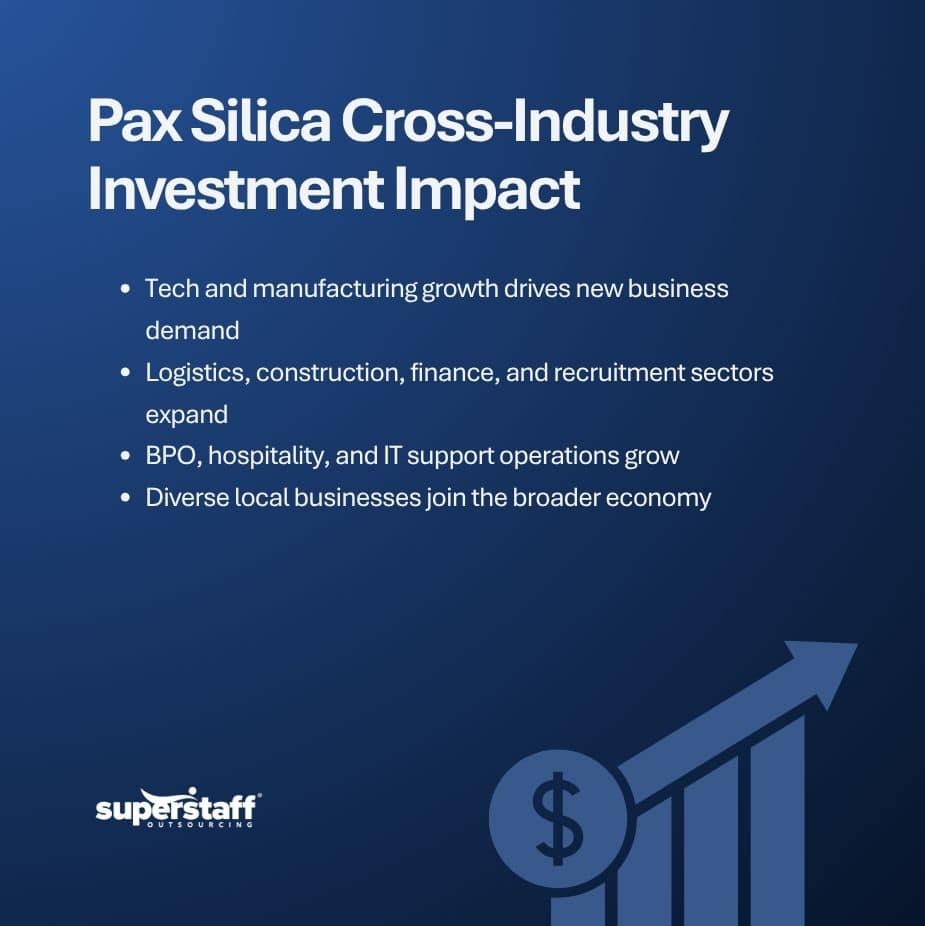
A large technology investment can affect more than the companies that build factories or develop advanced systems. It can also create demand for logistics, finance, recruitment, technology support, construction, real estate, and business services.
That is why the Pax Silica Philippines investment deserves attention from businesses across different industries. The proposed development in New Clark City forms part of a broader effort to strengthen the country’s role in the global technology supply chain. Plans include advanced manufacturing, artificial intelligence, semiconductor-related activities, and other technology-focused industries.
For companies in the Philippines, the opportunity may extend beyond attracting foreign investors. New business activity can create demand for suppliers, service providers, workers, and support teams. As these companies establish operations, they will need people and services to keep their businesses running.
Technology Investment Can Support Wider Growth
Pax Silica focuses heavily on technology and advanced manufacturing. However, these industries depend on many other businesses to operate efficiently. According to the Philippine government’s announcement about the proposed Pax Silica development, the planned high-tech industrial hub in New Clark City aims to attract investment in strategic industries and strengthen the country’s role in global supply chains.
1. Technology Companies Can Expand
Technology companies need more than engineers and developers. They also need administrative teams, technical support, data workers, finance staff, and other business functions.
As more technology firms consider the Philippines for investment or expansion, local service providers could gain new opportunities. Therefore, the Pax Silica Philippines investment could create demand across both technical and non-technical business functions.
2. Semiconductor Activity Can Increase Demand
Semiconductors support many products, including computers, vehicles, communication devices, and other electronic equipment. The Philippines already has experience in semiconductor assembly and related services.
If new investments expand this sector, companies may need suppliers, logistics providers, equipment services, maintenance teams, and administrative support. Consequently, growth in semiconductor activity can affect businesses beyond the manufacturing floor.
3. Logistics Companies Can Benefit
Technology and manufacturing operations depend on reliable movement of materials and products. Companies need to transport components, equipment, supplies, and finished goods between different locations.
Therefore, logistics providers could see additional demand as industrial activity increases. Services such as shipment tracking, dispatch support, inventory management, documentation, and proof-of-delivery verification may also grow.
4. Construction Can Gain New Projects
Large industrial developments require construction work before companies can begin full operations. This creates demand for contractors, suppliers, equipment providers, engineers, and other service businesses.
Furthermore, construction activity can create secondary demand for transportation, accommodation, food services, security, and facility management. These businesses can support the workforce and companies involved in the development.
5. Real Estate Could See New Demand
New industrial activity can attract workers and businesses to nearby areas. As a result, companies may need offices, warehouses, housing, commercial spaces, and other facilities.
New Clark City already forms part of a larger development plan in Central Luzon. Increased business activity could therefore create additional demand for property and related services.
Business Services Could Grow Alongside Investment
Companies entering a new market often need outside support. They may have strong technical capabilities but still require local teams to handle daily business processes. These needs can create opportunities for Philippine service providers that can support both established operations and new business activity.
1. BPO Services Can Support Operations
Companies may outsource customer service, finance, recruitment, technical support, data processing, and other functions. This allows them to access local talent while their internal teams focus on their core operations.
The Pax Silica Philippines investment could therefore create opportunities for BPO providers that offer specialized services. Demand may extend beyond traditional call center work as technology-focused companies require more complex support. The need for reliable customer support may also increase as companies expand their operations. Outsourced teams can handle customer inquiries, resolve issues, and maintain service quality as demand grows. SuperStaff’s customer service outsourcing services cover these support needs.
2. Recruitment Services May Expand
New businesses need employees. However, hiring hundreds or thousands of workers requires time, systems, and recruitment expertise.
Recruitment firms can support sourcing, screening, scheduling, onboarding, and other hiring activities. Additionally, they can help companies find specialized workers when demand exceeds the available internal recruitment capacity.
3. Financial Services Can Support Growth
New companies need banking, accounting, payroll, tax, and other financial services. Moreover, suppliers and employees also create additional financial activity around the main investment.
Accounting and finance service providers could therefore benefit as more businesses establish operations. Outsourced finance teams may also support companies that want to control administrative costs during their early stages.
4. IT Support Will Remain Important
Technology companies need reliable systems to operate. Employees need technical assistance, while businesses need support for devices, software, networks, and other IT functions.
As a result, managed IT and technical support providers may find opportunities among companies entering the technology ecosystem. Outsourcing can also provide access to trained support teams without requiring companies to build every function internally.
5. Training Providers Can Help
New industries require workers with specific skills. Companies may need training in technology, manufacturing processes, quality control, workplace systems, and other areas.
Training providers can work with businesses to prepare employees for new roles. Therefore, workforce development can become another service opportunity connected to broader investment.
Local Industries Could Join the Supply Chain
The impact of the Pax Silica Philippines investment may depend partly on how many local companies participate in the wider supply chain. Businesses that understand the needs of manufacturers, technology firms, and their employees may find ways to serve this growing market.
1. Local Suppliers Can Serve New Businesses
Manufacturing companies need materials, equipment, packaging, maintenance, office supplies, and other products. Local suppliers can compete for some of these needs when they meet quality, cost, and delivery requirements.
However, companies may need to improve their processes and certifications to meet the standards of international customers.
2. Food and Hospitality Can Support Workers
A growing business area brings more employees, visitors, contractors, and business travelers. These groups need restaurants, hotels, transportation, and other services.
Therefore, hospitality and food businesses can benefit from increased activity even when they have no direct connection to technology or manufacturing.
3. Transportation Services Can Expand
Workers and business visitors need reliable transportation. Companies may also need vehicles to move employees, materials, equipment, and documents.
As activity increases, transportation providers could develop services that support industrial parks and surrounding communities.
4. Security Services May See Demand
Industrial and technology facilities require security for buildings, equipment, employees, and restricted areas. Businesses may therefore need trained security personnel and monitoring services.
This demand can create opportunities for local security providers as new facilities begin operations.
5. Maintenance Services Will Remain Necessary
Factories, offices, warehouses, and technology facilities require regular maintenance. Electrical systems, equipment, buildings, cooling systems, and other facilities need ongoing attention.
As more properties become operational, maintenance companies can serve a steady need that continues beyond the initial construction stage. Logistics providers can also support growing industrial operations through shipment tracking, inventory management, documentation, and other back-office tasks.
The Workforce Will Shape Investment Results
Investment can create opportunities, but companies still need enough skilled workers to fill them. The Philippines will need to prepare workers for both technical and support roles. Businesses can also consider how outsourced business solutions in the Philippines support growing companies as they plan staffing and operational needs.
1. Technical Skills Will Matter
Engineers, software professionals, researchers, technicians, and other specialists can support advanced industries. Companies may also need workers with knowledge of manufacturing and technology systems.
Therefore, education and training will play an important role in supporting future investment.
2. Business Skills Will Also Matter
Not every job will involve engineering or programming. Companies will also need accountants, recruiters, customer support representatives, logistics coordinators, administrative workers, and managers.
This creates opportunities for workers with business and service skills as well.
3. Digital Skills Can Expand Job Options
Many support roles now require employees to use digital tools. Workers who understand common business software, data systems, and online communication can qualify for a wider range of jobs.
Companies can also provide additional training to help employees meet specific operational requirements.
4. Outsourcing Can Add Flexible Capacity
Businesses may not need every support role as a full-time internal position. Instead, they can use outsourcing for functions that require additional capacity.
This can help companies manage changing workloads while maintaining access to trained workers.
5. Skills Development Needs Long-Term Planning
Companies should not wait until operations begin before developing their workforce. Early training and partnerships can help create a stronger talent pipeline.
Moreover, ongoing training can help workers adapt as technology and business requirements change.
Investment Creates More Than One Opportunity
The Pax Silica Philippines investment could influence a wide range of industries, from technology and semiconductors to logistics, construction, finance, recruitment, hospitality, and business services. However, the size and timing of these opportunities will depend on how the proposed developments move forward and how companies participate in the ecosystem.
For businesses, the key is to look beyond the main investment. Every new facility creates operational needs, and those needs can support companies that provide specialized products and services.
SuperStaff can help businesses manage customer support, technical support, recruitment, finance, logistics, and other operational functions. As companies prepare for new opportunities connected to the Pax Silica Philippines investment, the right outsourcing partner can provide additional workforce capacity without requiring every support function to remain in-house.
Contact SuperStaff to discuss how an outsourced team can support your business growth.