
Insurance claims can pile up fast after natural disasters, economic changes, or seasonal spikes. When claims increase, internal teams often struggle to keep up with paperwork, customer calls, approvals, and follow-ups. As a result, delays happen, customers become frustrated, and employees feel overwhelmed.
Many insurance companies now outsource insurance claims processing to improve turnaround times and maintain service quality during busy periods. With the right outsourcing partner, insurers can process claims faster, reduce backlogs, and support policyholders without putting too much pressure on in-house teams. At the same time, companies can focus on core business operations while trained specialists handle repetitive and time-sensitive tasks.
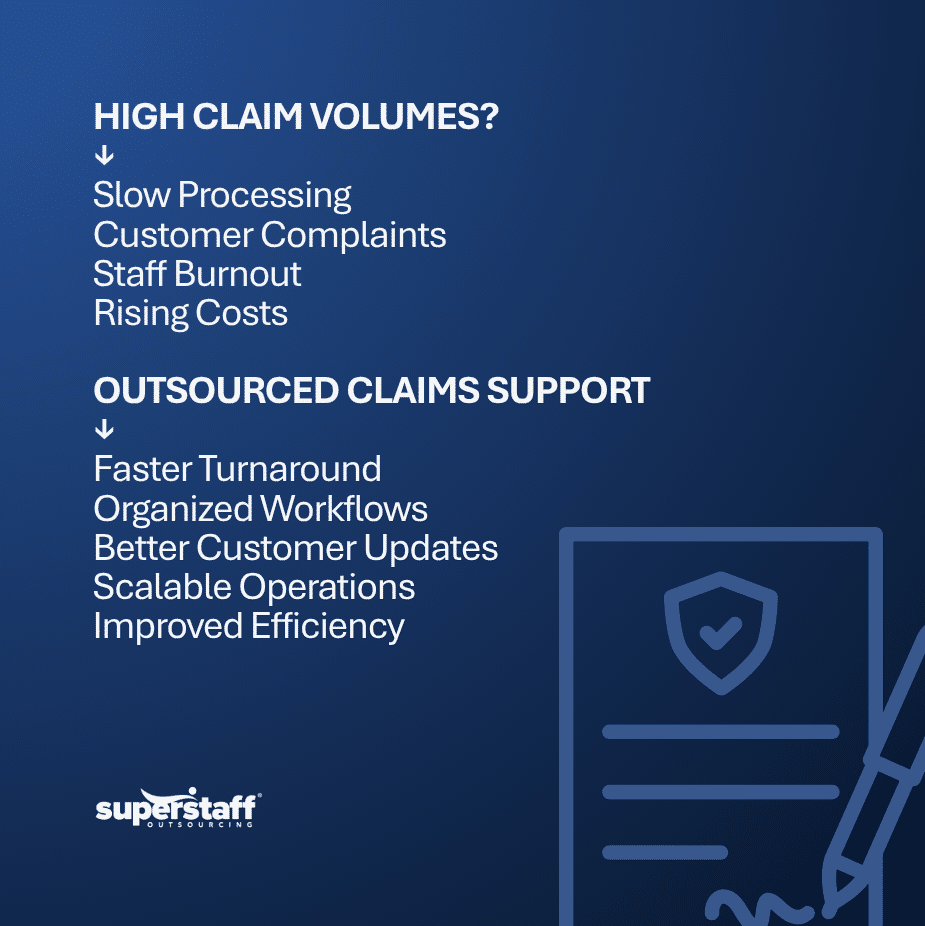
Why High Claim Volumes Create Operational Problems
Large claim volumes affect daily operations quickly. Even well-staffed insurance companies can experience delays when claims arrive all at once. Strong insurance customer service becomes especially important during these periods because policyholders need clear information about their claims.
1. Slower Claims Processing Times
Claims require document verification, policy checking, data entry, and customer communication. When workloads increase, employees may struggle to complete tasks on time. Consequently, processing delays can affect customer satisfaction and company reputation.
Long wait times also increase follow-up inquiries. Customers often call multiple times for updates, which creates additional pressure for support teams.
2. Higher Risk of Errors
Heavy workloads often lead to mistakes in claim documentation and approvals. Missing details, duplicate records, and incorrect data entries can slow the process further. Therefore, insurers need a system that supports both speed and accuracy.
Errors may also create compliance concerns. Insurance providers must maintain proper documentation according to applicable regulatory and internal requirements.
3. Employee Burnout and Turnover
High-pressure environments can exhaust employees over time. Claims teams may work longer hours just to meet deadlines. However, constant pressure can reduce productivity and morale.
When employees leave, companies spend additional time and money on recruitment and training. This cycle can affect service consistency across the organization.
4. Increased Customer Complaints
Policyholders expect fast and clear communication during the claims process. Delays and unanswered inquiries often lead to complaints and negative reviews. As a result, customer trust may decline.
Using additional customer service outsourcing support can give insurers more capacity to handle calls, emails, and other policyholder inquiries when claim volumes increase.
5. Rising Operational Costs
Hiring temporary staff during claim surges can become expensive. Companies must also invest in training, equipment, and management support. Because of this, many insurers look for cost-effective ways to scale operations quickly.
How Outsourcing Supports Claims Management
Many providers outsource insurance claims processing to improve efficiency while maintaining service quality. Outsourcing partners can provide additional capacity without requiring insurers to expand every internal function.
1. Access to Skilled Claims Professionals
Outsourcing companies can provide professionals trained to follow insurance workflows, documentation requirements, and customer service processes. Therefore, insurers can expand operations without handling every recruitment and onboarding requirement internally.
Experienced teams can also adapt to changing claim volumes. This flexibility helps companies maintain productivity during peak periods.
2. Faster Turnaround Times
Dedicated claims support teams can handle specific parts of the claims workflow, including document checks, data updates, and administrative reviews.
This added capacity can reduce backlogs and support faster turnaround times. In addition, more organized back-office outsourcing can reduce the amount of repetitive administrative work handled by internal employees.
3. Scalable Support During Peak Seasons
Claim volumes often change throughout the year. Natural disasters, storms, and accidents can increase workloads without warning. Outsourcing allows companies to scale support based on demand.
Instead of hiring full-time employees for temporary spikes, insurers can adjust outsourced staffing levels when needed. This setup improves flexibility and cost control.
4. Better Customer Communication
Claims processing involves regular communication with policyholders, healthcare providers, repair shops, and other parties. Outsourced customer support teams can manage calls, emails, and routine status updates.
Clear communication helps reduce confusion and repeated inquiries. Moreover, customers receive information about where their claims stand and what steps may come next.
5. Reduced Administrative Burden
Insurance teams often spend large amounts of time on repetitive tasks. Data entry, document organization, and verification processes can consume valuable resources.
Outsourcing these functions allows internal employees to spend more time on complex cases, risk analysis, and other responsibilities that require their direct expertise.
Key Tasks Companies Can Outsource
Insurance providers can outsource several claims-related functions depending on their operational needs. Some companies outsource broad claims support, while others delegate only selected administrative processes.
Commonly Outsourced Claims Tasks
- Claims intake and registration
- Policy verification support
- Data entry and documentation
- Claims status updates
- Customer support services
- Billing and payment processing support
- Fraud review assistance
- Appeals and follow-up coordination
These services can improve workflow management while maintaining organized records and communication. Companies can also use insurance back-office support to manage administrative work that supports the broader claims process.
What to Look for in an Outsourcing Partner
Choosing the right outsourcing provider plays a major role in long-term success. Insurance companies should evaluate providers carefully before signing agreements.
1. Industry Experience
Insurance workflows require specialized knowledge. Providers with experience in insurance support are more familiar with claim documentation, policyholder communication, and industry-specific processes.
Experienced teams can also adapt faster to company systems and established workflows.
2. Strong Data Security Practices
Insurance companies manage sensitive customer information every day. Therefore, outsourcing providers must follow appropriate security procedures to protect data.
Before partnering with a provider, insurers should review its security policies, access controls, incident procedures, and applicable compliance practices. The Federal Trade Commission’s data security guidance also provides businesses with information on protecting sensitive customer information.
3. Flexible Staffing Solutions
Claim volumes can change quickly. A reliable outsourcing company should offer scalable staffing support that matches business needs.
Flexible solutions help insurers control costs while maintaining service coverage during busy seasons.
4. Clear Communication Channels
Strong communication improves workflow coordination between internal and outsourced teams. Providers should offer regular updates, reporting systems, and dedicated support contacts.
Good communication also helps resolve issues faster and improves operational transparency.
5. Performance Monitoring and Reporting
Insurance companies need visibility into outsourced operations. Providers should track productivity, turnaround times, and quality metrics consistently.
Structured quality assurance can also help insurers review customer interactions, identify process gaps, and maintain established service standards.
Long-Term Benefits for Insurance Companies
Companies that outsource insurance claims processing can gain operational advantages beyond managing temporary claim surges.
Improved Customer Satisfaction
Faster claims handling and clearer communication can improve the policyholder experience. Customers are less likely to feel uncertain when they receive timely and accurate updates about their claims.
Stronger Operational Efficiency
Outsourcing helps companies maintain organized workflows and balanced workloads. Internal teams can focus on strategic priorities while external teams manage selected repetitive tasks.
Better Cost Management
Outsourced support can reduce some recruitment, training, and infrastructure requirements. Companies can also scale operations based on demand instead of maintaining the same staffing level throughout the year.
Increased Business Flexibility
Insurance providers must respond quickly to market changes and unexpected events. Outsourcing gives companies additional flexibility to adjust staffing and resources when workloads change.
Faster Claims Support Starts With The Right Partner
Handling high claim volumes requires speed, organization, and reliable customer support. Insurance companies that improve their claims operations can reduce delays, strengthen customer relationships, and support long-term growth.
SuperStaff provides scalable outsourcing solutions that can support insurers with customer communication, documentation, and back-office processes. Our teams work with businesses to add operational capacity while supporting established workflows and service standards.
Reach out to SuperStaff today to learn how outsource insurance claims processing can support your business goals.