Growing an online store takes more than selling products. Business owners also need to manage customer support, order processing, inventory updates, returns, product listings, and many other daily tasks. As sales increase, these responsibilities can quickly consume valuable time and resources.
That is why many companies are turning to e-commerce operations outsourcing. Instead of building large in-house teams, store owners can delegate operational tasks to experienced professionals who can handle them efficiently. As a result, businesses can focus on growth, customer acquisition, and long-term planning.
For growing stores, ecommerce operations outsourcing offers several advantages. It can reduce operational pressure, improve efficiency, and support a better customer experience. At the same time, it gives businesses more flexibility as order volumes and customer demands change.
Why More Ecommerce Businesses Are Outsourcing Operations
As online shopping continues to grow, ecommerce companies face increasing pressure to provide fast service and maintain customer satisfaction. According to the U.S. Census Bureau, ecommerce remains a significant part of total retail sales in the United States. As online demand grows, businesses need operational systems that can keep up with higher order and support volumes.
1. Lower Operating Costs
Hiring full-time employees requires salaries, benefits, equipment, training, and management resources. These expenses can quickly add up, especially for growing businesses.
With ecommerce operations outsourcing, companies can access additional support without building every operational function internally. Businesses can then direct resources toward other priorities, such as marketing, product development, and expansion.
2. Access to Skilled Professionals
Ecommerce operations involve specialized tasks that require experience and knowledge. These include inventory management, customer support, order processing, marketplace management, and administrative work.
Working with an experienced e-commerce outsourcing provider gives businesses access to professionals familiar with these processes. This can reduce the time required to recruit and train a large internal support team.
3. Faster Scalability
Growth often creates operational challenges. More orders mean more customer inquiries, inventory updates, shipment tracking requests, and fulfillment requirements.
By outsourcing operations, businesses can adjust support capacity as demand changes. This flexibility is especially useful during holiday sales, promotions, product launches, and other high-volume periods.
4. Improved Productivity
Store owners and internal employees can spend significant time handling repetitive administrative tasks. Consequently, they have less time for activities such as product planning, marketing, and business development.
Outsourcing allows businesses to delegate defined processes to dedicated teams. Internal employees can then focus on responsibilities that require their direct knowledge and attention.
5. Better Resource Allocation
Every growing business has limited time, people, and budget. Therefore, companies need to decide which functions should stay in-house and which ones can be supported externally.
Moving selected operational tasks to an outsourcing partner can give internal teams more capacity for product development, customer acquisition, and other business priorities.
Key Areas That Can Be Outsourced
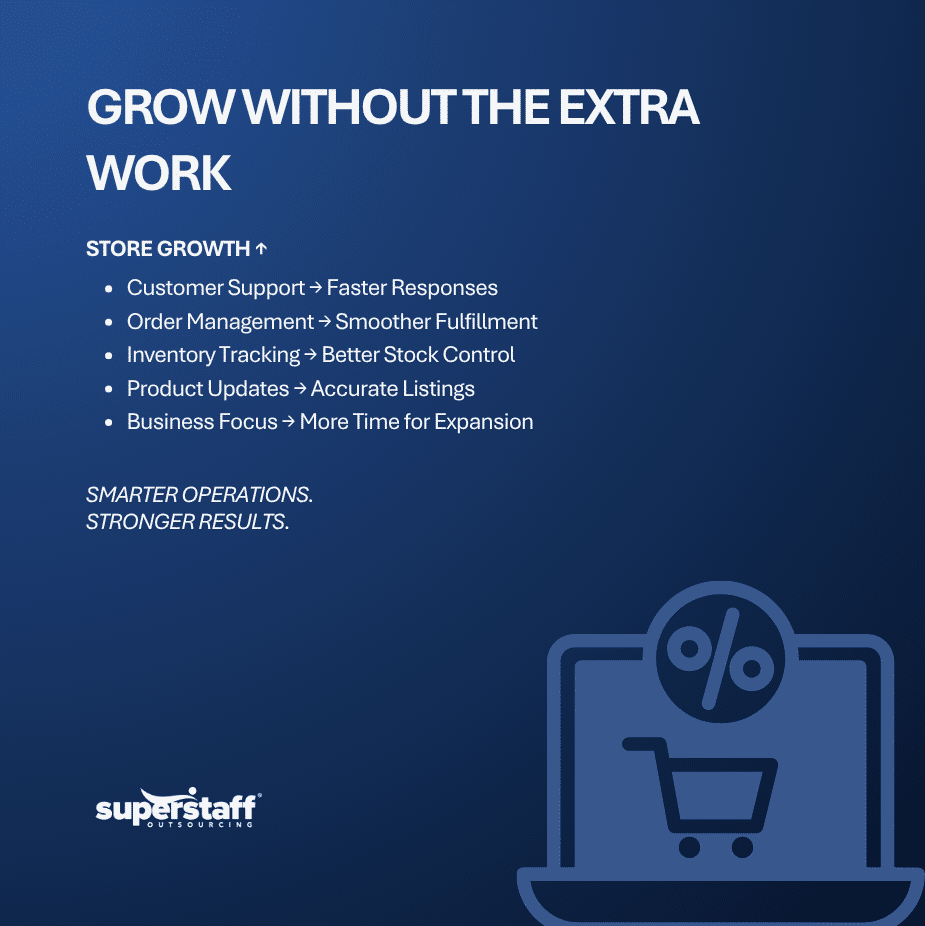
Not every ecommerce task needs to stay in-house. Many repetitive and high-volume operational functions can be managed by trained external teams.
1. Customer Support Services
Customers expect quick responses when they have questions about products, orders, payments, deliveries, or returns. Delayed support can lead to frustration and affect the overall shopping experience.
Businesses can use e-commerce customer service outsourcing to support customers through channels such as email, live chat, and phone. Additional support capacity can also help stores manage sudden increases in inquiries.
2. Order Processing
Order management requires accuracy and timely updates. Mistakes involving addresses, order details, payment information, or fulfillment instructions can create problems for both customers and operations teams.
Outsourced teams can assist with order entry, system updates, shipment monitoring, and coordination with relevant fulfillment teams. Clear procedures and quality checks are important to maintain accuracy throughout the process.
3. Product Listing Management
Accurate product information helps customers understand what they are buying. However, maintaining hundreds or thousands of listings can require significant time.
Dedicated support teams can update product descriptions, specifications, images, prices, categories, and other listing information. They can also follow defined marketplace requirements when maintaining listings across different sales channels.
4. Inventory Monitoring
Inventory problems can result in stockouts, overselling, delayed orders, and dissatisfied customers. Businesses need current inventory information to make better purchasing and fulfillment decisions.
Outsourced teams can monitor inventory records, update stock information, flag low inventory levels, and support routine reporting. Internal teams can then use this information when making replenishment and purchasing decisions.
5. Returns and Refund Processing
Returns are a normal part of ecommerce operations. However, processing requests, checking order details, updating systems, and communicating with customers can create additional administrative work.
Using back-office outsourcing services can give businesses additional support for repetitive processes such as data management, documentation, and other administrative tasks connected with ecommerce operations.
Long-Term Advantages for Growing Stores
The benefits of outsourcing can extend beyond daily task management. When properly planned, outsourcing can give growing ecommerce businesses more flexibility as their operational needs change.
1. Greater Business Flexibility
Market conditions and customer demand can change quickly. Seasonal sales, promotions, and product launches can create sudden increases in orders and support requests.
Outsourcing gives businesses another way to adjust operational capacity without constantly restructuring their internal teams.
2. Stronger Customer Experience
Customer satisfaction depends on several parts of e-commerce operations. Accurate orders, timely communication, clear return processes, and responsive support all contribute to the experience.
Dedicated support teams can help businesses maintain these processes as transaction volumes increase.
3. Reduced Management Burden
Managing a larger internal operational team involves recruitment, scheduling, training, supervision, and performance monitoring.
Ecommerce operations outsourcing can shift some of these responsibilities to an external provider. Internal managers can then spend more time overseeing business priorities and overall performance.
4. Increased Focus on Revenue Growth
Marketing, product expansion, partnerships, and customer acquisition require consistent attention.
When routine operational work is assigned to dedicated support teams, business leaders have more time to focus on these areas while still maintaining oversight of outsourced processes.
5. More Consistent Operations During Growth
Rapid growth can put pressure on processes that worked well when order volumes were lower. Businesses may suddenly need more people to handle customer inquiries, product updates, orders, and administrative work.
Ecommerce operations outsourcing provides additional capacity that can expand alongside business requirements. With clear workflows and performance standards, external teams can support consistent operations as the store grows.
Build Smarter Ecommerce Operations for Growth
As online stores expand, operational demands become more complex. However, businesses do not need to manage every task internally. Ecommerce operations outsourcing provides access to additional talent and scalable support for customer service, order processing, inventory monitoring, product listing management, and other routine functions.
SuperStaff works with ecommerce businesses that need additional operational support as order volumes and customer demands grow. The right outsourcing setup can reduce pressure on internal teams while keeping important daily processes organized.
Ready to strengthen your ecommerce operations? Contact SuperStaff to discuss your outsourcing needs and learn how additional operational support can fit your growth plans.