As businesses grow, daily operations become harder to manage. Customer inquiries increase, administrative tasks take longer, and internal teams may struggle to keep up with their responsibilities. Hiring additional employees is one option, but it also brings recruitment, training, and operating costs. This is why many companies begin asking: what is an outsourcing service provider, and how can one help manage growing workloads?
An outsourcing service provider is an external company that handles specific business functions on behalf of another organization. These services can include customer support, data entry, technical assistance, accounting, and other administrative tasks. With the right provider, businesses can improve task management, maintain service quality, and give internal employees more time to focus on their main responsibilities.
Understanding What an Outsourcing Service Provider Offers
An outsourcing service provider works with businesses to manage selected tasks or entire business processes. Instead of handling every function internally, companies delegate specific responsibilities to external professionals who follow agreed procedures, timelines, and performance standards.
1. What Is an Outsourcing Service Provider?
An outsourcing service provider is a third-party company hired to perform certain business activities. The provider supplies the workforce, skills, and operational support needed to complete assigned tasks.
For example, a company may outsource customer service to manage incoming inquiries or assign data entry work to an external team to maintain business records.
2. Common Services Offered
Outsourcing providers support different business functions depending on their expertise. Common services include:
- Customer service and call center operations
- Data entry and data processing
- Administrative and back-office support
- Technical support and helpdesk assistance
- Accounting and bookkeeping
- Recruitment and staffing support
- E-commerce and order management
3. Why Businesses Use Outsourcing Providers
Companies often turn to outsourcing when internal teams have limited time, specialized skills, or resources. External support helps manage workloads without requiring the business to build another department from the ground up.
4. How Outsourcing Fits Into Daily Operations
Outsourced employees handle assigned responsibilities using the client’s approved tools, procedures, and communication channels. Depending on the agreement, the provider may also manage supervision, training, quality checks, and performance reporting.
5. How It Supports Business Growth
Delegating routine activities allows internal employees to focus on planning, sales, product development, and other responsibilities that require their direct involvement.
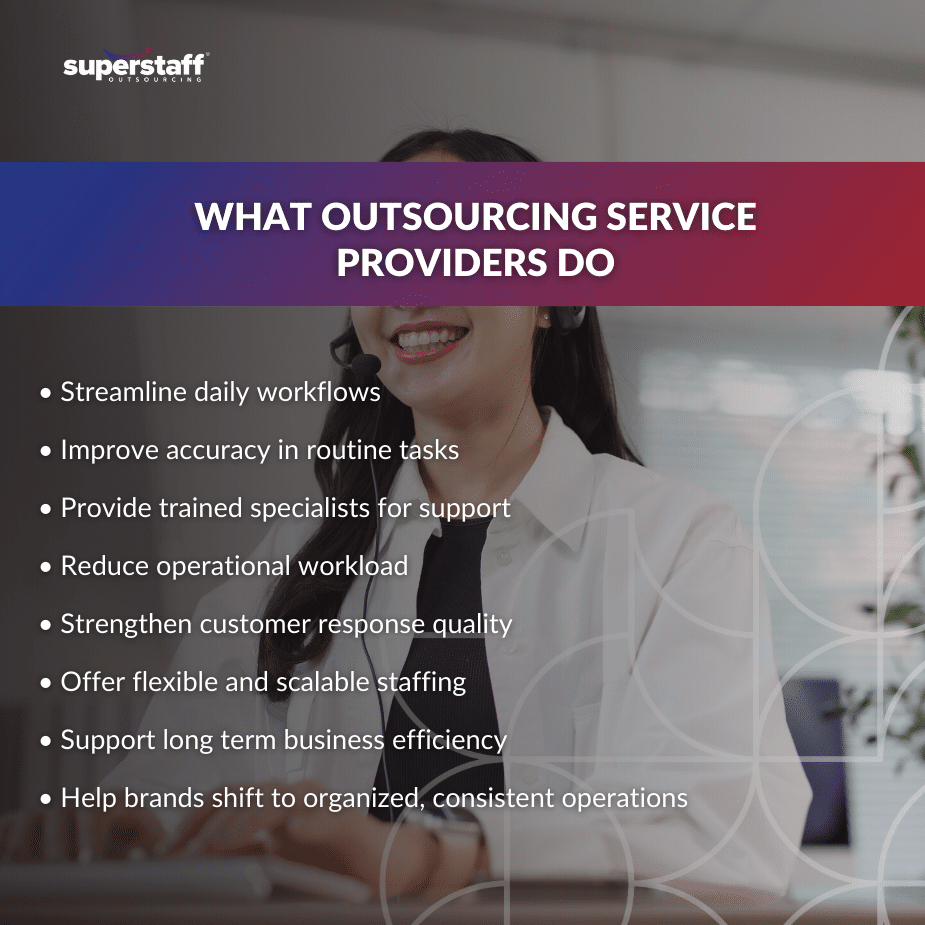
The range of available services also allows companies to choose between specialized assistance and broader operations outsourcing solutions based on their workload and business priorities.
How Outsourcing Works in Business Operations
Understanding what an outsourcing service provider does also means knowing how the arrangement works. A successful partnership requires clear responsibilities, proper coordination, and regular performance reviews.
1. Identify Business Needs
Companies begin by reviewing their existing operations. They identify tasks that consume too much time, create delays, or require skills that are not readily available internally.
2. Assign Specific Responsibilities
Once the required support is clear, the business decides which activities to delegate. These responsibilities should have defined tasks, expected outputs, and deadlines.
3. Align Processes and Systems
The provider receives the necessary instructions, system access, and company guidelines. Both teams should agree on communication methods and procedures before work begins.
4. Monitor Quality and Accuracy
Managers review completed tasks and measure results against agreed standards. Regular reports and quality checks help identify problems before they affect daily operations.
5. Adjust Resources When Needed
As business requirements change, companies can discuss staffing adjustments, additional responsibilities, or changes to service coverage with their provider.
This approach helps businesses maintain control over outsourced activities while allowing external teams to manage their assigned responsibilities.
Why Brands Switch to Outsourcing
Businesses do not always outsource because their existing teams are underperforming. Sometimes, their operations simply grow beyond what their current workforce can handle. Outsourcing provides another way to manage these changes without immediately expanding internal departments.
1. More Time for Core Responsibilities
Routine administrative and customer service tasks can take employees away from higher-priority work. Outsourcing gives internal teams more time to focus on business goals.
2. Better Cost Management
Recruiting, onboarding, salaries, equipment, and employee benefits add to operating expenses. Working with an outsourcing provider offers another way to manage staffing and operational costs.
3. Access to Specialized Skills
Some business functions require specific knowledge or experience. Outsourcing allows companies to work with trained professionals without having to recruit every specialist internally.
4. Improved Service Delivery
Dedicated external teams can manage customer inquiries, administrative requests, and other assigned activities using established workflows.
5. Flexible Workforce Support
Businesses can adjust their outsourcing arrangements as workloads increase or decrease. This is useful for companies experiencing seasonal demand or entering new markets.
These advantages explain why some brands consider outsourcing when their existing business structure can no longer support their operational requirements.
Core Benefits of Working With an Outsourcing Provider
The benefits of outsourcing go beyond reducing the workload of internal employees. A well-managed partnership can improve how different departments handle daily responsibilities and support long-term business goals.
1. Better Use of Internal Resources
Employees can spend more time on tasks that require their expertise instead of handling repetitive activities.
2. Access to Trained Professionals
Businesses gain access to workers with relevant experience in customer service, administration, technical support, and other functions.
3. More Consistent Work Output
Documented procedures and regular quality checks help maintain accuracy and predictable turnaround times.
4. Support During Busy Periods
External teams can help manage additional work during seasonal peaks, product launches, and periods of increased customer demand.
5. Easier Business Expansion
Companies can add support functions as their needs change without having to establish every department internally.
However, outsourcing does not automatically guarantee better results. Businesses still need to set clear expectations, monitor performance, and maintain regular communication with their providers.
How to Select the Right Outsourcing Service Provider
Choosing an outsourcing partner requires more than comparing service fees. Businesses should evaluate the provider’s experience, workforce, security practices, and ability to meet their operational requirements.
1. Check Industry Experience
Look for a provider that understands your industry and has experience handling similar tasks. This can reduce the time needed to explain processes and establish workflows.
2. Review Communication Practices
The provider should have clear channels for updates, progress reports, and urgent concerns. Regular communication helps both teams address issues before they affect service delivery.
3. Evaluate Data Security
Check how the provider handles confidential information, controls system access, and protects business records. Review relevant security certifications, policies, and contractual responsibilities before sharing sensitive data.
The National Privacy Commission’s guidance on outsourcing agreements explains the importance of proper safeguards when personal information is handled by an external service provider.
4. Understand Training Procedures
Ask how employees are recruited, trained, and evaluated. The provider should have a clear process for preparing its workforce to handle your company’s specific requirements.
5. Examine Performance Reports
Request sample reporting formats and ask which key performance indicators (KPIs) the provider tracks. These may include accuracy, turnaround time, productivity, customer satisfaction, and resolution rates.
A careful evaluation helps businesses avoid choosing a provider based on price alone. It also creates a stronger foundation for a working relationship that can adapt as business requirements change.
One useful consideration is how the provider manages its workforce and maintains service quality across different accounts. This is covered in what to consider before choosing an outsourcing provider.
Why Outsourcing Supports Long-Term Business Growth
Outsourcing can become a long-term part of a company’s operating structure when the arrangement meets its actual business needs. It allows organizations to distribute responsibilities more effectively while keeping internal resources focused on important priorities.
1. More Time for Business Planning
With routine tasks assigned to external teams, managers can give more attention to business development, market research, and strategic decisions.
2. Better Resource Allocation
Companies can direct their budget and workforce toward departments that need more internal attention.
3. Improved Customer Support
Dedicated customer service teams can help manage inquiries, maintain response standards, and address customer concerns.
4. Flexible Operational Capacity
Businesses can adjust their support arrangements when entering new markets, introducing products, or handling higher workloads.
5. Stronger Process Management
Clear responsibilities, documented workflows, and performance reviews help maintain accountability between internal and outsourced teams.
These improvements depend on selecting the right functions to outsource and maintaining an active working relationship with the provider.