B2B buyers expect fast websites, accurate product information, and convenient ordering processes. As digital purchasing becomes a regular part of business operations, many companies are reviewing whether their existing e-commerce platforms can keep up. One option gaining attention is headless commerce for B2B, an approach that separates the customer-facing website from the back-end system.
This structure gives businesses more control over website design, integrations, and digital experiences. However, moving to a headless setup requires technical resources, planning, and a clear understanding of long-term costs. Before making the investment, companies need to know where this approach provides value, what challenges it can solve, and whether it fits their operations.
What Headless Commerce for B2B Means
Headless commerce for B2B separates the front end, which buyers interact with, from the back end, which manages products, orders, inventory, and other business functions. Both sides communicate through APIs, allowing developers to update the website without making major changes to the underlying commerce system.
1. How the Structure Works
Traditional e-commerce platforms often connect website design and back-end functions within one system. A headless setup separates these components, allowing development teams to update the storefront while keeping existing business processes in place.
2. The Role of MACH Architecture in E-Commerce
MACH architecture supports this approach through four principles: microservices, API-first development, cloud-native technology, and headless design. These principles allow businesses to use separate tools for different functions instead of depending on one large platform. The MACH Alliance’s explanation of MACH principles provides further details on how these components support flexible technology systems.
3. Support for Complex B2B Requirements
B2B companies often manage large product catalogs, negotiated prices, bulk orders, and customer-specific purchasing rules. A flexible front end allows businesses to create interfaces that accommodate these requirements and make product selection easier.
4. Integration Across Business Systems
Headless commerce for B2B can connect with enterprise resource planning (ERP), customer relationship management (CRM), and product information management (PIM) systems. These connections help transfer information between departments and reduce the need for repeated manual data entry.
5. Greater Control Over Digital Operations
Businesses can manage different storefronts, sales channels, and customer experiences through a shared back-end system. This makes it easier to introduce new digital features without rebuilding the entire platform.
Why Traditional B2B E-Commerce Platforms Can Fall Short
Not every traditional platform can support the changing needs of B2B buyers. Some systems have limitations that affect website performance, integrations, and the ability to customize purchasing experiences.
1. Slow Page Performance
Heavy themes, unnecessary scripts, and large amounts of content can affect loading times. When buyers have to wait for product pages to load, they may leave before completing their orders.
2. Restricted Design Options
Some platforms rely on fixed templates that limit how businesses can organize product pages and navigation. This can make it difficult to create purchasing experiences that match specific B2B requirements.
3. Complicated System Integrations
Connecting older platforms with inventory, accounting, and customer management tools can require additional development work. Poorly managed integrations may also create inconsistent product and order information.
4. Limited Personalization
B2B buyers often expect account-specific pricing, product availability, and purchasing options. Platforms with limited customization features may struggle to support these requirements.
5. Difficulty Supporting Business Growth
As companies add products, markets, and sales channels, their existing platforms may require significant updates. Systems that cannot handle these changes efficiently can create additional work for development and IT teams.
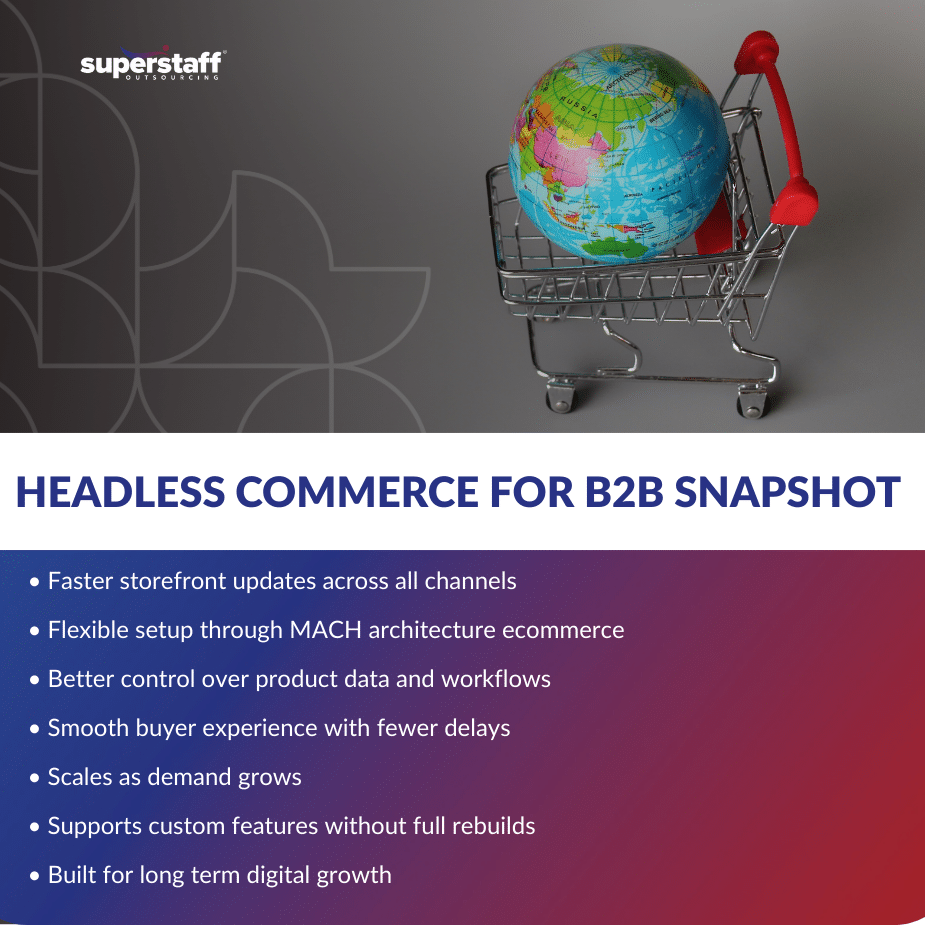
What Performance Data Should Businesses Measure?
The value of headless commerce for B2B should be assessed through measurable business outcomes rather than general claims about speed or conversion improvements. Companies need to compare their current platform performance with the results achieved after implementation.
1. Website Loading Speed
Page loading time is one of the first areas to monitor. Businesses can use website performance tools to measure how quickly product pages, search results, and checkout pages respond. Improvements should be checked across desktop and mobile devices.
2. Conversion and Order Completion
Companies should monitor the percentage of visitors who complete purchases, submit quote requests, or proceed through other important buying steps. Comparing these figures before and after implementation helps determine whether the new experience reduces purchasing difficulties.
3. Development and Update Time
A headless setup may allow development teams to update the front end without changing the back end. Businesses can track how long it takes to release new features, fix website issues, and introduce changes to existing pages.
4. Website Reliability
System uptime, page errors, and checkout interruptions provide useful information about platform stability. These measurements help determine whether the new architecture supports consistent website operations.
5. Customer Engagement
Businesses can review product searches, repeat purchases, abandoned carts, and customer feedback. These figures help identify whether website improvements are making the buying process easier.
How Headless Commerce for B2B Supports Daily Operations
B2B transactions often involve more steps than standard online purchases. Buyers may need to request quotations, check product availability, confirm delivery schedules, and follow specific approval procedures.
1. Managing Large Product Catalogs
Custom front ends allow businesses to organize thousands of products using clear categories, filters, and product specifications. This helps buyers find the items they need without going through unnecessary pages.
2. Displaying Customer-Specific Pricing
Headless commerce for B2B can support customized pricing experiences when connected to the appropriate back-end systems. Businesses can display negotiated rates, account-based discounts, and other purchasing conditions.
3. Supporting Order Processing
Connecting the storefront with inventory and order management systems helps keep information consistent. These processes also require clear coordination between customer service, fulfillment, and inventory teams. An organized e-commerce workflow helps businesses manage these activities and maintain accurate order information.
4. Maintaining Consistency Across Channels
Companies may sell through websites, mobile applications, sales portals, and other digital channels. A shared back-end system can help maintain consistent product information and pricing across these touchpoints.
5. Reducing Manual Work
API connections can transfer information between different systems automatically. This reduces repetitive tasks, although businesses still need proper integration testing and data management procedures.
Key Benefits B2B Companies Can Gain
The advantages of headless commerce for B2B depend on how well the technology matches a company’s requirements. For businesses with complex digital operations, several improvements may justify the investment.
1. Better Website Experiences
Companies gain more freedom to design pages around their buyers’ needs. They can improve navigation, organize product details, and adjust layouts for different devices.
2. More Flexible Integrations
API-based connections allow businesses to link different applications. They can also replace or upgrade individual components without necessarily changing the entire commerce platform.
3. Easier Expansion
Companies planning to enter new markets or introduce additional storefronts can use the same back-end infrastructure while creating different customer-facing experiences. Stronger internal processes also matter during expansion. A well-managed e-commerce back-office support team can help online businesses handle increasing orders, inventory activities, and administrative requirements.
4. Improved System Management
Separating the front end and back end allows development teams to work on different components independently. This can make updates easier to manage when responsibilities and technical requirements are clearly defined.
5. Greater Control Over Buyer Journeys
Businesses can create purchasing experiences that reflect their customers’ needs, from product discovery to account management and checkout.
How Headless Commerce Can Improve the B2B Buying Experience
Technology decisions should also consider the people who use the platform. A system may have strong technical features, but it still needs to make purchasing easier for customers.
1. More Relevant Navigation
Custom storefronts can organize products based on buyer categories, industry requirements, and purchasing habits. This helps customers locate relevant items more quickly.
2. Clearer Product Information
A well-integrated system can display product descriptions, specifications, stock information, and pricing. Accurate information helps buyers make purchasing decisions with fewer delays.
3. Simpler Repeat Ordering
B2B customers often purchase the same products regularly. Features such as saved orders, account dashboards, and quick reorder options can reduce the time spent on routine purchases.
4. Better Mobile Access
A flexible front end allows businesses to create mobile-friendly purchasing experiences. This is useful for buyers who need to check product information or submit orders while away from their offices.
5. Convenient Self-Service Options
Buyers can manage account details, review order histories, and check purchasing information without contacting sales representatives for every request. Businesses that need additional help with customer inquiries and order coordination can also consider e-commerce outsourcing services.
Costs and Challenges to Consider Before Investing
Despite its advantages, headless commerce for B2B is not automatically the best option for every company. Businesses need to consider the financial and technical requirements before making the transition.
1. Development Expenses
Building a custom front end requires developers with the right technical skills. Companies may also need additional tools, API services, and integration support.
2. Ongoing Maintenance
Separate front-end and back-end components require regular monitoring, updates, and testing. Businesses must have the resources to manage these responsibilities.
3. Integration Complexity
Connecting multiple applications can create technical challenges, especially when older systems have limited API support. Companies should review existing infrastructure before selecting a new architecture.
4. Staff and Technical Readiness
Internal teams need to understand how the new system works. Businesses without enough technical staff may need external development partners or additional training.
5. Data Migration
Moving product catalogs, customer accounts, pricing rules, and order records requires careful preparation. Errors during migration can affect purchasing activities and business records.
Preparing for a Successful Headless Commerce Transition
A structured implementation plan helps companies manage technical requirements and avoid unnecessary disruptions.
1. Define Business Objectives
Identify the specific problems the new system should address. These may include slow website performance, limited customization, complicated integrations, or difficulties managing multiple storefronts.
2. Review Existing Platform Limitations
Evaluate the current website, back-end systems, and purchasing processes. This helps determine whether a headless setup is necessary or if improvements to the existing platform would be enough.
3. Select Compatible Technology
Choose tools that support the company’s product catalog, pricing structure, inventory requirements, and integration needs. Compatibility should be a priority when evaluating different platforms.
4. Implement Changes in Phases
A gradual rollout allows teams to test individual components before moving the entire operation. Starting with selected pages or functions can also reduce disruption to existing customers.
5. Monitor Results After Launch
Track website speed, order completion, system reliability, and customer feedback. Regular reviews help businesses identify problems and determine whether the investment is delivering the expected results.
Make a More Informed Investment in B2B Commerce
Headless commerce for B2B can be a worthwhile investment for companies that need greater control over their websites, integrations, and digital purchasing experiences. However, the decision should depend on actual business requirements, available resources, and the expected return. Businesses should compare the cost of implementation with the improvements they want to achieve before changing their existing systems.
A successful digital commerce setup also depends on the people managing daily operations. From customer inquiries to order processing, businesses need reliable processes and enough support to manage growing demands. Companies reviewing their e-commerce operations can contact SuperStaff to discuss their business requirements and operational support needs.