Running a business involves more than managing employees and making decisions. Companies also need to handle customer inquiries, administrative work, financial records, and other daily responsibilities. While business schools explain the basic concepts behind outsourcing, actual business operations often reveal challenges that go beyond textbook definitions.
The outsourcing definition business owners use today focuses on more than reducing expenses. It covers access to skilled professionals, better workload management, flexible staffing, and support for essential business functions. Understanding how outsourcing works in real situations helps companies decide which tasks to delegate, how to manage external teams, and when additional support makes sense.
A Clearer View of Modern Outsourcing
Outsourcing refers to assigning specific business functions or processes to an external provider instead of managing everything internally. The arrangement can cover individual tasks, specialized roles, or entire operational functions, depending on the company’s requirements.
1. A Practical Meaning of Outsourcing
The outsourcing definition business leaders apply involves working with an external provider that manages agreed responsibilities under specific performance expectations. These arrangements can cover customer service, data entry, bookkeeping, technical support, and other business activities.
2. Why Textbook Definitions Are Incomplete
Business schools often introduce outsourcing through cost reduction and resource allocation. However, actual business decisions involve other factors, including access to specialized skills, staffing flexibility, service quality, and operational continuity.
The Philippine Statistics Authority’s definition of Business Process Outsourcing also highlights the role of external providers in managing selected business processes based on measurable performance requirements.
3. What Companies Outsource Today
Businesses can delegate different functions depending on their needs. Common examples include customer support, administrative assistance, accounting, recruitment, data processing, and IT support. These responsibilities allow internal employees to spend more time on activities that require their direct involvement.
4. Why Small Businesses Benefit
Business process outsourcing for small business operations gives smaller companies access to additional personnel without having to build every department internally. This can be useful for startups and growing businesses that need specialized assistance but have limited hiring resources.
5. A More Flexible Business Structure
Outsourcing allows companies to adjust their workforce based on demand. A retailer may need additional customer service agents during the holiday season, while another company may require temporary data entry support during a large project.
How Outsourcing Works in Real Business Operations
A successful outsourcing arrangement requires clear responsibilities, organized workflows, and regular communication. Modern outsourcing strategies for small and medium businesses focus on making external teams part of existing operations rather than treating them as completely separate units.
1. Identifying Tasks to Outsource
The process starts by reviewing which responsibilities consume too much time or require skills that the internal team does not have. Businesses should prioritize repetitive, specialized, or time-consuming tasks that can be managed through clear procedures.
2. Defining Responsibilities
Once the tasks are identified, the company and provider agree on the scope of work. This includes job responsibilities, expected output, schedules, reporting requirements, and performance standards.
3. Establishing Workflows
External employees need access to the right instructions, systems, and communication channels. Documented procedures help them understand how tasks should be completed and when issues should be escalated.
4. Managing Daily Activities
The outsourced team handles its assigned responsibilities according to the agreed workflow. Depending on the arrangement, the provider may also oversee attendance, scheduling, supervision, and daily performance.
5. Monitoring Results
Regular reporting helps businesses review completed tasks, pending work, accuracy, and productivity. Companies can use these results to identify problems and adjust workflows when needed. A structured operations outsourcing approach also emphasizes defined processes, performance tracking, and regular oversight.
Why Companies Rely on Outsourcing
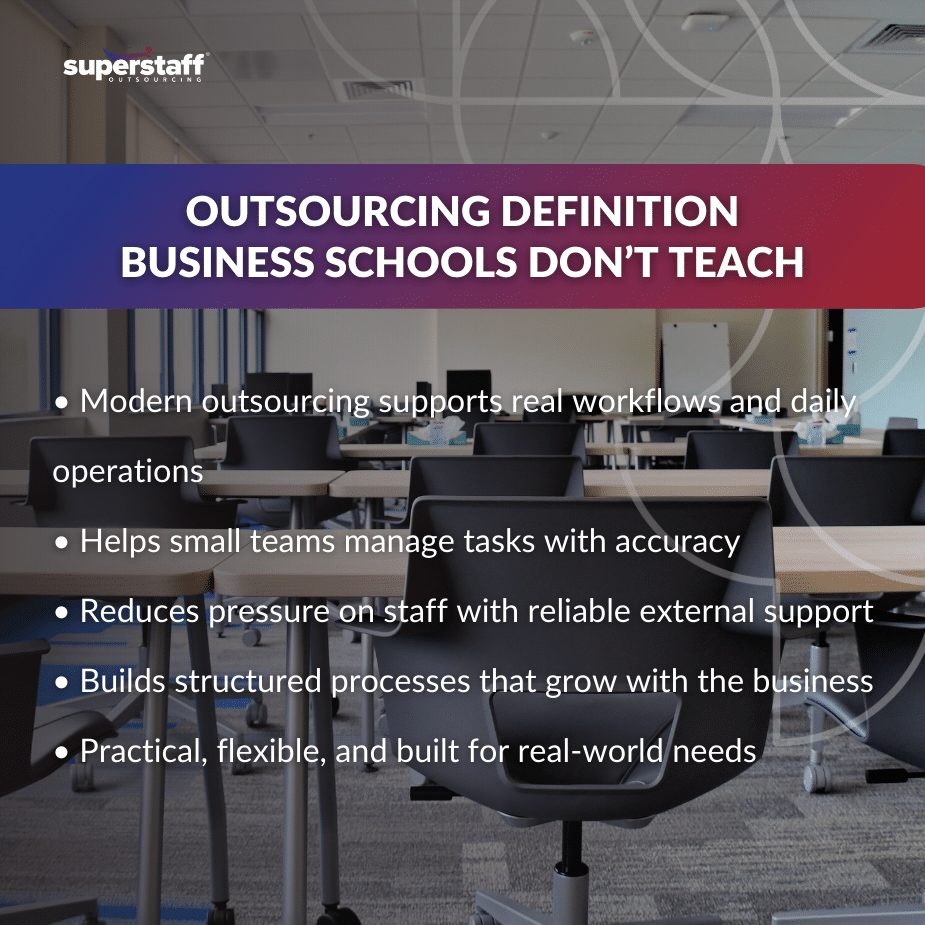
Businesses use outsourcing for different reasons. Some need additional employees, while others want to improve existing processes or access expertise that is difficult to find internally.
1. Access to Trained Specialists
External providers can supply professionals with experience in specific functions. This is useful for companies that need technical support, customer service, bookkeeping, recruitment, or other specialized roles.
2. More Time for Core Activities
When routine responsibilities are handled externally, internal employees can focus on product development, business planning, sales, and other priorities.
3. Better Workload Distribution
Outsourcing helps prevent internal teams from carrying too many responsibilities. Assigning selected functions to dedicated personnel can improve task ownership and reduce delays.
4. More Predictable Staffing Expenses
Recruitment involves advertising, screening, onboarding, salaries, benefits, and other employment expenses. Outsourcing offers another staffing arrangement that may reduce some of these costs, depending on the services and contract.
5. Support During Business Expansion
Growing companies may need additional employees before they are ready to establish new departments. Following practical outsourcing tips for small businesses can help owners identify suitable tasks, select providers, and prepare for future staffing needs.
The Benefits Companies Can Gain From Outsourcing
The right outsourcing arrangement can improve daily operations while giving businesses more control over how they use their internal resources. However, results depend on choosing suitable functions and managing the partnership properly.
1. Improved Task Accuracy
Trained specialists who follow documented procedures can help reduce errors in administrative work, data processing, billing, and record management. Regular quality checks also help maintain consistent output.
2. More Consistent Operations
Dedicated personnel can manage recurring responsibilities according to established schedules and service standards. This helps reduce backlogs and prevent important tasks from being overlooked.
3. Better Support for Small Businesses
Startups and small companies can access additional skills without immediately building large internal departments. This gives them more options when managing limited resources.
4. Improved Customer Experience
Outsourcing customer-facing functions can help businesses respond to inquiries, process requests, and manage customer concerns more consistently. Internal teams can then focus on complex issues and other business priorities.
5. More Capacity for New Projects
Companies can assign routine work to external teams while internal employees focus on launching products, entering new markets, or improving existing services.
Applying Modern Outsourcing in Real Business Situations
The outsourcing definition business owners follow today depends on actual operational needs. Companies should consider their workload, available resources, and business goals before deciding which functions to delegate.
1. Managing Seasonal Demand
Retailers, travel companies, and e-commerce businesses often experience changes in workload throughout the year. Outsourcing provides an option for adding support during busy periods without permanently expanding internal staffing.
2. Controlling Operating Expenses
Businesses can compare the cost of managing a function internally with the cost of outsourcing it. This assessment should include salaries, recruitment, equipment, training, supervision, and provider fees.
3. Improving Existing Processes
External teams can help manage repetitive tasks through documented procedures and regular quality checks. Businesses should still review performance to make sure the arrangement meets their expectations.
4. Supporting Remote Operations
Companies with employees in different locations can use outsourcing to maintain coverage across time zones. Shared systems, communication tools, and clear reporting procedures help keep teams aligned.
5. Maintaining Business Continuity
An organized outsourcing arrangement can provide additional operational support when internal staffing changes or workloads increase. Businesses should establish backup procedures and escalation plans to avoid service interruptions.
Expanding the Outsourcing Definition for Modern Businesses
Outsourcing continues to develop as companies adopt new technology, change their operating models, and look for more flexible ways to manage work. It now includes different arrangements that allow businesses to select the level of external support they need.
1. Full Operational Support
Some companies assign entire functions to an external provider. These may include customer service, bookkeeping, recruitment, or back-office administration.
2. Hybrid Support Models
A hybrid arrangement combines internal employees with outsourced professionals. For example, a company may keep its management and decision-making functions in-house while assigning routine customer inquiries and administrative tasks to an external team.
3. Industry-Specific Services
Certain industries require specialized knowledge and procedures. Healthcare, finance, technology, and e-commerce businesses may need external professionals who understand their operational requirements.
4. Scalable Outsourcing Services
Companies can adjust team size and responsibilities as their needs change. This is particularly useful for businesses experiencing growth, seasonal demand, or changes in customer volume.
5. Security and Compliance Requirements
Outsourcing does not remove a company’s responsibility to protect its information. Businesses should review data access, confidentiality agreements, security controls, and regulatory requirements before allowing external teams to handle sensitive information.
Build Stronger Workflows With the Right Support
Outsourcing is no longer just a way to reduce staffing expenses. It gives businesses another option for managing workloads, accessing specialized skills, and maintaining organized operations. The right arrangement depends on the tasks involved, the company’s resources, and the level of oversight required.
SuperStaff provides customer service and back-office support for businesses that need additional operational capacity. Whether you need help with administrative work, customer inquiries, or other business functions, contact SuperStaff to discuss an outsourcing arrangement that fits your requirements.