Reliable communication is essential for every home care agency. Families expect timely updates, caregivers need clear instructions, and clients want their concerns addressed quickly. As agencies grow, managing every call internally becomes more challenging.
Home care answering services help agencies handle incoming calls, record messages, forward urgent requests, and provide after-hours support. Choosing the right provider can reduce administrative work, improve response times, and keep daily operations organized.
Understanding How Home Care Answering Services Work
Home care answering services provide communication support for agencies that need help managing incoming calls and client requests. Depending on the arrangement, agents can answer general inquiries, record messages, coordinate schedule changes, and forward urgent concerns to the appropriate staff members.
These services allow agency employees to focus on care coordination and daily operations while keeping communication channels open.
1. Organized Call Handling Processes
A reliable answering service follows clear procedures for managing incoming calls. Agents should know how to identify callers, collect relevant details, document concerns, and direct messages to the correct department.
Having an established process reduces miscommunication and helps prevent important requests from being overlooked.
2. Trained Call Handling Professionals
Call handlers need to understand the basic workflows of home care agencies. They should be familiar with caregiver schedules, client inquiries, appointment requests, and common service concerns.
Professional communication is equally important. Agents must remain patient, respectful, and clear when speaking with clients and their families.
3. Timely Handling of Urgent Requests
Some calls require immediate attention, especially when they involve caregiver absences, schedule disruptions, or concerns about a client’s well-being.
A dependable provider should have clear escalation procedures that identify which staff members need to receive urgent messages. This helps agencies respond appropriately instead of allowing important concerns to remain unattended.
4. Scheduling and Caregiver Coordination
Home care agencies regularly manage schedule adjustments, shift confirmations, and caregiver availability. Answering service representatives can record these requests and forward them to the scheduling team.
This support helps reduce administrative delays and keeps employees informed about changes that may affect daily operations.
5. After-Hours and Weekend Coverage
Client families and caregivers may need assistance beyond normal business hours. After-hours call answering helps agencies maintain communication when their office staff are unavailable.
Depending on the provider’s coverage, support may extend through evenings, weekends, and holidays.
Key Features to Look for in an Answering Service
Not every provider offers the same capabilities. Agencies should compare available features to determine whether a service can handle their communication needs and existing workflows.
1. Consistent 24/7 Availability
A provider offering round-the-clock answering support can help agencies receive calls at any time. This is useful for organizations that serve clients with different schedules or need assistance outside regular office hours.
However, agencies should clarify whether 24/7 coverage includes live agents, message recording, and urgent call transfers.
2. Accurate Message Delivery
Every message should contain the correct caller details, contact information, and reason for calling. Inaccurate records can delay follow-ups and create confusion among caregivers and administrative employees.
Agencies should ask how providers document calls and verify information before forwarding messages.
3. Emergency Call Escalation
A reliable healthcare answering service needs clear instructions for handling urgent situations. Agents should understand which calls require immediate escalation and which can wait for regular office hours.
Agencies should establish an updated contact list and provide written instructions for different types of emergencies.
4. Flexible Call Routing Options
Call routing allows incoming inquiries to reach the appropriate person or department. For example, scheduling requests can go to the coordinator, while urgent concerns can be forwarded to an on-call supervisor.
Flexible routing makes communication easier to manage, especially when several employees handle different responsibilities.
5. Integration With Existing Systems
Some home care agencies use scheduling software, electronic records, and customer relationship management platforms to organize their operations.
An answering provider that works with these systems can reduce manual data entry and make information easier to access. Before signing an agreement, ask which platforms the provider supports and whether additional integration costs apply.
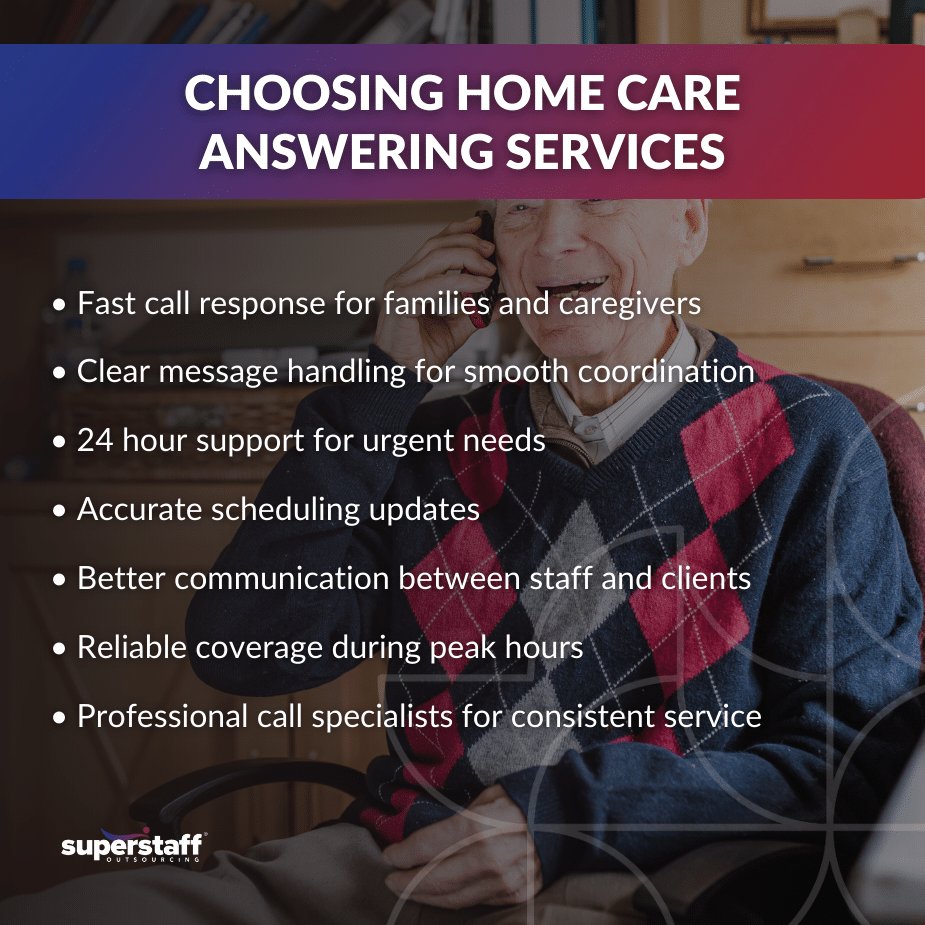
How Answering Services Improve Daily Home Care Operations
Managing phone calls takes time, especially when employees also handle scheduling, documentation, and caregiver coordination. Outsourcing selected communication tasks can help agencies distribute responsibilities more effectively.
1. Fewer Missed Calls
When employees are busy with administrative work or client coordination, incoming calls may go unanswered. A dedicated answering team provides additional coverage so callers have a reliable point of contact.
This can improve response times and reduce the number of people who need to call repeatedly to receive assistance.
2. Reduced Administrative Workload
Administrative employees often manage several tasks throughout the day. Taking over routine call handling allows an external team to manage basic inquiries, record messages, and forward requests.
This gives internal staff more time to focus on scheduling, documentation, and other agency responsibilities.
3. Better Call Management During Peak Hours
Call volumes can increase during certain periods, such as shift changes, holidays, or unexpected staffing shortages. Additional answering support helps agencies manage these periods without placing too much pressure on their existing employees.
4. Improved Communication With Families
Families want to know that their questions and concerns are being received. Professional call handlers can provide basic information, record requests, and direct more complex concerns to the appropriate agency representative.
For agencies reviewing their communication processes, patient care phone support also highlights how dedicated phone assistance can help healthcare organizations manage patient inquiries and improve communication.
5. Faster Handling of Caregiver Requests
Caregivers may call to report schedule changes, confirm assignments, or request assistance from supervisors. A structured answering process helps ensure these messages reach the right employees.
This is especially useful when agencies coordinate several caregivers across different client locations.
Common Tasks Handled by Home Care Answering Services
A home care answering provider can take on different communication responsibilities depending on the agency’s requirements and agreed service arrangement.
1. Recording Incoming Calls and Messages
Agents collect caller details and document the purpose of each call. These records help agency employees understand the concern before returning the call.
Accurate message taking is particularly important when several employees share responsibility for client communication.
2. Managing Appointment and Visit Inquiries
Call handlers can answer approved questions about appointment schedules and forward requests involving changes to the appropriate coordinator.
This helps agencies keep scheduling communication organized without requiring every inquiry to reach an internal employee immediately.
3. Supporting Caregiver Communication
Caregivers may need to report absences, confirm shifts, or communicate changes in their availability. Answering representatives can record these details and notify the scheduling team.
4. Forwarding Urgent Client and Family Concerns
Some inquiries require faster attention than routine messages. Agents should follow the agency’s escalation instructions and contact designated employees when a call meets the established criteria.
They should not attempt to make clinical decisions or provide medical advice unless specifically qualified and authorized to do so.
5. Responding to General Service Inquiries
Families often contact agencies to ask about available services, operating hours, scheduling procedures, and general requirements.
Trained representatives can provide approved information and transfer more detailed questions to agency personnel.
Industries That Benefit From Professional Answering Support
Although these services are useful for home care agencies, other healthcare organizations also rely on dedicated phone support to manage communication.
1. Home Health Agencies
Home health providers coordinate nursing visits, therapy appointments, and other care-related activities. Reliable call handling helps staff manage schedule inquiries and direct messages to the appropriate teams.
2. Hospice Organizations
Hospice providers communicate with patients, families, and care professionals who may need assistance at different times. A structured answering process helps ensure that messages reach the right personnel.
3. Private Duty Care Agencies
Private duty agencies coordinate nonmedical assistance, personal care, and caregiver schedules. Answering support helps manage inquiries from families and employees.
4. Medical Clinics
Clinics handle appointment requests, patient inquiries, prescription-related calls, and administrative questions. Virtual medical receptionist services can help manage incoming calls and reduce pressure on front desk employees.
5. Senior Care Programs
Senior care organizations coordinate wellness programs, personal assistance, and other support services. Consistent communication helps employees respond to inquiries and keep families informed.
Best Practices When Choosing a Home Care Answering Provider
Before selecting a provider, agencies should evaluate how its services fit their operations. The following considerations can help narrow down suitable options.
1. Review Knowledge of Home Care Workflows
Ask whether the provider has experience handling calls for home care or healthcare organizations. Familiarity with scheduling, caregiver coordination, and client communication can make training more efficient.
Providers offering broader medical call center services may also have experience managing healthcare inquiries, patient communication, and administrative support.
2. Understand Emergency Escalation Procedures
Ask how the provider identifies urgent calls and contacts the appropriate employees. Request a clear explanation of its escalation process and determine how quickly urgent messages are delivered.
The agency should also establish backup contacts in case the primary employee cannot be reached.
3. Evaluate Reporting and Performance Metrics
Regular reports help agencies understand call volumes, response times, missed calls, and message delivery performance.
Ask whether the provider offers daily or weekly summaries and whether reports can be customized based on the agency’s needs.
4. Check Staffing Flexibility
An agency may need additional support as its client base grows. Choose a provider that can adjust staffing and coverage based on changes in call volume and operating requirements.
5. Review Data Privacy and Security
Home care agencies may handle sensitive client information, so data protection should be a major consideration when choosing an external provider.
Ask about employee access controls, secure communication systems, data storage, and confidentiality procedures. If the provider handles protected health information on behalf of a covered entity, review whether a business associate agreement is required under HIPAA. The U.S. Department of Health and Human Services guidance on business associates explains the responsibilities involved in protecting this information.
Reliable Communication for Better Home Care Operations
Consistent communication helps home care agencies manage client expectations, support caregivers, and keep administrative tasks organized. With the right answering arrangement, agencies can reduce missed calls, improve message handling, and provide better access to assistance outside regular office hours.
The key is to select a provider with trained representatives, clear escalation procedures, dependable coverage, and strong data protection practices. These qualities help create a communication process that supports both internal employees and the people who depend on the agency’s services.
Build a More Reliable Support System for Your Agency
Managing calls while coordinating caregivers and client needs can place pressure on home care employees. Additional communication support can help agencies maintain organized workflows and give internal teams more time to handle their main responsibilities.
SuperStaff provides customer experience and healthcare support solutions for organizations that need assistance with customer and patient communication. Agencies evaluating their outsourcing requirements can contact SuperStaff to discuss their operational needs and available support arrangements.