Growing into new cities, states, or countries creates exciting opportunities for businesses. However, expansion also brings new responsibilities. Hiring employees in different locations means dealing with varying labor laws, payroll requirements, benefits administration, compliance rules, and employee relations concerns.
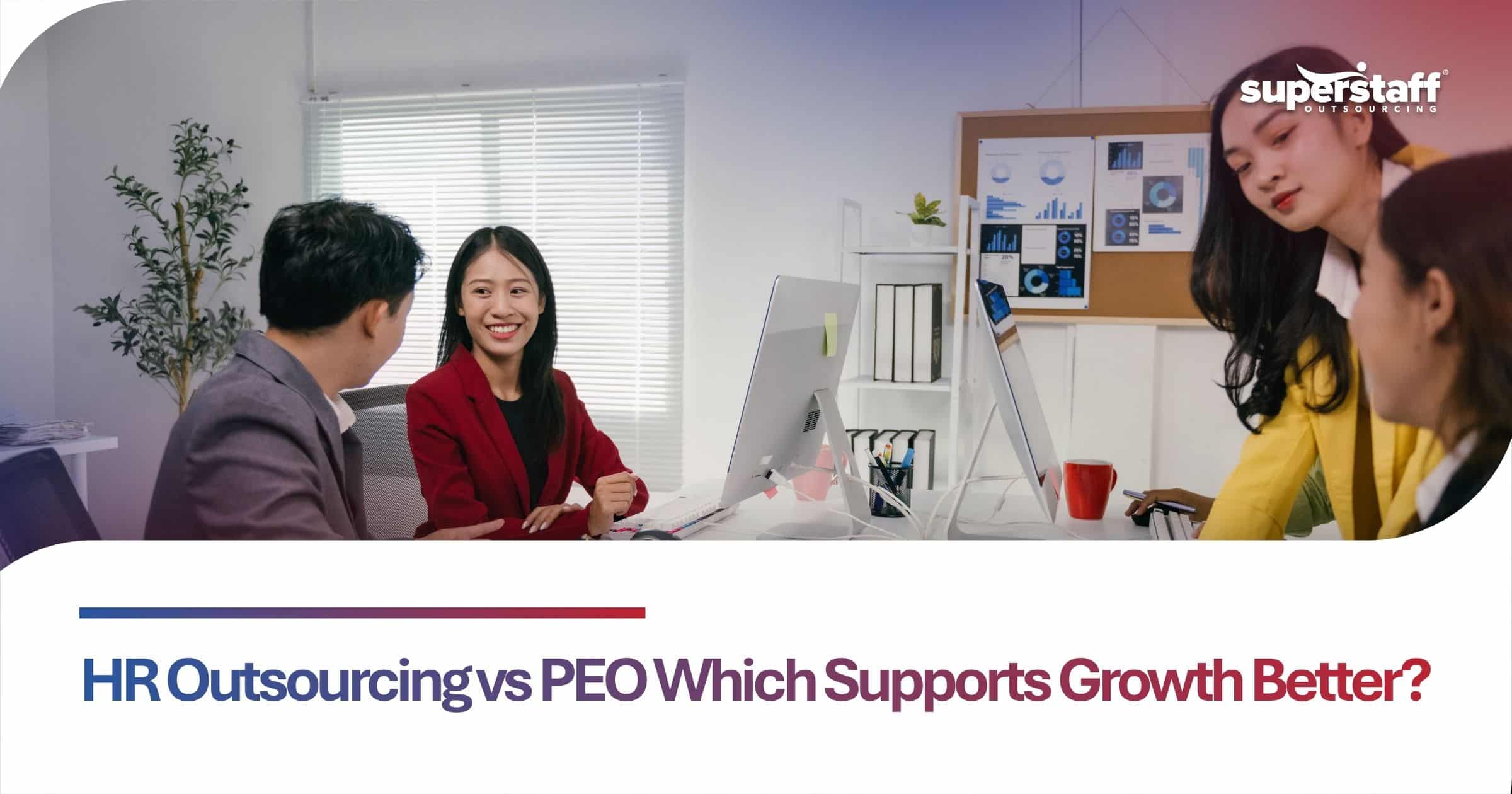
As companies grow, many leaders start looking for outside support to manage these responsibilities efficiently. This is where the discussion around HR outsourcing vs PEO often begins. Both options help businesses manage human resources, but they work in different ways and offer different levels of support.
Understanding the differences can help business owners make better decisions as they expand their operations. While both models reduce administrative burdens, the right choice depends on a company’s goals, workforce structure, and growth plans.
Understanding HR Support Options for Expansion
Businesses expanding across multiple locations often need additional HR resources. While internal HR teams can handle some responsibilities, expansion can quickly increase workloads.
1. What Is HR Outsourcing?
HR outsourcing involves hiring an external provider to manage specific HR functions. Businesses generally remain the employer and retain control over employment decisions.
Common outsourced services include:
- Payroll processing
- Recruitment support
- Employee onboarding
- Benefits administration
- HR compliance assistance
- Performance management support
As a result, companies can focus on growth while specialized professionals handle administrative tasks.
2. What Is a PEO?
A Professional Employer Organization (PEO) enters into a co-employment relationship with a business. Under this arrangement, the PEO shares certain employer responsibilities while managing various HR functions on behalf of the company.
Depending on the agreement, a PEO may handle:
- Payroll administration
- Tax filings
- Employee benefits
- Workers’ compensation administration
- Compliance support
Meanwhile, the business generally continues to manage daily employee supervision, work assignments, and operational decisions.
3. Why Expansion Creates HR Challenges
Opening new locations often means complying with different employment regulations. Furthermore, businesses must maintain consistent policies while adapting to local requirements.
Challenges may include:
- Different labor laws
- Tax regulations
- Benefits requirements
- Hiring regulations
- Employee documentation standards
Consequently, many growing companies seek external support to reduce compliance risks.
4. The Need for Scalable Solutions
Expansion rarely happens all at once. Companies may add new offices, branches, or remote teams over time.
Therefore, businesses need HR solutions that can scale alongside growth. Choosing the right support model helps maintain consistency while reducing administrative pressure.
Companies reviewing their options can also consider how global HR outsourcing helps growing organizations manage HR responsibilities across regions without placing all the work on their internal teams.
Key Differences Between HR Outsourcing and PEO
Although both models provide HR support, their structures differ significantly. Understanding these differences helps business leaders decide how much responsibility they want to keep internally and which functions they want an external provider to handle.
1. Employer Responsibility
With HR outsourcing, the company generally remains responsible for its employment obligations. The provider assists with specific tasks but does not automatically share employer responsibilities.
In contrast, a PEO enters into a co-employment arrangement and assumes certain responsibilities based on the agreement and applicable laws.
2. Level of Control
Businesses using HR outsourcing maintain greater control over policies, procedures, and employee management. They can customize support according to their needs.
Meanwhile, PEOs often provide established systems and processes for managing payroll, benefits, and other HR responsibilities.
3. Service Customization
HR outsourcing allows businesses to select only the services they need.
For example, a company may outsource:
- Recruitment
- Payroll
- Employee administration
However, it can still manage other HR functions internally. As a result, companies gain more customization options.
4. Benefits Administration
PEOs often provide access to group benefits programs through their larger employee pools.
Meanwhile, HR outsourcing providers may administer existing benefits programs but typically do not offer the same co-employment structure.
5. Cost Structure
Costs vary depending on company size and service requirements.
When evaluating HR outsourcing vs PEO, businesses should compare:
- Service fees
- Administrative costs
- Compliance support expenses
- Technology access
- Long-term scalability
A detailed cost analysis helps determine the best fit for future growth.
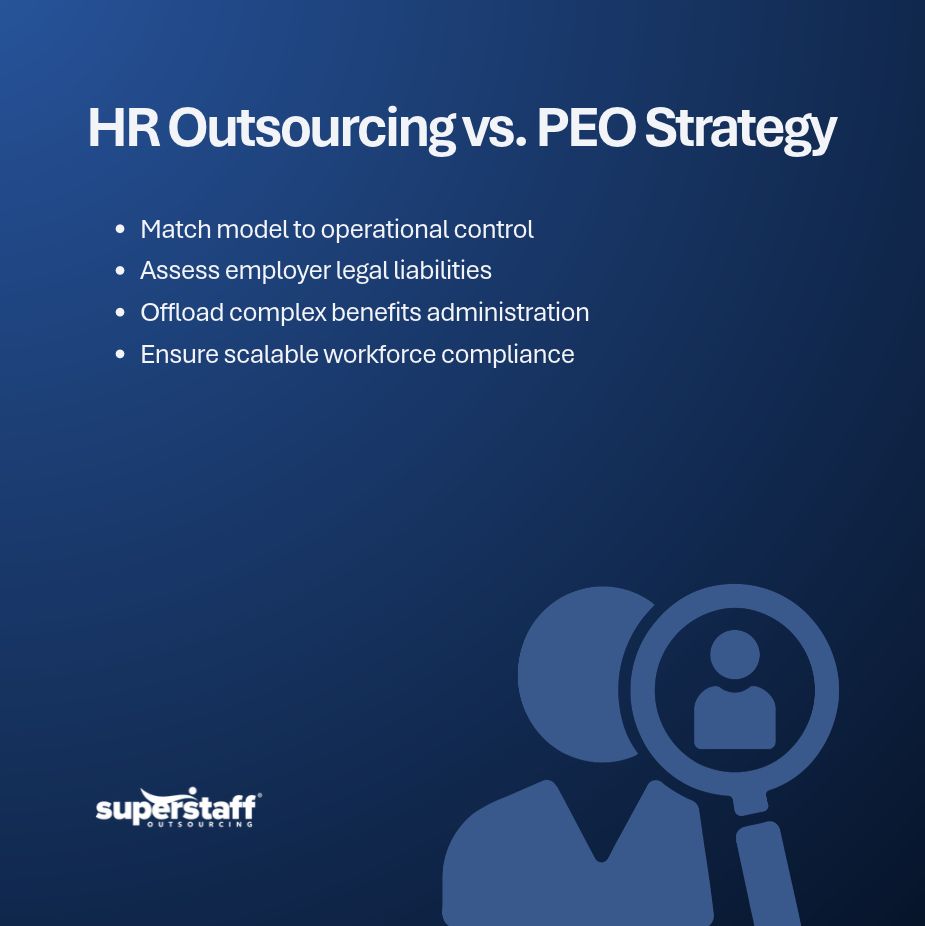
Which Option Works Best for Multi-Location Growth?
The right choice depends on business goals, expansion plans, and operational preferences. A company with an established HR department may need a different level of support from a smaller business entering its first new market.
1. HR Outsourcing for Greater Independence
Many businesses choose HR outsourcing because it allows them to maintain control over their employment practices.
This option often works well for organizations that already have internal HR leadership but need additional support as they expand.
2. PEO for Comprehensive Administration
Companies with limited HR resources may prefer a PEO. Since the PEO manages many administrative functions, business leaders can spend less time handling paperwork and payroll responsibilities.
For U.S. businesses considering this arrangement, it is worth understanding the role of a Certified Professional Employer Organization. The IRS guide to PEO certification explains the federal requirements for certified PEOs and how certification can affect employment tax responsibilities.
3. Consider Geographic Expansion Plans
Expansion across multiple states or countries introduces additional compliance requirements.
Businesses should evaluate:
- Number of planned locations
- Hiring volume
- Regulatory complexity
- Workforce size
These factors often influence whether HR outsourcing or PEO services provide better support.
4. Assess Internal HR Capabilities
Organizations with experienced HR teams may only need specialized support.
However, companies without dedicated HR departments may benefit from broader administrative assistance. Consequently, internal resources should play a major role in the decision-making process.
5. Focus on Future Growth
Growth strategies evolve over time. Therefore, companies should select a solution that can adapt to changing needs.
A careful review of HR outsourcing vs PEO options helps businesses avoid costly transitions later.
Factors Business Leaders Should Evaluate
Selecting the right partner requires careful planning. Beyond comparing services and prices, companies should review how an HR provider handles daily responsibilities and supports employees across different locations.
1. Compliance Support
Businesses operating in multiple locations face different employment regulations. Therefore, compliance expertise should be a top priority.
Ask potential providers how they monitor regulatory changes, maintain employee records, and handle payroll requirements. Companies should also clarify which compliance responsibilities remain with the business.
2. Technology and Reporting
Modern HR platforms improve efficiency and visibility. Companies should evaluate available tools for payroll, employee records, and reporting.
3. Employee Experience
Employees expect smooth onboarding, timely payroll, and reliable support. Strong HR processes contribute to a better workplace experience.
4. Service Scalability
Expansion often brings rapid workforce growth. Therefore, businesses should choose providers capable of supporting future hiring needs.
5. Industry Experience
Providers with experience supporting similar industries often understand unique workforce requirements and compliance concerns.
Managing HR Operations Across Multiple Locations
A growing workforce requires consistent processes. Employees in different offices should receive clear information about company policies, payroll schedules, onboarding procedures, and available support.
However, maintaining consistency does not mean using exactly the same approach everywhere. Local employment rules may require adjustments to contracts, benefits, and workplace policies.
Companies should create clear guidelines for internal HR teams and external providers. Regular communication between locations also helps managers identify issues before they affect employees.
Businesses exploring offshore support can also review how HR functions are outsourced to the Philippines to understand how external teams can assist with recurring HR activities and administrative work.
Plan Your Recruitment and Workforce Needs Early
Expansion plans often require businesses to hire employees before new locations become fully operational. Without a clear recruitment process, companies may struggle to fill important roles on time.
Start by identifying the positions needed, the skills required, and the expected hiring schedule. Then, determine which recruitment activities your internal team can manage and where outside assistance would be useful.
A clear hiring plan also helps businesses prepare for onboarding, employee documentation, and training. These steps make it easier to bring new employees into the organization without creating unnecessary delays.
Recruitment Support for Growing Businesses
Hiring across multiple locations can place pressure on internal recruitment teams. Job postings, candidate screening, interview scheduling, and onboarding all require time and coordination.
Businesses that need additional hiring capacity can use recruitment process outsourcing to support sourcing, screening, and onboarding. This allows internal leaders to stay involved in hiring decisions while receiving help with the work involved in finding suitable candidates.
Review Your HR Arrangement as Your Business Grows
The HR model that works for a small company may not be suitable once it has employees in several locations. Workforce size, hiring needs, and regulatory responsibilities can change as the business develops.
Review your arrangement regularly to determine whether the current provider still meets your needs. Look at service quality, response times, employee feedback, administrative costs, and the ability to support new locations.
If certain responsibilities are becoming difficult to manage, consider adjusting the services you outsource or reviewing whether a different arrangement would be more practical.
Build a Strong HR Foundation for Expansion
Expanding into multiple locations creates new opportunities, but it also increases HR responsibilities. Understanding the differences between HR outsourcing vs PEO helps businesses choose the support model that aligns with their growth plans.
Whether you need targeted HR assistance or broader workforce administration, selecting the right partner can simplify operations, improve consistency, and support long-term business goals.
SuperStaff helps businesses manage recruitment, administrative support, and workforce-related operations through flexible outsourcing solutions. If your company is preparing to expand and needs additional support, contact SuperStaff to discuss your business requirements.