
Finding qualified talent for critical positions can take weeks or even months. While companies search for the right candidates, projects slow down, teams face additional workloads, and business goals may be delayed. As a result, many organizations look for ways to speed up hiring without sacrificing quality.
This is where RPO providers can make a difference. They help businesses improve recruitment processes, expand candidate reach, and shorten hiring timelines. Instead of relying on traditional recruitment methods alone, companies gain access to dedicated hiring support and proven strategies.
When businesses need to fill important positions quickly, RPO providers offer the expertise, technology, and resources needed to move candidates through the hiring process faster. Consequently, organizations can maintain productivity and stay focused on growth.
Why Companies Struggle to Fill Critical Roles
Several hiring challenges can extend recruitment timelines. Before organizations can solve the problem, they need to understand what causes delays.
1. Limited Access to Qualified Candidates
Many companies rely on the same job boards and sourcing channels. As a result, they compete with other employers for the same talent pool.
Meanwhile, highly qualified candidates may not actively search for jobs. Without proactive sourcing efforts, businesses often miss these potential hires.
2. Lengthy Recruitment Processes
Many hiring teams follow processes that involve multiple approvals, interviews, and evaluations. Although these steps serve a purpose, they can slow hiring decisions.
Consequently, strong candidates may accept offers from competitors before the company completes its process.
3. Internal Resource Constraints
HR teams often manage recruitment alongside employee relations, payroll, onboarding, and compliance responsibilities.
As workloads increase, recruiters may struggle to focus on sourcing and screening candidates efficiently. Therefore, vacancies remain open longer.
4. High Demand for Specialized Talent
Healthcare, technology, engineering, finance, and customer support sectors often require highly specific skills.
Because the talent pool is smaller, companies must invest more time identifying suitable candidates. This can significantly increase time-to-fill metrics.
5. Ineffective Employer Branding
Candidates often research companies before applying. If an employer lacks a strong reputation or clear messaging, applicants may choose other opportunities.
As a result, organizations receive fewer applications and experience longer hiring cycles.
Businesses facing these challenges can benefit from additional recruitment capacity. Outsourcing recruitment functions gives companies access to specialized sourcing and screening support, helping internal HR teams manage open positions more efficiently.
RPO providers
How RPO Providers Accelerate Hiring
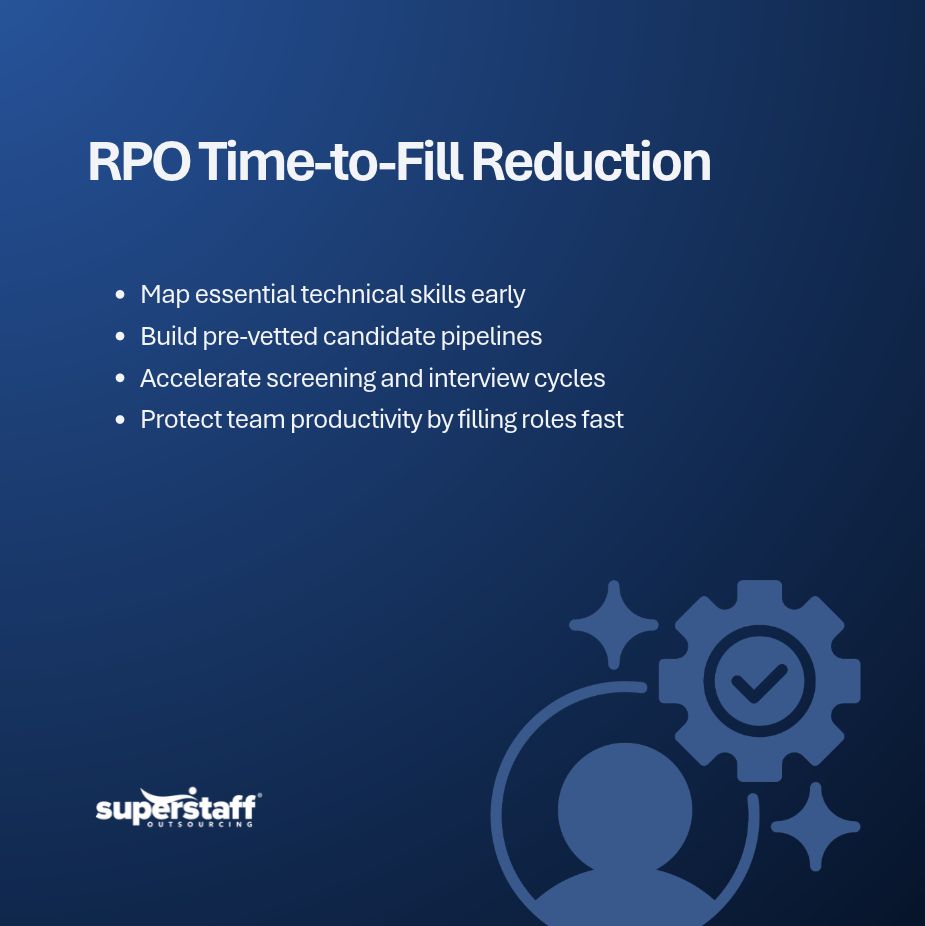
Organizations partner with recruitment experts because they need faster and more efficient hiring outcomes. RPO providers help reduce delays through several proven methods.
1. Building Larger Talent Pipelines
One of the biggest advantages of working with RPO providers is access to broader candidate networks.
Rather than waiting for applications, they actively search for qualified professionals through databases, referrals, social platforms, and industry connections. Therefore, companies gain access to more candidates in less time.
2. Improving Candidate Screening
Recruitment teams spend significant time reviewing resumes and conducting initial assessments.
RPO providers streamline this process by using structured screening methods that quickly identify qualified candidates. As a result, hiring managers spend more time interviewing strong applicants and less time reviewing unsuitable profiles.
3. Standardizing Recruitment Workflows
Many organizations experience delays because hiring processes vary across departments.
RPO providers create consistent recruitment workflows that improve communication, reduce bottlenecks, and support faster decision-making. Consequently, candidates move through the hiring process more efficiently.
4. Leveraging Recruitment Technology
Modern recruitment tools help automate repetitive hiring tasks.
For example, automated scheduling, applicant tracking systems, and candidate databases reduce administrative workloads. Therefore, recruiters can focus on engaging talent instead of managing paperwork.
5. Supporting Hiring Managers
Hiring managers often have limited time for recruitment activities.
RPO providers coordinate interviews, provide candidate insights, and manage recruitment logistics. As a result, managers can make faster hiring decisions without disrupting daily operations.
Key Benefits Beyond Faster Hiring
Reducing time to fill is important. However, organizations often experience additional advantages when partnering with recruitment specialists.
1. Better Candidate Quality
Faster hiring should never mean lowering standards.
Because recruitment specialists focus on targeted sourcing and thorough screening, companies often receive stronger candidate shortlists. Therefore, they improve both hiring speed and hiring quality.
2. Greater Recruitment Scalability
Hiring needs can change quickly. Some organizations may need a few hires, while others require hundreds.
RPO providers can scale recruitment efforts based on business demands. Consequently, companies avoid overwhelming internal HR teams during growth periods.
3. Improved Candidate Experience
Candidates appreciate clear communication and timely updates.
When recruitment teams respond quickly and maintain engagement, applicants remain interested throughout the hiring process. As a result, offer acceptance rates often improve.
4. Reduced Recruitment Costs
Long vacancies create hidden costs through lost productivity and delayed projects.
By filling roles more efficiently, organizations reduce the financial impact of open positions. Therefore, recruitment investments often generate long-term value.
5. Access to Recruitment Expertise
Hiring trends, candidate expectations, and labor market conditions change frequently.
Recruitment specialists stay informed about these developments and adjust hiring strategies accordingly. This helps businesses remain competitive when attracting talent.
Companies should also measure hiring speed consistently. The Society for Human Resource Management explains that time-to-fill is measured from when a job requisition opens until a candidate accepts the offer. Tracking this metric helps organizations see whether recruitment improvements are actually reducing delays.
Choosing the Right Recruitment Partner
Not every recruitment partner delivers the same results. Organizations should evaluate several factors before making a decision.
1. Industry Experience
Look for providers with experience in your sector. Industry knowledge often leads to faster sourcing and stronger candidate matches.
2. Recruitment Technology
Effective technology can significantly improve recruitment efficiency. Therefore, ask about the tools and systems they use.
3. Reporting Capabilities
Data helps companies measure recruitment success. Look for partners that provide clear hiring metrics and performance insights.
4. Scalability
Business needs change over time. Choose a provider that can support both current and future hiring demands.
5. Communication and Collaboration
Successful recruitment requires strong partnership. Select a provider that offers transparency, responsiveness, and consistent communication.
It is also helpful to review how a provider manages the full hiring process, from candidate sourcing to final selection. Businesses can compare different approaches through outsourced recruiting services and determine which recruitment activities would benefit most from additional support.
Keep Recruitment Moving With Clear Hiring Goals
Even with external support, companies need to make timely decisions. Delays in approving job descriptions, scheduling interviews, or providing candidate feedback can slow down the entire process.
Set clear expectations with hiring managers before recruitment begins. Agree on required qualifications, interview schedules, decision-making responsibilities, and feedback deadlines. When everyone understands their role, recruiters can move qualified candidates forward without unnecessary delays.
RPO Support for Faster Recruitment
Companies that need consistent recruitment support can work with a dedicated RPO partner. SuperStaff’s Recruitment Process Outsourcing services help businesses manage candidate sourcing, screening, and onboarding. The service can support both project-based hiring and larger recruitment needs, giving organizations access to additional hiring capacity without placing more pressure on internal HR teams.
Measure Recruitment Results Regularly
Filling positions faster is only one part of a successful recruitment strategy. Companies should also review candidate quality, offer acceptance rates, recruitment costs, and new-hire retention.
Regular performance reviews help identify which sourcing channels deliver suitable candidates and which hiring stages need improvement. These insights allow businesses and their recruitment partners to adjust their approach as workforce needs change.
Fill Critical Roles Faster With Expert Recruitment Support
Hiring delays can affect productivity, customer service, and business growth. Fortunately, RPO providers help organizations overcome recruitment challenges through strategic sourcing, streamlined processes, and dedicated hiring expertise.
SuperStaff helps businesses reduce hiring timelines while maintaining candidate quality. Our recruitment specialists work closely with organizations to identify talent, improve hiring efficiency, and support workforce growth.
If you’re looking for reliable RPO providers to strengthen your recruitment strategy, contact SuperStaff to discuss your hiring needs and find out how our team can help you fill critical roles faster.