
Running a business takes time, focus, and the right support. Many companies now work with an AI outsourcing company to handle tasks such as customer support, data processing, content moderation, and back-office operations. However, choosing the wrong provider can create delays, communication problems, and extra costs. That is why business owners need a clear process before making a decision.
Every company has different goals, budgets, and workflows. Therefore, the best outsourcing partner should match your business needs instead of offering generic services. A reliable AI outsourcing company should also provide strong communication, industry knowledge, and flexible support. When you evaluate providers carefully, you can build a long-term partnership that supports business growth and daily operations.
Understand Your Business Needs First
Before searching for providers, take time to identify what your business needs. This step helps you avoid paying for services that do not support your goals.
1. Identify the Tasks You Want to Outsource
Start by listing the tasks your internal team struggles to manage. For example, you may need help with customer service, data entry, analytics support, content review, or AI data annotation outsourcing.
Once you define these areas, you can narrow your search faster. Clear goals also help outsourcing providers understand your expectations. As a result, they can recommend services that fit your operations.
2. Set a Realistic Budget
Budget planning helps prevent overspending later. Some companies focus only on the lowest rates, but cheaper services may affect quality and response times.
Instead, balance pricing with experience, support quality, and long-term value. A dependable provider should explain pricing clearly and avoid hidden charges.
3. Determine Your Growth Plans
Your business may expand in the future, so your outsourcing partner should grow with you. Ask yourself if you plan to increase service coverage, add new markets, or support larger customer volumes.
Because of this, scalability matters when choosing an AI outsourcing company. A flexible provider can adjust services as your business changes.
4. Define Communication Expectations
Strong communication keeps projects organized and efficient. Decide how often you want updates, meetings, and reports before signing a contract.
Additionally, check if the provider offers multiple communication channels. Fast responses can reduce delays and improve teamwork.
5. Create Clear Performance Goals
Performance goals help measure outsourcing success. You can track metrics such as response times, accuracy rates, turnaround time, and customer satisfaction.
When expectations stay clear from the start, both sides can work toward the same objectives. Therefore, misunderstandings become less common.
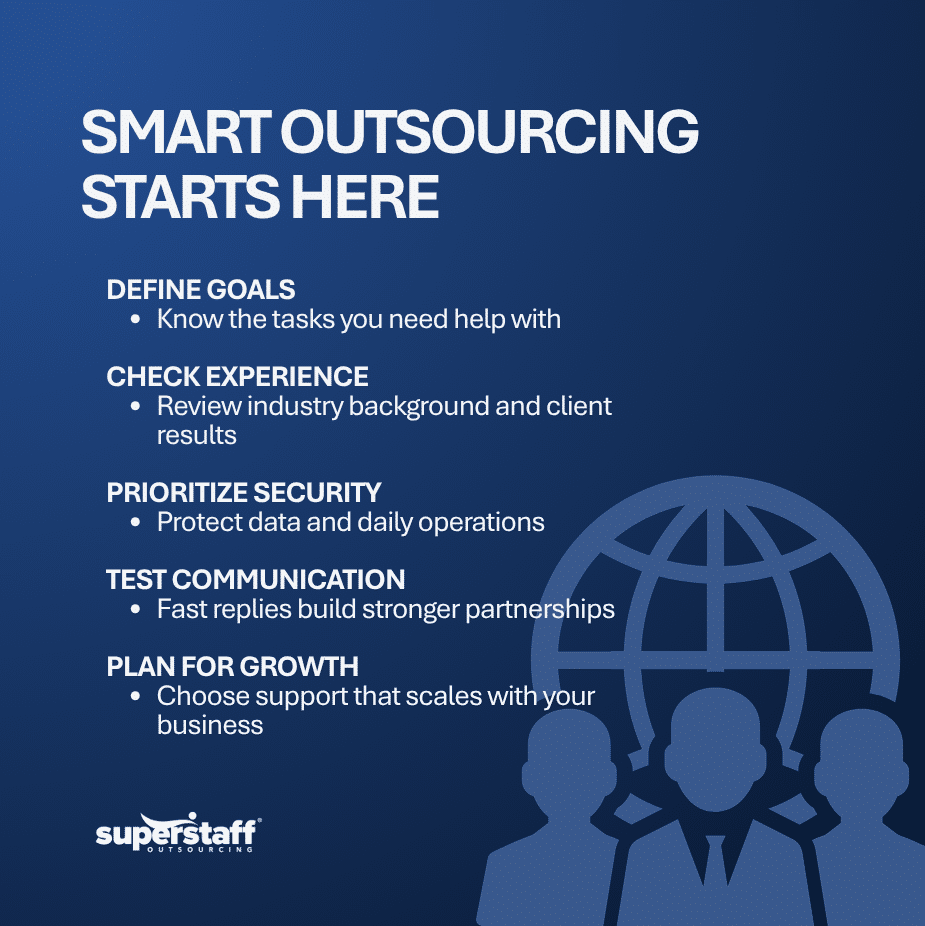
Evaluate the Company’s Experience and Services
After identifying your needs, review the provider’s background and service quality. Experience often reflects how well a company handles challenges and client demands.
1. Check Industry Experience
Different industries require different workflows and standards. A provider with experience in healthcare, retail, finance, or logistics may understand your operations better.
Additionally, experienced teams can adjust faster to project requirements. This saves time during onboarding and training.
2. Review Their Service Offerings
Some outsourcing firms specialize in only one service, while others offer broader support. Review their full list of services before making a decision.
You may need additional support later, so working with one provider can simplify management. Companies exploring AI outsourcing companies can also review the types of support roles that businesses commonly delegate to external AI-focused teams.
3. Ask About Their Team Structure
A strong team structure improves accountability and workflow management. Ask whether they assign project managers, team leaders, or dedicated support staff.
This setup helps businesses receive consistent updates and faster issue resolution. Moreover, organized teams usually maintain better service quality.
4. Look at Client Reviews and Testimonials
Client feedback can reveal strengths and weaknesses quickly. Search for reviews that mention communication, reliability, and project results.
Positive testimonials may provide useful information about a provider’s client relationships. However, repeated complaints about the same problems should receive closer attention.
5. Request Case Studies or Sample Projects
Case studies help you understand how the company solves business problems. They also show how the provider handles timelines, goals, and client expectations.
A trustworthy AI outsourcing company should explain relevant past project results clearly. This gives you a better picture of its capabilities and experience.
Focus on Security and Business Reliability
Security and reliability should never become secondary concerns. Businesses may share sensitive information with outsourcing providers, so proper safeguards matter.
1. Review Data Protection Policies
Ask how the company protects business information and customer data. Reliable providers should have clear procedures for access controls, data handling, confidentiality, and security monitoring.
Strong security policies can reduce exposure to data and operational risks. Therefore, always review these details carefully.
2. Check Compliance Standards
Some industries require strict compliance standards. For example, finance and healthcare businesses may need to follow specific rules when handling customer or patient information.
Companies outsourcing AI-related processes should also consider how providers identify and manage AI risks. The NIST AI Risk Management Framework provides a voluntary framework for organizations seeking to manage risks associated with the design, development, use, and evaluation of AI systems.
An experienced outsourcing provider should be able to explain which standards apply to its services and how its processes support your compliance requirements.
3. Evaluate Business Stability
Long-term partnerships require stable providers. Research how long the company has operated and whether it maintains established business processes and client relationships.
You should also consider leadership structure, workforce management, service capacity, and operational history before entering a long-term agreement.
4. Ask About Backup Plans
Unexpected issues can affect operations at any time. Ask how the company handles internet outages, staffing shortages, system failures, and other service disruptions.
Backup plans and documented continuity procedures can reduce downtime when problems occur. Therefore, businesses should include this topic during provider evaluations.
5. Test Their Responsiveness
Fast communication often reflects how a provider manages client relationships. Before signing a contract, observe how quickly and clearly the company responds to emails, questions, or meeting requests.
Slow or incomplete replies during the evaluation stage may be worth discussing before committing to a partnership.
Build a Strong Long-Term Partnership
Choosing a provider involves more than comparing prices. Long-term success depends on collaboration, transparency, and shared goals.
1. Start With a Trial Project
Small trial projects help businesses test service quality before making larger commitments. This approach reduces risk and provides real experience with the provider.
You can also evaluate communication, workflow efficiency, accuracy, and turnaround time during the trial period.
2. Discuss Reporting Methods
Regular reporting keeps projects organized and measurable. Ask how the company shares updates, performance reports, and progress tracking.
Consistent reporting improves transparency and decision-making. As a result, businesses can identify and address issues earlier.
3. Clarify Contract Terms
Review all contract details carefully before signing. Pay attention to pricing, timelines, cancellation terms, service expectations, data handling, and performance requirements.
Clear agreements help avoid misunderstandings later. Therefore, businesses should ask questions whenever details seem unclear.
4. Encourage Collaboration
Strong partnerships require teamwork from both sides. Schedule regular meetings and provide clear feedback to improve results over time.
Additionally, collaborative relationships can create smoother workflows and give the provider a better understanding of your changing business requirements.
5. Measure Long-Term Results
Track performance regularly after launching the partnership. Compare results against your original goals and identify areas for improvement.
A reliable AI outsourcing company should remain open to adjustments and performance discussions. This approach helps businesses maintain consistent service quality over time.
Find Reliable Support That Fits Your Goals
Choosing the right outsourcing partner takes careful planning, research, and communication. The right provider should understand your goals, support your operations, and maintain reliable service standards. A trusted AI outsourcing company can give your business additional resources to manage workloads, improve processes, and support future growth.
SuperStaff provides outsourcing solutions for businesses across different industries. Its teams support AI-related operations, customer service, back-office processes, data services, and other business functions.
If you are looking for an outsourcing partner that aligns with your business goals, contact SuperStaff to discuss your requirements.