
Businesses across North America are rethinking their outsourcing strategies after significant changes in immigration and labor policies. The tightening of the H-1B visa program has made it harder for companies to bring skilled professionals into the United States, pushing organizations to search for new solutions abroad. Colombia nearshoring hubs are emerging as one of the strongest answers to this shift, offering talent, proximity, and cost efficiency. With regional outsourcing destinations gaining global recognition, Colombia is positioning itself as a center for growth and collaboration. The outsourcing rebalance in Colombia shows how global workforce strategies are changing and why nearshoring is becoming the new standard.

Colombia Nearshoring Hubs Gaining Momentum
Colombia nearshoring hubs are becoming a key part of outsourcing strategies as companies look for partners closer to home. This development is supported by a combination of skilled labor, competitive costs, and growing infrastructure.
1. A Skilled Talent Pool
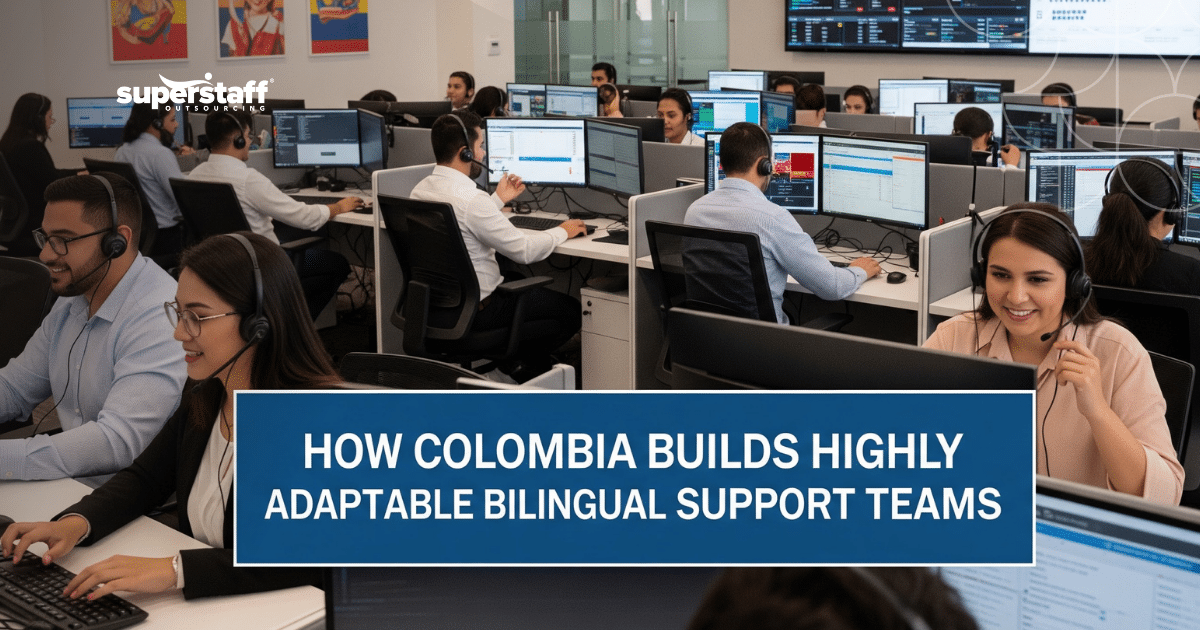
Colombia has invested in education, language training, and technical skills, producing professionals ready to serve international clients. The presence of bilingual workers makes Colombia nearshoring hubs attractive for companies in customer service, IT, and knowledge-based industries. This focus on talent readiness has helped Colombia become one of the most reliable regional outsourcing destinations.
2. Strategic Location and Time Zone
Colombia’s geographical proximity to the United States allows nearshoring partners to work in almost identical time zones. This creates smoother communication, easier project management, and quicker problem-solving compared to distant offshore locations. Colombia nearshoring hubs benefit from this alignment, offering real-time collaboration to companies that need faster results.
3. Competitive Costs
Outsourcing through Colombia nearshoring hubs provides savings compared to hiring in-house talent in North America. At the same time, companies can maintain high standards of quality and service delivery. This cost balance makes Colombia a practical choice for businesses aiming for long-term scalability.
4. Infrastructure and Technology Growth
The Colombian government has invested in digital infrastructure, modern office spaces, and connectivity improvements. These developments ensure that outsourcing providers have the tools to run reliable operations for global clients. Colombia nearshoring hubs rely on these upgrades to support both small teams and large-scale business services.
5. Government and Policy Support
Pro-business regulations, trade agreements, and government incentives create a favorable environment for foreign companies outsourcing to Colombia. These measures give international businesses confidence that operations will remain stable. With policy support in place, Colombia nearshoring hubs continue to attract more global partnerships.
The Outsourcing Rebalance in Colombia
The outsourcing rebalance in Colombia is driven by shifts in labor policy and the search for practical workforce solutions. Companies are now moving toward nearshoring instead of relying solely on distant offshoring models.
1. Response to H-1B Visa Outsourcing Shifts
H-1B visa outsourcing shifts have limited access to skilled foreign professionals in the U.S., creating hiring gaps for businesses. Colombia fills this gap by offering skilled professionals within close reach, without the complications of U.S. visa restrictions. This shift is a major factor in the rise of Colombia nearshoring hubs.
2. Regional Outsourcing Destinations on the Rise
Latin America outsourcing growth is proof that the region is becoming a global leader in service delivery. Colombia stands out as one of the most advanced regional outsourcing destinations because of its readiness to support international companies. As global businesses diversify away from Asia-only models, Colombia’s role in this growth becomes even stronger.
3. Addressing the Need for Flexibility
Colombia nearshoring hubs offer workforce flexibility that matches changing business demands. Companies can scale operations quickly, adjust team sizes, and expand services as needed. This flexibility is one of the main drivers of the outsourcing rebalance in Colombia.
4. Building Trust with U.S. Companies
Colombian professionals share cultural similarities with the United States, which makes business collaboration smoother. This cultural fit helps U.S. companies trust their nearshoring partners to deliver consistent results. Colombia nearshoring hubs benefit from this advantage when competing with offshore providers.
5. Long-Term Scalability
Nearshoring in Colombia allows companies to start small and grow over time without major risk. Businesses can expand their teams in a structured way as their needs increase. This scalability positions Colombia nearshoring hubs as reliable long-term partners for outsourcing solutions.
Why Businesses Choose Colombia Over Distant Markets
Companies are rethinking their global strategies by choosing destinations closer to their core markets. Colombia nearshoring hubs are a preferred option compared to far-off outsourcing locations.
1. Reduced Travel and Oversight Costs
Nearshoring in Colombia lowers the costs of frequent travel for managers who need to visit teams. Shorter flight times and affordable travel make oversight simpler and less expensive. This convenience strengthens the case for building operations in Colombia.
2. Faster Response Times
Aligned time zones allow U.S. companies to collaborate with Colombian teams in real time. Faster communication improves project management and customer support. This advantage helps Colombia nearshoring hubs stand out in competitive global markets.
3. Strong Industry Specialization
Colombia has developed industry expertise in IT, customer service, and back-office support. Companies benefit from this specialization because it ensures higher quality outcomes and more efficient processes. Colombia nearshoring hubs continue to strengthen these industries to meet growing global demand.
4. Security and Compliance Measures
Global businesses require high levels of data security and compliance. Colombian outsourcing providers follow strict standards to protect sensitive information and maintain regulatory alignment. This level of assurance makes Colombia nearshoring hubs reliable partners for critical business functions.
5. Positive Economic and Social Impact
Nearshoring creates economic opportunities in Colombia while also giving businesses affordable and skilled labor. This shared benefit strengthens long-term relationships between international companies and Colombian outsourcing partners. The growth of Colombia nearshoring hubs contributes to both global business success and local development.
The Future of Nearshoring in Colombia
The outsourcing industry continues to evolve as companies adapt to global challenges and policy changes. Colombia nearshoring hubs are expected to expand further in the coming years.
1. Expanding Technology Ecosystems
Colombia is growing its technology and innovation ecosystems, which attract investors and support advanced outsourcing services. This ensures that Colombia nearshoring hubs remain competitive in IT and knowledge-based sectors.
2. More Global Partnerships
International businesses are forming long-term partnerships with Colombian providers, reflecting confidence in the country’s outsourcing industry. These collaborations open new opportunities for both global clients and Colombian professionals.
3. Workforce Development Programs
Continuous investment in education and skills development keeps the workforce aligned with international demands. These programs ensure that Colombia nearshoring hubs can continue meeting specialized client needs.
4. Regional Collaboration in Latin America
Colombia works with other countries in the region to strengthen Latin America outsourcing growth. This cooperation increases global confidence in Latin America as a whole. Colombia plays a central role in promoting the region as a reliable nearshoring hub.
5. Resilience to Policy Shifts
H-1B shocks and the shift to Colombia for outsourcing solutions show how adaptable the country has become. Businesses see this resilience as proof that Colombia nearshoring hubs can handle future challenges. This reliability makes Colombia a preferred partner for long-term outsourcing strategies.
Building Global Teams Through Colombia Nearshoring Hubs
Colombia nearshoring hubs are shaping the future of outsourcing by offering proximity, skilled talent, and flexible growth. They provide U.S. companies with practical alternatives to offshore models while supporting long-term collaboration. The outsourcing rebalance in Colombia shows how businesses can adapt to global shifts while keeping operations efficient and reliable. SuperStaff helps organizations build high-performing teams through nearshoring partnerships in Colombia and other regional outsourcing destinations. By working with SuperStaff, companies can access outsourcing solutions that match their needs while staying competitive in a changing global market.