A startup can gain customers worldwide in just a few months. However, hiring employees in another country is a different challenge. Every market has its own labor laws, payroll rules, taxes, and employment requirements. One mistake can delay hiring or create legal issues.
That is why many founders turn to employer of record services for startups when they begin building international teams. An Employer of Record (EOR) becomes the legal employer of workers in another country while the startup manages daily work and performance. As a result, startups can hire faster, manage employment requirements, and expand without setting up a local entity right away. Moreover, employer of record services for startups help young companies stay focused on growth while experienced professionals handle employment administration.
Why Startups Need Employer of Record Support
International expansion creates opportunities, but it also adds operational complexity. Startups usually move fast, and they cannot afford lengthy legal setup processes in every new country. Therefore, an EOR gives them a practical way to test markets and build teams without immediately establishing a local entity.
1. Faster International Hiring
Setting up a foreign entity can take months, depending on the country and its registration requirements. Meanwhile, an EOR already has an established legal structure in the market, which can help startups hire employees sooner.
2. Compliance Becomes Easier
Employment laws vary widely between countries. An EOR manages agreed responsibilities such as local employment contracts, statutory benefits, payroll taxes, and labor compliance. This can help startups reduce administrative mistakes and avoid problems caused by unfamiliar regulations.
3. Lower Expansion Costs
Opening a legal entity involves registration fees, legal counsel, accounting, and ongoing administration. For startups with limited budgets, an EOR provides another way to enter new markets without taking on all these upfront expenses.
4. Access to Global Talent
The best candidate may not live in your home country. With employer of record services for startups, companies can hire skilled professionals wherever they are located, including developers, marketers, customer support staff, and sales teams.
5. More Focus on Growth
Founders should spend time building products, serving customers, and raising capital. An EOR handles many employment administration tasks, allowing leadership teams to focus on scaling the business.
Startups exploring international hiring can also consider global employment outsourcing as a way to access talent and manage workforce requirements without building every operation from scratch.
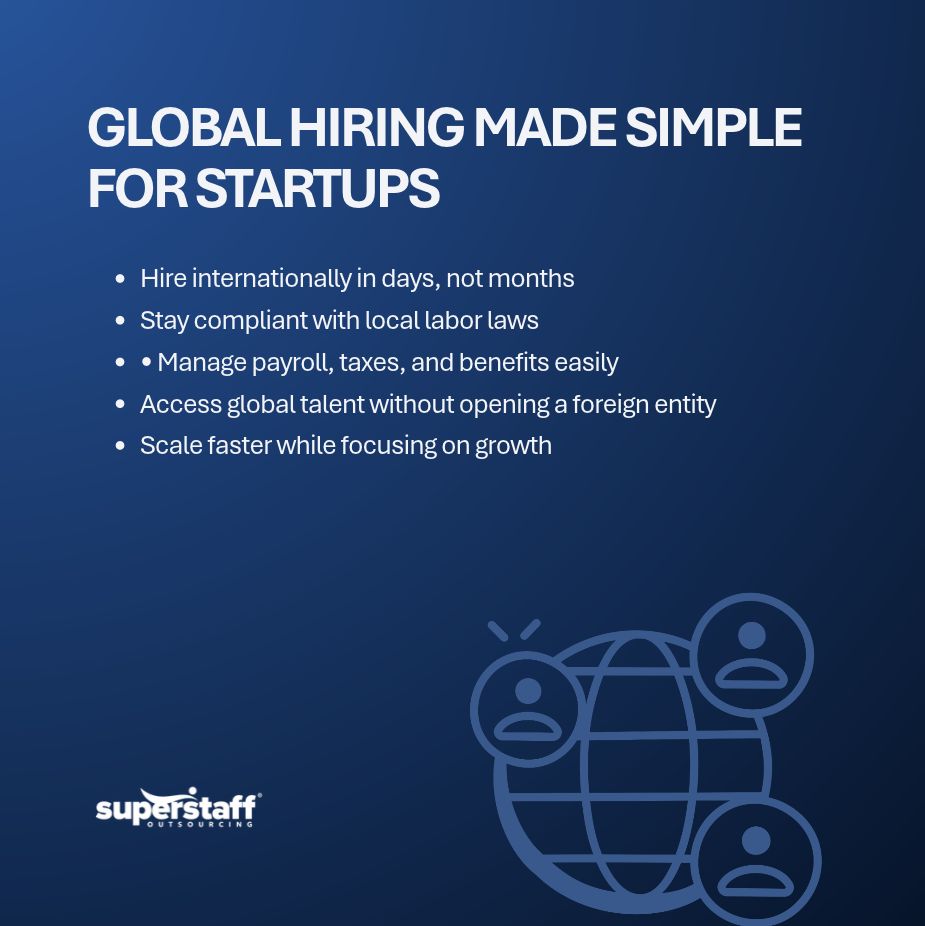
employer of record services for startups
How Employer of Record Services Work
Understanding the process helps startups decide whether an EOR fits their expansion plans. The setup involves several steps, and each one plays an important role in compliance and employee experience.
1. The Startup Chooses a Candidate
The startup recruits and selects the employee. It also determines the role, salary, and reporting structure because the worker performs daily responsibilities as part of the startup’s team.
2. The EOR Becomes the Legal Employer
The EOR signs the employment contract with the worker in the local country. It ensures the agreement follows applicable labor laws, including requirements for probation periods, termination, and mandatory benefits.
3. Payroll and Benefits Are Managed Locally
The EOR processes payroll, handles applicable tax withholdings and social contributions, and administers benefits such as health insurance, leave, and retirement programs according to local requirements.
4. The Startup Manages Daily Work
Although the EOR is the legal employer, the startup directs the employee’s daily tasks, goals, and performance. The worker functions as part of the startup’s internal team.
5. Ongoing Compliance Is Managed
Employment regulations change regularly. The EOR monitors relevant legal updates and adjusts employment administration as needed. This helps startups maintain processes that reflect local requirements.
When Startups Should Consider an EOR
Not every company needs an EOR immediately. However, certain situations make this arrangement especially useful for startups entering international markets.
1. Testing a New Market
If a startup wants to explore demand in another country, hiring one or two local employees through an EOR may be faster and less expensive than opening a subsidiary.
2. Hiring Remote Employees Abroad
Many startups hire remote talent globally. Without a local entity, paying and employing those workers legally can become complicated. An EOR can manage the local employment arrangement in the worker’s country.
3. Expanding Quickly
Startups that scale fast may need teams in multiple countries at once. Setting up entities everywhere can slow hiring plans, while an EOR can help businesses recruit without waiting for each local registration process.
4. Entering Countries With Complex Regulations
Some countries have strict labor laws, mandatory benefits, or difficult registration processes. An EOR with local expertise can help startups understand and manage employment requirements.
5. Delaying Entity Setup
A startup may eventually open a local office or subsidiary, but not right away. An EOR can support hiring during the early stages until the business reaches a size that justifies a permanent entity.
Key Factors When Choosing an EOR Partner
Not all EOR providers offer the same level of service. Startups should evaluate providers carefully before making a decision.
1. Country Coverage
Make sure the provider supports the countries where you plan to hire. Some EORs have broad global coverage, while others focus on specific regions.
2. Compliance Expertise
The provider should understand local labor laws, taxes, and employment practices. Ask how it monitors regulatory changes and handles employment documentation.
3. Payroll Accuracy and Timeliness
Employees expect to be paid correctly and on time. Review the provider’s payroll processes, reporting tools, and service-level commitments.
4. Employee Experience
Your international employees represent your company culture. A good EOR should provide clear onboarding, responsive support, and professional handling of HR matters.
5. Transparent Pricing
EOR pricing models vary. Some charge a flat monthly fee per employee, while others use a percentage of payroll. Understand all costs upfront, including onboarding or termination fees.
It is also important to understand how employment responsibilities are divided between the startup and the provider. The International Labour Organization’s guidance on employment relationships explains why the actual working arrangement and the responsibilities of each party matter when determining employment status.
Common Misconceptions About EOR Services
Startups sometimes hesitate to use an EOR because of misunderstandings about how the model works. Knowing what an EOR does and does not handle can help founders make a more informed decision.
“We Lose Control of Our Employees”
This is not necessarily true. The startup generally continues to manage the employee’s daily work, performance, and integration into the team. The EOR handles the legal employment and administrative responsibilities covered by the agreement.
“An EOR Is Only for Large Companies”
Many early-stage startups use EORs because they need flexibility and speed. In fact, employer of record services for startups can be useful during the early phases of international growth.
“Setting Up an Entity Is Always Better”
A local entity can make sense later, especially for large teams or long-term operations. However, for early expansion, an EOR may be faster and more practical.
“EOR Employees Are Not Part of the Company”
Employees hired through an EOR can participate in company meetings, projects, culture, and collaboration. They work with the startup’s internal team even though the EOR is the legal employer.
“EOR Services Are Too Expensive”
When compared with the costs of legal setup, accounting, compliance management, and administrative staffing, an EOR may be a more economical option for small international teams. However, startups should compare provider fees with the full cost of establishing and maintaining a local entity.
For a closer look at the advantages and limitations of this arrangement, read Employer of Record: When It Makes Sense and When It Doesn’t.
Prepare Your Startup Before Hiring Abroad
Before choosing an EOR provider, identify the positions your startup needs to fill and the countries where you plan to recruit. Consider the employee’s expected salary, work arrangement, reporting structure, and start date.
It also helps to prepare job descriptions, onboarding materials, company policies, and performance expectations. These details make it easier for new employees to join the team and understand their responsibilities.
Founders should also check whether the planned role and working arrangement are suitable for an EOR model. Local legal and tax advice may be necessary, particularly when a company plans to establish a permanent office or carry out regulated business activities in another country.
Employer of Record Support for Growing Startups
Finding international employees is only one part of global expansion. Startups also need support with employment contracts, payroll processing, statutory benefits, and ongoing HR administration.
SuperStaff’s global Employer of Record services help businesses hire talent in supported markets without establishing their own local entities. This gives startups access to employment administration support while they focus on building their teams and managing daily operations.
Review Your Hiring Arrangement as Your Startup Grows
An EOR may be a practical starting point, but your company’s needs can change as the workforce expands. A startup that begins with one international employee may eventually need a larger team, a local office, or a permanent business presence.
Review your arrangement regularly. Compare ongoing EOR fees with the cost of setting up and maintaining a foreign entity. Consider hiring volume, compliance responsibilities, employee experience, and the level of control your business needs.
These reviews help founders decide whether to continue using an EOR or consider a different structure as the company develops.
Expand Globally Without Slowing Your Startup
International growth should create opportunities, not unnecessary administrative work. With employer of record services for startups, founders can hire global talent, manage local employment requirements, and enter new markets without immediately establishing a foreign entity.
SuperStaff supports growing businesses through global hiring and workforce solutions. If your startup is ready to build an international team, contact SuperStaff to discuss your hiring plans and find the right support for your expansion goals.