Expanding into a new country can create exciting opportunities for business growth. However, hiring employees in another market often brings legal, tax, and compliance responsibilities that many companies do not expect. Before recruiting talent overseas, business leaders must decide whether to establish a local entity or partner with a provider that can handle employment requirements on their behalf.
This is where Employer of Record services become part of the conversation. Many businesses use this approach to enter new markets quickly while reducing administrative work. At the same time, some organizations prefer to establish their own legal presence to gain direct control over local operations. Understanding the differences between these two options can help companies choose the right path for their growth plans.
Understanding the Two Global Expansion Models
Businesses often compare Employer of Record services and foreign entity setup because both support international hiring. However, they differ significantly in terms of speed, cost, responsibility, and long-term commitment.
1. What Is an Employer of Record?
An Employer of Record (EOR) serves as the legal employer of workers in a foreign country. The EOR handles payroll, benefits administration, employment contracts, tax filings, and compliance requirements.
As a result, businesses can hire employees abroad without creating a legal entity in that market. The company still manages daily work activities while the EOR manages employment-related obligations under the agreed arrangement.
2. What Is a Foreign Entity?
A foreign entity is a legally registered business presence in another country. Companies establish this structure to operate directly within a specific market.
After registration, the company becomes responsible for employment contracts, payroll processing, tax reporting, and compliance with local labor laws. Therefore, the organization maintains greater direct control but also assumes more responsibility.
3. Why Businesses Compare These Options
Many organizations want to hire talent internationally without unnecessary delays. Consequently, they often compare setup costs, timelines, compliance requirements, and long-term business goals.
The right choice depends on expansion plans, hiring volume, and available resources. While some businesses prioritize speed, others focus on building a permanent presence.
4. Common Industries Using These Models
Several industries rely on global hiring strategies, including:
- Technology
- Healthcare support services
- Customer service operations
- Finance and accounting
- Professional services
Because these sectors often need specialized talent, international hiring has become a practical solution.
5. Key Decision Factors
Business leaders typically evaluate:
- Cost of entry
- Compliance risk
- Hiring speed
- Administrative workload
- Long-term expansion plans
Each factor influences whether an EOR or foreign entity makes more sense.
Companies that want to understand how EOR arrangements work in practice can review Employer of Record benefits for hiring abroad, including how this model supports international recruitment without requiring a company to establish its own local entity.
Comparing Speed, Cost, and Compliance
The decision often comes down to how quickly a company wants to enter a market and how much responsibility it wants to manage.
1. Market Entry Speed
Employer of Record services allow businesses to hire workers without waiting for their own entity registration to be completed. Since the EOR already has an established local structure, companies may be able to begin hiring much sooner.
In contrast, establishing a foreign entity may take several months. Registration requirements, government approvals, and legal documentation can delay hiring plans.
2. Initial Investment Requirements
Creating a foreign entity usually requires legal fees, registration costs, accounting services, and ongoing administrative expenses.
Meanwhile, an EOR model typically requires lower upfront investment. As a result, companies can test new markets without committing significant resources to entity setup.
3. Compliance Management
Labor laws differ from one country to another. Therefore, compliance mistakes can create financial and legal risks.
Employer of Record services provide support with local employment requirements because the provider manages agreed employment responsibilities. On the other hand, companies with foreign entities must establish their own processes for monitoring and maintaining compliance.
4. Payroll and Benefits Administration
Payroll regulations can become complex when operating across multiple countries. Businesses must calculate taxes correctly, meet reporting deadlines, and administer benefits according to local requirements.
An EOR manages these processes as part of its services. Consequently, internal teams can focus on strategic business activities rather than handling every employment-related administrative task.
5. Risk Exposure
Foreign entities place direct employment and business responsibilities on the company. Therefore, organizations must prepare for compliance issues, tax concerns, and labor disputes.
An EOR can take responsibility for specific employment administration duties, but it does not remove every legal or tax obligation a foreign company may have. Businesses should review the agreement and seek local legal and tax advice before choosing either model.
When Each Option Makes Sense
Every expansion strategy should align with business goals and future plans. The number of employees, expected length of operations, and level of local control all matter.
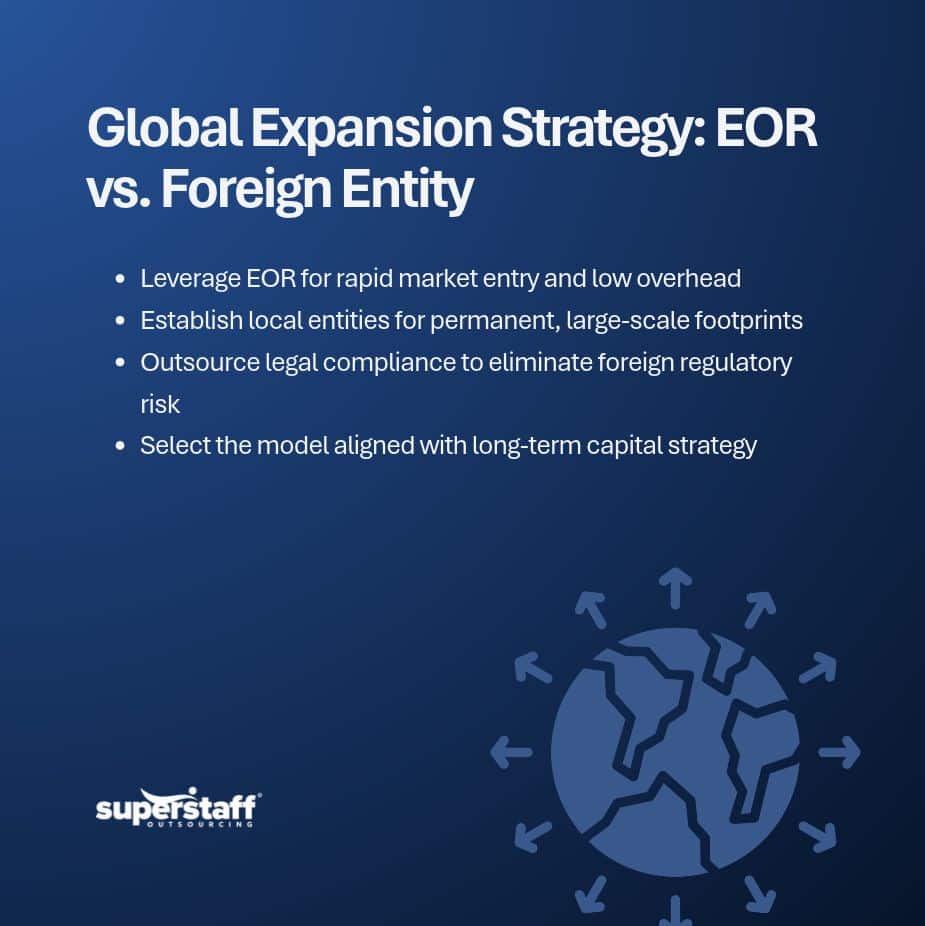
1. Choose an EOR for Faster Expansion
Companies often select Employer of Record services when they want to enter new markets quickly. This approach works particularly well for businesses hiring a small number of employees in different countries.
Additionally, companies can evaluate market opportunities before making larger investments.
2. Choose a Foreign Entity for Long-Term Presence
Organizations planning significant growth in a specific country may benefit from creating a local entity.
This option provides greater operational control and may support future business activities such as opening offices, signing local contracts, and developing a larger local operation.
3. Consider Hiring Volume
A small international team may not justify the cost of entity setup. Therefore, many businesses begin with an EOR solution.
However, larger workforces may eventually make entity creation more cost-effective, depending on local costs, tax rules, and the company’s operating plans.
4. Evaluate Internal Resources
Managing payroll, compliance, and legal obligations requires expertise. Companies with limited internal resources often prefer EOR support because it reduces administrative demands.
Meanwhile, organizations with established legal, finance, and HR teams may feel more comfortable managing a foreign entity.
5. Think About Future Flexibility
Business priorities can change over time. An EOR arrangement may give companies more flexibility when testing a market or hiring a limited number of employees.
Conversely, closing a foreign entity can involve lengthy legal and administrative procedures.
For a closer look at situations where this arrangement may or may not be suitable, businesses can read Employer of Record: When It Makes Sense and When It Doesn’t.
Factors Business Leaders Should Evaluate
Selecting the right approach requires more than comparing monthly fees. Companies should review how each option affects their operations, legal responsibilities, and long-term plans.
1. Compliance Support
Businesses operating in multiple locations face different employment regulations. Therefore, compliance expertise should be a top priority.
Ask potential providers how they manage employment contracts, payroll requirements, statutory benefits, and changes in local labor rules. Companies should also clarify which responsibilities remain with them.
2. Technology and Reporting
Modern HR and payroll platforms improve efficiency and visibility. Companies should evaluate available tools for payroll, employee records, reporting, and document management.
3. Employee Experience
Employees expect clear employment terms, timely payroll, and reliable support. Strong HR processes contribute to a better workplace experience, even when workers are located in different countries.
4. Service Scalability
Expansion often brings workforce growth. Therefore, businesses should choose an arrangement that can support future hiring needs without creating unnecessary administrative work.
5. Industry and Local Experience
Providers with experience in the target market may have a better understanding of local employment requirements and common administrative concerns. Businesses should check the provider’s track record and confirm that its services cover the countries where they plan to hire.
What Setting Up a Foreign Entity Involves
Establishing a local business presence usually requires several steps. These may include choosing a legal structure, registering the company, securing business permits, arranging tax registration, and meeting employer obligations.
The exact process depends on the country. For example, the Philippine Board of Investments provides a guide to doing business in the Philippines, which outlines company registration, permits, and other requirements for businesses operating in the country.
Companies should check the rules of their intended market before estimating setup costs or setting a hiring date. Legal and accounting advice can also help identify obligations that may continue after registration.
Preparing for International Hiring
Before choosing an EOR or establishing a foreign entity, businesses should create a clear hiring plan. Identify the roles to be filled, expected headcount, employment duration, compensation structure, and locations where employees will work.
It is also useful to determine how new hires will report to managers, access company systems, and work with existing teams. These details help prevent confusion once international employees join the organization.
A written plan also makes it easier to compare provider fees and entity setup expenses. Instead of looking only at initial costs, consider the full cost of managing employees over the next few years.
Employer of Record Support for Global Expansion
Businesses that want to hire internationally without establishing their own local entity may consider working with an EOR provider. This arrangement can support employment contracts, payroll processing, tax filings, statutory benefits, and local HR administration.
SuperStaff’s global Employer of Record and payroll services help companies hire talent across different markets while receiving support with employment administration and local requirements. The right arrangement should still be reviewed against the company’s hiring plans and local legal obligations.
Review Your Expansion Strategy as Your Business Grows
The best hiring arrangement can change as a company develops. A business that starts with one or two international employees may eventually need a larger workforce, a local office, or a permanent business presence.
Review the arrangement regularly. Compare the cost of continued EOR support with the expenses and responsibilities involved in establishing an entity. Also consider employee experience, operational control, compliance requirements, and future business opportunities.
Making these reviews part of the expansion plan helps companies decide when to maintain their current arrangement or consider a different structure.
Choose the Right Path for Sustainable Growth
Global expansion creates new opportunities, but every market entry strategy comes with responsibilities. Businesses must balance speed, cost, compliance, and long-term goals before making a decision.
Employer of Record services offer a practical option for organizations that want to hire internationally without establishing their own legal entity. Meanwhile, foreign entities provide greater direct control for companies planning substantial long-term operations in a specific market.
SuperStaff helps businesses explore global hiring through workforce solutions and Employer of Record support. If your company is preparing to expand into another market, contact SuperStaff to discuss your hiring plans and find an approach that fits your business goals.