
Technology supply chains connect materials, workers, energy, manufacturing, and transportation across different countries. When one part changes, businesses across the network can be affected.
This is where Pax Silica enters the discussion. Launched by the United States in 2025, the initiative focuses on critical minerals, semiconductors, manufacturing, energy, infrastructure, logistics, and technology. The Philippines joined in 2026 and announced plans for a proposed industrial zone in the Luzon Economic Corridor.
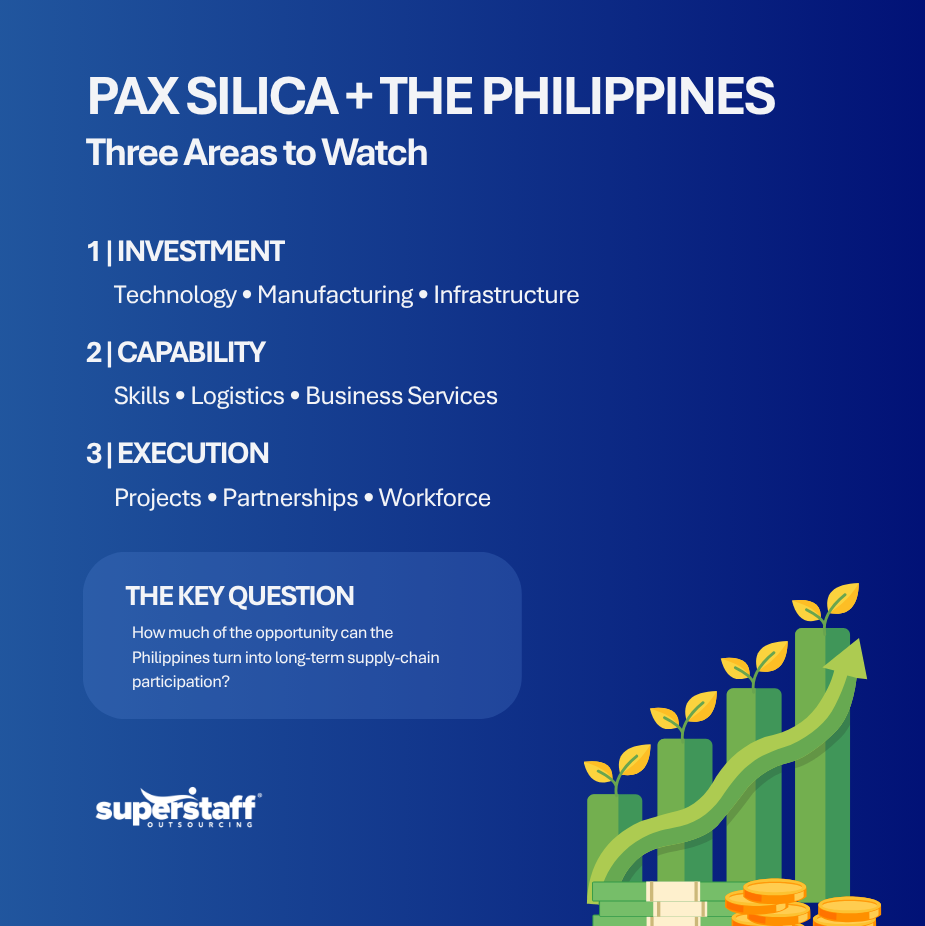
For the Philippines, this could create opportunities in investment, manufacturing, logistics, jobs, and business services. However, the impact will depend on infrastructure, workforce skills, investment, and project development.
Where Could New Opportunities Come From?
Pax Silica could affect several parts of the Philippine economy, but the opportunities may not be limited to companies directly involved in technology. The actual impact, however, will depend on how these activities progress and what businesses are able to support them.
Technology and Manufacturing
The Philippines has announced plans for a proposed industrial zone in the Luzon Economic Corridor. The planned development could support manufacturing and technology activities.
If these projects move forward, they could create work for companies that support manufacturing operations. This could include logistics providers, technical service companies, equipment suppliers, and business support providers.
However, the size of these opportunities will depend on how much investment actually takes place. Announcements are an early step. New facilities, jobs, suppliers, and business activity will show how much the projects are developing.
Logistics and Transportation
Technology products cannot be made or delivered without transportation. Raw materials need to reach factories, components need to reach manufacturers, and finished products need to reach customers.
Pax Silica includes logistics and transportation as part of its broader technology supply chain focus.
This could create opportunities for Philippine logistics companies. Businesses may need help with transportation planning, inventory, tracking, documentation, and coordination.
However, companies supporting international supply chains will need to provide reliable and accurate services. Growing demand alone will not be enough.
Workforce Development
Technology supply chains need many different types of workers. Some jobs require technical and engineering skills. Others involve logistics, procurement, data management, customer service, documentation, and administrative work.
This could create new job opportunities in the Philippines. It could also encourage more training and skills development.
The challenge lies in ensuring workers have the skills companies actually need. If new technology projects require skills that are difficult to find, companies may face challenges when expanding their operations.
What Challenges Could the Philippines Face?
The potential opportunities also come with practical challenges. Building a stronger role in technology supply chains requires more than attracting investment. The Philippines will also need infrastructure, skilled workers, competitive business conditions, and enough time for projects to develop.
Infrastructure
Technology and manufacturing companies need reliable infrastructure. They need dependable energy, transportation, communication networks, and industrial facilities.
If infrastructure cannot keep up with new investment, companies could face delays or higher operating costs.
This means infrastructure development will be an important part of the Philippines’ ability to support more technology-related activities.
Skills
Having workers is not the same as having workers with the right skills.
Some technology and manufacturing jobs require specialized knowledge and training. Companies may also need people who understand complex supply-chain operations.
The Philippines may need continued investment in training to meet these needs. This could help workers move into more specialized roles as new industries develop.
Competition
The Philippines will also compete with other countries for technology-related investment.
Companies may look at more than labor costs when choosing where to operate. They may consider infrastructure, skills, transportation, energy, regulations, supplier availability, and overall reliability.
This means the Philippines may need to compete based on a combination of cost, talent, infrastructure, and business capabilities.
Time and Execution
Pax Silica creates opportunities for cooperation, but projects still need time to develop.
Companies need funding, facilities, workers, suppliers, and clear business conditions before they can start large-scale operations.
For this reason, businesses should look at actual developments rather than relying only on announcements. New investments, construction, hiring, and supplier agreements can provide clearer signs of where opportunities are developing.
Public Backlash and Stakeholder Concerns
Large technology and infrastructure initiatives can also face public scrutiny.
Concerns may emerge around land use, environmental impact, energy and water consumption, labor conditions, data security, and whether the economic benefits will meaningfully reach local communities.
If these concerns are not addressed clearly, public opposition could slow implementation, influence policy discussions, or affect investor confidence.
For Pax Silica, this means long-term success may depend not only on attracting investment, but also on maintaining transparency, regulatory accountability, and public trust as projects move forward.
What Could Pax Silica Mean for Outsourcing?
However, we need to keep in mind that Pax Silica may also create opportunities for companies that provide business support services.
A technology or manufacturing company may need customer service, administrative support, technical assistance, logistics coordination, data management, or documentation. These functions help companies manage their daily operations as they grow.
This could give Philippine outsourcing companies another way to support international businesses.
However, the type of outsourcing may also change. Companies working in technology and supply chains may need more specialized support. Outsourcing providers may need to develop industry knowledge and technical skills to meet these needs.
Why Clark Could Matter
The proposed development in the Luzon Economic Corridor makes Central Luzon an area worth watching. The region could see more activity if technology, manufacturing, logistics, and infrastructure projects move forward.
SuperStaff has a site in Clark, giving the company an established presence in Central Luzon. This can be relevant for businesses that may need additional workforce and operational support as activities in the region develop.
Support needs could include customer service, administration, logistics coordination, technical support, and other business functions. Outsourcing can allow companies to add support without building every function internally.
What Should Businesses Watch?
Businesses do not need to make decisions based on Pax Silica alone. They can monitor how the initiative develops and look for signs of actual business activity.
Investment
New investments can show which industries are developing in the Philippines and what types of companies are entering the market.
Infrastructure
New energy, transportation, connectivity, and industrial projects can show whether the country is preparing for additional technology-related activities.
Workforce Needs
Hiring trends can show which skills companies need. This can help businesses identify where training or external workforce support may be useful.
Supply Chains
Changes in sourcing, manufacturing, transportation, and supplier relationships can show where new business needs are developing.
These areas can give companies a clearer view of how Pax Silica may affect their operations.
What Will Determine the Philippines’ Role?
Pax Silica gives the Philippines a chance to participate in the transformation of technology supply chains. But participation alone will not determine the outcome.
The country will need reliable infrastructure, skilled workers, strong businesses, and continued investment. Local companies will also need to find ways to join these supply chains.
The results may not be the same across all industries. Some businesses may see opportunities sooner, while others may need more time to benefit from new investments and projects.
That is why it is important to consider both the opportunities and the challenges.
What Businesses Can Expect
As Pax Silica develops, businesses may need to reassess how they manage their workforce and day-to-day operations. Companies connected to technology, manufacturing, logistics, and related industries may need flexible support as their requirements change.
SuperStaff can help businesses manage functions such as customer support, administrative work, logistics support, and technical services, allowing internal teams to focus on their core operations while adding capacity where needed.
As the Philippines’ role in technology supply chains continues to develop, having the right operational support can help businesses respond to new demands.
Talk to SuperStaff about building a workforce solution that fits your business needs and supports your next stage of growth.
The Real Test Is What Happens After the Headlines
Pax Silica could strengthen the Philippines’ position in technology, manufacturing, logistics, and business services, but the opportunity is not automatic. New investment could create jobs, deepen local capabilities, and open more space for Filipino companies to participate in global supply chains. At the same time, infrastructure gaps, skills shortages, competition, execution delays, and public concerns around resources, labor, governance, and community impact could limit how much value the country ultimately captures.
The more important question is not whether Pax Silica is inherently good or bad, but whether the Philippines can turn participation into sustainable, broad-based economic value. That will depend on what actually gets built, what kinds of jobs are created, how local businesses benefit, and whether growth is matched by accountability and public trust. For businesses, the smartest approach is to look beyond announcements and follow the evidence as the investment landscape develops.
Build Your Philippines Operations At the Heart of Clark
With established operations in Clark, SuperStaff helps growing businesses build scalable support teams across customer service, back-office, logistics, technical support, and other critical functions. Talk to SuperStaff about creating a workforce solution that can grow with your business.