Expanding your workforce into another country creates opportunities to access skilled professionals, enter new markets, and support customers across different regions. However, international hiring also involves employment contracts, payroll administration, tax obligations, and local labor requirements. These responsibilities can delay hiring if businesses are unfamiliar with the process.
An Employer of Record (EOR) can simplify international expansion by managing the legal employment responsibilities on behalf of a client company. While the EOR handles employment administration, the client company oversees the employee’s daily work. This arrangement allows businesses to hire internationally without setting up a local legal entity, making global recruitment and workforce management easier to coordinate.
Understanding How an Employer of Record Works
Before hiring internationally, businesses should understand the role of an Employer of Record. This hiring model allows companies to expand their workforce while reducing the administrative work involved in employing people across borders.
1. Understand the Employer of Record Model
An Employer of Record serves as the legal employer on behalf of a client company. Depending on the agreement and local regulations, the EOR manages employment contracts, payroll, statutory benefits, tax-related responsibilities, and other employment administration.
Meanwhile, the client company directs the employee’s daily tasks, performance, and work priorities. This arrangement allows businesses to focus on operations while the EOR manages the legal employment relationship.
2. Identify Your Hiring Goals
Every successful hiring plan starts with clear objectives. Businesses should determine which roles they need to fill, where they want to hire, and how new employees will support company growth.
They should also consider whether the hiring need is temporary, project-based, or part of a long-term workforce plan. These details help companies decide whether an EOR arrangement is suitable for their goals.
3. Choose the Right Hiring Location
Different countries offer different talent pools, language skills, labor costs, and business advantages. Therefore, businesses should evaluate locations based on workforce availability, time zone compatibility, local employment requirements, and operational needs.
For example, companies considering the Philippines should understand local workplace expectations and employee practices. A closer look at Philippine work culture and what it means for American companies can help employers prepare for communication, onboarding, and team integration.
4. Select an Experienced Employer of Record
Not every Employer of Record provides the same level of service. Businesses should evaluate providers based on their experience, responsiveness, payroll capabilities, HR support, and knowledge of local employment practices.
Before signing an agreement, ask about the provider’s coverage, service fees, employment responsibilities, reporting process, and approach to handling employee concerns. A clear service agreement helps both parties understand their roles and responsibilities.
5. Establish a Hiring Timeline
Creating a realistic hiring schedule keeps everyone aligned throughout the recruitment process. Businesses should include time for candidate sourcing, interviews, employment documentation, payroll setup, and onboarding.
Clear timelines also improve communication between hiring managers and service providers. Companies should allow enough time for document collection and any required employment checks before the employee’s start date.
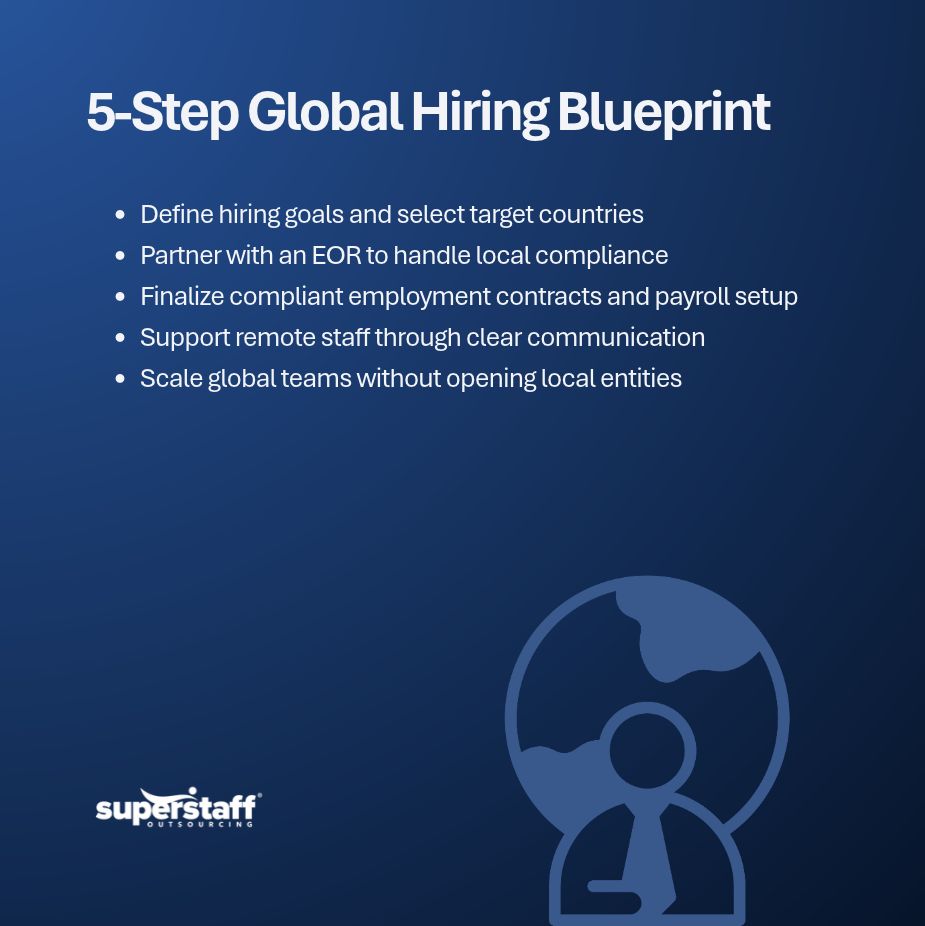
hire through an Employer of Record
Steps to Hire Employees Successfully
Once the planning phase is complete, businesses can begin building their international workforce. Each step supports a smoother hiring experience while helping the company prepare for its employment responsibilities.
1. Recruit Qualified Candidates
Businesses can recruit talent through job boards, referrals, recruitment partners, or specialized hiring agencies. During the selection process, they should evaluate skills, experience, communication, and suitability for the role.
Companies that need additional recruitment support can consider end-to-end recruitment process outsourcing. This approach can help organize candidate sourcing, screening, selection, and onboarding activities.
Choosing the right candidate contributes to stronger long-term employee performance and reduces the need to repeat the hiring process.
2. Finalize Employment Documentation
After selecting a candidate, the Employer of Record prepares the employment agreement in line with applicable local requirements. These documents should clearly explain compensation, benefits, working hours, leave entitlements, and other employment terms.
Businesses should review the agreement before the employee signs it. Both the EOR and client company should understand their responsibilities, including how employment changes, disputes, and termination matters will be handled.
3. Complete Payroll Setup
The Employer of Record manages payroll administration based on local employment requirements. This may include salary payments, tax deductions, statutory contributions, benefits administration, and required employment reporting.
Before the first payroll cycle, businesses should confirm the employee’s compensation details, payment schedule, currency, and any applicable allowances. Reliable payroll processes improve employee confidence while reducing administrative work for the client company.
4. Prepare Employee Onboarding
A structured onboarding process helps employees understand their responsibilities and become productive more quickly. Businesses should introduce company policies, communication tools, performance expectations, and team members during onboarding.
The EOR may handle employment documents and local HR requirements, while the client company provides role-specific training and explains daily workflows. Clear coordination prevents gaps and helps new employees settle into their positions.
5. Begin Daily Operations
Once onboarding is complete, employees can begin their assigned responsibilities. The client company manages projects, performance, and daily communication, while the Employer of Record continues handling employment administration.
This division of responsibilities allows businesses to manage work directly without taking on every local employment task themselves. Companies should maintain regular communication with their EOR to address payroll questions, employee concerns, and changes to employment arrangements.
Best Practices for Long-Term Success
Hiring employees is only the beginning. Businesses should continue improving their workforce management practices to support long-term growth, compliance, and employee satisfaction.
1. Maintain Regular Communication
Employees perform better when managers communicate consistently. Regular meetings, project updates, and performance discussions help remote and international employees stay connected.
Open communication also strengthens collaboration across different locations. Managers should establish clear channels for work-related questions, feedback, and urgent concerns.
2. Keep Employee Records Updated
Businesses should maintain organized records for employment agreements, payroll information, performance reviews, and training documentation. Accurate records support operational efficiency while simplifying future administrative tasks.
Companies should also coordinate with their EOR to confirm which party maintains specific employment records and how updates are shared. Access to employee information should be limited to authorized personnel.
3. Provide Ongoing Employee Support
Employees benefit from regular feedback, professional development, and opportunities to ask questions. Therefore, businesses should create an environment that encourages learning and collaboration.
Supportive workplaces can improve employee engagement and retention. Managers should also make sure employees know whom to contact for workplace concerns, benefits questions, and employment-related matters.
4. Review Workforce Needs Regularly
Business priorities change over time. Companies should review staffing requirements regularly to determine whether they need additional employees, new roles, or operational support.
Planning ahead allows organizations to expand without creating unnecessary pressure on existing teams. It also helps businesses assess whether their current EOR arrangement continues to meet their hiring needs.
5. Build a Strong Partnership With Your EOR
An Employer of Record should be a reliable partner in your international workforce strategy. Regular communication with the provider helps address questions, clarify responsibilities, and improve employment processes.
Businesses should schedule periodic reviews to discuss service performance, payroll accuracy, employee concerns, and upcoming hiring plans. Companies that work with recruitment partners can also coordinate sourcing and onboarding activities more effectively. A structured step-by-step recruitment process can help businesses understand how recruitment activities fit into a broader workforce plan.
Expand Globally With Confidence
Hiring internationally does not have to involve complicated administrative processes or establishing a legal entity in every country. Businesses that hire through an Employer of Record can access skilled professionals while receiving support for employment administration, payroll, benefits, and local requirements. With the right strategy and a reliable provider, companies can focus on managing their teams and growing their operations.
SuperStaff provides workforce solutions that include Employer of Record support, recruitment services, payroll administration, HR assistance, and business process outsourcing. Whether you are hiring one employee or building an international workforce, our team can help you plan your next steps. Contact SuperStaff to discuss your hiring requirements and find the right support for your global expansion plans.