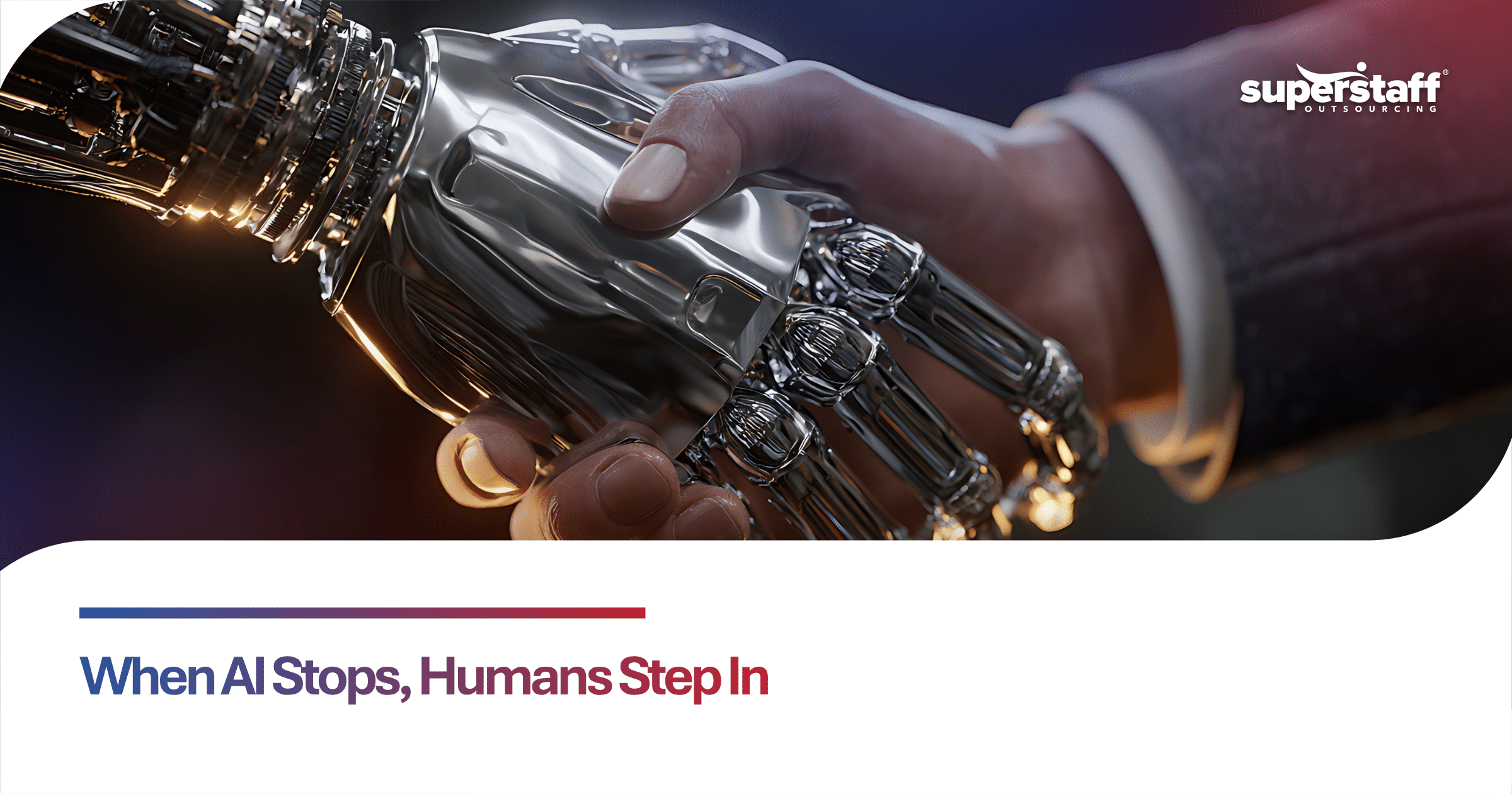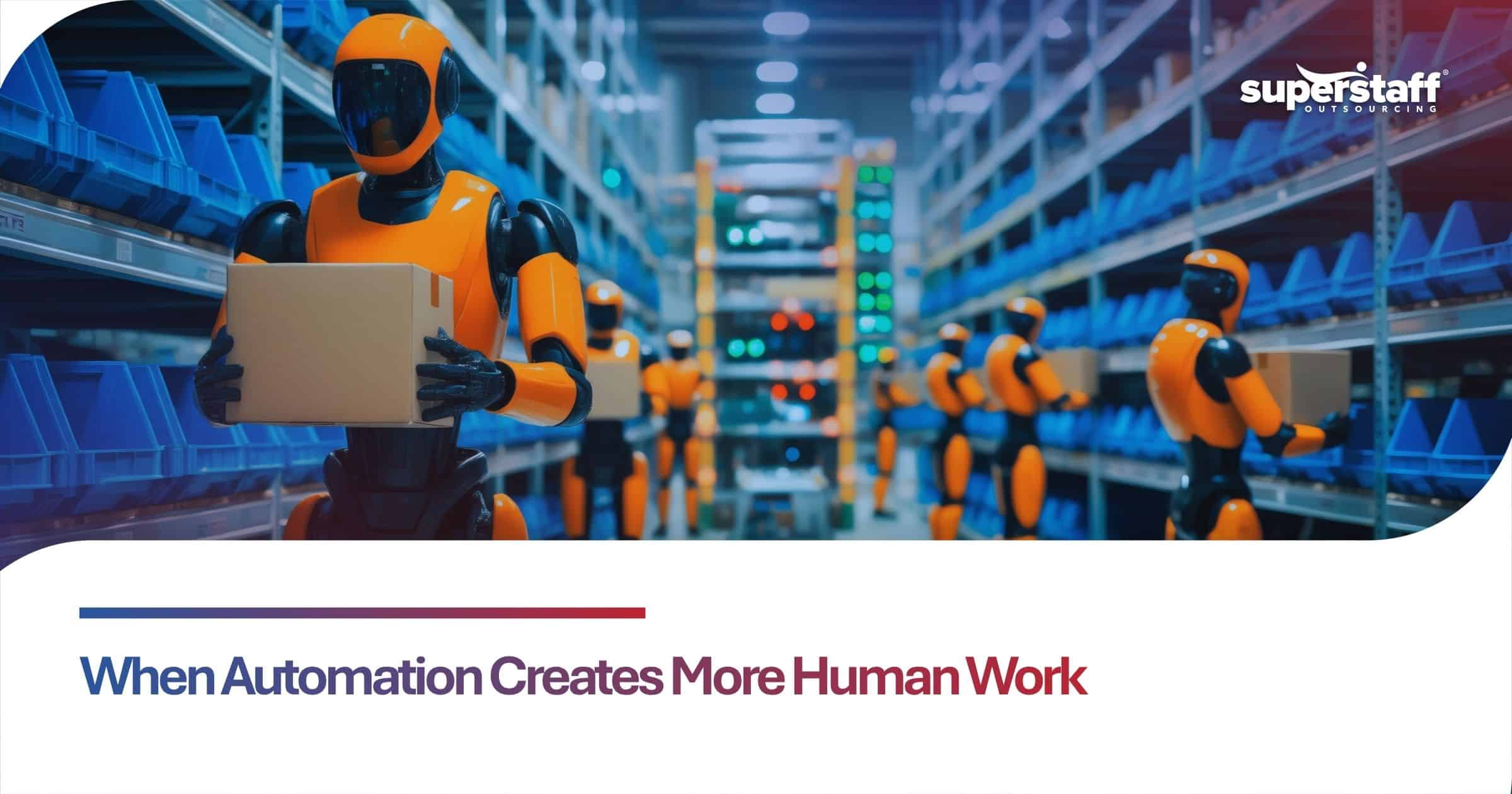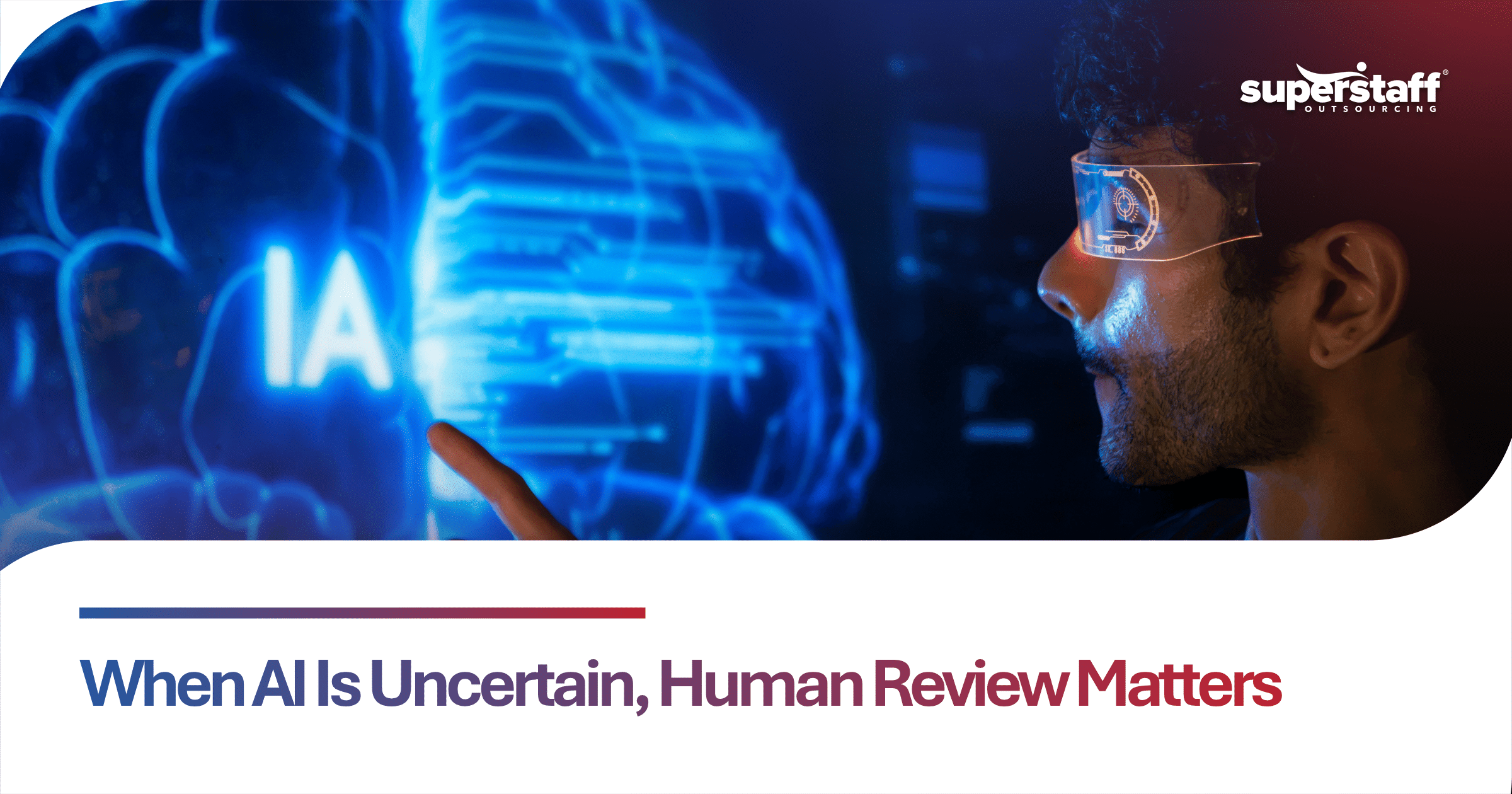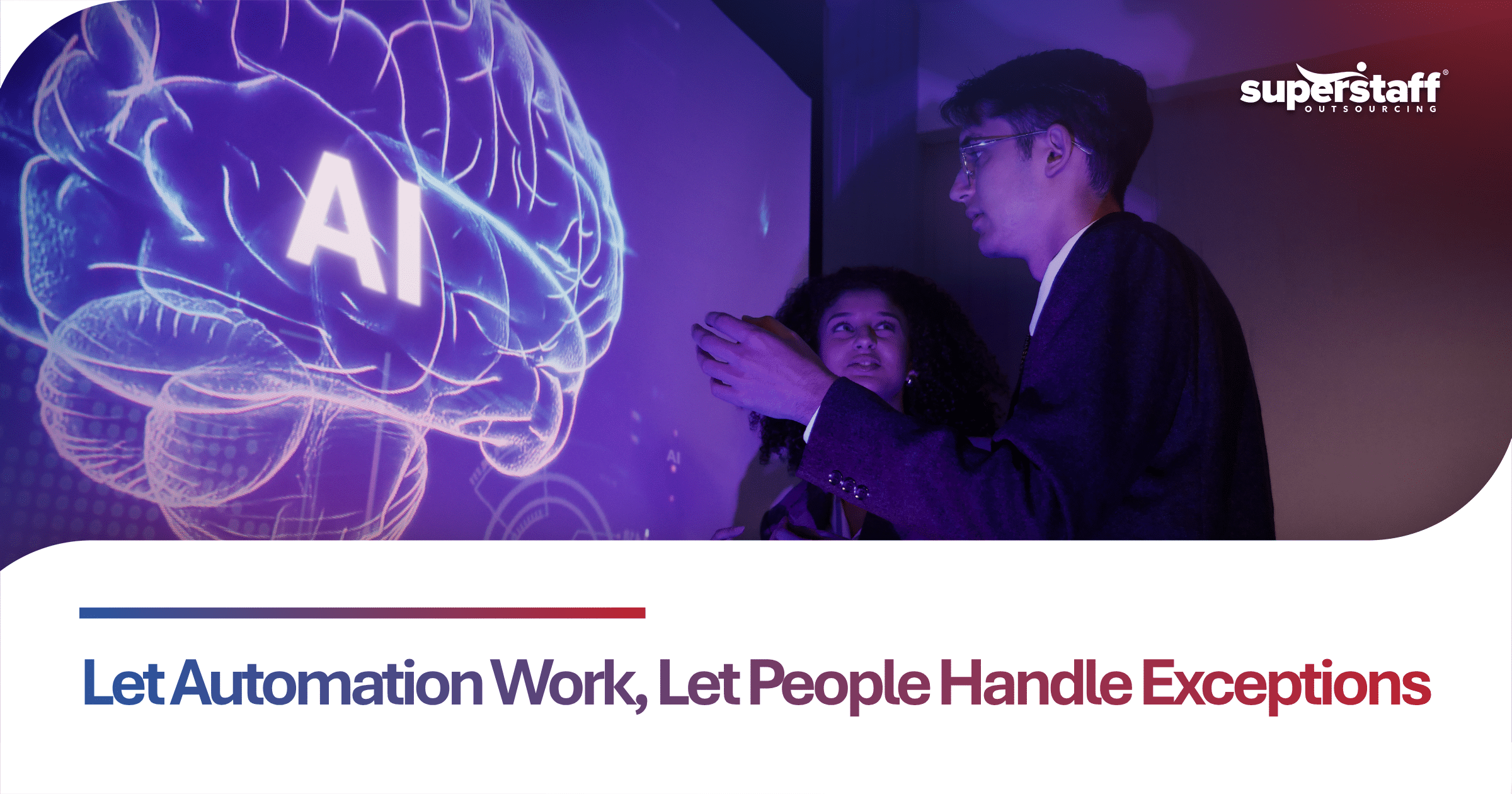
A company can automate a task and still need people to finish it. This may sound like a problem with AI, but often the issue comes from the type of work involved. AI can process information, create responses, classify records, and make recommendations. However, businesses still need people to review exceptions, handle unclear cases, communicate with customers, and correct errors.
This is where human-in-the-loop (HITL) becomes important. Instead of removing people from a process, HITL gives them a defined role alongside AI. As a result, companies may discover that some AI-supported tasks still require a dedicated team.
For many businesses, that team can come from a business process outsourcing (BPO) provider. AI operations outsourcing can help companies manage the human work that remains after automation without building a large internal team.
AI Still Needs People for Specific Tasks
AI can handle many repetitive activities. However, some parts of a workflow still require human judgment, communication, and attention to detail.
1. Exceptions Need Human Judgment
AI works best when a task follows a clear pattern. However, business operations often include cases that do not match standard rules.
A customer may submit an unusual request, a document may contain missing information, or two records may conflict. Therefore, companies need people who can investigate the situation and decide what should happen next. These responsibilities are part of the human-in-the-loop workforce model for AI outsourcing, which places trained employees at key points in automated workflows.
2. Customers Still Need Human Support
AI can answer common questions and handle simple requests. However, customers may need help when an issue becomes complex or sensitive.
For example, an automated system may handle a billing question until it detects conflicting information. At that point, a trained support representative can review the account, explain the issue, and find the appropriate solution.
3. AI Outputs Require Quality Checks
AI can produce an answer quickly, but speed does not guarantee accuracy. Businesses still need employees to check information before they use it in important processes.
These checks can include reviewing customer records, verifying documents, checking data, and confirming that responses follow company policies. Consequently, AI may reduce production time while creating a new quality-control role.
4. Some Decisions Need Business Context
AI can analyze the information available to it. However, it may not know every factor that influences a business decision.
A human employee can consider customer history, internal policies, special circumstances, and information from other systems. This context can change the final decision.
5. Compliance Requires Careful Review
Some industries require companies to follow detailed rules when handling information or completing specific processes. AI can help organize and review information, but employees may still need to confirm that the final action meets company requirements.
The NIST AI Risk Management Framework offers guidance on identifying and managing AI risks, including the need for appropriate oversight. This can help businesses decide where human review is needed.
Why BPO Teams Fit AI-Supported Work
When AI creates new human tasks, companies need a practical way to manage them. A BPO team can provide the people needed to handle these tasks without requiring the company to hire and manage every role internally.
1. BPO Teams Can Handle Review Queues
AI systems can generate large volumes of outputs. Therefore, companies need enough people to review the cases that require attention.
A BPO team can manage these review queues according to defined procedures. This helps internal employees focus on higher-level work while the outsourced team handles routine checks and escalations.
2. Teams Can Work Around AI Workflows
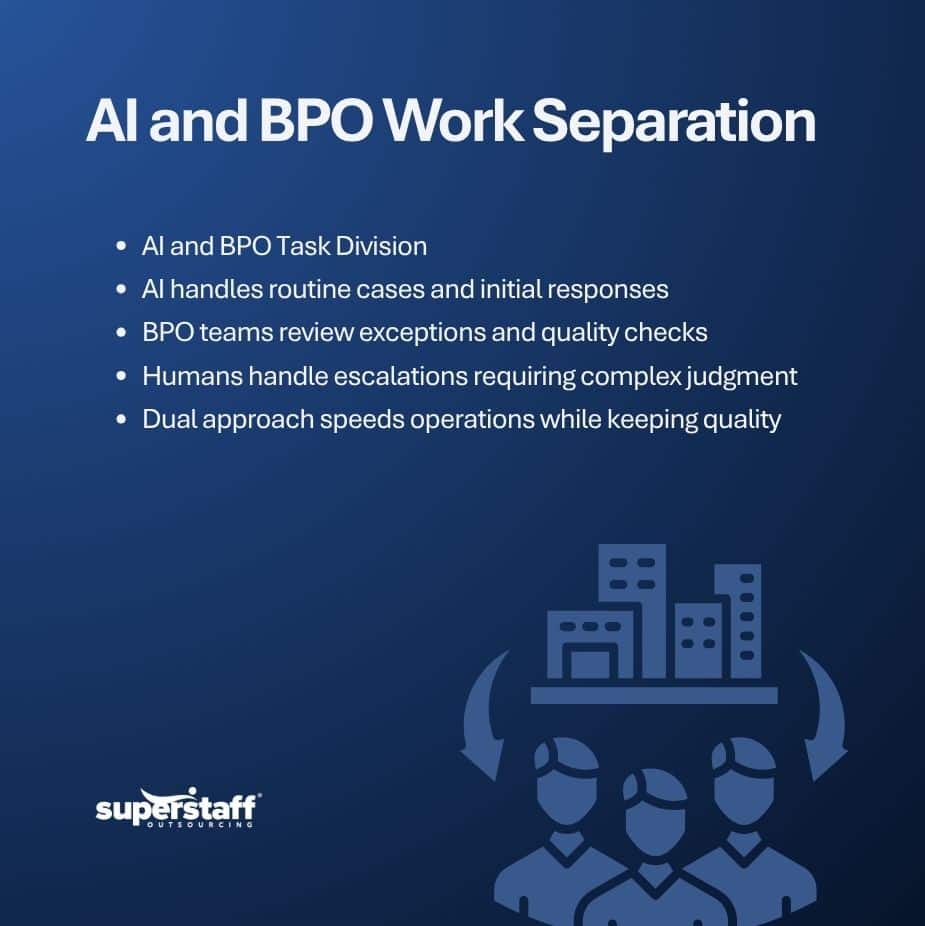
BPO employees can support specific stages of an AI-enabled process. They can review flagged cases, update records, respond to customers, or escalate problems.
Moreover, companies can define the exact tasks the team should handle. This creates a clearer division between what AI manages and what people manage.
3. Businesses Can Adjust Team Size
AI-supported workloads can change over time. A new system may generate more review work during its early stages, while a mature process may require fewer employees.
BPO arrangements can give companies more flexibility when workload levels change. Instead of maintaining a fixed internal team, businesses can adjust support based on operational needs.
4. BPO Teams Bring Process Experience
A strong BPO team does more than complete assigned tasks. Employees can follow documented procedures, monitor recurring issues, and identify areas where the workflow creates unnecessary work.
Therefore, the team can provide useful feedback about the practical performance of an AI-supported process. This also reflects the broader shift toward AI in business process outsourcing, where technology and human expertise support different parts of the same operation.
5. Outsourcing Can Support Internal Teams
BPO does not have to replace an internal operations team. Instead, an outsourced team can handle defined tasks while internal employees manage strategy, process design, and complex decisions.
This approach allows companies to use AI and human workers together without forcing one group to manage the entire workflow.
Where AI Operations Outsourcing Makes Sense
AI operations outsourcing works best when companies understand which human tasks remain after automation. The focus should stay on operational support rather than simply adding people to an AI process.
1. Data Review and Validation
AI can sort, classify, and process data. However, employees may still need to verify important information.
BPO teams can review records, identify inconsistencies, and update incorrect details. This creates a quality check before information moves to the next stage.
2. Customer Service Escalations
AI can handle common customer questions. However, difficult cases may require a person who can understand the issue and communicate clearly.
An outsourced support team can manage these escalations while following the company’s policies and service standards.
3. Content and Document Review
AI can create summaries, drafts, and other documents. Yet, companies may still need people to check facts, formatting, completeness, and compliance with internal standards.
A BPO team can manage these reviews based on clear guidelines and escalation rules.
4. Back-Office Processing
Many back-office tasks involve repetitive work combined with exceptions. AI can process standard cases, while people handle records that need additional research.
This model can reduce the amount of manual processing without removing human involvement from the workflow.
5. AI Quality Monitoring
Companies also need people to monitor how AI performs over time. Employees can track errors, review corrections, identify repeated issues, and report patterns.
This creates an ongoing operational role that companies may overlook when they calculate the expected savings from automation. Businesses that need dedicated support for annotation, output validation, moderation, and AI quality checks can use SuperStaff’s AI outsourcing services.
Build Human Support Around AI
HITL does not mean a company failed to automate. Instead, it shows that some business processes need both technology and people.
1. Map the Full Workflow
Start by documenting every step. Identify where AI produces an output, where a person reviews it, and where someone makes the final decision.
This makes the remaining human work easier to measure.
2. Separate Routine From Complex Work
Not every task needs the same level of human involvement. Companies should allow AI to handle predictable work while directing exceptions to trained employees.
This approach can reduce unnecessary reviews and help people focus on cases that actually need attention.
3. Create Clear Escalation Rules
Employees need to know when they can resolve a case and when they should send it to another team. Clear rules prevent delays and inconsistent decisions.
Additionally, escalation data can show which issues occur most often.
4. Measure Human Work
Companies should track review time, correction rates, escalations, and workload volume. These numbers show whether AI actually reduces operational effort.
Without these measurements, businesses may underestimate how much human work remains after automation.
5. Improve the Process Over Time
Human reviewers can identify repeated problems that AI systems cannot solve on their own. Companies can use this feedback to improve instructions, workflows, data, and escalation rules.
As a result, human involvement becomes part of process improvement rather than simply another operating cost.
Let People Handle What AI Cannot
AI can reduce repetitive work, but it does not remove every operational requirement. HITL creates a clear role for people when AI encounters exceptions, complex decisions, customer concerns, or quality issues.
That is why some AI-supported processes still need BPO teams. With AI operations outsourcing, companies can assign the remaining human work to trained teams while keeping internal employees focused on business priorities.
SuperStaff can help businesses build teams for customer support, back-office operations, quality checks, data processing, and other AI-supported workflows. By combining technology with the right human support, companies can manage workload without assuming that AI can handle every step alone.
Contact SuperStaff to discuss how your business can support AI-enabled operations with a team that handles the work automation cannot finish.