A guest may forget the room number, but they will remember how the staff treated them. A warm greeting, quick support, and clear communication can shape the entire customer experience. Because of this, businesses in the travel and hotel industry continue to improve hospitality customer service to meet rising guest expectations.
Guests now expect fast replies, personalized support, and smooth service from check-in to check-out. At the same time, hospitality businesses face staffing shortages, busy seasons, and growing customer demands. Therefore, companies need reliable systems and trained teams that can deliver quality support every day. Strong hospitality customer service helps hotels, resorts, and travel brands build trust, improve reviews, and encourage repeat bookings.
Key Elements of Strong Hospitality Customer Service
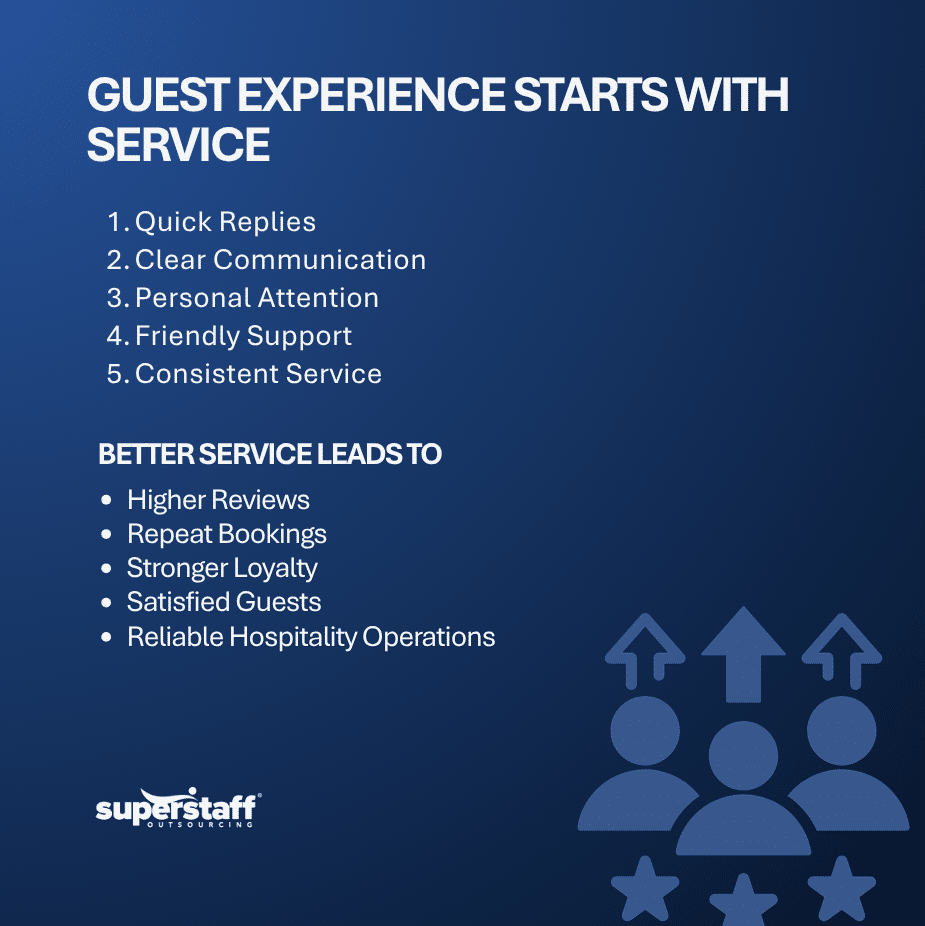
Great guest experiences start with consistent service. While amenities matter, customer interactions can have a major effect on overall satisfaction. Because of that, hospitality businesses should focus on service practices that improve every stage of the guest journey.
1. Fast Response Times Matter
Guests do not want to wait long for assistance. Whether they ask about a reservation, request room service, or report an issue, they expect quick action. Therefore, staff members should acknowledge concerns and provide updates as soon as possible.
Fast hospitality customer service can also reduce frustration when a problem occurs. Businesses that need additional coverage can use customer service outsourcing to expand support capacity during busy periods or outside regular service hours.
2. Clear Communication Builds Trust
Confusing instructions can create problems for guests. For example, unclear booking details or delayed updates may lead to complaints. Hospitality teams should provide accurate information and explain changes clearly.
Staff should also use simple language when assisting international travelers. Clear communication can reduce misunderstandings and make it easier for guests to get the information they need.
3. Personalized Experiences Improve Satisfaction
Guests appreciate service that considers their needs and preferences. This may include recording room preferences, recognizing returning guests, or providing recommendations based on previous requests.
Personalized hospitality customer service can also encourage repeat bookings. However, businesses should manage guest information responsibly and follow applicable privacy requirements when storing and using customer data.
4. Professional Staff Create Positive Experiences
Friendly employees can make interactions more pleasant, but professionalism matters just as much. Staff should remain calm, respectful, and focused on resolving the guest’s concern, including during difficult situations.
Regular training gives employees clear procedures for handling common requests, complaints, booking problems, and service disruptions.
5. Consistency Keeps Guests Loyal
Guests expect reliable service across different interactions. A traveler who receives excellent booking support should receive the same level of attention when checking in, requesting assistance, or contacting the business after the trip.
Consistent hospitality customer service also supports a stronger brand reputation because guests know what level of service they can expect when they return.
Common Challenges in Hospitality Customer Service
The hospitality industry moves quickly, and service demand can change throughout the day or year. Identifying common challenges allows businesses to plan staffing and processes more effectively.
1. High Employee Turnover
Hospitality businesses can experience frequent staffing changes. New employees require onboarding and training before they can confidently manage guest concerns and follow established service standards.
Businesses can address this challenge by maintaining clear procedures, structured training, and accessible service guidelines.
2. Seasonal Demand Increases Pressure
Hotels, resorts, and travel companies often experience higher booking and inquiry volumes during holidays and peak travel seasons. Internal teams may struggle to handle the sudden increase in guest requests.
Hospitality offshoring services can provide additional operational and customer service capacity when businesses need support for reservations, inquiries, and other travel-related processes.
3. Managing Guest Complaints
Even well-managed hospitality businesses receive complaints. What happens next can influence the guest’s overall impression of the company.
Teams should acknowledge the concern, collect the necessary information, explain the available solution, and provide updates when an issue cannot be resolved immediately. Clear escalation procedures also show employees when a problem needs management involvement.
4. Language and Cultural Differences
Hospitality businesses serve travelers from different countries and backgrounds. Language barriers and differences in communication styles can sometimes create confusion.
Training employees in active listening, clear communication, and cultural awareness can reduce these problems and support more respectful guest interactions.
5. Limited Staff During Busy Hours
Restaurants, hotels, resorts, and travel companies may experience sudden increases in inquiries throughout the day. Guests still expect timely assistance even when staff members are managing several requests.
Workforce planning and clear workflows can help businesses allocate people based on expected demand rather than relying on the same staffing level throughout the day.
Ways to Improve Hospitality Customer Service
Improving guest experiences requires planning, training, and reliable support systems. Businesses should review the complete guest journey to identify where delays, communication gaps, or service problems occur.
1. Provide Regular Employee Training
Training gives employees a clear understanding of company standards and guest expectations. It can cover communication, booking procedures, complaint management, escalation processes, privacy requirements, and other relevant areas.
Regular coaching can also address recurring problems identified through customer feedback or quality reviews.
2. Use Customer Feedback Effectively
Guest feedback provides useful information about what works and what needs improvement. Hotels and travel businesses can gather feedback through reviews, surveys, direct conversations, and customer support interactions.
According to UN Tourism, tourism organizations continue to focus on service quality, innovation, accessibility, and sustainable tourism development as the sector evolves.
Businesses should look for repeated patterns in feedback rather than treating every review as an isolated comment. Recurring complaints can indicate a larger problem with a process, policy, or service.
3. Improve Multi-Channel Support
Guests may contact a hospitality business by phone, email, live chat, social media, or messaging platforms. They expect consistent information regardless of the channel they choose.
Businesses should keep customer information and service procedures organized so agents can understand previous interactions without asking guests to repeat the same issue.
4. Focus on Employee Support
Employees need the right information, training, tools, and staffing levels to provide reliable service. Businesses should also create clear processes for escalating difficult situations.
Supporting employees can reduce confusion and give teams more confidence when handling guest concerns.
5. Partner With Reliable Outsourcing Providers
Outsourcing can give hospitality businesses additional people to manage reservations, customer inquiries, booking changes, after-hours support, and selected back-office processes.
The right outsourcing structure can complement internal teams rather than replace important on-site guest interactions. Companies considering this approach can explore the customer service and back-office capabilities available through SuperStaff.
Technology Supports Better Guest Experiences
Technology can make hospitality services faster and easier to access. Businesses can use digital tools to manage routine interactions while allowing employees to focus on requests that require personal attention.
Useful tools may include:
- Live chat for quick guest inquiries
- Online booking systems with confirmation features
- Mobile check-in and digital access tools
- CRM systems for managing guest information
- Automated post-stay feedback surveys
However, technology should not make it difficult for guests to reach a person when they need assistance. A chatbot may answer a basic booking question, for example, while a trained employee handles a complaint, unusual request, or complex reservation issue.
Hospitality customer service works best when technology supports employees rather than creating additional barriers between the guest and the business.
Better Guest Experiences Start With Great Support
Hospitality businesses depend on guests who feel welcomed, informed, and supported throughout their experience. Strong hospitality customer service can improve satisfaction by providing faster responses, clearer communication, consistent assistance, and reliable problem resolution.
SuperStaff provides scalable outsourcing solutions for hospitality and travel businesses that need additional customer service and back-office support. Trained teams can assist with reservations, guest inquiries, customer care, and selected administrative processes based on your operational requirements.
Want to strengthen your guest support operations? Contact SuperStaff to discuss a hospitality outsourcing solution for your business.