Every business handles rules, policies, and industry standards. However, keeping up with changing regulations can take time away from daily operations. Many companies start with internal compliance teams, spreadsheets, and manual tracking. Yet as the business grows, those methods often become difficult to manage.
Missed deadlines, reporting errors, and weak documentation can create serious problems. As a result, businesses may face penalties, legal concerns, and damaged client trust. That is why many companies now turn to compliance outsourcing services to improve accuracy and reduce pressure on internal teams.
The right support helps businesses stay organized while meeting industry requirements. Additionally, outsourced compliance specialists can support companies as requirements change. Businesses that address compliance gaps early may also reduce the time and resources needed to correct problems later.
Signs Your Business Needs Outside Compliance Support
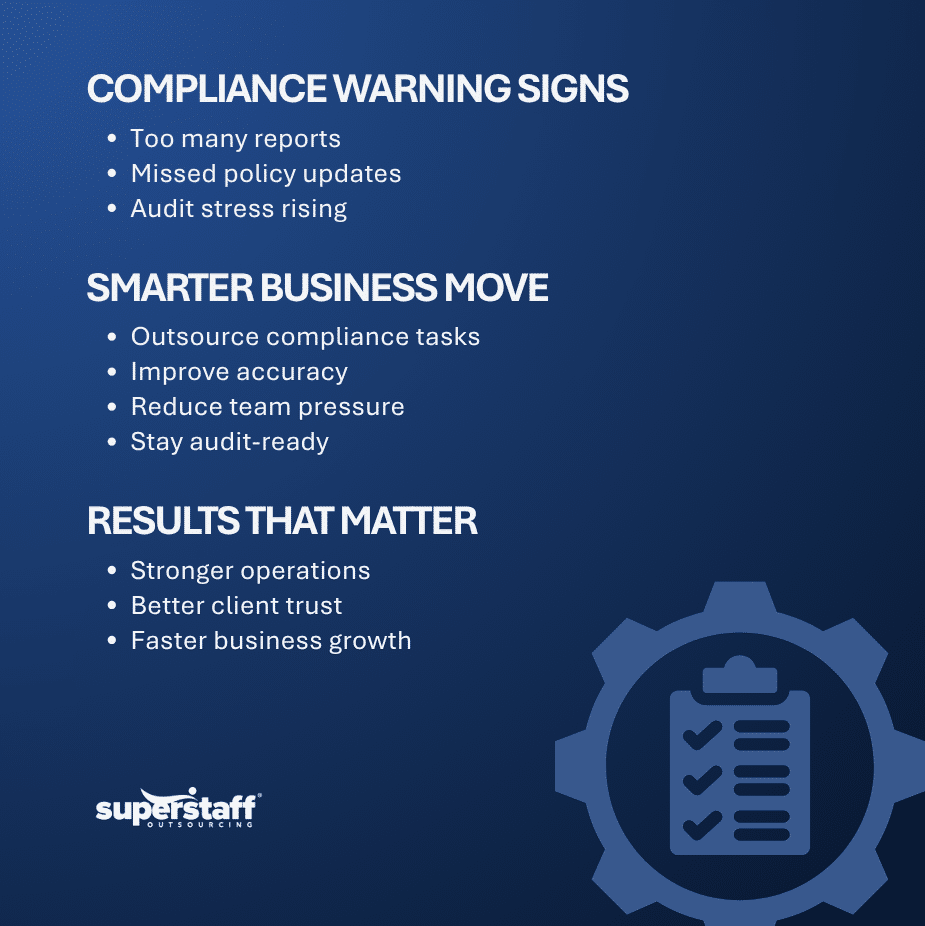
Managing compliance internally may work for small operations. However, certain warning signs can show when additional support is needed. Compliance outsourcing services can give businesses more resources to manage these responsibilities.
1. Your Team Misses Important Deadlines
Compliance work involves renewals, audits, reporting schedules, and policy updates. When employees already manage several tasks, they may overlook important deadlines. As a result, the company may face penalties or delayed operations.
Compliance outsourcing services can support structured monitoring, documentation, and reporting processes. Businesses experiencing similar challenges can also use outsourced IT compliance support to maintain records and prepare for recurring compliance requirements.
2. Regulations Change Too Often
Many industries deal with changing rules and standards. Healthcare, finance, logistics, technology, and other regulated sectors may need to update procedures as new requirements take effect.
Outsourced specialists can assist with monitoring relevant regulatory sources and maintaining records of required changes. Compliance outsourcing services can also provide administrative support when approved policies and procedures need to be updated.
3. Your Internal Team Feels Overloaded
Compliance tasks can increase as a company grows. Employees may spend hours reviewing documents, preparing reports, maintaining records, or tracking policy updates. This workload can take time away from their primary responsibilities.
Compliance outsourcing services allow companies to transfer suitable administrative and monitoring tasks to external teams while maintaining internal oversight of important compliance decisions.
4. Audit Preparation Takes Too Long
Audits require organized records, accurate reporting, and complete documentation. If employees need to search through different systems and files every time an audit approaches, the business may need a more organized process.
Compliance outsourcing services can support ongoing recordkeeping and document management rather than leaving most preparation until an audit is announced.
5. Errors Keep Appearing in Reports
Incorrect information, missing documentation, outdated policies, or incomplete records can create problems during audits and regulatory reviews.
External teams can follow documented procedures and quality checks when preparing or maintaining compliance-related records. Regular reviews can also identify recurring errors that require changes to the underlying process.
Business Situations That May Require Additional Compliance Support
Some business changes can increase compliance responsibilities quickly. During these periods, additional support can prevent existing teams from becoming overloaded.
1. Rapid Business Expansion
Growth can create new compliance responsibilities. Businesses may enter new markets, hire more employees, handle larger amounts of data, or introduce additional services.
Compliance outsourcing services can provide extra operational capacity during these periods. Companies can add support for documentation, monitoring, reporting, and other defined processes as requirements increase.
2. Entering Regulated Industries
Healthcare, finance, insurance, logistics, and other regulated industries may have detailed requirements covering privacy, security, recordkeeping, reporting, and operational procedures.
The NIST Cybersecurity Framework is one example of an established framework organizations can use to understand and manage cybersecurity risks as part of broader risk management activities.
Businesses should determine which laws, regulations, and industry standards specifically apply to their operations rather than relying on a single framework for every compliance requirement.
3. Managing Multiple Locations
Companies with several offices, branches, or remote teams may find it harder to maintain consistent processes. Different locations may store records differently or follow separate procedures.
Compliance outsourcing services can support standardized administrative processes and documentation across locations. Internal compliance leaders can then maintain oversight and address requirements that vary by jurisdiction.
4. Recovering From Compliance Issues
A previous compliance issue may reveal weaknesses in documentation, monitoring, employee training, or internal controls.
Businesses can use external support to organize records and implement approved process changes. Compliance outsourcing solutions can also provide additional resources for companies managing growing compliance workloads.
5. Preparing for Large Contracts
Potential clients may request security, privacy, certification, or compliance documentation before signing an agreement. Companies that cannot provide the requested information may experience delays during vendor reviews and contract negotiations.
Compliance outsourcing services can support the administrative work involved in organizing records and maintaining required documentation.
Benefits of Compliance Outsourcing Services
Businesses may consider outsourcing when they need additional resources, structured processes, or specialized operational support. The results depend on the provider, scope of work, and level of internal oversight.
1. Better Focus on Core Operations
Heavy compliance workloads can take employees away from their primary responsibilities.
By outsourcing suitable compliance support tasks, internal employees can spend more time on customer service, operations, product development, and other core activities while maintaining appropriate oversight of outsourced work.
2. Improved Accuracy and Consistency
Compliance tasks require careful documentation. Defined workflows, quality checks, and standardized procedures can reduce inconsistent recordkeeping.
External teams can follow the same approved processes across recurring tasks, while internal leaders review performance and address exceptions.
3. Faster Response to Regulatory Changes
Regulatory requirements can change over time. Businesses need processes for identifying relevant updates, determining their impact, and implementing approved changes.
External support teams can assist with monitoring, documentation, and administrative updates while legal or compliance leaders determine how new requirements apply to the organization.
4. More Flexible Resource Management
Building an internal compliance team can involve recruitment, salaries, training, technology, and administrative expenses.
Outsourcing provides another staffing model. Businesses can determine which functions should remain internal and which support tasks can be assigned externally based on workload and available resources.
Companies exploring broader outsourcing options can learn more about the services available through SuperStaff.
5. Stronger Risk Management Processes
Compliance risks can affect finances, operations, customer relationships, and business continuity. Regular reviews and clear documentation can make potential gaps easier to identify.
Compliance outsourcing services can support these processes by maintaining records, tracking defined requirements, and escalating identified issues to responsible internal teams.
Choosing the Right Compliance Outsourcing Partner
Not all providers offer the same services or level of experience. Businesses should evaluate potential partners carefully before transferring compliance-related work.
Important factors to consider include:
- Industry experience and relevant regulatory knowledge
- Clear communication and reporting systems
- Defined quality assurance procedures
- Flexible service options as requirements change
- Strong data protection and confidentiality practices
- Employee access controls and security training
- Reliable escalation and response procedures
Businesses should also clearly define responsibilities before outsourcing begins. The provider may handle selected compliance support tasks, but the organization should maintain internal accountability for its regulatory obligations.
Reduce Compliance Pressure With the Right Support
Compliance responsibilities can increase as businesses expand, enter new markets, and face changing regulatory requirements. Internal teams may need additional resources to manage reporting, audit documentation, policy administration, and other recurring tasks.
Compliance outsourcing services provide another way to add operational capacity while keeping important compliance decisions and oversight within the business.
SuperStaff provides outsourcing solutions that can support compliance-related and back-office processes across different industries. External teams can work within defined procedures to assist with documentation, reporting, record management, and other operational requirements.
Need additional resources for your compliance processes? Contact SuperStaff to discuss your outsourcing requirements.