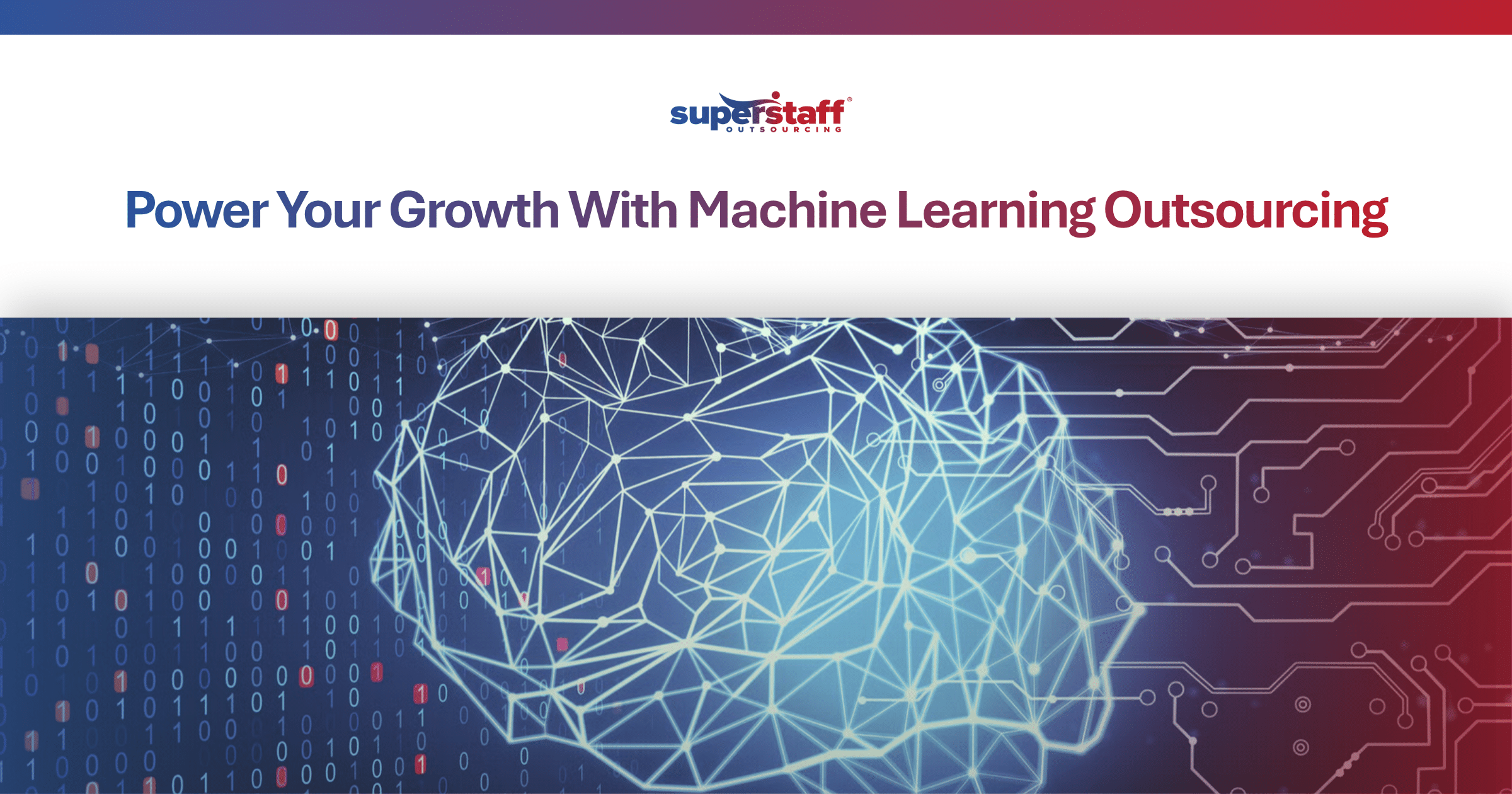
Every small business collects data. Sales records, customer messages, website visits, and support tickets all hold useful information. Yet many teams struggle to turn that data into clear action. This is where machine learning for small business starts to make a real difference.
Instead of guessing what customers want, companies can rely on patterns and trends. However, tools alone are not enough. Success comes from combining technology with the right people. With dedicated support teams, machine learning for small business becomes practical, manageable, and results-driven.
Why Machine Learning for Small Business Matters
Small businesses often work with limited time and resources. As a result, every decision needs to count. Machine learning for small business helps teams make faster and more accurate choices without increasing workload.
Key benefits include:
- Better customer insights
- Faster decision-making
- Reduced manual work
- Improved forecasting accuracy
- More consistent service delivery
At the same time, businesses gain the ability to respond to trends early. This creates a stronger position in competitive markets.
Common Challenges Small Businesses Face
Despite the benefits, many leaders hesitate to adopt machine learning for small business. The reason is simple. Implementation can feel complex.
1. Limited technical expertise
Many teams do not have in-house data specialists. Because of this, tools are underused or misconfigured.
2. Data overload
Businesses collect large amounts of data but struggle to organize it. Without structure, insights remain unclear.
3. Time constraints
Daily operations take priority. As a result, there is little time to explore new systems.
4. Cost concerns
Hiring full-time experts can be expensive. Therefore, companies delay adoption.
Even so, these challenges can be solved with the right support structure.
How Dedicated Support Teams Bridge the Gap
Technology works best when supported by skilled people. That is why many companies pair machine learning for small business with dedicated offshore or nearshore teams.
These teams handle the setup, monitoring, and optimization of tools. As a result, internal teams can focus on core business tasks.
What support teams typically manage:
- Data cleaning and organization
- Model setup and testing
- Performance tracking
- Reporting and insights generation
- Continuous improvements
In addition, support teams ensure that systems stay aligned with business goals. This keeps operations efficient and scalable.
Turning Data Into Actionable Insights
Data alone does not drive results. Action does. With machine learning for small business, companies can move from raw data to clear next steps.
1. Customer behavior analysis
Support teams analyze buying patterns. Then, businesses can adjust offers or timing.
2. Sales forecasting
Historical data helps predict future demand. As a result, inventory and staffing improve.
3. Customer support optimization
Machine learning identifies common issues. Teams can respond faster and reduce repeat concerns.
4. Marketing improvements
Campaign performance becomes easier to track. Businesses can refine messaging based on real results.
Each of these actions leads to measurable improvements over time.
Practical Use Cases for Small Businesses
Adopting machine learning for small business does not require complex systems. In fact, many use cases are simple and effective.
Common applications include:
- Product recommendations for e-commerce
- Lead scoring for sales teams
- Chat support analysis for faster resolution
- Fraud detection for online transactions
- Demand planning for inventory management
Because of these use cases, small businesses can compete with larger companies without increasing overhead.
Why Outsourcing Makes Sense
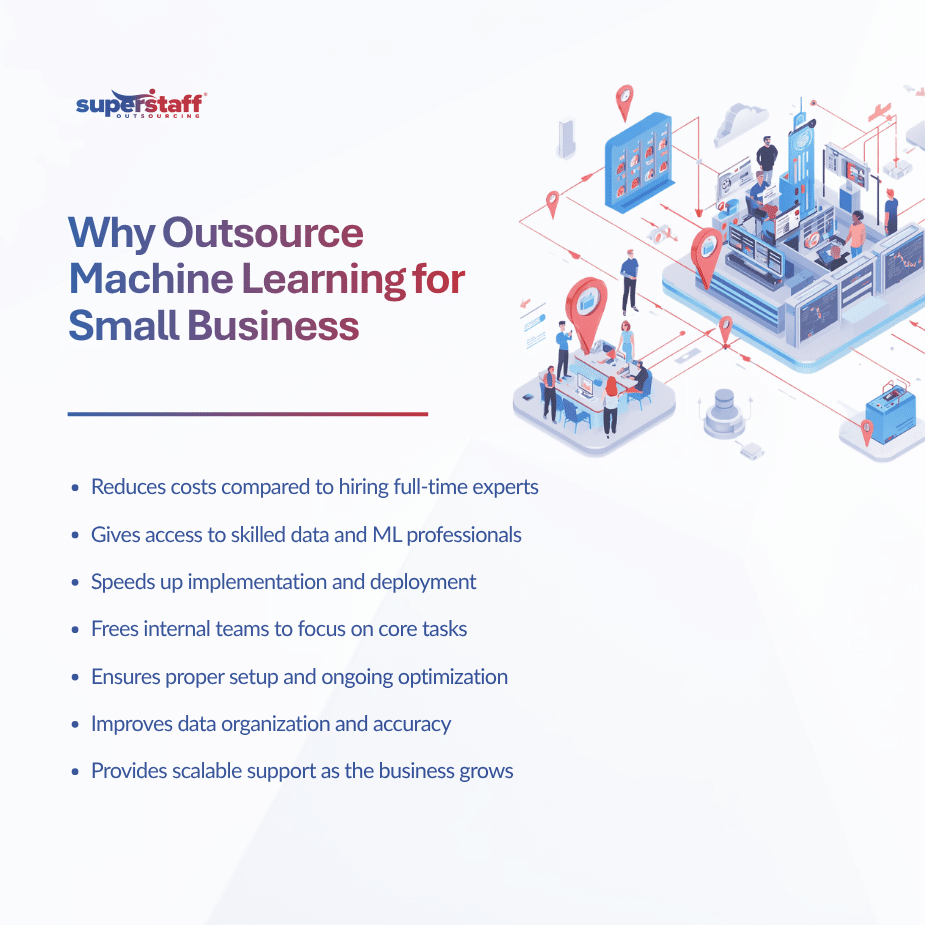
Building an in-house team takes time and resources. On the other hand, outsourcing offers a faster path. Many companies now combine machine learning for small business with outsourced support teams to stay efficient.
Advantages of outsourcing include:
- Lower operational costs
- Access to skilled professionals
- Faster implementation timelines
- Scalable support based on demand
- Reduced training requirements
Additionally, outsourcing allows businesses to test strategies without long-term commitments.
Building a Simple Machine Learning Workflow
Getting started with machine learning for small business does not need to be complicated. A structured workflow helps teams stay focused.
Step-by-step approach:
- Define a clear goal
- Example: improve customer retention
- Gather relevant data
- Sales records, customer feedback, website activity
- Clean and organize data
- Remove duplicates and errors
- Apply machine learning tools
- Use models to identify patterns
- Interpret results
- Focus on trends that impact decisions
- Take action
- Adjust pricing, campaigns, or operations
- Monitor performance
- Track results and refine strategies
With support teams in place, each step becomes easier to manage.
The Role of Human Insight
While automation helps process data, human input remains important. Dedicated teams add context to insights generated by machine learning for small business.
For example, a model may detect a drop in sales. However, a support team can connect this trend to seasonality or external factors. This ensures that decisions are accurate and relevant.
Moreover, human oversight prevents errors and improves long-term performance.
Measuring Success
To understand the value of machine learning for small business, companies need clear metrics.
Key performance indicators include:
- Increase in sales conversion rates
- Reduction in customer churn
- Faster response times in support
- Improved campaign performance
- Better inventory accuracy
Tracking these metrics helps businesses refine their approach over time.
Why Businesses Choose SuperStaff
Many companies choose to partner with outsourcing providers to simplify adoption. SuperStaff offers dedicated teams that support machine learning for small business initiatives.
With SuperStaff, businesses gain:
- Skilled professionals trained in data handling and analysis
- Scalable teams that grow with your needs
- Support for customer service, back office, and analytics
- Cost-efficient solutions without compromising quality
As a result, companies can focus on strategy while experts handle execution.
Take the Next Step With Machine Learning for Small Business
Data holds answers, but action drives results. Machine learning for small business gives companies the tools to understand trends and improve performance. However, real success comes from combining technology with dedicated support teams.
If your business wants to improve decision-making, increase efficiency, and stay competitive, now is the time to act. SuperStaff can help you build and manage the right support team to turn insights into real outcomes.
Connect with SuperStaff today and discover how machine learning for small business can work for you.