
Startups operate under constant pressure to deliver software quickly while maintaining quality and controlling costs. Product teams must build, iterate, and scale without overstretching limited internal resources.
Many founders are exploring nearshore SaaS development as a way to strengthen engineering capacity while maintaining close collaboration with teams in the United States. Colombia has become a strong candidate for this approach.
Its growing tech ecosystem, bilingual talent pool, and time zone alignment offer practical advantages for software-driven startups that need reliable development partners.
Why Startups Need Flexible Development Capacity
Startups rarely follow a predictable growth path. Product demand can surge quickly, forcing engineering teams to accelerate development while managing new features and bug fixes.
Leadership teams must often decide whether to expand internal hiring or explore external development support. Hiring locally can take months. Competition for developers remains high, especially for SaaS platforms that require cloud, integration, and API expertise.
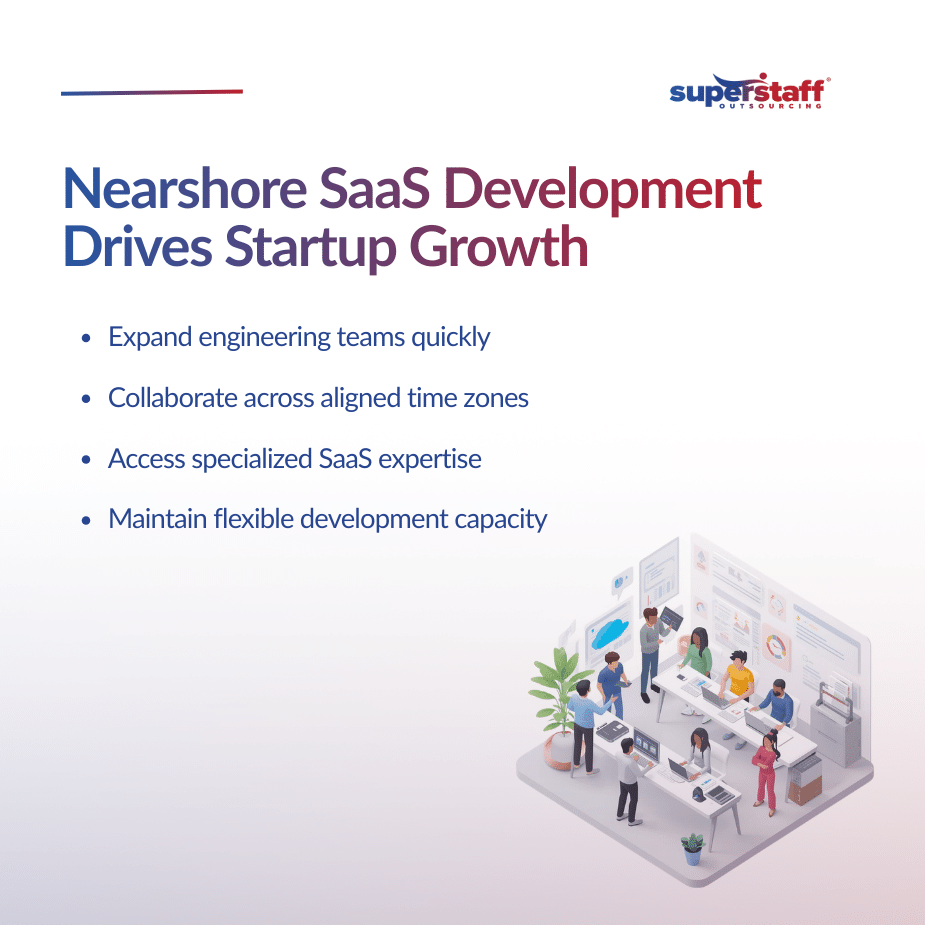
Nearshore SaaS development offers an alternative that allows startups to add development capacity quickly.
Companies typically benefit from:
- Faster access to qualified developers
- Reduced hiring delays
- Flexible team structures that scale with product demand
This approach allows startup founders to maintain product momentum without overwhelming internal teams. As a result, many organizations view nearshore development as a practical strategy rather than a temporary solution.
Colombia’s Expanding Technology Workforce
Colombia’s technology sector has expanded steadily over the past decade. Universities and technical training programs have produced thousands of developers skilled in software engineering, data systems, and cloud infrastructure.
Technology hubs in cities such as Bogotá, Medellín, and Cali support a growing community of developers experienced in SaaS platforms.
Nearshore SaaS development teams in Colombia often specialize in:
- Cloud-based application development
- SaaS platform architecture
- API integrations and microservices
- DevOps and infrastructure automation
These capabilities allow startups to extend their engineering teams with professionals who already understand modern SaaS environments.
This growing talent base has attracted global companies looking for development partners that can work within U.S. time zones.
Time Zone Alignment Supports Agile Collaboration
Software development requires frequent communication. Product managers, engineers, and designers must work closely together to refine features and release updates.
Nearshore SaaS development in Colombia supports this collaboration because teams operate in overlapping time zones with North America.
Working hours typically align with U.S. Eastern and Central time zones. This creates several operational advantages.
Teams can:
- Conduct daily standups without scheduling conflicts
- Review product updates during the same workday
- Resolve development issues quickly
- Maintain real-time communication during product sprints
This level of alignment supports agile development models where feedback cycles must move quickly.
Startups that depend on rapid product iteration benefit significantly from this structure.
Cost Efficiency Without Sacrificing Quality
Startups must manage development budgets carefully. Hiring senior developers in the United States often requires substantial salary commitments, benefits, and long recruitment cycles.
Nearshore SaaS development provides access to skilled developers at competitive cost levels.
Companies gain several financial advantages:
- Lower labor costs compared with U.S. markets
- Reduced recruitment expenses
- Flexible contract structures for project phases
This approach allows startups to allocate resources toward product development, marketing, and customer acquisition.
Cost savings alone do not drive the decision. Many startups pursue nearshore partnerships because they can maintain quality standards while improving financial efficiency.
Faster Product Development Cycles
Speed is one of the most important competitive advantages for SaaS companies. Launching features ahead of competitors can determine whether a startup captures market share.
Nearshore SaaS development helps accelerate product delivery by expanding engineering bandwidth.
Distributed development teams allow companies to:
- Work on multiple product features simultaneously
- Reduce development backlogs
- Maintain continuous product improvements
For example, internal developers may focus on product architecture while nearshore teams handle feature implementation or testing.
This collaboration allows product roadmaps to move forward without delay.
Faster development cycles help startups maintain momentum as they scale.
Access to Specialized SaaS Skills
SaaS platforms require a wide range of technical expertise. Developers must understand cloud environments, security protocols, system integrations, and platform scalability.
Nearshore SaaS development teams often bring specialized experience in these areas.
Startups can access professionals with skills such as:
- SaaS infrastructure design
- Cloud deployment and containerization
- API management and integrations
- Quality assurance and automated testing
Access to specialized expertise allows startups to strengthen their development process without building every skill internally.
This approach improves development efficiency while supporting long-term platform stability.
Cultural Compatibility With U.S. Teams
Successful development partnerships depend on more than technical expertise. Communication style, work culture, and business expectations all influence project outcomes.
Nearshore SaaS development teams in Colombia often work closely with U.S. companies and understand North American business practices.
Several factors contribute to this compatibility:
- Strong English proficiency among technology professionals
- Familiarity with agile development methods
- Experience collaborating with international clients
This alignment helps development teams integrate smoothly into startup workflows.
Product discussions become more productive when teams share similar communication styles and expectations.
This compatibility strengthens long-term development partnerships.
Nearshore Development Supports Startup Scalability
Startups often experience unpredictable growth cycles. Product demand can change quickly, requiring development teams to expand or contract within short timeframes.
Nearshore SaaS development provides flexibility that traditional hiring cannot always match.
Companies can scale development teams by:
- Adding engineers during major product releases
- Expanding QA support during testing phases
- Increasing DevOps capacity as platforms grow
This flexibility allows startups to respond quickly to business opportunities without committing to permanent staffing changes.
Leadership teams gain more control over development planning while maintaining operational stability.
Risk Management and Operational Continuity
Building software products involves operational risk. Development delays, staffing shortages, or sudden market shifts can affect product timelines.
Nearshore SaaS development helps reduce these risks by diversifying development capacity.
Startups that rely on a single internal team may struggle when key engineers leave or workloads increase unexpectedly.
Distributed teams help maintain continuity because development responsibilities are shared across multiple contributors.
Companies can:
- Maintain project progress during staffing changes
- Balance workloads between internal and nearshore teams
- Protect development timelines during growth phases
This structure strengthens operational resilience for software-driven startups.
How Startups Can Build Effective Nearshore Partnerships
Successful nearshore collaboration requires clear planning and structured communication.
Startups must approach nearshore SaaS development with the same strategic discipline used for internal engineering teams.
Best practices often include:
- Defining clear product roadmaps and priorities
- Establishing communication protocols for development teams
- Aligning project management tools across organizations
- Integrating nearshore developers into agile workflows
When these practices are followed, nearshore teams operate as an extension of the internal development organization.
This structure allows startups to maintain consistent product quality while expanding development capacity.
Building Stronger SaaS Teams Through Nearshore Collaboration
Startups must balance speed, cost control, and product quality as they grow. Building scalable engineering capacity is often one of the most difficult challenges leadership teams face.
Nearshore SaaS development offers a practical solution by providing access to skilled developers, time zone alignment, and flexible staffing models. Colombia has become an attractive destination for this strategy due to its expanding technology workforce and strong cultural compatibility with U.S. companies.
SuperStaff helps growing companies build reliable global teams that support software development, technical operations, and customer-facing functions. Organizations that want to expand their technology capabilities while maintaining operational control can explore how nearshore SaaS development fits into their long-term growth strategy.
Connect with SuperStaff to learn how global staffing solutions can support your next stage of growth.