Software companies move fast. Customers expect quick replies, clear answers, and support teams that understand their concerns. However, many SaaS businesses struggle to keep up with growing support requests while managing costs at the same time. That is why many companies now outsource SaaS customer service to trusted teams in Colombia.
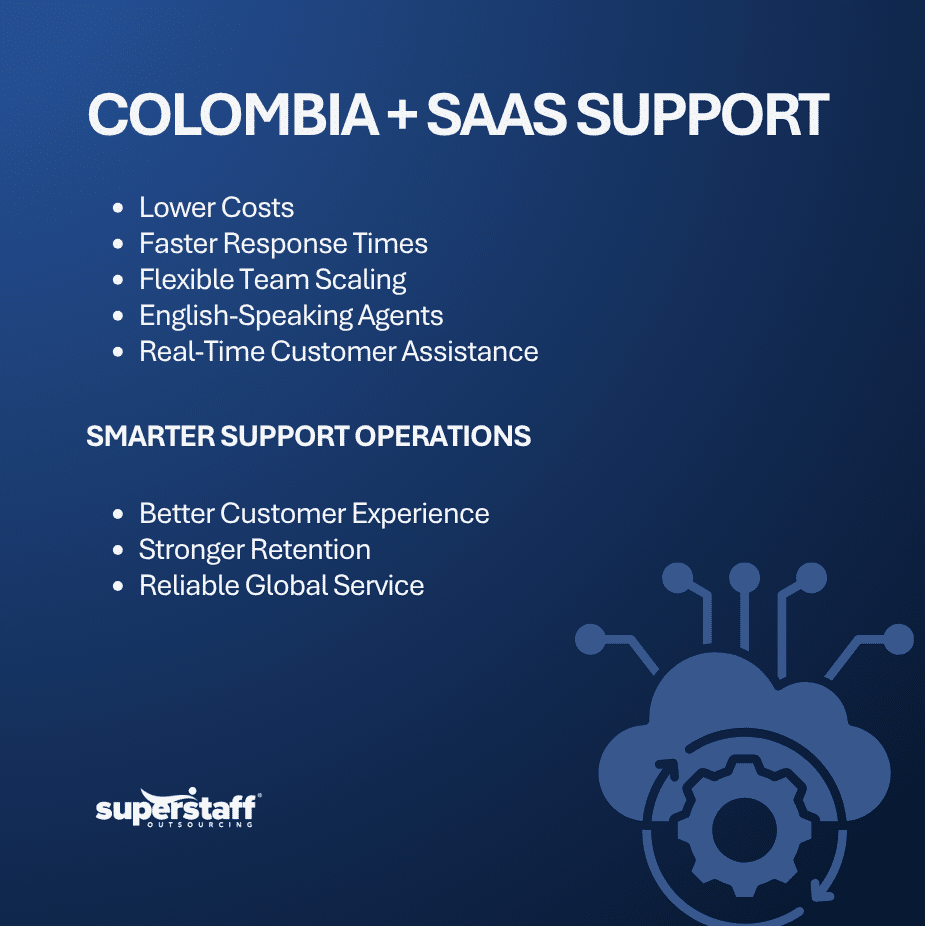
Colombia continues to attract global SaaS brands because of its skilled workforce, strong English proficiency, and customer-focused culture. In addition, companies can build support teams that match their brand voice without overspending on local hiring. When businesses outsource SaaS customer service, they often aim to improve response times, customer satisfaction, and operational flexibility.
The experience also goes beyond simple ticket handling. Colombian outsourcing teams can support onboarding, technical troubleshooting, account management, and live chat services. As a result, SaaS companies can focus more on product growth while support specialists handle customer concerns efficiently.
Why SaaS Companies Choose Colombia
Colombia has become an outsourcing option for SaaS businesses that need reliable talent, cost efficiency, and strong communication skills. Companies can use nearshore teams to support customers during overlapping business hours while keeping their internal teams focused on product development and business goals.
1. Strong English Communication Skills
Many Colombian professionals work with international clients daily. Because of this, SaaS companies can maintain smooth communication across email, chat, and phone support channels.
Customers also appreciate clear and professional conversations. Consequently, businesses can maintain customer satisfaction while expanding their support operations.
2. Lower Operational Costs
Hiring and training in-house support teams can become expensive. On the other hand, companies that outsource SaaS customer service in Colombia gain another staffing option that may reduce labor and operational expenses.
Lower costs can also allow SaaS businesses to invest more in product development and marketing. Actual savings depend on team size, service requirements, training, and the outsourcing agreement.
3. Flexible Team Scaling
SaaS companies often experience seasonal spikes or sudden customer growth. Because of this, support demands can increase quickly.
Colombian outsourcing providers can give businesses another way to expand their teams. Instead of managing every recruitment and onboarding task internally, companies can work with a provider to add trained support agents based on their needs.
4. Customer-Centered Work Culture
Customer service plays a major role in outsourcing operations. Teams need patience, clear communication, and problem-solving skills to handle customer interactions effectively.
As a result, businesses that outsource SaaS customer service can assign routine inquiries and customer concerns to trained agents while keeping complex product or account decisions with the appropriate internal specialists.
5. Time Zone Compatibility
Colombia’s time zone works well with North American businesses. This setup allows support teams to provide assistance during overlapping business hours.
Moreover, smoother collaboration between internal teams and outsourced agents can improve daily workflows. For more on the role of nearshore teams in SaaS support, see Colombia outsourcing for SaaS onboarding and customer success.
Services You Can Expect From Outsourced SaaS Teams
When companies outsource SaaS customer service, they can assign several support functions to external teams. The service scope depends on company size, product complexity, customer needs, and the level of training provided.
1. Live Chat Support
Live chat has become one of the fastest ways to address customer issues. Customers want timely responses, especially when they encounter technical concerns during work hours.
Outsourced teams in Colombia can manage live chat queues, answer common questions, and follow established procedures for more complex requests. As a result, businesses can reduce wait times and maintain more consistent customer communication.
2. Technical Troubleshooting Assistance
Many SaaS customers need help navigating software features or fixing technical issues. Outsourced support teams can receive product training before handling customer interactions.
Agents can follow approved troubleshooting steps and resolve common issues. More complex problems can be escalated to internal developers or specialized technical staff, allowing product teams to focus on issues that require deeper investigation.
3. Email Ticket Management
Support tickets can pile up quickly for growing SaaS companies. However, structured workflows can help teams organize requests, prioritize urgent concerns, and maintain consistent response times.
This process allows outsourced agents to manage routine inquiries while following the company’s service standards. It also gives managers a clearer view of ticket volumes, unresolved cases, and recurring customer concerns.
4. Customer Onboarding Support
New customers need guidance during the onboarding stage. Without proper support, users may struggle to understand software features or complete account setup.
Outsourced onboarding specialists can guide customers through initial setup, explain basic features, and answer common questions. Consequently, SaaS companies can give new users more consistent assistance while internal customer success teams focus on adoption strategies and complex accounts.
5. Multichannel Customer Support
Customers communicate through different platforms every day. Some prefer email, while others use chat, social media, or phone support.
Colombian outsourcing teams can manage multiple communication channels based on the company’s requirements. Businesses can also use shared customer records and clear handoff procedures to keep conversations consistent across channels. Companies planning their support setup can review Zendesk’s AI customer service resources for information on how AI tools can support customer service workflows.
What Businesses Should Prepare Before Outsourcing
Companies often achieve better results when they prepare properly before they outsource SaaS customer service. Clear planning gives external agents the information and tools they need to represent the brand accurately.
1. Clear Brand Guidelines
Support teams represent your company directly. Therefore, businesses should provide clear instructions about tone, messaging, and customer interaction standards.
Well-documented brand guidelines also help outsourced teams maintain consistency across every customer conversation. Include sample responses, escalation rules, and examples of how agents should handle sensitive customer concerns.
2. Product Training Materials
Support agents need strong product knowledge to solve issues effectively. Companies should prepare training videos, product manuals, troubleshooting guides, and answers to common questions before onboarding agents.
This preparation allows outsourced teams to deliver faster and more accurate support. Product training should also continue when the company releases new features or changes existing workflows.
3. Defined Performance Goals
Businesses should establish measurable goals before outsourcing begins. Common targets include response time, customer satisfaction scores, first-contact resolution, and ticket resolution speed.
Clear goals also help managers evaluate team performance regularly. Companies should review these measures with their outsourcing partner and adjust targets when customer needs or service requirements change.
4. Communication Channels
Regular communication improves outsourcing success. Many SaaS companies use Slack, Zoom, or project management tools to stay connected with outsourced teams.
Frequent meetings also help businesses address concerns quickly and improve workflows. Teams should agree on who handles urgent issues, how product updates are shared, and when performance reports are reviewed.
5. Long-Term Support Strategy
Outsourcing works best when companies view it as an ongoing business arrangement. Instead of focusing only on cost savings, businesses should prioritize support quality, customer experience, and continuous training.
Companies that outsource SaaS customer service successfully often establish regular performance reviews and clear plans for handling changes in customer volume. For additional guidance on structuring outsourced support, see the SaaS customer support playbook.
Common Challenges and How to Manage Them
Every outsourcing strategy comes with challenges. However, businesses can reduce common problems through proper planning, training, and communication.
1. Product Knowledge Gaps
New agents may initially struggle with technical software features. Regular training sessions, updated knowledge bases, and access to approved troubleshooting guides can address these gaps.
Ongoing coaching also helps agents stay informed about product updates and changes to customer support procedures.
2. Maintaining Brand Voice
Customers expect consistent communication across all support channels. Therefore, businesses should provide scripts, examples, and regular feedback to outsourced teams.
Quality reviews can identify differences in tone, accuracy, or response quality. Managers can then use these findings to improve training and maintain brand consistency.
3. Handling Complex Support Cases
Some technical concerns require advanced troubleshooting. In these situations, outsourced agents should have direct escalation paths to internal specialists.
Clear escalation systems improve customer experiences and reduce delays. They also prevent agents from making technical decisions outside their training or assigned responsibilities.
4. Data Security Concerns
SaaS companies handle sensitive customer information daily. Because of this, businesses should assess an outsourcing provider’s security controls before sharing access to customer records or internal systems.
Companies should review access permissions, confidentiality procedures, employee training, incident reporting, and any legal or contractual requirements that apply to their operations.
5. Team Integration
Outsourced teams perform better when they understand company goals and work processes. Businesses should include outsourced agents in relevant meetings, product updates, and recognition programs.
Strong collaboration creates better teamwork and more consistent customer support outcomes. Internal teams should also know how to coordinate with outsourced agents when a customer concern requires additional assistance.
Build Better SaaS Support With SuperStaff
Choosing to outsource SaaS customer service in Colombia can help businesses manage costs, improve customer communication, and scale support operations. With the right outsourcing partner, companies can access trained professionals who understand customer service processes and work according to defined service standards.
SuperStaff provides customer service outsourcing solutions for businesses that need support across live chat, email, technical assistance, onboarding, and other customer interactions. Teams can be structured around product requirements, service channels, operating hours, and expected customer volumes.
If your SaaS company needs reliable customer support, contact SuperStaff to discuss your requirements and determine which outsourcing arrangement fits your business.