
Litigation has become more complex. Case volumes fluctuate. Timelines tighten. Meanwhile, internal teams are stretched thin by discovery demands, documentation reviews, and constant procedural pressure. To stay responsive without overbuilding internal headcount, many firms now outsource litigation support as a strategic extension of their legal operations.
This shift is not about shortcuts. It is about control, consistency, and capacity. Below are five reasons U.S. law firms are increasingly looking to the Philippines for litigation support and why this model continues to gain traction among midmarket and growing practices.
1. Litigation Workloads Demand Flexible Capacity
Litigation rarely follows a steady rhythm. One quarter brings a surge of discovery. Another slows without warning. Hiring full time staff to absorb these swings creates cost pressure and underutilization.
When firms outsource litigation support, they gain flexible capacity aligned to active matters. Offshore teams scale up during discovery, document review, or trial preparation. They scale down when cases close or timelines shift.
This flexibility allows partners and practice leaders to manage workloads without disrupting staffing plans. Internal attorneys stay focused on strategy, client interaction, and court preparation. Support tasks move forward without delay, even during peak cycles.
Litigation support outsourcing in Philippines teams provides this elasticity without sacrificing accountability. Dedicated offshore professionals follow defined workflows, reporting lines, and quality checks that mirror in house standards.
2. Cost Control Without Compromising Precision
Litigation support work is detail intensive. Errors create downstream risk. At the same time, billing pressure from clients continues to rise. Law firms must deliver precision while managing cost exposure.
When firms outsource litigation support, they convert fixed labor costs into predictable operating expenses. Offshore support reduces overhead related to hiring, training, benefits, and attrition. This financial flexibility supports competitive pricing without eroding margins.
Legal process outsourcing litigation support allows firms to maintain high review standards while allocating budget more strategically. Senior attorneys spend time where judgment matters most. Routine but critical tasks move to trained specialists operating within controlled processes.
This model improves cost visibility across cases. Leaders gain clarity on support expenses tied to each matter rather than absorbing generalized staffing costs across the firm.
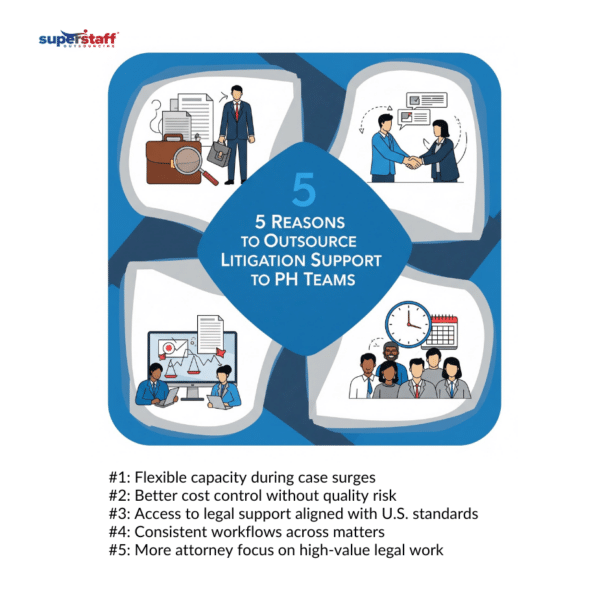
3. The Philippines Offers Legal Support Talent Aligned With U.S. Standards
The Philippines has long supported U.S. legal operations through offshore services. Legal education emphasizes English fluency, analytical rigor, and familiarity with U.S. legal systems. This foundation makes collaboration smoother and reduces ramp up time.
Firms that outsource litigation support to the Philippines benefit from teams experienced in document review, deposition summaries, case indexing, privilege logs, and trial preparation materials. These professionals understand confidentiality requirements and litigation timelines.
Time zone alignment also plays a practical role. Overnight progress accelerates document processing and review cycles. Attorneys arrive each morning to completed work rather than pending tasks.
This alignment explains why U.S. law firms outsource litigation support to Philippines teams that operate as extensions of their legal staff rather than distant vendors.
4. Operational Consistency Across Matters
Litigation quality depends on consistency. Each case requires uniform documentation standards, clear version control, and reliable turnaround times. Internal teams juggling multiple responsibilities often struggle to maintain this level of operational discipline.
When firms outsource litigation support, they gain standardized workflows applied across cases. Offshore teams follow documented procedures, defined review protocols, and structured escalation paths.
This consistency reduces variation across matters. Partners gain confidence that support work meets expectations regardless of case size or complexity. Quality assurance processes catch issues early before they affect filings or trial preparation.
Litigation support outsourcing in Philippines models emphasizes repeatability. That operational discipline strengthens firm wide performance and reduces dependency on individual staff availability.
5. Attorneys Reclaim Focus on High Value Legal Work
Every hour spent organizing exhibits or reviewing documents is an hour not spent advising clients or developing legal strategy. Over time, this imbalance affects profitability and attorney satisfaction.
Firms that outsource litigation support reallocate internal capacity toward higher value work. Attorneys focus on argument development, negotiation, and courtroom preparation. Support teams handle execution driven tasks that require accuracy but not legal judgment.
This separation improves client outcomes. It also supports talent retention by reducing burnout among associates and paralegals.
Legal process outsourcing litigation support helps firms align roles with expertise. The result is a more sustainable operating model that scales with demand.
Why This Model Works for U.S. Law Firms Today
Litigation is becoming faster and more demanding. Clients expect responsiveness without inflated fees. Courts enforce stricter timelines. Internal teams cannot absorb endless growth without operational strain.
That reality explains why U.S. law firms outsource litigation support to Philippines teams that offer capacity, discipline, and reliability. This model supports growth while preserving quality and control.
Successful firms approach outsourcing as integration, not delegation. They establish clear expectations, communication channels, and performance metrics. Offshore teams become part of the case workflow, not an afterthought.
SuperStaff supports this approach through dedicated legal support teams trained to align with U.S. firm standards. Each engagement focuses on process clarity, confidentiality, and long term partnership rather than transactional staffing.
Building a Strong Litigation Support Partnership
Effective litigation support outsourcing depends on structure. Firms that see results invest time in defining scope, turnaround expectations, and escalation protocols.
When firms outsource litigation support through a partner like SuperStaff, they gain teams designed around their practice needs. Support professionals integrate into existing workflows and reporting structures. Communication remains consistent across matters.
This partnership model supports predictability. It also creates space for law firms to grow without operational bottlenecks.
Ready to Outsource Litigation Support? Connect With SuperStaff Legal Outsourcing Team!
Litigation pressure is not slowing. Firms that adapt their operating models gain resilience and control. Those that outsource litigation support strategically position themselves to handle complexity without compromising service quality.
SuperStaff works with U.S. law firms to build reliable litigation support teams in the Philippines that align with American legal standards and firm expectations. If your firm is evaluating how to scale litigation operations while protecting margins and quality, now is the time to explore how SuperStaff can support your next phase of growth.