Retailers face constant pressure to process orders quickly, maintain accurate inventory records, and provide reliable customer service. As sales grow across websites, marketplaces, and physical stores, managing daily operations can become more demanding. Business process outsourcing retail allows companies to delegate selected tasks to external teams while maintaining control over business goals and service standards.
By outsourcing order processing, inventory updates, customer support, and other administrative tasks, retailers can manage larger workloads without expanding their internal teams for every new demand. This approach can also free up time for planning, marketing, and product development.
How Business Process Outsourcing Retail Improves Daily Operations
Outsourcing helps retailers organize routine tasks and maintain accurate records across sales channels. The results depend on clear procedures, trained staff, and access to the right systems.
1. Order Management and Entry
Outsourced teams verify order details, update records, and monitor order status. Accurate data entry helps prevent shipping mistakes, incorrect quantities, and delays. Retailers should also establish procedures for handling incomplete orders and changes requested by customers.
2. Payment Verification and Fraud Prevention
Retailers need reliable procedures for reviewing transactions and identifying suspicious activity. Outsourced staff can check order details, flag unusual transactions, and follow established escalation rules. Payment decisions should use approved systems and security controls, with sensitive information limited to authorized personnel.
3. Inventory Tracking and Updates
Accurate inventory records help retailers avoid overselling and unexpected stock shortages. Outsourced specialists can update stock levels, review product listings, and report discrepancies across sales platforms. Regular inventory checks also help businesses plan replenishment and identify products that need attention.
4. Shipping Coordination and Returns
Retail teams can coordinate shipment updates, track delayed orders, and manage return requests. These tasks require accurate records and communication with warehouses or shipping partners. The process should give customers clear information about delivery schedules, return eligibility, and refunds.
5. Customer Service Support
Support agents answer questions about orders, payments, products, and returns. They can also direct complex concerns to the right department. Consistent communication helps customers understand the status of their purchases and reduces repeated inquiries.
Key Functions and Benefits of Outsourced Retail Services
Retailers can outsource individual tasks or combine several functions based on workload and business priorities.
1. Multi-Channel Order Processing
Retailers selling through websites, marketplaces, and social media need consistent order records across platforms. Outsourced teams can consolidate order information, update statuses, and check for missing details. This helps reduce errors when several channels generate orders at the same time.
2. Data Management and Reporting
Outsourced staff can maintain sales records, update product information, and prepare reports on orders, returns, and stock movement. These reports help managers identify recurring problems and make better decisions about inventory and staffing.
3. Cost Savings
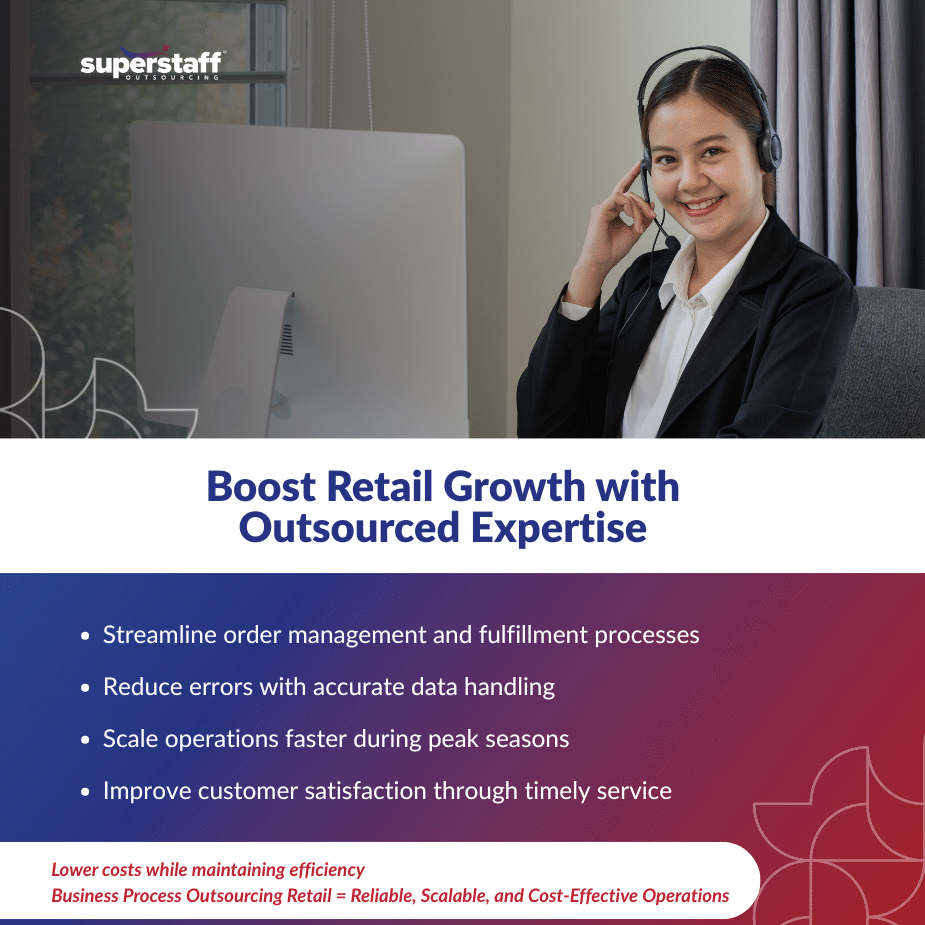
Hiring additional employees involves recruitment, salaries, training, equipment, and management costs. Outsourcing may reduce some of these expenses by providing access to an established team. Retailers should compare total service fees with their current operating costs before deciding which tasks to outsource.
4. Time Efficiency
Delegating repetitive administrative work allows internal employees to focus on merchandising, marketing, supplier relationships, and business planning. Retailers can review e-commerce workflow and order processing practices to understand how order entry, data management, fulfillment, and returns fit together.
5. Consistent Quality and Accuracy
Documented procedures and regular quality checks help ensure that orders and inventory records are handled consistently. Retailers should establish accuracy targets, review errors, and provide feedback to address recurring problems.
Why Choose the Philippines for Retail BPO Services
The Philippines is an established outsourcing destination with professionals experienced in customer service, e-commerce support, and administrative operations. Retailers should assess providers based on their skills, systems, security practices, and ability to meet business requirements.
1. Skilled Workforce
Professionals with experience in order management, data entry, and e-commerce platforms can help retailers manage routine workloads. Role-specific training is important because each business may use different software, approval processes, and inventory rules.
2. Strong Communication Skills
Clear communication helps outsourced teams coordinate with customers, suppliers, and internal departments. English-speaking teams can support retailers serving English-speaking markets, while additional language skills may be needed for other regions.
3. Cost-Effective Operations
Outsourcing to the Philippines may lower staffing costs compared with hiring similar roles in some markets. Savings depend on team size, training, technology, management, and service scope. Retailers should evaluate the full cost rather than labor rates alone.
4. Technology and Data Security
Retail operations involve customer details, transaction records, and inventory information. Providers should have appropriate access controls, data handling procedures, and security measures. Retailers remain responsible for checking whether the provider’s practices meet their legal and contractual requirements.
5. Extended Service Coverage
Retailers serving international customers may need support outside standard office hours. Outsourced teams can cover additional shifts when staffing and contracts allow. Businesses should confirm schedules and escalation coverage before launching the service.
How Business Process Outsourcing Retail Supports Scalability
Retail workloads change throughout the year. Outsourcing can help companies adjust their staffing and processes as sales volumes and customer needs change.
1. Seasonal Scaling
Holiday promotions and major sales events can increase orders, returns, and customer inquiries. Outsourcing allows retailers to request additional support for these periods without maintaining the same staffing level throughout the year.
2. Faster Market Expansion
Entering a new market may require more order management, customer support, and administrative work. An outsourcing team can help manage these tasks while the business evaluates demand and develops its local operations.
3. Flexible Staffing
Business process outsourcing retail gives companies options for adjusting team capacity based on workload. Retailers should establish how staffing changes will be requested, approved, and measured.
4. Standardized Processes
Written procedures help ensure that orders, returns, and inventory updates follow consistent steps across channels. Standardization also makes it easier to train new team members and identify gaps in performance.
5. Long-Term Growth Support
As a retailer expands, outsourced teams can continue managing selected routine tasks while internal managers focus on business priorities. Regular reviews help determine whether the existing arrangement still meets operational needs.
Outsourced Order Fulfillment and E-Commerce Integration
Order fulfillment connects order entry, inventory availability, shipping, and customer updates. Retailers need these processes to work together so that orders move through each stage with fewer errors.
1. End-to-End Processing
Outsourced staff can verify orders, update records, monitor progress, and coordinate with fulfillment teams. Clear responsibilities help prevent missed steps and reduce processing delays.
2. Inventory and Logistics Coordination
Inventory records must match available stock and fulfillment activity. Outsourced teams can report stock discrepancies, monitor shipments, and communicate delivery issues to the appropriate staff.
3. Returns Management
Return requests require accurate records, eligibility checks, and timely updates. A consistent process helps retailers track returned items, process approved refunds, and identify recurring product or delivery issues.
4. Real-Time Updates
Connected systems can help teams monitor order status and share accurate information with customers. Retailers should ensure that their platforms exchange data correctly and that staff know how to handle system errors.
5. Customer-Focused Service
Customers need clear updates when orders are delayed, products are unavailable, or returns take longer than expected. Responsive support helps set realistic expectations and reduces confusion.
Reliable Outsourcing for Consistent Retail Performance
Business process outsourcing retail can help companies manage routine tasks, control costs, and respond to changing demand. Its effectiveness depends on choosing suitable functions, maintaining accurate data, and setting measurable service standards.
Retailers can assess retail outsourcing services based on their order volume, inventory needs, customer support requirements, and seasonal workload. The right service arrangement should fit existing systems and clearly define responsibilities.
Strengthen Retail Operations Through Outsourcing
Before outsourcing, retailers should review their current workflows, error rates, staffing needs, and peak-season demands. This helps identify which tasks can be delegated and what performance standards an external team must meet.
Businesses considering external support can discuss their retail outsourcing requirements with SuperStaff to assess their operational needs and determine which functions may be suitable for outsourcing.