
Every business needs to keep customers satisfied, but managing an in-house support team can be costly and time-consuming. Customer service BPO allows companies to work with trained professionals who handle inquiries, complaints, order updates, and other customer needs. This approach helps businesses maintain support quality without taking on the full cost of building a larger internal team.
Outsourcing also gives companies more flexibility when customer demand changes. With the right provider, businesses can improve response times, extend service hours, and give internal employees more time to focus on their main responsibilities. The results depend on choosing suitable services, setting clear goals, and maintaining good communication with the outsourcing team.
The Role of Customer Service in Business Growth
Customer service influences how people view a brand and whether they choose to return. Helpful responses and timely solutions build trust, while repeated delays can drive customers away. Research on customer service and customer loyalty examines how customer experiences affect trust and purchasing decisions.
1. Strengthening Customer Relationships
Trained support agents help customers resolve problems, understand policies, and find suitable solutions. Clear communication and respectful treatment make customers feel heard and encourage them to maintain their relationship with a business.
2. Improving Customer Retention
Unresolved complaints and slow responses can lead customers to consider other providers. Outsourced teams help manage inquiries efficiently and follow established procedures, supporting stronger customer relationships.
3. Protecting Brand Reputation
Every customer interaction reflects on a company’s reputation. Clear guidelines, regular training, and quality checks help agents provide accurate information and handle complaints professionally.
4. Supporting Sales Opportunities
Customer service agents can answer product questions, explain available options, and recommend relevant products when appropriate. These interactions help customers make informed decisions and may create opportunities for additional sales.
Key Functions Managed by Customer Service BPO
Outsourcing providers can manage several support tasks based on a company’s needs, customer volume, and available resources.
1. Inbound and Outbound Calls
Agents answer questions, provide account assistance, follow up on unresolved concerns, and share order updates. Clear call procedures help ensure customers receive consistent information.
2. Email and Live Chat Support
Outsourced teams respond to digital inquiries, explain policies, track orders, and resolve common concerns. A customer service outsourcing guide can help businesses assess which support functions may be suitable for external teams.
3. Technical and Product Support
Technology companies and retailers often receive questions that require product knowledge. Trained agents can guide customers through basic troubleshooting and direct complex issues to specialized staff.
4. Complaint Management
Agents document complaints, provide updates, and escalate cases that need further review. Reviewing recurring issues also helps businesses identify weaknesses in their products or service processes.
5. Order Processing and Feedback
Support teams can handle order tracking, return requests, delivery updates, and feedback collection. These tasks help businesses manage customer needs, especially during busy sales periods.
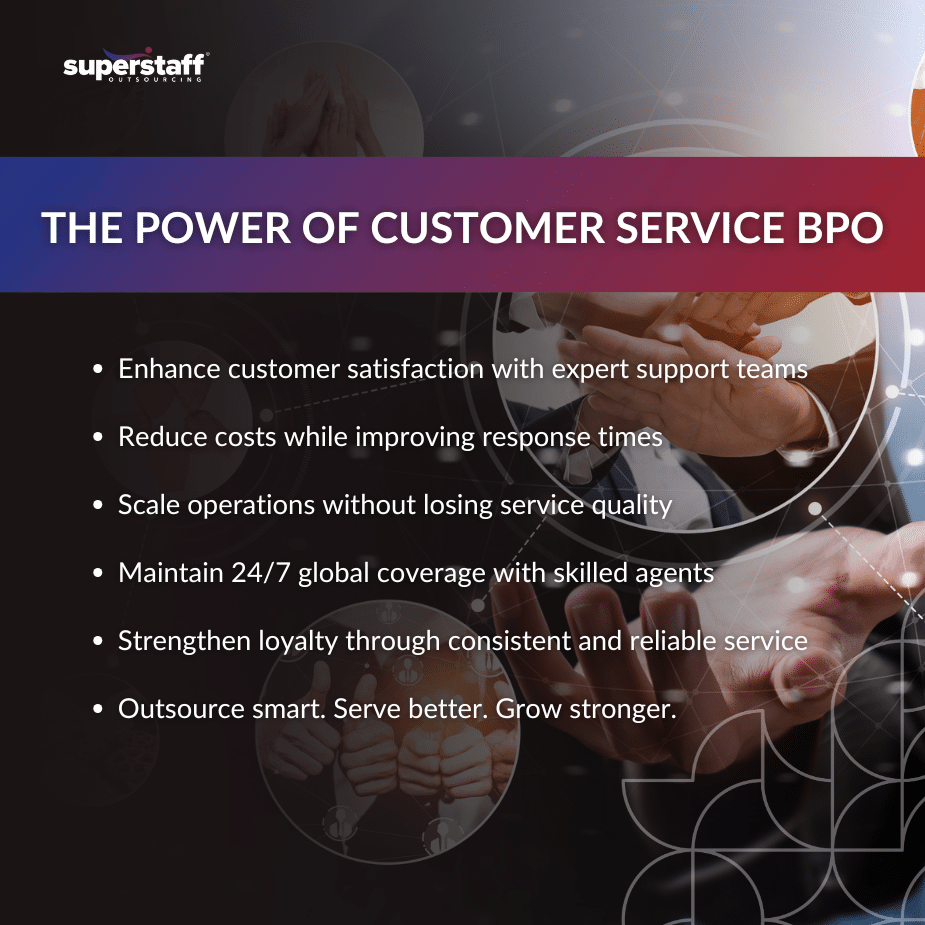
Benefits of Outsourcing Customer Service
The value of outsourcing depends on how well the service matches a company’s goals. A suitable arrangement can help businesses manage costs, adjust staffing, and monitor service performance.
1. Reducing Operating Costs
In-house support requires spending on recruitment, salaries, training, equipment, software, and management. Outsourcing can reduce some of these expenses by using an established support operation. Actual savings depend on the provider’s fees and the services required.
2. Adjusting Team Size to Demand
Customer inquiries may increase during promotions, product launches, and seasonal sales. Outsourcing can provide additional staffing during busy periods without requiring a permanent increase in internal headcount.
3. Extending Support Hours
Businesses serving customers in different time zones may need assistance outside regular office hours. Outsourced teams can cover additional shifts, depending on the staffing arrangement and agreed service hours.
4. Improving Daily Operations
Established providers may have structured workflows, quality checks, and reporting tools that help organize support tasks. Reviewing customer experience outsourcing practices can help businesses understand how external teams can support their wider customer service processes.
5. Measuring Customer Satisfaction
Businesses can track response times, resolution rates, customer satisfaction scores, and complaint volume. These measures help managers identify performance gaps and decide where additional training or process changes are needed.
Why Businesses Choose the Philippines for Outsourcing
The Philippines is an established destination for customer service outsourcing. Its experienced workforce, English communication skills, and developed BPO industry make it an option for companies seeking external support.
1. Skilled Professionals
The country has professionals with experience in customer support, technical assistance, account management, and other business services. Companies can recruit agents based on their specific service and communication requirements.
2. English Communication Skills
English is widely used in Philippine business settings. This helps support teams communicate with English-speaking customers, explain policies, and document customer concerns.
3. Flexible Staffing Costs
Hiring in the Philippines may cost less than maintaining a similar team in some higher-cost markets. Businesses should compare the full cost of outsourcing, including training, technology, management, and service fees.
4. Established Industry Experience
The Philippine BPO industry supports customer service, technical assistance, and back-office operations. Experienced providers can use established recruitment, training, and quality assurance processes to manage support activities.
5. Business Continuity
Companies should assess providers’ backup systems, disaster recovery plans, data security measures, and contingency staffing arrangements. These safeguards can help maintain support during disruptions.
Industries That Benefit from Customer Service BPO
Many industries outsource customer support to manage inquiries and maintain service quality.
1. E-Commerce and Retail
Online stores use outsourced teams to handle order tracking, delivery questions, returns, refunds, and product inquiries. Additional support can be especially useful during seasonal sales.
2. Telecommunications and Technology
These companies receive billing questions, setup requests, and technical concerns. Outsourced agents can resolve routine issues and escalate complex cases to specialized teams.
3. Financial Services and Insurance
Support teams may assist with general account inquiries, policy questions, payment reminders, and administrative tasks. Proper access controls and data protection procedures are necessary.
4. Healthcare and Wellness
Healthcare organizations can outsource appointment scheduling, general inquiries, reminders, and administrative coordination. Agents must follow privacy requirements and refer clinical questions to qualified staff.
5. Travel and Hospitality
Hotels and travel companies use customer support teams to manage bookings, itinerary questions, cancellations, and service concerns. Extended coverage can help businesses assist customers across time zones.
Managing a Successful Outsourcing Partnership
A successful arrangement requires clear expectations, regular communication, and ongoing performance reviews.
1. Define Service Standards
Set measurable service-level agreements and key performance indicators, including response times, resolution rates, and customer satisfaction targets.
2. Maintain Regular Communication
Schedule performance reviews to discuss results, recurring concerns, and changing business needs. Both teams should understand their responsibilities and escalation procedures.
3. Provide Updated Training
Share accurate product information, policies, and process updates with outsourced agents. Regular training helps reduce errors and keeps customer responses consistent.
4. Use Reporting Tools
Shared dashboards and reports help teams track unresolved cases, review performance, and identify areas that need improvement. Access permissions should protect confidential information.
5. Review Results Regularly
Customer needs change over time. Reviewing feedback and performance data helps businesses adjust workflows, address service gaps, and improve the customer experience.
Reliable Outsourcing for Lasting Customer Success
Outsourcing customer service can help businesses control operating costs, manage changing workloads, and provide consistent support. The best results come from selecting suitable tasks, setting measurable goals, and maintaining a strong working relationship with the provider.
Businesses should review their inquiry volume, communication channels, operating hours, and service targets before choosing an outsourcing arrangement. Companies can discuss their customer service outsourcing requirements with SuperStaff to assess their support needs and determine which tasks may be suitable for an external team.