Businesses in Colombia must keep up with different rules and requirements depending on their industry. They need to protect customer information, maintain accurate records, prepare reports, and follow the policies that apply to their operations. As these responsibilities grow, managing every compliance task manually can take up a lot of time.
This is why more companies are looking at an AI compliance solution to support their compliance processes. These tools can help review documents, organize records, monitor certain activities, and flag information that may need further attention. They can also reduce repetitive work and help employees find important details faster.
However, AI should not replace legal advice or human oversight. Businesses still need people who understand their industry, review important findings, and make sure the company follows the right requirements. When used properly, AI can help make compliance work more organized and easier to manage.
Why Colombian Businesses Need Better Compliance Processes
Compliance is part of running a business, regardless of its size or industry. Companies that collect customer information, process payments, manage employee records, or handle financial data must have clear procedures for protecting and managing that information.
For example, Colombia’s Law 1581 of 2012 on Personal Data Protection sets out rules for handling personal information. Businesses must understand their responsibilities when collecting, storing, and processing personal data.
Keeping track of these requirements can become difficult when information is spread across different systems and departments. A company may have one team handling customer records, another preparing reports, and another reviewing internal policies. Without a clear process, important details can be missed.
An AI compliance solution can help organize these activities by bringing relevant information together and supporting routine reviews. This gives employees more time to focus on issues that require closer attention.
Key Benefits of an AI Compliance Solution
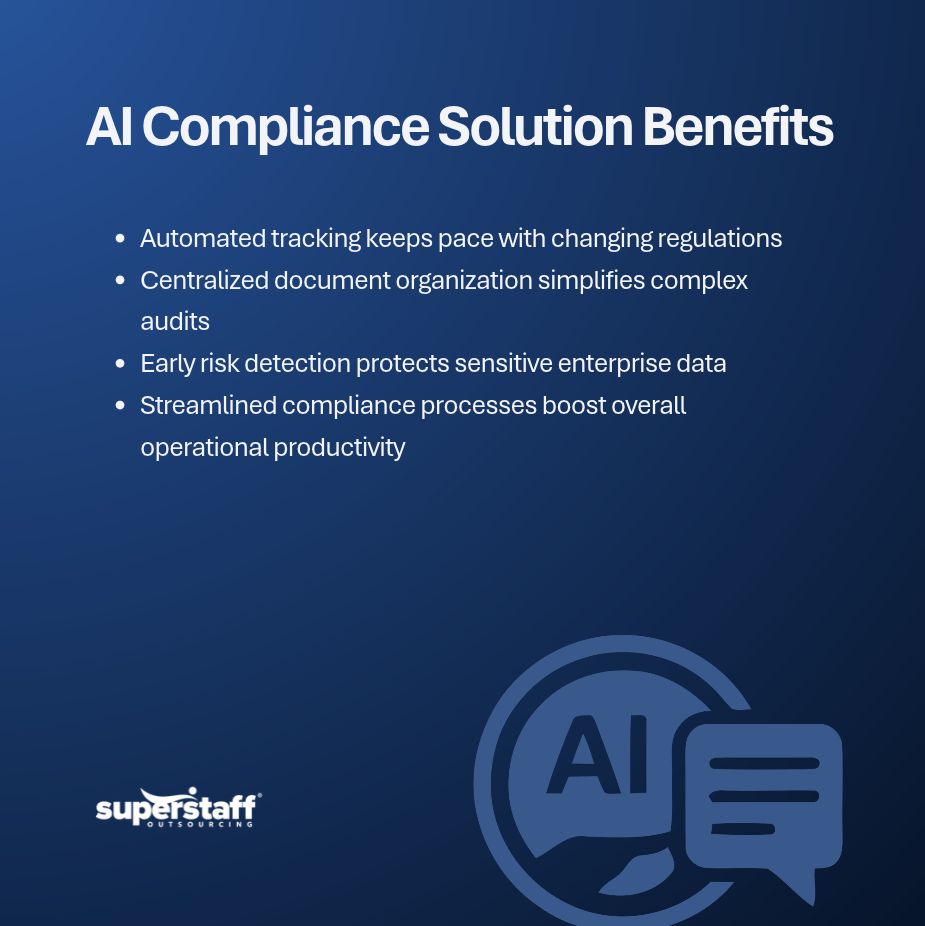
AI-powered compliance tools can support several parts of a company’s daily operations. Their value depends on the features available, the quality of the information they process, and how well they fit existing business procedures.
1. Easier Regulatory Monitoring
Businesses need to stay aware of changes in laws, industry rules, and internal policies. Checking different sources manually can take time, especially for companies operating in more than one market.
AI tools can help monitor selected regulatory sources, organize updates, and flag changes that may affect business processes. Compliance employees can then review these updates and determine whether the company needs to adjust its procedures.
2. Fewer Manual Errors
Compliance work often involves reviewing forms, checking records, entering information, and preparing reports. When employees handle large volumes of documents, small mistakes can happen.
Automated tools can check information against set requirements and identify missing fields, duplicate records, or unusual entries. Employees can review these results and correct problems before they affect important reports or processes.
3. Faster Document Reviews
Contracts, policies, financial records, and other business documents may contain information that compliance teams need to review regularly. Going through each file manually can slow down the process.
AI-powered document tools can help extract relevant details, organize files, and identify sections that need further review. This does not remove the need for legal or compliance professionals, but it can help them spend less time searching through documents.
4. Earlier Risk Detection
Some compliance problems begin with small warning signs, such as missing information, unusual transactions, or repeated policy exceptions. These details may be difficult to spot when records are reviewed only from time to time.
AI systems can analyze available data and flag patterns that may require investigation. For example, they can help identify unusual account activity or incomplete documentation.
These alerts should be treated as signals for further review, not proof that a violation has occurred. Employees must check the facts before taking action.
5. More Organized Records
Businesses need reliable records to support internal reviews, reporting, and audits. Searching through scattered folders, emails, and spreadsheets can make it harder to find the right information.
An AI compliance solution can help classify documents, extract key details, and make records easier to search. With clear naming rules and access controls, employees can find the information they need without going through every file manually.
Benefits of Using an AI Compliance Solution in Colombia
How AI Can Improve Daily Compliance Operations
The benefits of AI go beyond checking documents or identifying possible risks. These tools can also help companies improve how employees complete recurring tasks.
1. Less Time Spent on Repetitive Work
Employees may spend hours reviewing forms, updating records, checking information, and preparing routine reports. These tasks are necessary, but they can take time away from more important responsibilities.
Automation can handle selected steps, such as sorting documents or checking whether required fields are complete. Employees can then focus on reviewing results and resolving issues.
2. More Consistent Workflows
When departments follow different procedures, compliance records may become inconsistent. One team may use an updated form while another continues using an older version.
AI tools can work with approved templates, checklists, and workflow rules to support more consistent processes. Businesses should still maintain clear procedures and make sure employees use the correct versions of their documents.
3. Better Access to Business Information
Managers need reliable information when reviewing compliance performance. If records are spread across different platforms, gathering the details can take time.
AI-supported reporting tools can help summarize available information and organize it into reports. This allows decision-makers to review patterns, identify outstanding tasks, and determine which areas need attention.
4. Improved Audit Preparation
Preparing for an audit often means gathering policies, transaction records, contracts, and supporting documents. If these files are not organized, employees may spend days searching for missing information.
AI tools can help classify documents and identify records that may be incomplete. This can make preparation easier, although businesses still need to confirm that their records are accurate and meet the requirements of the audit.
5. Better Use of Employee Resources
Compliance teams often have several responsibilities beyond reviewing documents. They may also handle internal requests, coordinate with other departments, and prepare management reports.
By reducing repetitive work, AI can give employees more time for risk reviews, policy updates, and other tasks that need professional judgment.
Industries That Can Benefit From AI Compliance Tools
Compliance requirements vary by industry. However, many businesses can use AI to support documentation, monitoring, and reporting activities.
1. Financial Services
Banks, lending companies, and other financial institutions handle sensitive customer and transaction information. AI tools can help review transaction patterns, organize customer records, and flag activities that may need further investigation.
Human review remains necessary, especially when a decision could affect a customer’s account or financial access.
2. Healthcare
Healthcare providers manage patient records, appointment details, billing information, and other sensitive data. AI can help organize documents, check records for missing information, and support administrative reviews.
Healthcare organizations must also make sure that any tools they use follow applicable privacy and security requirements.
3. Retail and E-Commerce
Retailers collect customer details, process payments, manage refunds, and maintain supplier records. AI can help organize these records and identify inconsistencies in selected transactions or documents.
This can support internal checks while allowing employees to focus on customer service and daily operations.
4. Manufacturing and Logistics
Manufacturers and logistics companies manage supplier agreements, shipment records, safety documents, and operational reports. AI-powered tools can help organize these files and flag missing or outdated information.
This makes it easier for teams to review records and follow established procedures.
What Businesses Should Check Before Using AI for Compliance
An AI tool is only useful when it supports the company’s actual requirements. Before choosing a platform, businesses should review their current processes and identify where automation can help.
Consider these points before getting started.
1. Identify the Tasks That Need Support
Start by reviewing the compliance work that takes the most time. This may include document reviews, record management, reporting, or checking whether required information is complete.
Choose tasks with clear rules and measurable results. Avoid automating decisions that require legal interpretation or complex judgment without proper human review.
2. Check Data Security and Privacy
Compliance tools may process customer records, employee information, financial details, and confidential documents. Businesses should understand where their data is stored, who can access it, and how it is protected.
They should also review the provider’s security practices and confirm that the platform supports their privacy requirements.
3. Review the Quality of AI Results
AI systems can make mistakes, misunderstand documents, or produce incomplete results. Companies should test the tool using actual business workflows and have employees check its output.
Regular reviews help identify errors and determine whether the system is performing as expected.
4. Keep Employees Involved
Employees need to understand how the system works, what it can handle, and when they should step in. Training should cover data handling, review procedures, escalation steps, and the limits of automated recommendations.
A clear process helps prevent employees from treating AI-generated results as automatically correct.
5. Measure the Results
Businesses should track whether the tool is improving their processes. Useful measures include document processing time, reporting accuracy, unresolved compliance tasks, and the number of issues identified during reviews.
These results can help managers decide whether to adjust the system or expand its use.
How Outsourcing Can Support Compliance Work
Introducing AI does not mean that a company must handle every related task internally. Some businesses need additional support with document management, data entry, record checking, reporting, and other administrative processes.
Outsourcing can provide access to trained professionals who can handle selected tasks based on the company’s procedures. This gives internal compliance staff more time to review findings, manage risks, and make decisions that require specialized knowledge.
However, businesses should define responsibilities before outsourcing any compliance-related work. They should establish clear instructions, access restrictions, confidentiality requirements, and quality checks.
Companies considering this approach can review SuperStaff’s guide to compliance outsourcing services to understand what to consider when assigning compliance-related tasks to an external team.
Combining AI Tools With Human Oversight
AI can process information quickly, but it does not always understand the full business context. A document may contain an unusual term for a valid reason, or a transaction may appear different because of a specific customer arrangement.
This is why employees should review important alerts and automated findings before making decisions. Compliance professionals, legal advisers, and department managers still play an important role in interpreting requirements and deciding what action to take.
Companies should also keep clear records of who reviewed a result, what action was taken, and why. This creates a more accountable process and makes it easier to explain decisions during internal reviews or audits.
An effective setup uses AI to support routine work while keeping people responsible for important decisions.
Build More Reliable Compliance Processes With the Right Support
An AI compliance solution can help Colombian businesses organize records, review documents, identify possible risks, and reduce repetitive administrative work. These benefits can improve productivity and make compliance processes easier to manage.
Still, technology is only one part of a strong compliance program. Businesses also need accurate information, clear procedures, trained employees, and regular reviews. Combining these elements can help companies manage their responsibilities while preparing for future business needs.
SuperStaff supports businesses with back-office and administrative services, including data management, document handling, and other process-driven tasks. If your organization needs additional support for its compliance-related operations, contact SuperStaff to discuss a solution that fits your business requirements.