Managing employees across different locations has become a normal part of business. Some team members work from home full-time, while others split their time between the office and remote work. Although this setup offers flexibility, it can also create challenges when handling payroll.
Employers need to track hours, manage different pay schedules, comply with labor laws, and ensure employees receive accurate compensation on time. Even small payroll errors can lead to employee dissatisfaction, compliance issues, and unnecessary administrative work. As a result, many businesses are turning to payroll outsourcing services to simplify payroll management and maintain accuracy.
By partnering with a trusted provider, companies can focus on business growth while experienced payroll specialists handle payroll tasks efficiently. This approach helps remote and hybrid teams stay productive while ensuring employees receive the support they need.
Why Payroll Management Becomes More Complex for Remote Teams
As businesses expand remote and hybrid work arrangements, payroll responsibilities become more demanding. Different work locations, varying labor regulations, and changing schedules often create additional administrative work.
1. Multiple Work Locations Create Compliance Challenges
Employees working in different cities, states, or countries may fall under different labor regulations. Therefore, employers must stay updated on tax requirements, wage laws, and reporting obligations.
Payroll providers help businesses maintain organized processes while reducing the risk of penalties and reporting errors.
2. Tracking Employee Hours Requires Accuracy
Remote employees may work flexible schedules. Consequently, employers need reliable systems to monitor attendance, overtime, and paid leave.
Accurate payroll processing ensures employees receive correct compensation while helping companies avoid disputes.
3. Tax Filing Becomes More Complicated
Different employee locations often mean different tax requirements. As a result, payroll teams must manage various tax rates, deductions, and filing deadlines.
Professional payroll support helps businesses handle these responsibilities correctly and on time.
4. Payroll Errors Can Affect Employee Trust
Employees expect accurate and timely pay. However, payroll mistakes can quickly affect morale and employee satisfaction.
Reliable payroll processes help businesses maintain trust and support positive employee experiences.
5. Administrative Work Continues to Grow
As companies hire more remote workers, payroll workloads increase. Meanwhile, HR and finance teams often have additional responsibilities.
Outsourcing payroll reduces manual work and allows internal teams to focus on higher-value tasks.
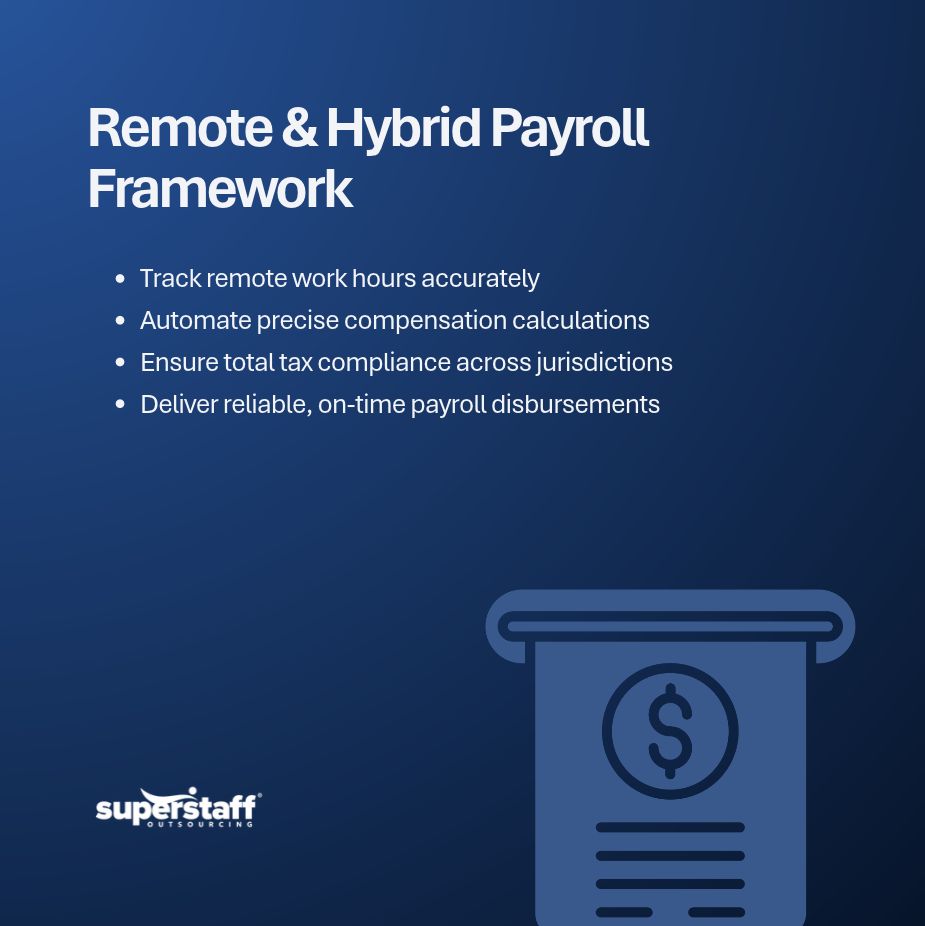
How Payroll Outsourcing Services Support Remote Workforces
Many organizations use payroll outsourcing services to improve efficiency, maintain compliance, and reduce administrative burdens. These services provide specialized support that helps businesses manage growing workforces.
1. Automated Payroll Processing
Payroll providers use structured systems to calculate wages, deductions, taxes, and benefits. As a result, businesses can reduce manual errors and improve consistency.
Automation also helps payroll teams process payments faster and more accurately.
2. Consistent Employee Payments
Remote employees may work across different locations and time zones. Therefore, companies must ensure timely payroll processing regardless of employee location.
Payroll specialists help businesses maintain consistent payment schedules and avoid delays.
3. Compliance Monitoring
Employment regulations often change. Consequently, businesses must continuously monitor payroll-related requirements.
Payroll providers stay informed about regulatory updates and help companies maintain organized compliance processes.
4. Secure Payroll Data Management
Payroll records contain sensitive employee information. Therefore, businesses need secure systems to protect data.
Outsourcing providers should use appropriate security measures and access controls to help safeguard employee records and financial information.
5. Scalable Payroll Support
Business growth often leads to larger payroll demands. Fortunately, payroll outsourcing services can scale alongside company expansion.
Whether hiring five employees or five hundred, businesses can maintain efficient payroll operations without significantly increasing internal workloads.
Companies looking at the operational side of payroll can also review how outsourced payroll services help reduce errors and improve efficiency. This can help employers understand how dedicated support fits into their existing finance processes.
Key Benefits of Outsourcing Payroll for Hybrid Teams
Hybrid workplaces require flexibility and consistency. Payroll outsourcing offers several advantages that support these goals while helping organizations operate more efficiently.
1. Reduced Administrative Burden
Payroll processing takes time and attention to detail. By outsourcing these responsibilities, employers can reduce repetitive tasks and improve productivity.
As a result, HR and finance teams can dedicate more time to strategic priorities.
2. Improved Accuracy
Payroll specialists focus on payroll management every day. Therefore, they often have the expertise and systems needed to minimize errors.
Greater accuracy helps businesses avoid costly corrections and employee concerns.
3. Better Employee Experience
Employees appreciate receiving accurate paychecks on time. Furthermore, efficient payroll processes create confidence and trust within the workforce.
Satisfied employees are more likely to remain engaged and productive.
4. Cost Control
Building and maintaining a large internal payroll department can increase operating costs. Meanwhile, outsourcing provides access to experienced professionals without expanding internal payroll teams.
This approach helps businesses manage costs while maintaining quality service.
5. Support for Business Growth
As companies expand into new markets or hire additional remote workers, payroll demands often increase. However, outsourcing providers can adapt to changing business requirements.
This flexibility allows organizations to grow without creating payroll bottlenecks.
Practical Factors When Choosing a Payroll Partner
Selecting the right payroll provider requires careful evaluation. Businesses should consider several factors before making a decision.
- Industry experience and payroll expertise
- Compliance knowledge across multiple locations
- Data security practices
- Payroll technology capabilities
- Customer support availability
- Scalability for future growth
- Reporting and analytics features
A strong payroll partner should align with business goals while supporting both current and future workforce needs.
For employers in the United States, remote work does not remove the responsibility to track employee hours accurately. The U.S. Department of Labor’s recordkeeping guidelines explain the wage and hour information employers must maintain for covered workers. These records help businesses calculate pay correctly and support compliance with applicable requirements.
Keep Payroll Records Organized Across Locations
Managing payroll across several locations requires more than collecting employee hours. Employers also need updated employee details, pay rates, tax information, leave records, and documentation of any changes that affect compensation.
Create a standard process for collecting and checking payroll information before every pay cycle. Managers should submit approved hours and updates on time, while HR and finance teams should review records for missing or incorrect details.
A consistent process makes payroll easier to manage, especially when employees follow different schedules or work arrangements.
Build a Reliable Payroll Administration Process
Payroll outsourcing works best when the provider and internal team understand their responsibilities. Businesses should establish clear deadlines for submitting time records, approving changes, checking payroll reports, and addressing employee questions.
Outsourced teams can also assist with recurring administrative tasks such as employee information updates, timekeeping follow-ups, benefits coordination, and report preparation. Payroll administration support for growing businesses can help employers understand how these tasks can be organized without giving up control over important payroll decisions.
Protect Employee Information and Payroll Access
Remote and hybrid arrangements often mean employees and managers access payroll systems from different locations. This makes access management and data protection important parts of payroll planning.
Businesses should limit payroll access to authorized personnel, use secure systems, and establish clear procedures for sharing employee information. Regular reviews can help identify outdated user accounts and unnecessary access permissions.
Employers should also confirm how an outsourcing provider stores, processes, and protects sensitive payroll data before starting a partnership.
Back-Office Support for Payroll and Administrative Tasks
Payroll is connected to other administrative activities, including recordkeeping, data entry, document processing, and reporting. When these tasks fall behind, payroll teams may struggle to complete each pay cycle on time.
Businesses can use back-office support services to manage recurring administrative and finance-related work. This gives internal employees more time to review payroll information, handle exceptions, and support workforce needs.
Simplify Payroll Across Every Work Location
Managing payroll for remote and hybrid teams requires accuracy, compliance, and consistency. Payroll outsourcing services help businesses reduce administrative work, improve payroll accuracy, and support employee satisfaction.
As companies continue to embrace flexible work arrangements, outsourcing payroll can provide the structure and support needed for long-term success. A clear process, reliable records, and regular reviews also help employers manage payroll as their workforce changes.
SuperStaff helps businesses manage operational demands through reliable outsourcing solutions tailored to their needs. If your organization is looking for dependable payroll support and workforce solutions, contact SuperStaff to discuss how payroll outsourcing services can help your business operate more efficiently.