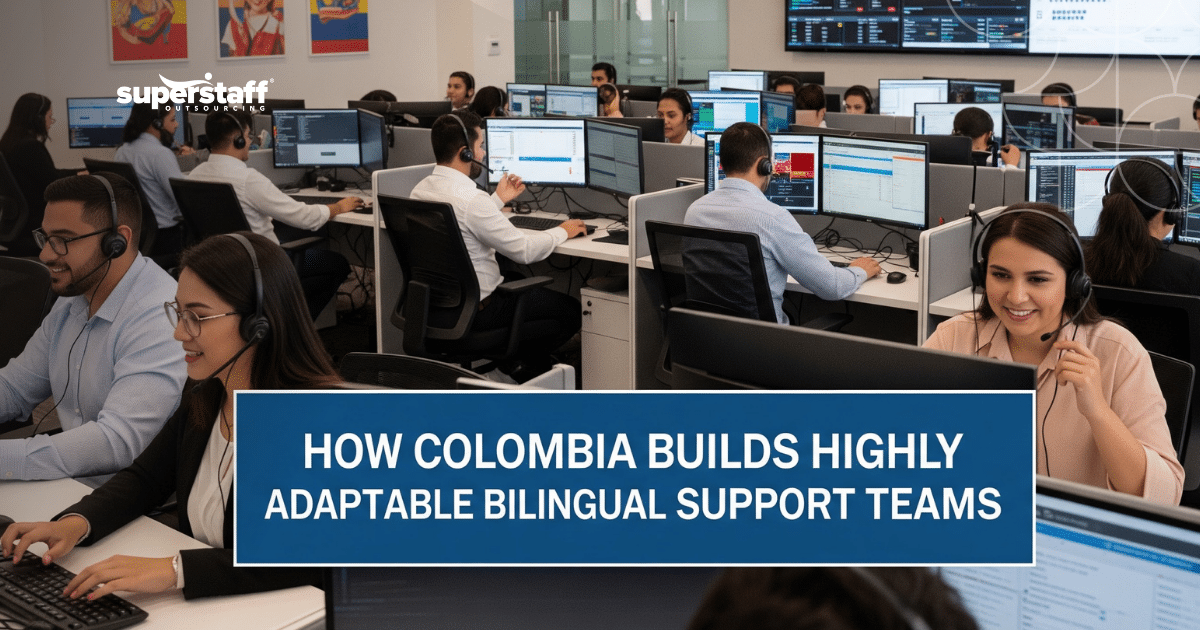

Global talent strategies are changing as companies search for talent pools that offer both proximity and capability. Business leaders now evaluate outsourcing models that balance operational efficiency, collaboration, and workforce quality.
One of the most visible developments is nearshoring to Colombia, which is increasingly shaping how organizations build distributed teams across the Americas.
Companies that once focused primarily on offshore destinations in Asia are now integrating Latin American talent hubs into their workforce models.
Colombia has emerged as a strong option because of its educated workforce, improving digital infrastructure, and cultural compatibility with North American markets. As a result, executives are taking a closer look at how Colombia fits into their long term talent strategies.
Why Global Talent Strategies Are Shifting Toward Nearshore Models
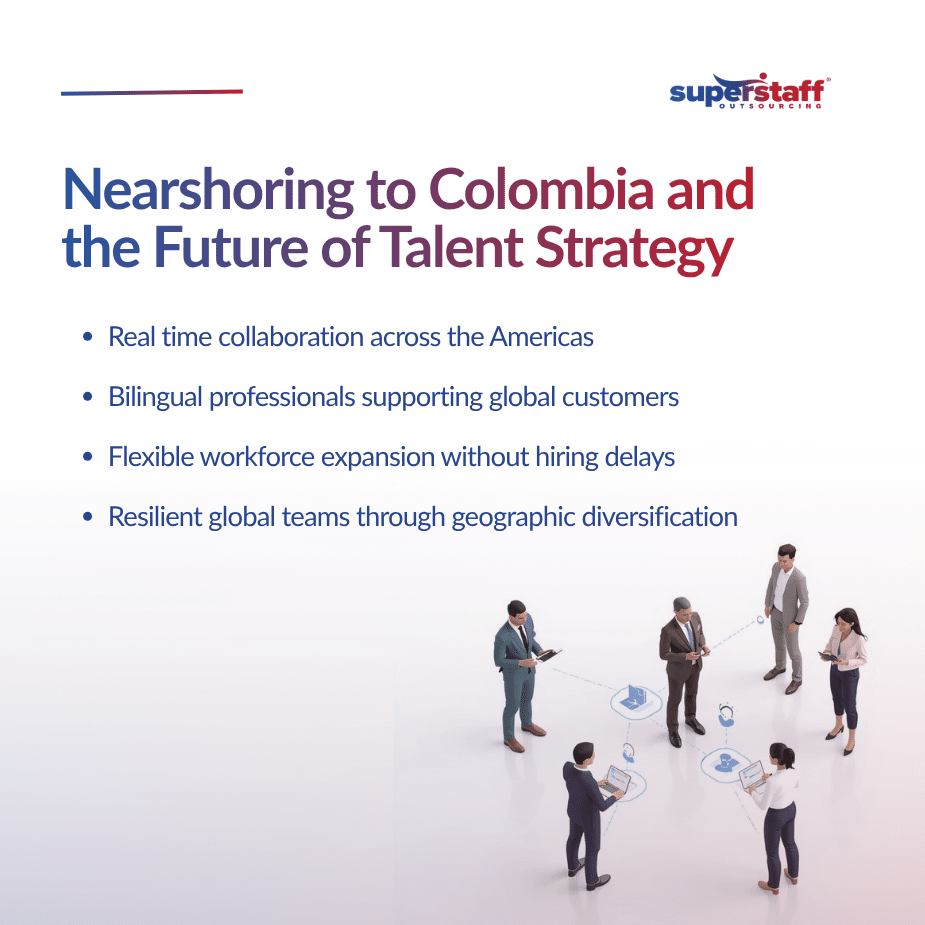
The global workforce model has evolved significantly over the past decade. Organizations now prioritize flexibility and resilience in how they build and manage teams.
Traditional outsourcing often required teams to work across large time zone gaps. This created delays in communication and slowed project cycles. Nearshore strategies help address this issue by placing teams closer to headquarters.
Nearshoring to Colombia allows companies to operate in similar time zones to North America. This alignment enables real time collaboration between internal teams and outsourced staff.
Business leaders increasingly see Colombia nearshore outsourcing as part of a broader strategy to strengthen global operations while maintaining efficient communication across teams.
As this model becomes more common, companies are reassessing how nearshore partnerships fit into their workforce planning.
Colombia’s Talent Pipeline Is Gaining Global Attention
One of the biggest drivers behind nearshoring to Colombia is the country’s expanding professional workforce.
Universities in Colombia produce graduates in technology, finance, customer support, and business management every year. Many professionals have strong English proficiency and experience working with international companies.
This talent pipeline supports a range of functions such as:
- Customer experience support
• Back office operations
• Technical services
• Digital operations
• Financial and administrative support
Companies evaluating Colombia nearshore outsourcing often highlight the availability of trained professionals who can quickly integrate into global teams.
As talent development continues to expand, Colombia’s workforce will likely remain a key factor in the growth of nearshoring models.
Time Zone Alignment Supports Faster Collaboration
Time zone compatibility remains one of the most practical advantages of nearshoring to Colombia.
Organizations headquartered in the United States often struggle with the delays that occur when offshore teams operate on opposite schedules. When teams work in similar hours, project coordination becomes easier.
Real time communication improves:
- Customer support responsiveness
• Cross functional collaboration
• Project delivery timelines
• Issue resolution
For companies using Latin America nearshoring services, Colombia’s time zone alignment enables faster decision making and operational efficiency.
Executives increasingly view this operational benefit as an essential component of modern outsourcing strategies.
Bilingual Talent Strengthens Customer Experience Operations
Customer experience programs depend heavily on communication quality. Companies must ensure that agents can interact effectively with global customers.
Nearshoring to Colombia offers access to bilingual professionals who can support both English and Spanish speaking markets. This capability expands customer service coverage across multiple regions.
Organizations that adopt Colombia nearshore outsourcing often use these teams to manage:
- Omnichannel support
• Customer retention programs
• Technical assistance
• Social media support
• E commerce inquiries
This linguistic capability explains why companies nearshore to Colombia for talent when expanding multilingual customer experience operations.
As customer expectations grow, access to bilingual agents becomes an increasingly valuable advantage.
Digital Infrastructure Is Supporting Nearshore Expansion
Technology infrastructure is another factor that supports the growth of nearshoring to Colombia.
Over the past several years, Colombia has invested in telecommunications networks, digital connectivity, and technology training programs. These developments make it easier for global companies to operate distributed teams.
Businesses that rely on Latin America nearshoring services often look for destinations where remote teams can integrate with cloud based platforms, CRM systems, and digital communication tools.
Colombia’s expanding digital ecosystem supports a wide range of outsourced functions including:
- Contact center operations
• Remote administrative services
• IT support and helpdesk teams
• Data processing and analytics support
This infrastructure makes it easier for companies to integrate nearshore teams into existing workflows.
Cost Efficiency Still Matters in Strategic Nearshoring
While talent access is a major factor, cost efficiency continues to influence outsourcing decisions.
Nearshoring to Colombia provides companies with opportunities to manage operational costs without sacrificing service quality. Labor costs remain competitive compared with North American markets while still attracting skilled professionals.
This balance supports organizations that want to expand operations without increasing internal staffing expenses.
Executives exploring Colombia nearshore outsourcing often see it as a way to:
- Maintain predictable labor costs
• Scale teams based on demand
• Allocate internal resources toward strategic initiatives
Cost management remains part of the broader value equation when companies evaluate global outsourcing destinations.
Remote Work Trends Are Accelerating Nearshore Adoption
The global shift toward remote work has also accelerated the adoption of nearshoring to Colombia.
Companies have become more comfortable managing distributed teams. Cloud collaboration tools and remote management platforms allow organizations to supervise teams across borders.
Nearshore teams now operate as integrated extensions of internal departments. This model works well for functions that require consistent communication with headquarters.
Examples include:
- Customer support teams
• Operations coordination
• Back office administration
• Technical troubleshooting
Organizations that already use Latin America nearshoring services often expand their partnerships once they see the operational benefits.
Remote work trends continue to reinforce the viability of nearshore workforce models.
Business Continuity Planning Is Driving Talent Diversification
Companies increasingly view global talent strategies as part of risk management planning.
Relying on a single geographic workforce can expose organizations to operational disruptions. Diversifying talent locations helps create more resilient operations.
Nearshoring to Colombia allows companies to diversify their workforce while maintaining geographic proximity to the United States.
This approach supports:
- Workforce continuity
• Operational redundancy
• Regional coverage across the Americas
For many executives, Colombia nearshore outsourcing is part of a broader strategy to build geographically balanced operations.
Diversification remains an important factor in modern workforce planning.
The Role of Nearshore Partnerships in Scaling Operations
Scaling operations quickly is often difficult when companies rely solely on internal hiring.
Recruitment timelines, onboarding processes, and training requirements can slow expansion. Nearshore partnerships offer a more flexible alternative.
Nearshoring to Colombia allows organizations to scale customer support and operational teams without the delays associated with traditional hiring.
Companies that understand why companies nearshore to Colombia for talent often view outsourcing partners as strategic workforce providers rather than short term vendors.
This model enables organizations to respond to growth opportunities while maintaining operational stability.
Why Executives Are Including Colombia in Global Workforce Plans
Colombia’s growing role in global outsourcing reflects broader shifts in workforce strategy.
Companies now evaluate outsourcing destinations based on a combination of talent quality, communication alignment, and operational flexibility.
Nearshoring to Colombia meets many of these criteria while also supporting collaboration with North American teams.
Executives exploring Latin America nearshoring services frequently view Colombia as part of a long term workforce model that includes both offshore and nearshore locations.
This approach allows organizations to balance cost efficiency with operational agility.
As nearshoring continues to expand, Colombia will likely remain a key part of global talent strategies.
Building Stronger Global Teams Through Strategic Nearshoring
Companies across the United States are rethinking how they structure their global workforce. Access to skilled talent, operational flexibility, and real time collaboration have become essential elements of modern business strategy.
Nearshoring to Colombia is gaining traction because it addresses these priorities while supporting efficient collaboration with North American teams. Organizations that integrate nearshore talent hubs into their workforce models often find it easier to scale operations and maintain consistent service delivery.
For businesses looking to expand customer support or back office operations, partnering with an experienced outsourcing provider can simplify the process. SuperStaff helps companies build high performing teams across strategic locations including the Philippines and Colombia.
If your organization is exploring how nearshore and offshore teams can strengthen your workforce strategy, explore SuperStaff’s outsourcing solutions and discover how the right partnership can support your next stage of growth.