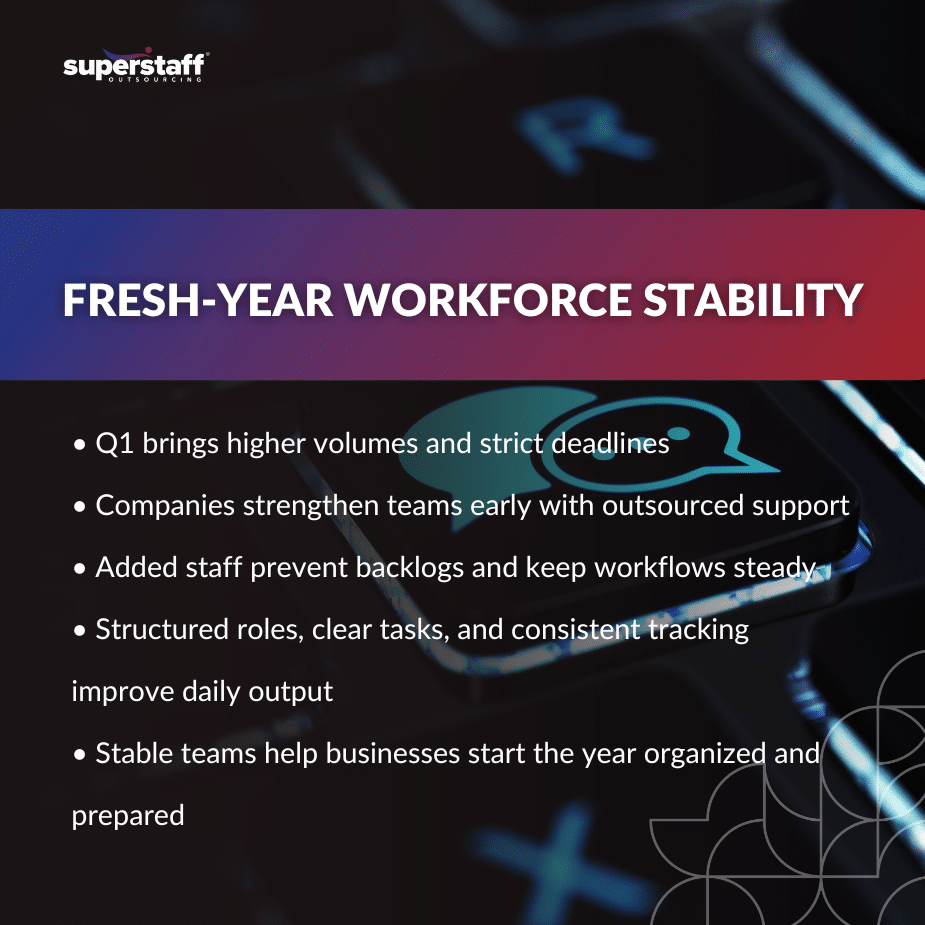
Many companies experience higher workloads at the start of the year. Holiday backlogs, annual reporting requirements, new customer demands, and early-year business targets can put pressure on existing employees. When several departments face these demands at once, delayed tasks and unfinished work can affect daily operations.
Outsourced support gives businesses additional staffing capacity before these demands increase. By assigning routine and specialized tasks to trained external teams, companies can manage workloads more effectively while allowing internal employees to focus on responsibilities that require their direct attention.
Preparing before Q1 begins also gives managers time to review staffing needs, establish clear responsibilities, and organize workflows. These steps help businesses maintain consistent output without placing unnecessary pressure on their existing workforce.
Why Companies Prepare for Q1 Workloads With Outsourced Support
The first quarter often brings a combination of unfinished work from the previous year and new operational requirements. Accounting teams may need to complete financial records, HR departments may process new employee documents, and customer service teams may handle inquiries related to holiday purchases, returns, and deliveries.
Without enough available staff, these responsibilities can compete for the same resources. Employees may need to handle several tasks at once, increasing the possibility of mistakes and missed deadlines.
Early workforce planning helps companies identify these gaps before they affect daily operations. Reviewing existing responsibilities, expected demand, and available skills gives managers a clearer picture of where additional support is needed. A workforce planning guide from SHRM also highlights the importance of assessing current staff, forecasting future needs, and identifying skills gaps.
Outsourcing provides another way to address these staffing gaps. Companies can assign specific administrative, customer service, and back-office responsibilities to external professionals instead of increasing the workload of their existing employees.
Key Workforce Stability Practices Companies Should Follow
Preparing for Q1 requires more than adding employees when workloads become difficult to manage. Companies need clear processes that help internal and outsourced staff work together.
The following practices help businesses organize their workforce and maintain consistent operations during periods of increased demand.
1. Early workload assessment
Companies should review their expected workload before the first quarter begins. This includes identifying pending projects, recurring administrative tasks, customer service demands, and reporting deadlines.
Comparing these requirements with available staff helps managers determine which departments may need additional assistance. It also prevents companies from hiring or outsourcing without a clear understanding of their actual needs.
2. Task distribution planning
Tasks should be assigned according to urgency, complexity, and the skills required to complete them. Routine work can be delegated to additional support staff, while internal employees focus on responsibilities that require company-specific knowledge or decision-making.
A clear task distribution plan prevents employees from handling overlapping responsibilities and helps managers monitor progress across departments.
3. Clear role definitions
Every team member should understand their responsibilities, reporting structure, and expected output. This is particularly important when internal employees and outsourced professionals share the same workflow.
Documented role descriptions reduce confusion and help employees identify who should handle specific requests, updates, and concerns.
4. Structured communication routines
Regular communication helps teams stay informed about deadlines, changing priorities, and pending tasks. Scheduled check-ins also give employees an opportunity to raise concerns before they affect productivity.
Companies should establish clear communication channels and assign responsible contacts for different operational concerns.
5. Onboarding preparation
Outsourced employees need access to the information and resources required to perform their assigned tasks. Companies should prepare process documents, training materials, system instructions, and relevant company guidelines before onboarding begins.
Providing these materials early reduces the time needed to explain routine procedures and helps new team members adjust to established workflows.
6. Defined response and turnaround times
Clear service expectations help employees understand how quickly tasks should be completed. Managers should establish deadlines based on task complexity, urgency, and available resources.
These standards also make it easier to identify delays and determine whether additional staffing or process adjustments are necessary.
7. Use of centralized work systems
Shared platforms help internal and outsourced teams access updated information, track assignments, and review completed work. Centralized systems also reduce the risk of duplicated tasks and missing records.
Companies should establish appropriate access permissions to ensure employees only handle information relevant to their responsibilities.
8. Monitoring and quality checks
Regular performance reviews help managers identify errors, incomplete assignments, and recurring process issues. Tracking completion rates and turnaround times also provides useful information about team performance.
Quality checks should be part of the regular workflow rather than something performed only after problems occur.
9. Documentation rules
Consistent documentation helps teams maintain accurate records of completed tasks, customer interactions, and operational updates. Standard formats also make reporting easier and reduce misunderstandings between departments.
Businesses should establish clear guidelines for storing, updating, and reviewing important documents.
10. Alignment with the outsourcing provider
Companies should communicate their expectations, task requirements, and performance standards before outsourced employees begin handling assignments.
Both parties should understand reporting procedures, escalation processes, and responsibilities. This helps prevent confusion and ensures external support follows the same operational priorities as the internal team.
Factors to Evaluate When Coordinating With Outsourced Teams
Even with additional staffing, companies need reliable coordination to maintain consistent results. Internal and outsourced employees must understand how their responsibilities connect and how work moves between departments.
Several factors deserve attention when establishing these working arrangements.
Communication workflows
Teams should have agreed communication channels for daily updates, urgent concerns, and task-related questions. Managers should also identify who has the authority to approve changes or escalate problems.
Collaboration tools
Shared project management platforms, communication applications, and document management systems help employees monitor assignments and exchange information. The selected tools should support the company’s existing processes.
Data protection and privacy
Outsourced employees may need access to customer records, financial documents, and internal business information. Companies should establish access restrictions, authentication requirements, and information handling policies to protect sensitive data.
Role and responsibility clarity
Each employee should know which tasks they can complete independently and which require approval from internal managers. This prevents duplicated work and reduces unnecessary delays.
Documentation and record-keeping
Updated records help both teams monitor task progress and verify completed work. Businesses should also establish consistent procedures for handling reports, customer information, and operational files.
Training and onboarding
Training should cover company policies, software, task procedures, and quality expectations. Managers should also provide feedback during the first few weeks to address problems early.
Performance and accuracy tracking
Companies should monitor relevant measures such as task completion, response times, error rates, and adherence to deadlines. These results help managers determine whether the current staffing arrangement meets operational requirements.
Vendor support and issue resolution
The outsourcing provider should have a clear process for addressing staffing concerns, performance issues, and technical problems. Quick resolution helps prevent small issues from affecting larger operations.
How Workforce Stability Supports Daily Operations
A stable workforce helps companies maintain regular business activities even when demand increases. Employees can complete their responsibilities without constantly shifting between unrelated assignments or taking on work beyond their capacity.
For example, customer service representatives can focus on inquiries and order updates while administrative staff handle documentation and reporting. Accounting employees can concentrate on financial records instead of spending additional hours managing unrelated administrative tasks.
This separation of responsibilities also helps reduce backlogs. When tasks are distributed according to available skills and resources, teams can maintain more consistent turnaround times.
Companies that use structured back-office outsourcing can also assign recurring administrative responsibilities to dedicated professionals. This arrangement gives internal employees more time to manage decisions, review results, and address work that requires their direct involvement.
Use Cases Where Outsourcing Helps During Q1 Surges
Different departments experience increased workloads for different reasons. Identifying which functions need additional support helps businesses assign resources where they can make the greatest difference.
Common examples include:
- Customer service queues: Additional agents can handle inquiries about orders, returns, deliveries, and account concerns. This helps businesses manage higher contact volumes without placing all the pressure on their existing customer service employees. Companies that need additional phone support can also review how call center outsourcing works.
- Order processing: Additional staff can update order records, verify customer information, and coordinate fulfillment requests. These tasks help businesses process pending holiday orders and manage new purchases.
- Accounting and bookkeeping updates: Outsourced professionals can assist with transaction entries, invoice processing, reconciliations, and financial record updates. This gives internal accounting teams more time to review financial information and complete reporting requirements.
- Reporting and compliance tasks: External support can help organize documents, update records, and prepare information needed for internal reviews. Companies should still assign qualified personnel to review and approve compliance-related submissions.
- HR onboarding and documentation: Additional administrative staff can assist with employee records, application processing, interview scheduling, and onboarding documents. This helps HR teams manage recruitment activities alongside their regular responsibilities.
- Data entry and verification: High-volume data processing can be assigned to trained staff who follow established validation procedures. Accurate records help departments work with reliable information.
- Inventory coordination: Support staff can update inventory records, check stock information, and coordinate routine documentation. These activities help businesses maintain accurate inventory data.
- Scheduling and administrative support: Virtual assistants can manage calendars, organize meetings, prepare reports, and handle routine correspondence. This reduces the time internal employees spend on recurring administrative work.
How Stable Outsourced Teams Support Internal Staff
Outsourced support should complement the existing workforce rather than create additional coordination problems. When responsibilities are properly assigned, external employees can help internal teams manage routine work and maintain their productivity.
One benefit is the reduction of repetitive tasks. Internal employees can spend less time processing records, answering routine inquiries, and updating documents when these responsibilities are handled by trained support staff.
Consistent staffing also helps prevent interruptions. Instead of repeatedly shifting employees between different assignments, managers can maintain dedicated teams for specific functions.
Clear reporting procedures give supervisors better visibility into completed tasks and pending work. This allows them to identify delays, review performance, and make adjustments before workloads become difficult to manage.
Choosing the Right Outsourcing Partner for Q1 Preparation
The right outsourcing arrangement depends on the company’s workload, required skills, and operational goals. Businesses should evaluate potential providers based on their ability to support existing processes and maintain consistent service quality.
Consider the following factors before making a decision:
- Experience handling seasonal and high-volume workloads
- Clear communication procedures and reporting arrangements
- Secure technology platforms and information handling practices
- Documented training and onboarding processes
- Transparent performance monitoring and quality standards
- Flexible staffing arrangements based on changing business needs
- Established procedures for resolving operational concerns
Companies should also confirm how quickly a provider can recruit and prepare additional staff. A team that takes too long to onboard may not provide the support needed before Q1 workloads increase.
SuperStaff Outsourced Workforce Support
SuperStaff provides outsourced workforce support for businesses that need additional capacity across customer service, administrative, accounting, and back-office operations.
Its Back-Office Support services cover tasks such as bookkeeping, data entry, virtual assistance, and other administrative functions. These services can help companies manage recurring responsibilities while keeping internal teams focused on their main business priorities.
Structured workflows, employee training, and performance monitoring also help maintain accountability across assigned tasks. Companies can identify the support they need based on their current operations, expected workload, and staffing requirements.
Stable Workflows Through Strategic Outsourced Support
Preparing for Q1 requires businesses to understand their staffing needs before workloads increase. Reviewing responsibilities, distributing tasks, and establishing clear processes can help prevent delays and reduce pressure on internal employees.
Outsourced support gives companies additional resources to manage customer service, administrative work, accounting tasks, and other recurring responsibilities. When properly integrated, these teams help maintain consistent operations while allowing existing employees to focus on higher-priority activities.
Businesses planning their workforce requirements can contact SuperStaff to discuss their operational needs and determine which outsourced support arrangements may fit their Q1 workload.