The beginning of a new year gives businesses an opportunity to review their operations and address unfinished administrative work. Finance teams need to reconcile records, HR departments update employee information, and operations managers review supplier accounts, contracts, and pending transactions. These responsibilities often overlap with regular business activities, making it difficult to complete everything within the expected timeframe.
Small administrative issues can also affect other departments. An outdated supplier record may delay an invoice, while incorrect customer information can lead to reporting errors. When these problems accumulate, managers spend more time correcting records instead of planning upcoming activities.
Outsourced back-office teams help businesses handle these responsibilities by taking on specific administrative and data-related tasks. With properly assigned work, documented procedures, and trained professionals, companies can organize their records and reduce delays without placing every responsibility on their internal employees.
Why Companies Strengthen Back-Office Functions at the Start of the Year
Year-opening activities involve several processes that need to be completed before regular operations reach full capacity. Finance departments review outstanding payments, HR teams check employee files, and purchasing teams verify supplier information. Each activity requires accurate records because other business functions depend on the information being updated.
Financial records are particularly important during this period. Companies need to review outstanding invoices, confirm transactions, organize expense documents, and prepare information for financial reporting. The Small Business Administration’s financial management guidance explains how bookkeeping, balance sheets, and expense tracking help businesses monitor their financial position.
However, completing these activities alongside regular administrative work can create pressure on internal employees. Outsourced professionals can assist with document processing, data updates, transaction records, and other recurring assignments. This gives internal teams more time to review information, approve transactions, and handle decisions that require direct business knowledge.
Companies evaluating different ways to distribute these responsibilities may also consider how businesses outsource back-office operations to the Philippines to support finance, data processing, HR administration, and other internal functions.
Key Practices for Building Year-Opening Efficiency
Preparing business records for a new year requires specific actions rather than simply asking employees to complete pending tasks. Companies should identify which information needs updating, which documents require review, and which administrative activities can be assigned to additional staff.
1. Review Financial Records and Outstanding Transactions
Finance teams should begin by checking unpaid invoices, outstanding customer balances, expense entries, and pending transactions. These records help businesses understand their current financial position and identify items that need further attention.
Outsourced administrative staff can assist with organizing supporting documents, entering transaction details, and preparing reconciliation records. Internal accountants should remain responsible for reviewing discrepancies and approving financial adjustments.
2. Update Employee and Payroll Information
Employee records may contain outdated addresses, contact details, employment information, or payroll-related data. HR departments should review these records before processing new-year payroll activities and preparing workforce reports.
External administrative staff can help update employee information, organize onboarding documents, and check whether required files are complete. Any changes involving compensation, employment status, or sensitive employee matters should follow the company’s approval procedures.
3. Reorganize Supplier and Vendor Records
Supplier information affects purchasing, invoice processing, and payment schedules. Businesses should verify vendor names, contact details, payment information, contract records, and outstanding account balances.
Maintaining updated supplier records helps prevent incorrect payments and delays caused by missing information. Outsourced teams can handle routine record updates while purchasing and finance managers review changes that require authorization.
4. Standardize Document Storage
Documents become difficult to manage when departments use different naming formats or store files in separate locations. Companies should establish a consistent structure for organizing invoices, contracts, employee records, purchase orders, and reports.
A centralized storage system makes documents easier to locate and reduces the risk of using outdated versions. It also helps employees understand where completed files should be stored and who can access them.
5. Establish Clear Processing Deadlines
Year-opening tasks often involve several departments. For example, finance may need supplier information from purchasing before completing payment records, while HR may need updated attendance data before preparing payroll documents.
Companies should identify these dependencies and set realistic deadlines for each stage. This prevents one delayed submission from affecting several other activities.
6. Introduce Document Verification Procedures
Data entry mistakes can create problems when records are used for financial reporting, employee administration, or customer management. Businesses should establish verification procedures to check important information before it is accepted into company systems.
Reviews may involve comparing entries against original documents, checking required fields, and identifying duplicate records. The level of review should depend on the importance and sensitivity of the information.
7. Define Responsibilities Across Departments
Some administrative tasks require cooperation between finance, HR, purchasing, and operations. Companies should identify who prepares information, who reviews it, and who gives final approval.
This distinction is important when outsourced employees handle part of a process. External staff may prepare records or organize documents, but internal managers should retain responsibility for decisions that require company authority.
8. Review Software and Database Information
Business systems may contain outdated customer details, duplicate supplier entries, inactive employee accounts, or incomplete product information. These issues can affect reporting and make it harder for employees to retrieve reliable data.
Companies should schedule database reviews and establish rules for correcting or removing records. Outsourced data specialists can assist with these activities when they receive clear instructions and appropriate system permissions.
9. Prepare Reports for the New Operating Period
Managers need accurate information to assess previous performance and establish new targets. Administrative teams may need to compile sales records, expense summaries, employee information, inventory updates, and operational reports.
Outsourced staff can gather information and prepare reports using approved templates. Department heads can then review the results and use them when planning upcoming activities.
10. Create a Process for Pending Work
Some tasks cannot be completed immediately because they require additional documents, approvals, or responses from other departments. These assignments should be recorded and monitored rather than left in individual email conversations or informal notes.
A shared task register helps managers identify outstanding requirements, assigned employees, and expected completion dates. This provides a clearer view of unfinished work and makes follow-ups easier to manage.
Factors to Evaluate When Coordinating With Outsourced Back-Office Teams
Assigning administrative work to an external team requires a clear understanding of how information moves through the business. Companies should examine the actual workflow before transferring responsibilities.
Workflow Handoffs
Businesses should determine when an outsourced employee receives a task, what information must be provided, and where completed work should be submitted. Clear handoff procedures prevent missing documents and reduce unnecessary follow-ups.
Approval Requirements
Not every administrative task can be completed independently. Financial adjustments, employee record changes, supplier payment details, and other sensitive updates may require internal approval. These responsibilities should be documented before work begins.
System Compatibility
Outsourced employees may need to use accounting software, spreadsheets, document management platforms, or enterprise systems. Companies should confirm that the provider can work with the required applications and follow established data entry procedures.
Confidentiality and Access
Administrative records can contain financial, employee, supplier, and customer information. Companies should provide access based on assigned duties and establish clear rules for storing, sharing, and handling confidential files.
Reporting Responsibilities
Managers need regular updates to understand which assignments are complete and which still require attention. Reports should include relevant details such as completed tasks, pending documents, identified errors, and items awaiting approval.
Staff Familiarity With Business Processes
Some administrative tasks require knowledge of company terminology, document formats, and internal procedures. Training should cover these requirements before outsourced employees begin handling actual assignments.
How Outsourced Back-Office Teams Support Daily Operations
Back-office work affects several departments, even when customers do not directly see these activities. An incomplete invoice can delay a supplier payment, while an incorrect employee record can affect payroll preparation. These problems can interrupt routine operations when employees need to stop their regular work to investigate missing information.
Outsourced teams can take responsibility for recurring administrative assignments such as data entry, document sorting, account updates, and report preparation. This allows internal employees to focus on reviewing results and resolving issues that require their expertise.
The arrangement can also help businesses manage changes in workload. For example, a company completing annual financial reviews may temporarily need more assistance with document organization and transaction records. Additional support can help complete these assignments without permanently increasing the size of the internal department.
Use Cases Where Outsourced Back-Office Support Provides Value
The type of administrative support required depends on the department and the amount of work involved. Businesses can assign routine tasks to external professionals while keeping sensitive decisions and approvals within their organization.
Common applications include:
- Financial administration: Organizing invoices, entering expense details, and preparing transaction records for accounting review.
- Employee records: Updating contact information, arranging personnel files, and organizing onboarding documents.
- Supplier management: Maintaining vendor details, updating account records, and organizing purchasing documents.
- Database maintenance: Checking customer information, correcting duplicate entries, and updating business records.
- Inventory documentation: Entering stock information, organizing product records, and updating inventory spreadsheets.
- Report preparation: Gathering operational data and arranging information in approved reporting formats.
Financial administration may require particular attention during the first few months of the year. Companies handling transaction records, reconciliations, and routine financial documentation can review how outsourced bookkeeping services support financial recordkeeping. This can help them identify which accounting tasks require dedicated support and which should remain under the supervision of internal finance professionals.
How Back-Office Support Benefits Different Internal Departments
Each department has different administrative requirements, so outsourced support should be assigned according to actual workload rather than applied in the same way across the organization.
Finance teams may need assistance with invoice entry, expense documentation, accounts payable records, and reconciliation preparation. HR departments may require help organizing employee files, updating personnel databases, and processing routine onboarding documents.
Sales and customer management teams can benefit from accurate customer records, updated contact details, and organized account information. Operations departments may need support with supplier documentation, inventory records, purchase orders, and routine reporting.
When these responsibilities are properly distributed, internal employees have more time to focus on decisions, approvals, and activities that directly affect their departments.
Choosing the Right Back-Office Outsourcing Partner
Selecting a provider requires an assessment of the actual work involved. Companies should determine whether potential partners have experience with the systems, records, and administrative functions that need additional support.
For financial tasks, businesses should examine the provider’s experience with transaction documentation, reconciliation support, and bookkeeping procedures. For data-related assignments, they should review data entry accuracy, database management, and document verification practices.
Technology and information security also deserve attention. Providers should have clear procedures for system access, confidential information, file handling, and employee training. Businesses should also understand how work is monitored and how errors or incomplete assignments are reported.
Finally, staffing arrangements should match the expected workload. A company with recurring monthly administrative tasks may need a different arrangement from one that requires temporary assistance with year-opening records.
SuperStaff Back-Office Support Services
Back-office responsibilities vary between businesses, but many companies need assistance with recurring administrative and information-processing tasks. SuperStaff provides support across functions such as bookkeeping, data entry, and virtual assistance.
Its Accounting and Bookkeeping services cover financial recordkeeping, account reconciliation, and reporting support. These functions can assist businesses that need additional help managing routine accounting work while retaining internal oversight of financial decisions.
The type of support required depends on transaction volume, existing systems, reporting schedules, and the responsibilities that the company intends to delegate. Defining these requirements helps establish a working arrangement that fits the organization’s operations.
Start the Year With More Organized Back-Office Operations
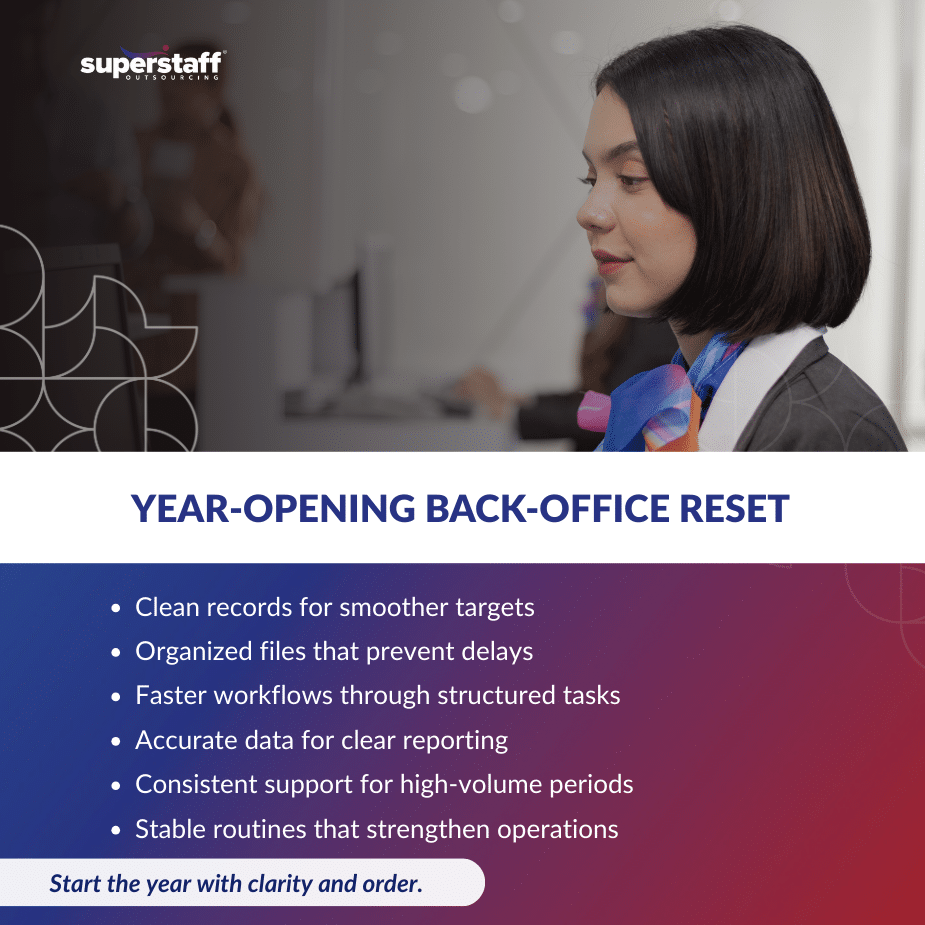
Year-opening efficiency depends on having accurate information, clear responsibilities, and reliable processes for completing administrative work. Financial reviews, employee record updates, supplier documentation, and database maintenance all contribute to how effectively businesses manage their operations.
Outsourced back-office teams can provide additional assistance with these recurring responsibilities. When tasks are properly assigned and supported by clear instructions, companies can reduce administrative delays and give internal employees more time to focus on planning and decision-making.
Businesses reviewing their administrative requirements can contact SuperStaff to discuss their back-office needs and determine which support arrangements may fit their operations.