
After the holiday season, many businesses experience a rise in customer support requests. Customers contact companies to process returns, request exchanges, check delivery updates, verify payments, and resolve account concerns. These requests often continue into January, creating additional work for teams that are already managing regular business activities.
When support staff handle high inquiry volumes for an extended period, response times can increase, and errors become more common. Unresolved tickets also accumulate when queues are poorly organized, or employees lack clear procedures. Without enough coverage, businesses may struggle to maintain consistent service quality.
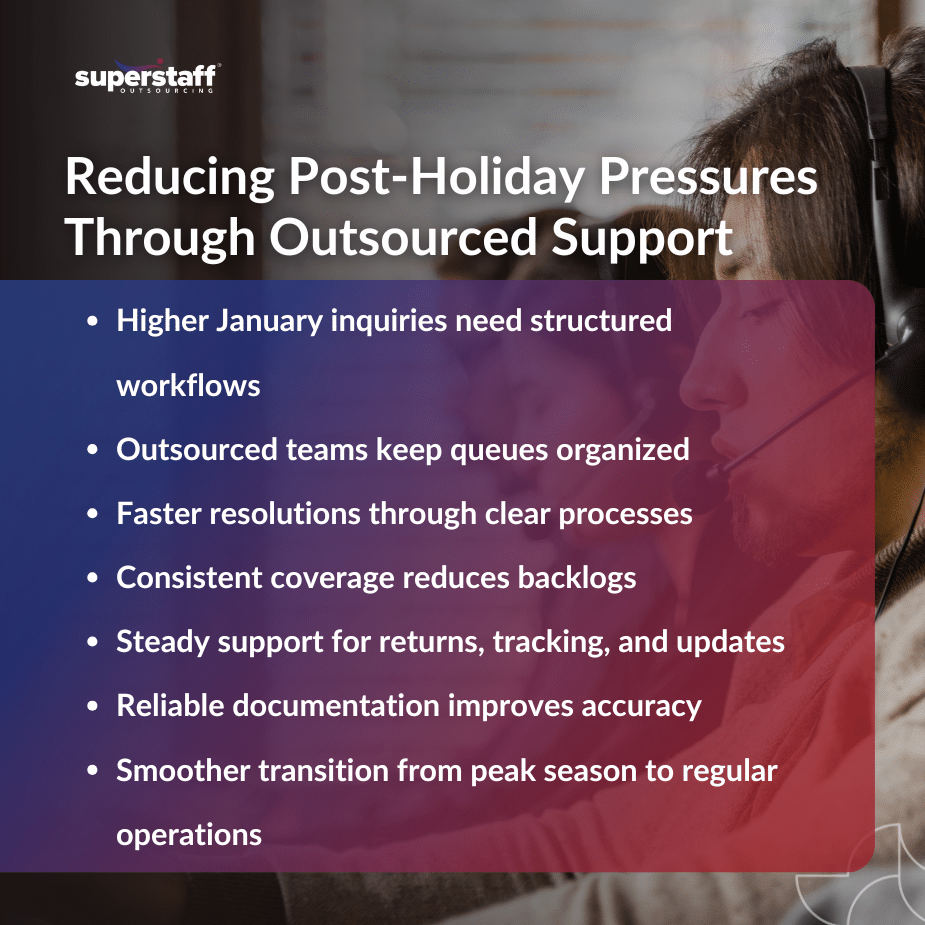
Outsourced customer support programs give companies additional staffing capacity to manage these demands. With trained professionals handling routine inquiries and following established workflows, internal teams can focus on other responsibilities while customers continue receiving timely assistance.
Why Post-Holiday Support Needs Structured Assistance
Customer support demand often remains high after the holiday shopping season. Many customers follow up on purchases made in December, while others need help with delayed deliveries, refunds, payment concerns, and product issues.
These requests require accurate information and proper coordination between customer service, sales, billing, and logistics departments. When these teams do not share updated records, customers may receive conflicting answers or need to contact the company several times to resolve one concern.
Structured support helps prevent these problems. Clear procedures allow agents to classify inquiries, access relevant records, and follow the correct steps for each request. Additional staff can also help businesses maintain coverage during busy periods without placing all the pressure on their existing employees.
Companies handling seasonal customer service demand can benefit from reviewing how an outsourced customer service team supports inquiry management, extended coverage, and post-holiday returns.
Key Support Practices Companies Should Follow After the Holidays
Managing post-holiday inquiries requires more than adding agents to existing queues. Companies need organized procedures that help employees handle requests accurately and maintain consistent service.
The following practices can improve daily support operations and reduce the risk of unresolved cases.
1. Queue segmentation
Queue segmentation separates customer inquiries according to their type, urgency, or required department. For example, refund requests can be assigned to billing specialists, while delivery concerns can go to order support representatives.
This approach helps agents focus on specific tasks and prevents inquiries from getting mixed into the wrong queues. It also makes it easier for supervisors to monitor pending cases.
2. Clear resolution pathways
Resolution pathways provide step-by-step instructions for handling common customer concerns. These may include verifying order details, checking payment records, confirming return eligibility, and providing the next steps.
When agents follow consistent procedures, customers receive more accurate answers. Clear instructions also reduce unnecessary transfers between departments.
3. Defined escalation procedures
Some customer concerns require additional review, especially when they involve billing disputes, damaged products, missing orders, or unresolved complaints.
Escalation procedures identify which cases need supervisor attention and who should handle them. This prevents difficult requests from remaining unanswered in general support queues.
4. Consistent communication templates
Approved response templates help agents provide accurate information when handling recurring inquiries. Businesses can prepare templates for refund updates, delivery delays, return instructions, and payment confirmations.
These templates should still allow agents to address each customer’s specific concern. Responses should sound natural and provide relevant information rather than relying entirely on generic messages.
5. Centralized ticketing systems
A centralized ticketing system keeps customer requests, previous conversations, and resolution updates in one place. Agents can review case histories before responding, reducing the need for customers to repeat information.
Shared records also help supervisors identify pending cases and monitor how quickly different inquiry types are resolved.
6. Quality checks
Regular quality reviews help businesses confirm that agents follow company policies and provide correct information. Supervisors can review selected interactions, identify recurring mistakes, and provide additional training when necessary.
Quality monitoring should cover accuracy, communication, policy compliance, and resolution effectiveness.
7. Turnaround time expectations
Clear response and resolution targets help agents understand how quickly they should handle different types of inquiries. A simple delivery update may require less time than a complicated refund dispute.
Companies should establish realistic targets based on the nature of each request and available resources.
8. Data documentation rules
Complete customer records support accurate follow-ups and reduce repeated work. Agents should document important details, actions taken, and any remaining concerns after handling an inquiry.
Consistent documentation also helps other employees continue a case without losing important information.
9. Alignment with the outsourcing partner
Internal and outsourced employees should follow the same service procedures, communication standards, and escalation rules. Both teams must understand their responsibilities and know how to transfer cases when additional assistance is required.
Regular coordination helps maintain consistent service even when several departments are involved.
10. Monitoring of request patterns
Tracking inquiry volumes helps businesses identify recurring customer concerns. For example, an increase in refund questions may indicate processing delays, while repeated delivery complaints may point to logistics problems.
These patterns help managers adjust staffing levels, improve procedures, and prepare for similar demand increases in the future.
Factors to Evaluate When Working With Outsourced Customer Support Teams
Choosing an outsourcing arrangement requires attention to several operational factors. Businesses should assess whether external employees can follow established procedures, protect customer information, and maintain the expected level of service.
Communication workflows
Internal and outsourced employees need clear communication channels for daily updates, urgent requests, and unresolved cases. Managers should also establish reporting schedules to keep everyone informed about pending work.
Collaboration tools
Shared ticketing platforms and communication systems allow employees to access updated information. The tools should support task tracking, case assignments, and proper documentation.
Data protection and access
Customer support employees may handle personal information, payment details, and account records. Companies should establish access restrictions, authentication requirements, and secure information handling procedures.
Role clarity
Every team member should understand which requests they can resolve independently and which require approval. Clear responsibilities reduce duplicated work and prevent cases from being transferred unnecessarily.
Documentation practices
Accurate case notes help teams understand previous interactions and continue unresolved requests. Businesses should establish consistent formats for recording customer concerns, actions taken, and resolution details.
Training and onboarding
Outsourced employees need training on company policies, products, support tools, and customer communication standards. A structured onboarding process helps agents understand their responsibilities before handling actual customer requests.
Performance and accuracy checks
Businesses should monitor response times, resolution rates, customer satisfaction, and error frequency. These measures help managers evaluate whether the support arrangement meets operational expectations.
Technical assistance and vendor support
Reliable technical assistance helps resolve system problems that may interrupt customer service. Companies should confirm how technical concerns are reported, assigned, and addressed.
How Outsourced Support Stabilizes Daily Operations
Post-holiday inquiries can interrupt regular business activities when internal employees need to divide their attention between customer concerns and other responsibilities. Outsourced support helps manage this workload by assigning routine requests to trained professionals.
For example, external agents can handle order status inquiries, payment verification, return instructions, and account updates. Internal employees can then focus on complex complaints, policy decisions, and other responsibilities that require direct company involvement.
Additional coverage also helps reduce ticket backlogs. When more agents are available to handle incoming requests, businesses can distribute work more evenly and maintain consistent response times.
Clear documentation further supports daily operations. Internal teams can review completed actions, follow up on unresolved cases, and access accurate customer records without repeating previous work.
Use Cases Where Outsourced Customer Support Provides Value
Post-holiday customer inquiries cover several areas of the customer experience. Businesses can assign recurring requests to outsourced agents while keeping specialized concerns within the appropriate departments.
Common applications include:
- Order status updates: Agents check order records and provide customers with accurate delivery information.
- Return and exchange requests: Support staff explain return policies, verify eligibility, and guide customers through the required steps.
- Payment verification: Agents assist with billing questions and coordinate with the appropriate department when payment records need further review.
- Account assistance: Support teams help customers resolve login concerns, update account details, and address profile-related issues.
- Delivery tracking: Agents provide shipment updates and help customers understand delays or changes in delivery schedules.
- Product information requests: Trained representatives answer questions about product features, availability, and basic usage.
- Issue resolution follow-ups: Agents check pending cases and communicate updates until the appropriate team completes the resolution.
- Post-purchase support: Customer service staff address concerns that arise after customers receive their purchases.
- Refund status updates: Agents check refund progress and explain expected processing timelines.
For online retailers, ecommerce customer support outsourcing can also help manage inquiries across order tracking, returns, and other customer service activities.
How Outsourced Teams Support Internal Staff
Internal customer service employees often handle several responsibilities beyond answering inquiries. They may also assist with reporting, customer retention, account management, and coordination with other departments.
High inquiry volumes can make it difficult to complete these responsibilities on time. Outsourced support reduces this pressure by handling routine requests and following established service procedures.
This arrangement gives internal employees more time to address complicated concerns and manage tasks that require direct business knowledge. It also helps supervisors distribute work without constantly moving employees between different responsibilities.
Accurate case documentation supports coordination between both teams. Managers can review completed requests, identify unresolved concerns, and make decisions using updated information.
Choosing the Right Customer Support Outsourcing Partner
Selecting an outsourcing provider requires careful evaluation of its staffing capabilities, service processes, and ability to support changing customer demand.
Before entering an agreement, businesses should consider the following:
- Experience handling seasonal customer support volumes
- Clear communication and escalation procedures
- Reliable customer service and ticket management systems
- Documented information security practices
- Transparent reporting and performance monitoring
- Flexible staffing arrangements for changing workloads
- Structured recruitment, training, and onboarding processes
Companies should also assess how providers train agents to handle brand-specific inquiries. Customer service representatives need to understand company policies and communication standards to provide accurate answers.
A suitable partner should also have clear procedures for managing performance concerns and addressing service interruptions.
SuperStaff Customer Support Programs
SuperStaff provides customer support outsourcing for businesses that need additional assistance with customer inquiries and daily service operations.
Its Customer Service (Omnichannel Support) services cover customer interactions across phone, email, chat, and social channels. This allows businesses to manage inquiries through different communication platforms while maintaining consistent service procedures.
Trained professionals follow established workflows and company-specific guidelines when handling customer concerns. Structured reporting and quality monitoring also help businesses review service performance and identify areas that need improvement.
Consistent Customer Support for Post-Holiday Demands
Post-holiday customer service requires proper staffing, clear procedures, and reliable coordination. Without these elements, businesses may struggle with growing ticket queues, delayed responses, and inconsistent customer experiences.
Outsourced customer support programs help companies manage recurring inquiries while allowing internal employees to focus on other operational responsibilities. With trained agents, organized workflows, and regular performance reviews, businesses can maintain service quality even when customer requests remain high after the holidays.
Companies that need additional support for customer service operations can contact SuperStaff to discuss their staffing requirements and determine an arrangement that fits their customer support needs.