Outsourcing has become one of the most effective ways for companies to cut costs, improve efficiency, and reach new markets. But with different outsourcing models available, many businesses often face one big question: should they choose nearshore or offshore partners? The comparison of nearshore vs offshore outsourcing is not just about geography but also about how each option impacts communication, cost, and service quality.
Some businesses prefer nearshore outsourcing for smoother collaboration and fewer cultural gaps, while others choose offshore outsourcing for access to larger talent pools and significant cost savings. Understanding the difference between nearshore and offshore outsourcing gives companies the knowledge they need to make better decisions. By learning the strengths and limits of each model, businesses can build a strategy that supports both immediate needs and long-term growth.
Understanding the Basics of Outsourcing Models
Before deciding, businesses must look at how each model works and what makes them different. This outsourcing models comparison gives a clear foundation. Knowing the structure of each option makes it easier to align them with business goals.
1. Nearshore Outsourcing Defined
Nearshore outsourcing means working with service providers in nearby countries. For example, a U.S. company may outsource to Mexico or Colombia. This setup makes communication smoother and collaboration easier due to similar work hours.
2. Offshore Outsourcing Defined
Offshore outsourcing involves working with providers far away, often across continents. A U.S. business may outsource to the Philippines or India. The main advantage here is cost savings and access to a wide pool of skilled workers.
3. Time Zone Alignment
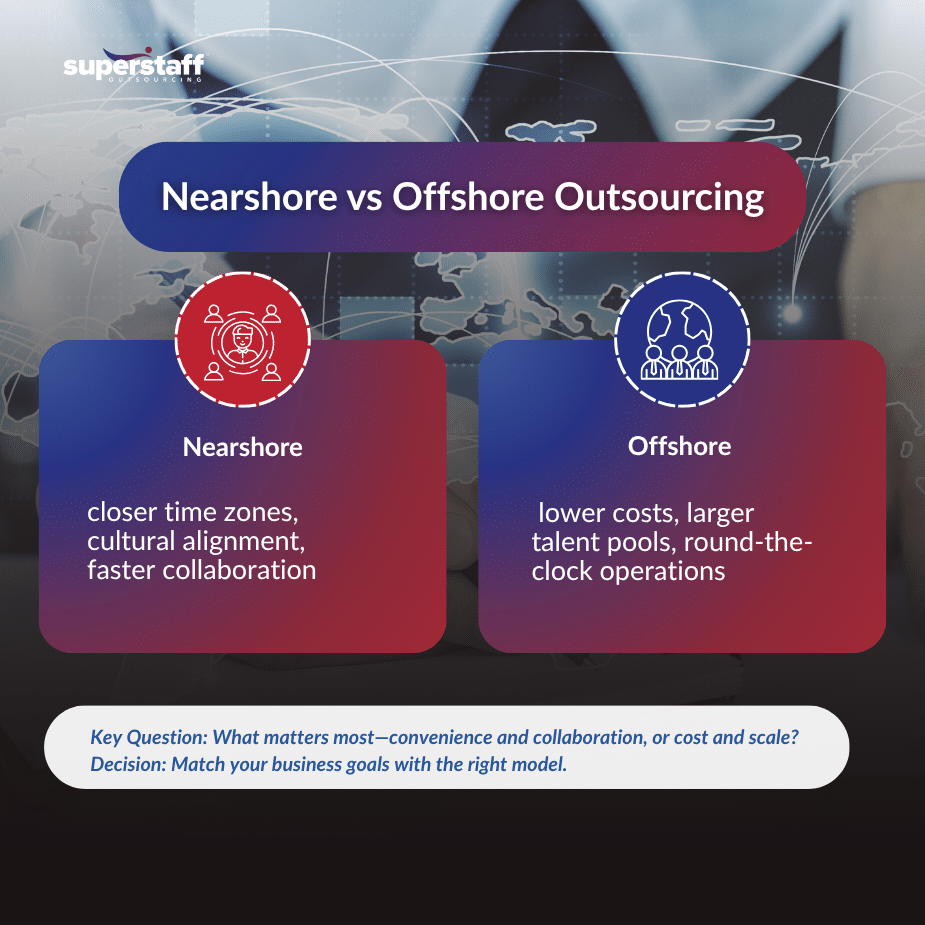
Nearshore outsourcing offers easier communication because of overlapping time zones. Offshore providers may work outside your business hours, which can cause delays but may also allow 24/7 work cycles. Each approach has its own rhythm that businesses must adjust to.
4. Talent Pool Access
Offshore outsourcing gives access to a larger and often more specialized workforce. Nearshore, while smaller in scale, often provides easier collaboration due to fewer cultural differences. Companies must weigh scale against ease of coordination when deciding.
5. Cost Comparison
Costs are usually lower in offshore outsourcing, but nearshore outsourcing offers savings in communication efficiency and fewer travel expenses. Businesses must consider the full picture rather than focusing only on hourly rates.
Pros of Nearshore Outsourcing
Companies choosing nearshore outsourcing often benefit from smoother day-to-day operations. This model works well for businesses that value collaboration and real-time updates.
1. Easier Communication
With fewer time zone differences, meetings and daily updates are easier to arrange. This makes teamwork more efficient. Quick responses also help prevent small issues from turning into bigger problems.
2. Cultural Similarities
Cultural alignment reduces the risk of misunderstandings. Customers also appreciate service that feels familiar. Shared values and work habits can strengthen long-term business relationships.
3. Travel Convenience
Visiting nearshore partners is faster and more affordable than long-haul international travel. This helps maintain stronger relationships. Regular visits make it easier to monitor progress and build trust.
4. Flexibility for Small to Mid-Sized Companies
Nearshore outsourcing is often a practical choice for businesses that want balance between cost savings and collaboration. It provides support without the complexity of managing teams far away. This balance is useful for growing companies with limited resources.
5. Quality and Speed
Since teams are easier to reach, project changes and problem-solving happen faster compared to far-off outsourcing partners. Businesses can quickly adjust strategies based on market changes. This reduces delays and increases overall efficiency.
Pros of Offshore Outsourcing
Offshore outsourcing remains a top choice for companies that prioritize cost reduction and global talent. It is especially popular among large businesses with high-volume needs.
1. Large Talent Pools
Countries like the Philippines and India provide access to millions of trained professionals across various industries. This means companies can find the right expertise for nearly any type of task.
2. Cost Savings
One of the strongest advantages is the reduced labor cost. Offshore outsourcing usually offers the lowest rates worldwide. These savings free up resources that can be reinvested in growth or innovation.
3. 24/7 Support
Different time zones allow businesses to provide around-the-clock service, especially for customer support operations. This creates a continuous workflow that improves customer satisfaction.
4. Specialized Skills
Offshore providers often focus on specific industries, offering expertise in IT, customer service, healthcare, and finance. These specialized skills can give businesses a competitive edge.
5. Scalable Operations
Offshore outsourcing can handle large projects and quick expansions, making it suitable for enterprises and startups alike. This scalability ensures businesses can adjust resources as demand changes.
Nearshore vs Offshore Outsourcing: Challenges
Both models have limitations, and knowing them is key before making a decision. Weighing risks against benefits allows businesses to choose more wisely.
1. Nearshore Challenges
- Higher costs than offshore providers.
- Limited availability of certain specialized roles.
- Smaller talent pool compared to global outsourcing hubs.
This makes nearshore better suited for collaboration-focused needs rather than cost-driven strategies.
2. Offshore Challenges
- Time zone differences may delay communication.
- Cultural differences can affect service quality.
- Longer travel distances make in-person collaboration harder.
These issues require stronger planning and careful provider selection.
3. Hidden Costs
Both models may include hidden expenses like training, compliance, or infrastructure upgrades. These costs often appear later, so businesses must plan carefully.
4. Dependency on Providers
Outsourcing creates reliance on external teams, so choosing a reliable partner is critical. Businesses must evaluate long-term stability before signing contracts.
5. Balancing Quality and Cost
Companies must ensure savings do not come at the expense of quality. Finding the right middle ground is the real test of outsourcing success.
How to Choose Between Nearshore and Offshore Outsourcing
Making the right choice means looking beyond cost. Each option can be effective if it matches company goals.
1. Define Your Priorities
Decide whether cost, quality, or communication matters most for your company. Clear priorities help avoid confusion later.
2. Analyze Customer Needs
If your customers expect 24/7 service, offshore may be best. If they want familiarity, nearshore might work better. Meeting customer expectations ensures stronger brand loyalty.
3. Consider the Project Type
IT and tech development often thrive offshore due to talent availability, while customer service can benefit from nearshore alignment. Matching project needs with the right model improves results.
4. Test Small Before Scaling
Start with a pilot project to compare real results from both outsourcing models. This reduces risk and gives insights before making a full commitment.
5. Partner With Trusted Providers
Choosing a reliable outsourcing company ensures smoother operations and long-term results. Trusted providers also help manage risks and reduce hidden costs.
Superstaff Helps Businesses Make the Right Choice
Whether you are leaning toward nearshore or offshore, the right partner makes the difference. SuperStaff offers outsourcing solutions designed to fit your company’s needs. From customer service to back-office support, our team helps you weigh the difference between nearshore and offshore outsourcing and select the model that delivers results.
With expertise in multiple regions, we help businesses navigate the nearshore vs offshore outsourcing pros and cons while keeping focus on growth. If you are still wondering how to choose between nearshore and offshore outsourcing, SuperStaff can guide you through every step.
Contact us today to learn how we can support your business expansion with tailored outsourcing solutions.