Managing healthcare plans can be confusing for individuals and businesses alike. With multiple plan types available, knowing which one offers the best balance of cost, flexibility, and provider access is essential. Two of the most common options are PPO and EPO plans. Understanding how each works helps people make better decisions about their healthcare coverage. This comparison of PPO vs EPO healthcare explains how these plans differ and what makes each one suitable for different needs.
What Makes PPO vs EPO Healthcare Different
Both PPO (Preferred Provider Organization) and EPO (Exclusive Provider Organization) plans provide structured healthcare coverage, but they differ in flexibility, cost, and provider access.
1. What Is a PPO Plan
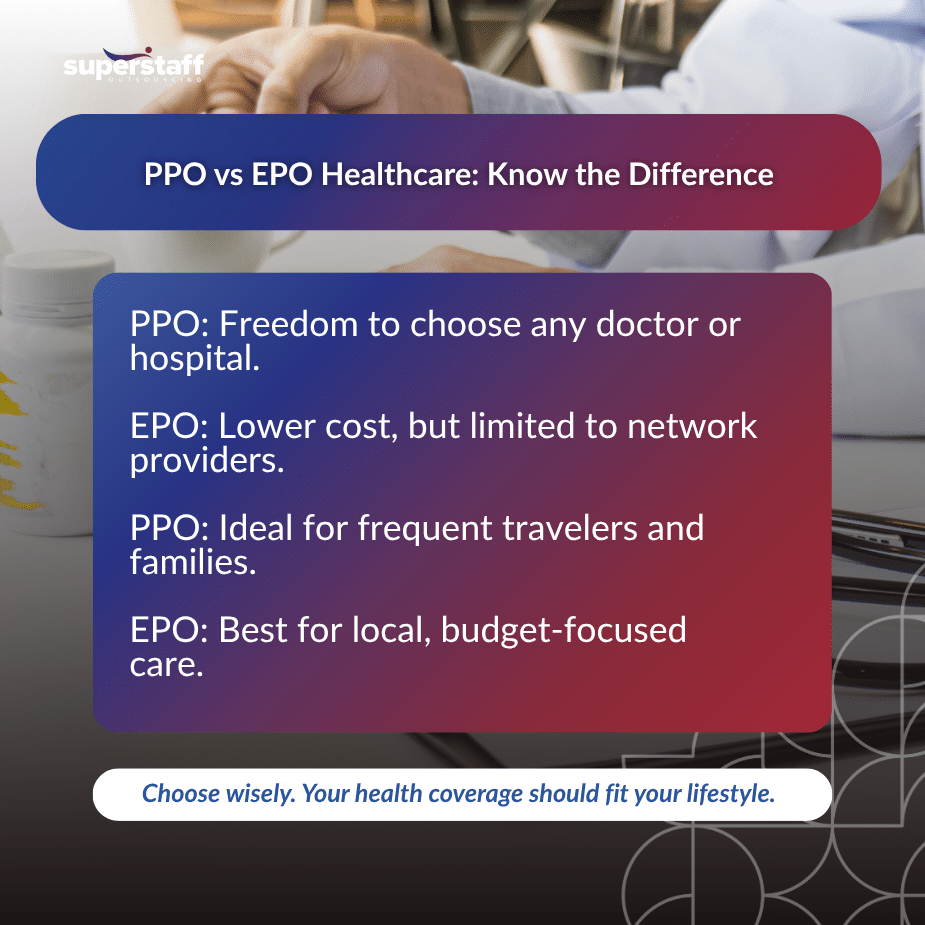
A PPO plan allows members to visit both in-network and out-of-network providers. This means you can choose any doctor or hospital, although costs are usually lower if you stay within the network. PPO plans are ideal for people who want freedom in choosing healthcare providers.
- No referrals required for specialists
- Coverage available for out-of-network care
- Higher premiums but greater flexibility
2. What Is an EPO Plan
An EPO plan focuses on using providers within a specific network. It offers lower premiums but limits coverage to in-network services except in emergencies.
- Referrals are not always required
- No coverage for out-of-network services
- Best for those who want predictable costs
3. Main Difference Between PPO and EPO Plans
The difference between PPO and EPO plans mainly lies in how much freedom you have when choosing doctors or hospitals. PPOs cover out-of-network services, while EPOs generally do not.
4. Cost and Premium Comparison
PPO plans usually cost more because they offer wider access to providers. EPO plans keep costs down by restricting coverage to selected doctors and facilities.
5. Choosing the Right Plan for Your Lifestyle
People who travel frequently or need regular specialist care may find PPO plans more convenient. Those who want affordable premiums and mainly visit local providers may prefer EPO plans.
Comparing PPO vs EPO Healthcare Benefits
Both types of plans have advantages, depending on how you use healthcare services. Understanding each benefit helps make better decisions for your health and budget.
1. Flexibility and Access
PPOs give more flexibility to choose providers, including out-of-network care. EPOs focus on using network providers to manage costs effectively.
2. Cost Efficiency
EPO plans often have lower monthly premiums and out-of-pocket expenses. PPOs may cost more but can save money for people who see specialists or travel often.
3. Referral and Specialist Access
With PPO plans, you can visit specialists without a referral. Some EPO plans may still require a primary care referral before seeing certain specialists.
4. Emergency Coverage
Both PPO and EPO plans provide emergency coverage anywhere. However, only PPOs typically include non-emergency out-of-network coverage.
5. EPO vs PPO Coverage and Flexibility
When comparing EPO vs PPO coverage, flexibility is the deciding factor. PPOs support more provider options, while EPOs help control overall costs through a defined network.
Cost Factors That Influence PPO vs EPO Healthcare
Every healthcare plan has its cost structure. Knowing how costs are calculated can help individuals and employers budget more accurately.
1. Premiums
PPOs have higher premiums because they provide broader access to doctors and hospitals. EPOs have lower premiums due to their limited network.
2. Deductibles
EPOs typically have smaller deductibles, making them more affordable for those who rarely visit doctors. PPOs may have higher deductibles, especially for out-of-network services.
3. Copayments
Copay amounts depend on the provider network. In-network visits usually cost less for both PPO and EPO plans.
4. Out-of-Pocket Maximums
Both plan types have an annual limit on out-of-pocket spending, which provides financial protection for policyholders.
5. Long-Term Affordability
The best plan depends on how often you use healthcare services. PPOs offer flexibility for frequent users, while EPOs work well for those who want lower monthly expenses.
Who Benefits Most from PPO vs EPO Healthcare
Choosing between PPO and EPO plans depends on personal needs, work situations, and healthcare habits.
1. Individuals and Families
Families with varied healthcare needs often prefer PPOs for their provider flexibility. Single individuals with predictable medical care may find EPOs more practical.
2. Employers and HR Teams
Small and mid-sized businesses often select EPOs to manage insurance costs while still offering quality coverage. Larger corporations might choose PPOs to provide employees with broader access.
3. Remote and Traveling Professionals
PPO plans are ideal for professionals who move or travel frequently because they allow access to providers nationwide.
4. Retirees and Seniors
PPOs offer more control over specialist care, while EPOs can provide budget-friendly solutions for those with consistent care needs.
5. Students and Entry-Level Employees
EPOs are often suitable for younger individuals or entry-level workers who want affordable coverage within a specific area.
How to Decide Between a PPO and an EPO Plan
Selecting between PPO vs EPO healthcare depends on several personal and financial considerations.
1. Evaluate Healthcare Habits
Think about how often you visit doctors, need specialists, or travel for work or personal reasons.
2. Compare Network Options
Review which hospitals and doctors are included in each plan’s network. EPO networks may be more limited, so ensure your preferred providers are included.
3. Assess Budget and Premiums
If you prioritize lower monthly costs, an EPO might be the better choice. If flexibility is more important, a PPO may be worth the higher price.
4. Consider Employer Contributions
Employer-sponsored health insurance can influence your decision, as some companies offer better contributions for certain plan types.
5. Review Long-Term Needs
Health conditions, family plans, and location stability all play a role in deciding between a PPO and EPO plan. Understanding how to decide between a PPO and an EPO plan ensures better long-term healthcare value.
The Long-Term Value of PPO vs EPO Healthcare
Choosing between these plans affects not only cost but also overall healthcare access and satisfaction.
1. For Individuals
EPOs help maintain consistent care at lower costs, while PPOs provide flexibility for changing medical needs.
2. For Businesses
Outsourced benefits administration and financial management can simplify plan selection for employees. Businesses that grow across regions may find PPOs better aligned with expansion, while EPOs help control spending in local operations.
3. For Healthcare Providers
Clear understanding of coverage helps providers manage billing efficiently and maintain compliance with insurer rules.
4. For Consultants and Brokers
Knowledge of PPO vs EPO healthcare allows professionals to match clients with the right plans based on goals and budget.
5. For Long-Term Stability
Both plan types support financial predictability and healthcare accessibility when chosen strategically.
Smarter Healthcare Choices Start with the Right Plan
Making informed choices about PPO vs EPO healthcare helps individuals and businesses achieve both financial balance and reliable care. Each plan offers advantages depending on how often and where healthcare services are used.
SuperStaff helps healthcare organizations and insurance partners streamline administrative work related to plan management and support services. Our team provides reliable back-office solutions that ensure accuracy, compliance, and efficiency in healthcare operations.
Call us now to learn how SuperStaff can support your healthcare business with dependable outsourced administrative services.