Remote staffing industry leaders focus heavily on clear processes because remote teams rely on structure to stay aligned. When processes are unclear, employees often feel lost, disconnected, or overwhelmed. As a result, turnover rises, and teams struggle to stay consistent. Since retention directly affects cost, quality, and stability, companies now look for practical ways to build workflows that support long-term engagement. By improving documentation, communication, and daily routines, remote staffing industry leaders create work environments that help employees settle into their roles with confidence. This article explains how structured workflows reduce turnover, improve efficiency, and support scalable remote staffing across different functions.
How Structure Supports Workforce Stability
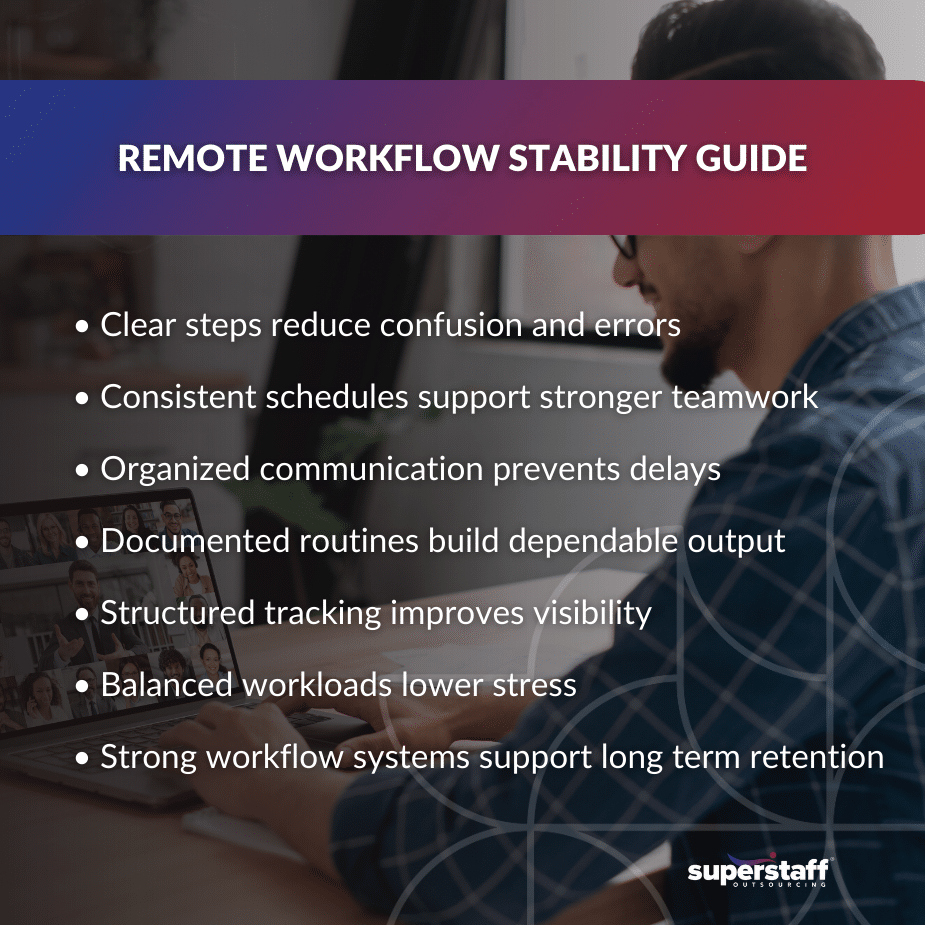
Remote staffing industry leaders agree that organized processes help teams handle work with fewer delays and fewer misunderstandings. A short and clear workflow allows team members to follow steps without overthinking, which improves accuracy and reduces stress.
1. Clear Role Expectations
Remote staffing industry leaders outline each role with clear checklists. This helps employees know what to prioritize every day. Since they understand expected outcomes, they can manage time better and avoid confusion.
2. Organized Communication Channels
Many nearshore staffing providers use structured communication to reduce delays. When teams know which platform to use for updates, questions, or escalations, they move faster and avoid miscommunication. This also helps supervisors track concerns in real time.
3. Predictable Schedules
Remote staffing industry leaders set consistent schedules for meetings, reports, and deliverables. Predictable timelines support better planning and help employees stay organized. As a result, teams experience less pressure during busy periods.
4. Standardized Procedures
When teams use documented steps for common tasks, they complete work with fewer mistakes. This reduces rework and helps new employees adjust faster during onboarding. Since everyone follows the same steps, quality stays consistent.
5. Reduced Work Overload
Structured task assignments help leaders distribute work evenly. This keeps workloads manageable and reduces burnout. When employees feel supported, they are less likely to resign.
Workflow Practices That Reduce Attrition
Remote staffing industry leaders use different workflow elements to keep operations stable. Each item supports remote teams in staying productive without feeling overwhelmed.
1. Step-by-Step Routines
Leaders break tasks into clear sequences. This supports accuracy and reduces the chance of errors. Employees feel more confident because they understand each step in the process.
2. Scheduled Check Ins
Managers set regular check-ins to stay updated on progress. These meetings help employees raise concerns early. Through this approach, leaders address problems before they affect performance.
3. Updated Documentation
Teams maintain updated process guides so everyone can reference accurate steps. This reduces confusion and keeps employees aligned even when tasks change. Employees rely on documentation when supervisors are unavailable.
4. Accurate Tracking Tools
Remote staffing industry leaders implement tools for timekeeping, performance, and task monitoring. These tools help managers understand workloads and make adjustments quickly. With more visibility, employees receive support when needed.
5. Collaboration Guidelines
Many leaders create rules for file sharing, naming formats, and task submissions. These guidelines keep operations organized and easy to review. Streamlined collaboration supports scalable remote staffing in growing teams.
Benefits of Structured Workflows
When organizations use structured workflows, they reduce turnover and improve consistency. Remote staffing industry leaders highlight several key benefits that support long-term retention.
1. Faster Onboarding
Newcomers learn their roles more easily when tasks are documented. They complete training in less time and adapt to workflows faster. A smooth start helps them feel secure in the role.
2. Fewer Errors
Clear steps lower the chance of mistakes. Employees deliver accurate work, and supervisors spend less time correcting errors. This strengthens team performance and efficiency.
3. Higher Engagement
When employees understand their responsibilities, they stay engaged. Work feels manageable, and expectations are clear. This creates a more stable work environment.
4. Lower Stress Levels
Structured systems reduce uncertainty and confusion. Employees feel supported because they know where to find information. Lower stress directly affects retention and job satisfaction.
5. Better Client Satisfaction
When teams follow consistent processes, clients receive steady output. This helps companies maintain strong relationships and grow accounts. Remote staffing industry leaders use this approach to support steady growth.
Use Cases for Structured Workflows
Remote teams handle many tasks, and structured workflows help them perform reliably across different functions. Here are common examples.
- Organizing daily task queues
- Processing client deliverables
- Tracking performance data
- Coordinating virtual training
- Managing documentation and employee files
- Handling timekeeping and payroll tasks
- Completing compliance reviews
- Managing employee concerns
Each use case benefits from clear workflow steps that support accuracy and stability.
How Structured Workflows Support Remote Teams
Remote staffing industry leaders design workflows that support both employees and managers. These systems improve performance while reducing the likelihood of turnover.
1. Reduced Administrative Work
Clear processes require fewer reminders and corrections. Employees complete tasks with less supervision, giving managers more time for strategic activities.
2. Better Performance Visibility
Leaders use organized systems to review employee progress. This makes performance evaluation easier and more consistent across departments.
3. Improved Work Quality
Employees produce better work when they follow consistent steps. This reduces rework and supports the goal of reducing attrition and boosting engagement with structured workflows.
4. Stable Team Dynamics
Since workflows help reduce stress and confusion, team members cooperate better. This creates a more supportive work environment.
5. Easier Scalability
Teams grow more easily with structured systems. Many nearshore staffing providers rely on this approach to manage new clients and expanding workloads.
Choosing a Provider That Supports Structured Workflows
Remote staffing industry leaders recommend evaluating workflow structure before partnering with any provider. Look for the following:
- Clear workflow documentation
- Transparent reporting practices
- Scalable remote staffing solutions
- Strong communication systems
- Accurate record management
- Organized support channels
These factors help organizations maintain smooth operations with lower attrition.
Workflow Systems That Strengthen Remote Team Stability
SuperStaff helps organizations reduce turnover by using structured workflows that support employee confidence and accuracy. Remote staffing industry leaders value systems that simplify tasks and improve daily performance, and SuperStaff designs processes that follow these standards. Through documented procedures, active communication, and consistent reporting, teams stay aligned and productive. Call us now to build stronger and more stable remote staffing operations with SuperStaff.