Sales performance drives growth, but many companies struggle to scale their teams while keeping costs under control. The solution for many growing businesses is outsourcing. By understanding different sales outsourcing types, companies can focus on their goals while letting experts handle the technical and people-driven aspects of selling.
Outsourced professionals can manage calls, generate leads, and maintain client relationships efficiently. The right sales outsourcing types can turn sales operations into structured, measurable, and scalable systems that deliver consistent results.
Understanding Sales Outsourcing
Sales outsourcing allows businesses to delegate parts or all of their sales operations to external specialists. These professionals work under performance-based metrics, ensuring accountability and quality. Exploring various sales outsourcing types helps companies choose a model that fits their goals, budget, and customer strategy.
1. How Sales Outsourcing Works
External providers manage assigned sales functions such as lead generation, inbound calls, or account management. This model saves time, reduces fixed costs, and gives businesses access to skilled professionals.
2. Benefits of Outsourced Sales Services
Outsourced teams bring structure to operations by using proven sales frameworks and technologies. Businesses also gain flexibility, allowing them to expand or reduce support as needed.
3. Sales Outsourcing Types and Their Purpose
Each sales outsourcing type has a defined goal, whether it’s converting prospects, maintaining relationships, or entering new markets. Understanding each type ensures businesses invest in the right function.
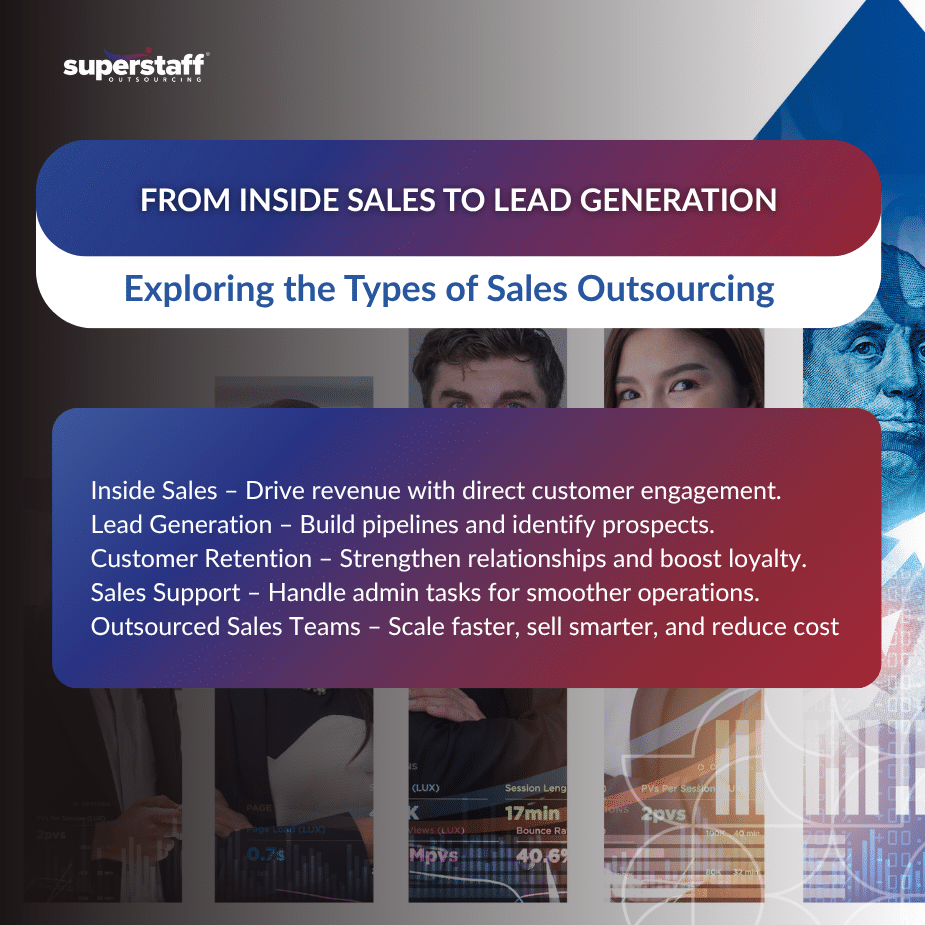
Key Sales Outsourcing Types and Their Functions
Different sales outsourcing types serve unique stages in the sales process. Selecting the right one helps companies create an organized and result-oriented system.
1. Inside Sales Outsourcing
Inside sales teams focus on remote sales efforts, such as calls, virtual demos, and follow-ups. This sales outsourcing type is ideal for companies that rely on digital communication to reach clients without face-to-face meetings.
2. Outbound Sales Outsourcing
Outbound agents initiate contact with potential clients through calls and emails. This type targets customer acquisition by directly promoting products and building relationships from the ground up.
3. Inbound Sales Outsourcing
Inbound sales teams handle incoming inquiries and convert them into customers. This model helps ensure every qualified lead receives timely attention and accurate information.
4. Lead Generation Outsourcing
This sales outsourcing type focuses on identifying and qualifying prospects for the internal sales team. With lead generation outsourcing, companies get a steady flow of potential clients without dedicating internal resources to research and cold outreach.
5. Account Management Outsourcing
This setup ensures long-term client satisfaction. Outsourced account managers handle renewals, upselling, and retention strategies, ensuring that existing clients continue to bring value.
How Sales Outsourcing Types Improve Business Growth
Companies that understand and apply various sales outsourcing types experience growth driven by efficiency and specialization.
1. Access to Skilled Professionals
Each sales outsourcing type connects businesses with trained professionals who already know the tools, language, and techniques that drive sales results.
2. Reduced Hiring and Training Expenses
Outsourcing eliminates the need for internal recruitment and onboarding. Teams are ready to operate immediately, saving time and resources.
3. Scalable and Flexible Operations
Businesses can expand their outsourced teams during busy seasons and reduce them when demand slows down.
4. Entry to New Markets
Outsourcing helps businesses test or enter new regions without major investments. Outsourced teams already understand the local market, giving faster access to new opportunities.
5. Data-Driven Reporting
Outsourced providers often use advanced tracking tools. This allows clients to measure conversion rates, lead quality, and sales performance in real time.
Comparing Common Sales Outsourcing Types
Choosing between sales outsourcing types depends on what part of the sales process a company wants to strengthen.
1. Inside Sales vs. Outbound Sales
Inside sales teams rely on digital communication, while outbound sales teams reach out directly. The first focuses on warm leads, and the second builds relationships from scratch.
2. Inbound Sales vs. Lead Generation Outsourcing
Inbound sales react to inquiries, while lead generation outsourcing focuses on finding those leads in the first place. Together, they create a complete pipeline from interest to conversion.
3. Account Management vs. SDR Outsourcing
Account management focuses on retention, while Sales Development Representative (SDR) outsourcing qualifies new leads for future sales.
4. Full-Cycle Sales Outsourcing
This sales outsourcing type covers every stage—from lead generation to client retention. It’s a complete model for companies that want end-to-end management.
5. How Lead Generation Outsourcing Differs from Full-Cycle Sales Outsourcing
Lead generation outsourcing focuses on prospecting, while full-cycle outsourcing handles everything, including closing and maintaining clients. The former supports internal teams, while the latter replaces them entirely.
Industries That Benefit from Sales Outsourcing Types
Different industries gain unique advantages from applying sales outsourcing types.
- Technology and SaaS: Outsourced teams can manage complex products and demo software efficiently.
- E-commerce: Teams handle inbound inquiries and manage customer acquisition campaigns.
- Financial Services: Professionals manage sensitive data and client accounts with accuracy.
- Healthcare and Pharmaceuticals: Outsourced teams simplify outreach to providers and institutions.
- Manufacturing and Logistics: Specialized agents handle distributor relations and large-scale contracts.
These examples show that sales outsourcing fits a wide range of industries needing scalability and specialization.
How to Choose the Right Sales Outsourcing Partner
A good partner ensures the chosen sales outsourcing types match your business objectives.
1. Define Clear Goals
Identify whether the goal is lead generation, customer retention, or expansion into new markets.
2. Assess Industry Experience
Work with providers familiar with your target market. Industry knowledge ensures effective communication with prospects.
3. Check Technology and Reporting Tools
Ensure the partner uses modern CRM systems and shares transparent performance reports.
4. Evaluate Training and Quality Standards
Providers should have structured training and consistent quality monitoring processes.
5. Review Pricing and Contract Terms
Compare hourly, commission-based, or hybrid pricing models. Choose one that aligns with budget and performance targets.
Common Challenges and Best Practices
Even the best sales outsourcing types require proper coordination and monitoring to deliver results.
- Maintain Brand Consistency: Make sure outsourced teams understand brand values and tone.
- Ensure Communication: Hold regular meetings to review performance and resolve issues.
- Protect Data Privacy: Choose providers with strict data protection and compliance policies.
Track Performance Metrics: Use clear KPIs to monitor progress and make adjustments when needed.
Smart Sales Solutions for Scalable Growth
SuperStaff offers customized outsourced sales services that align with business goals and budgets. Whether you need lead generation outsourcing, inbound support, or complete sales management, our professionals ensure measurable results and consistent performance. Reach out to us today to learn how our team can help you strengthen your sales process and achieve long-term growth.