As companies expand across regions and time zones, managing people operations becomes more complex. Many organizations struggle to maintain compliance, support employees, and manage hiring while also focusing on growth priorities.
Virtual HR services offer a flexible solution. Instead of building a large internal HR department, companies can access specialized HR support through remote teams that manage recruitment coordination, employee documentation, payroll administration, and workforce support.
This model allows growing organizations to scale their HR capabilities while keeping leadership focused on strategy.
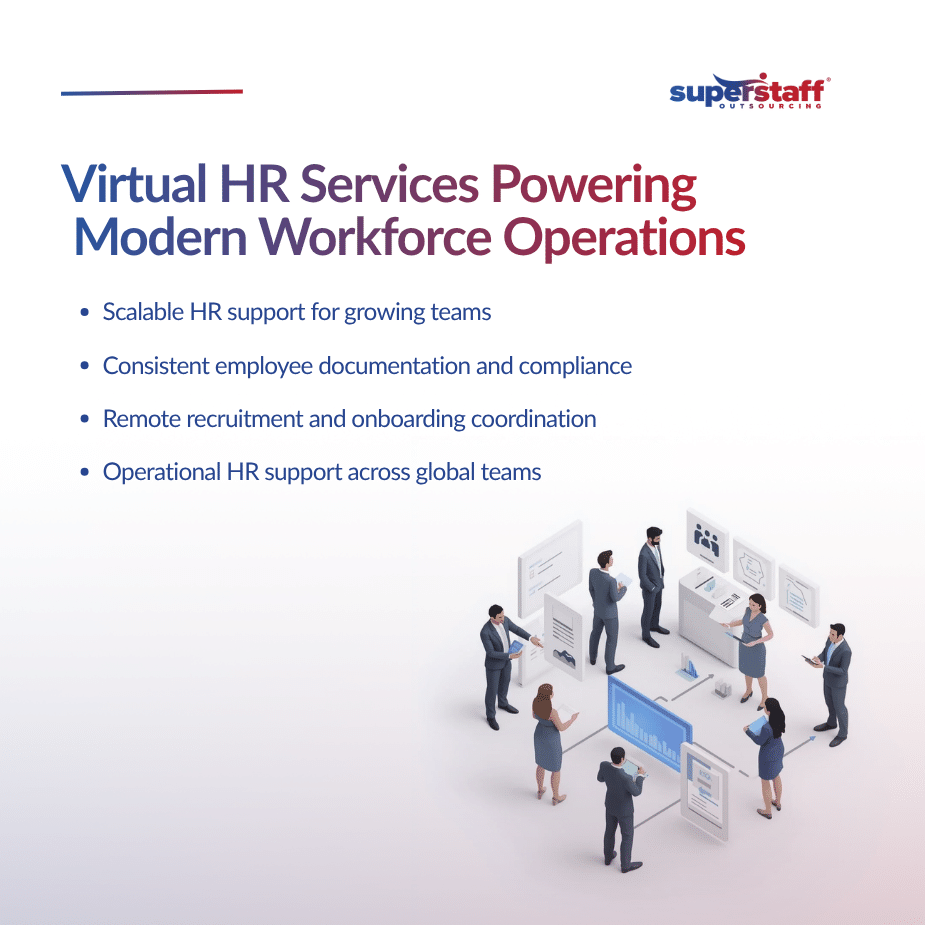
Why HR Operations Become Complex as Companies Grow
As companies grow, their HR needs evolve quickly. Tasks that were once handled by founders or office managers become full operational responsibilities that require structure and expertise.
Managing hiring pipelines, employee documentation, onboarding, and policy enforcement requires consistent oversight. Without proper support, these processes become fragmented and difficult to scale.
Virtual HR services allow organizations to support these expanding responsibilities without immediately building large internal HR teams.
Many companies start by outsourcing administrative HR tasks while keeping leadership and strategic planning in house. This creates a balanced structure where leadership maintains control while operational work is handled efficiently.
This shift reflects a broader trend toward flexible workforce models that prioritize scalability and operational focus.
The Shift Toward Flexible HR Support Models
Modern companies are moving away from rigid organizational structures. Instead of hiring large teams upfront, they adopt modular operational models that expand as the business grows.
Human resources is one of the functions that benefits most from this approach.
Virtual HR services allow companies to access trained HR professionals without committing to permanent internal hires for every HR role. Organizations can scale support based on hiring cycles, geographic expansion, or new compliance requirements.
For example, a company entering a new market may need help with onboarding documentation, benefits administration, and employee records management. Virtual teams can handle these responsibilities without requiring an entire in-house HR department.
This approach supports growth while maintaining operational discipline.
Core HR Functions That Can Be Managed Virtually
Many HR responsibilities follow structured workflows that translate well to remote support models.
Virtual HR services commonly support several operational functions.
- Recruitment coordination and candidate screening
• Onboarding documentation and employee records management
• Payroll administration support
• Benefits coordination
• HR help desk and employee inquiries
• Policy documentation and compliance tracking
These tasks require consistency and organization rather than constant physical presence. Remote HR teams can manage them effectively with secure systems and clear processes.
By delegating these operational responsibilities, internal leaders can concentrate on culture development, leadership coaching, and organizational strategy.
Supporting Recruitment and Hiring Operations
Hiring is one of the most time-intensive HR responsibilities, especially for growing companies that need to recruit quickly.
Recruitment requires coordinating interviews, screening applicants, scheduling assessments, and maintaining candidate communication.
Virtual HR services allow companies to maintain organized recruitment processes without overwhelming internal teams.
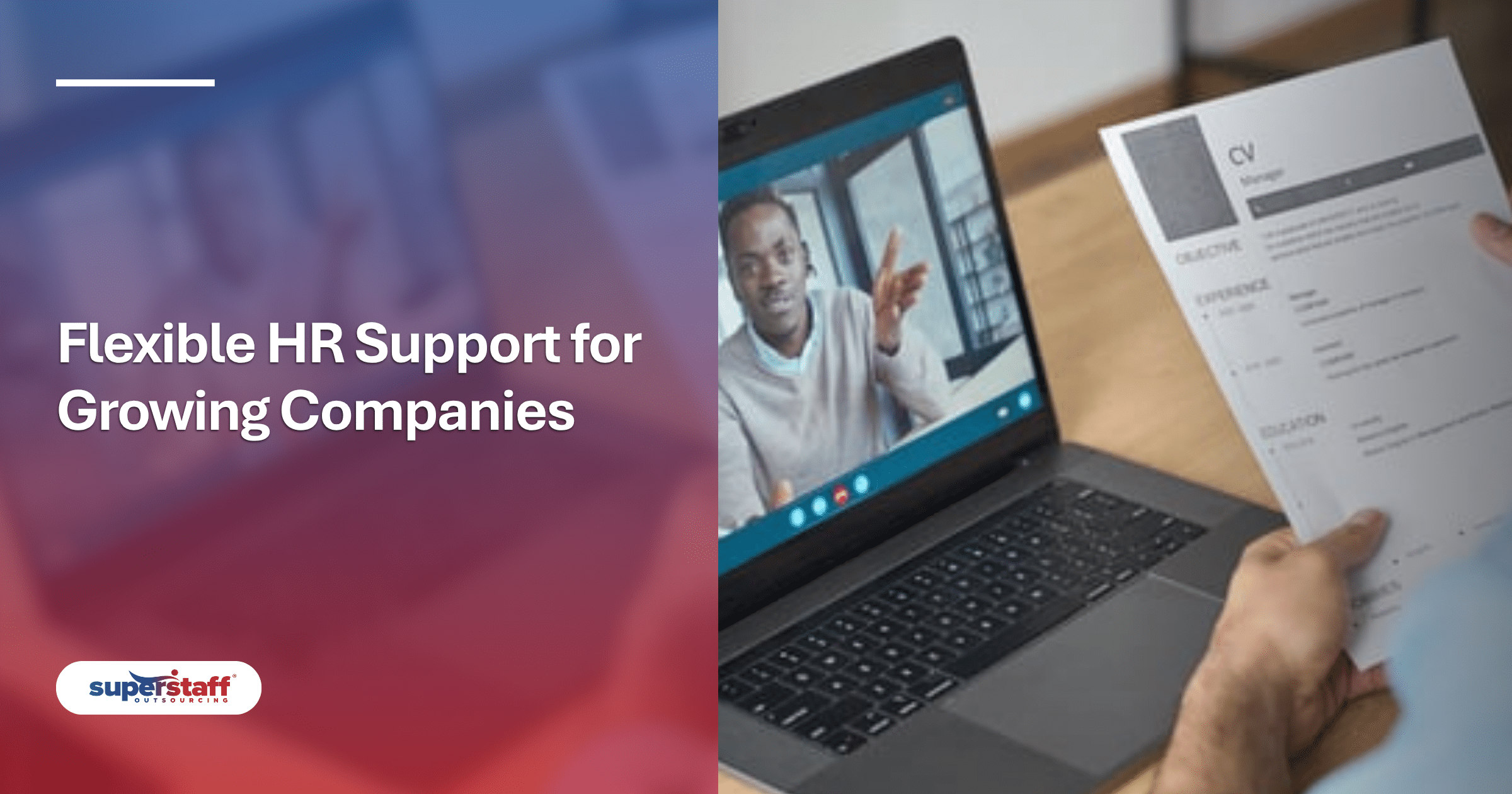
Remote HR specialists can manage applicant tracking systems, schedule interviews across time zones, and ensure candidate records remain accurate and compliant.
This structure allows leadership to focus on final hiring decisions while operational recruitment tasks are handled efficiently.
As companies expand hiring pipelines, this level of support becomes increasingly valuable.
Managing Employee Documentation and Compliance
Compliance remains one of the most important responsibilities in HR management.
Organizations must maintain accurate employee records, enforce workplace policies, and ensure documentation aligns with employment regulations.
Virtual HR services provide structured processes that help companies maintain consistent documentation and policy implementation.
Remote teams can organize employment contracts, onboarding forms, policy acknowledgments, and compliance documentation. They can also help maintain employee records across secure HR systems.
For companies operating across multiple regions, structured documentation becomes even more critical.
With dedicated HR support, organizations reduce the risk of administrative errors that can create legal and operational challenges.
Enhancing the Employee Experience
Employee experience often depends on how responsive and organized HR operations are.
When employees cannot access information about policies, benefits, or payroll questions, frustration grows quickly.
Virtual HR services allow companies to maintain consistent employee support without overloading internal managers.
Remote HR professionals can manage help desks, respond to HR inquiries, and ensure employees receive timely assistance.
This responsiveness improves employee satisfaction while allowing managers to stay focused on team performance and operational priorities.
For distributed companies, consistent HR support helps maintain engagement across remote teams.
Supporting Payroll and Benefits Administration
Payroll and benefits administration require precision and reliable processes.
Employees expect accurate compensation and clear communication about their benefits. Errors in these areas can quickly damage trust.
Virtual HR services help organizations manage payroll support tasks such as data validation, time tracking coordination, and payroll documentation.
Remote teams can also assist with benefits enrollment processes and employee communication regarding healthcare or retirement plans.
This structured support ensures HR operations remain organized even as employee headcount increases.
Companies benefit from stable processes without expanding internal administrative teams.
Improving HR Efficiency Through Structured Workflows
Operational efficiency is essential as organizations grow.
HR departments often manage multiple processes simultaneously. Without clear workflows, administrative work can quickly become overwhelming.
Virtual HR services introduce structured systems that help standardize HR operations.
Remote teams often use defined workflows for onboarding, documentation, recruitment coordination, and employee support.
This structure improves operational consistency and reduces delays.
Leaders gain confidence that HR tasks are being handled reliably while internal teams maintain focus on strategic initiatives.
Enabling Leadership to Focus on Strategic HR
Senior leadership should focus on workforce strategy rather than daily administrative work.
Leadership responsibilities include building company culture, developing leaders, and aligning workforce planning with long-term business goals.
When internal teams spend excessive time on administrative tasks, these strategic priorities receive less attention.
Virtual HR services help separate operational work from strategic HR leadership.
Administrative responsibilities such as document management, employee records, and recruitment coordination can be handled remotely while internal leaders concentrate on workforce development.
This division of responsibilities strengthens organizational leadership while maintaining efficient operations.
Why Many Companies Choose Offshore HR Support
Offshore HR support models offer an additional advantage for companies seeking operational efficiency.
Countries with strong business process outsourcing industries provide access to trained professionals who specialize in administrative support and operational coordination.
The Philippines has become one of the most recognized destinations for HR and administrative outsourcing.
Professionals in the Philippines are experienced in supporting global companies and working within international HR systems and compliance frameworks.
Virtual HR services delivered through offshore teams allow companies to maintain high operational standards while managing costs responsibly.
This model supports growth while maintaining reliable HR operations.
The Role of Virtual HR in the Future Workplace
Workforce models continue to evolve as companies adopt remote work and global hiring strategies.
Organizations now operate across multiple regions and time zones. Traditional HR structures designed for single office environments no longer fit modern operations.
Virtual HR services provide a structure that aligns with distributed teams and flexible work models.
Companies can access HR expertise regardless of location while maintaining organized processes and employee support.
This model allows organizations to scale confidently without creating administrative bottlenecks.
As the global workforce becomes increasingly distributed, flexible HR support will continue to play a central role in business operations.
Building HR Operations That Support Growth
Managing people operations becomes more demanding as companies grow. Hiring, compliance, payroll coordination, and employee support require organized processes and dedicated attention.
Virtual HR services provide companies with a flexible way to manage these responsibilities while maintaining leadership focus on strategy and growth.
By combining internal HR leadership with remote operational support, organizations can maintain consistent processes and stronger employee experiences.
SuperStaff helps companies build reliable support teams that strengthen business operations. Through experienced professionals and structured workflows, organizations can scale HR functions while keeping their internal teams focused on strategic priorities.
Businesses that want to expand efficiently can explore how virtual HR services from SuperStaff help create a flexible and sustainable HR model.