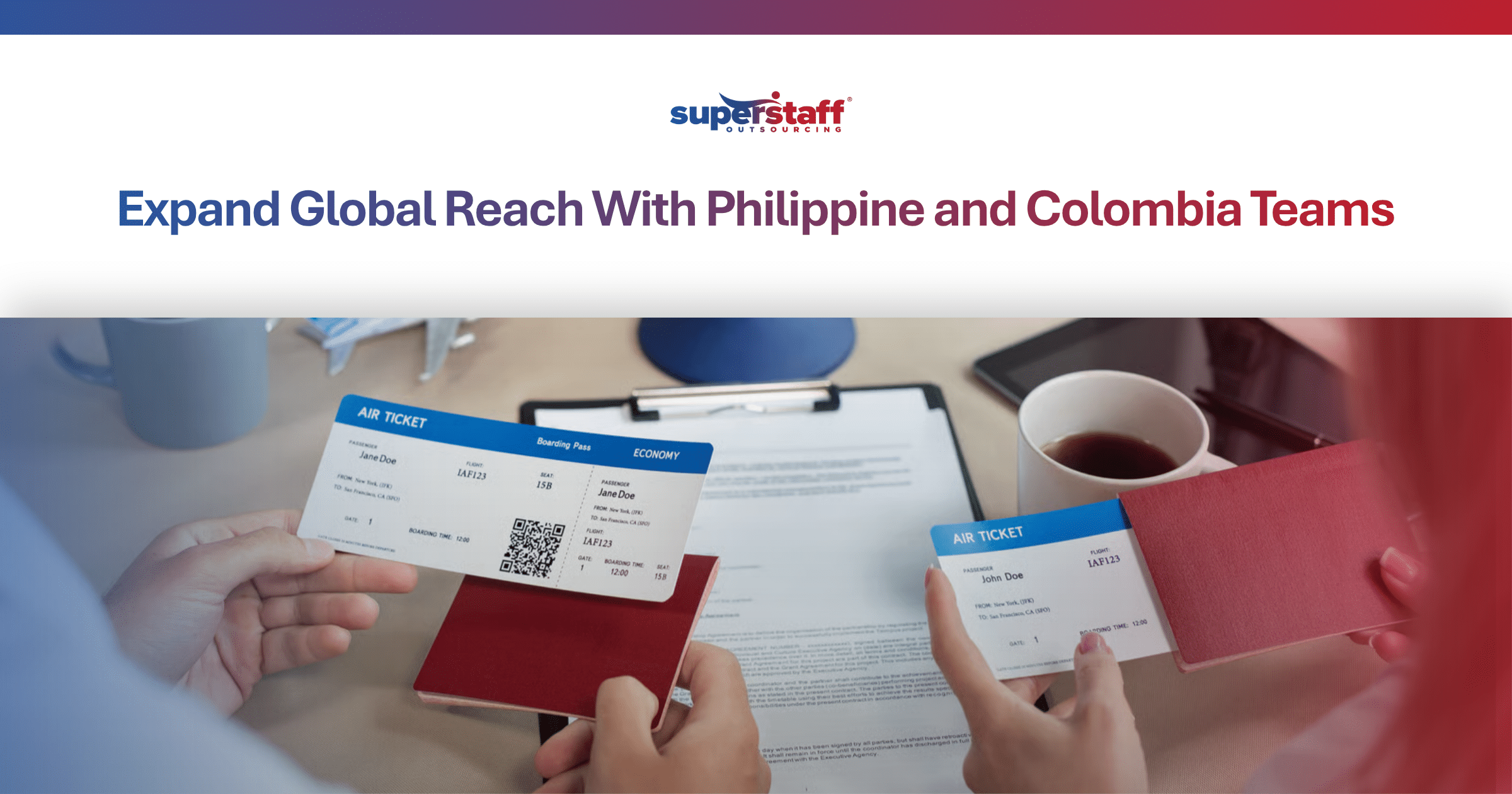
A traveler books a flight late at night. Another one cancels a hotel during a layover. Someone else needs help in a language they are most comfortable with. These moments shape how people remember a brand.
Travel companies now face one clear demand. Customers expect fast, clear, and localized help at any time. Because of this, multilingual travel support has become a core part of delivering better service.
At the same time, businesses are looking for smarter ways to scale. Offshore and nearshore teams in the Philippines and Colombia are now helping brands expand coverage without increasing overhead. With the right multilingual travel support, companies can respond faster, connect better, and serve more markets with confidence.
Why Multilingual Travel Support Matters in Global Travel
Travel is borderless. However, communication barriers still exist.
When customers cannot explain their concerns, delays happen. Frustration builds. As a result, satisfaction drops. This is where multilingual travel support plays a direct role.
Clear communication improves every step of the journey.
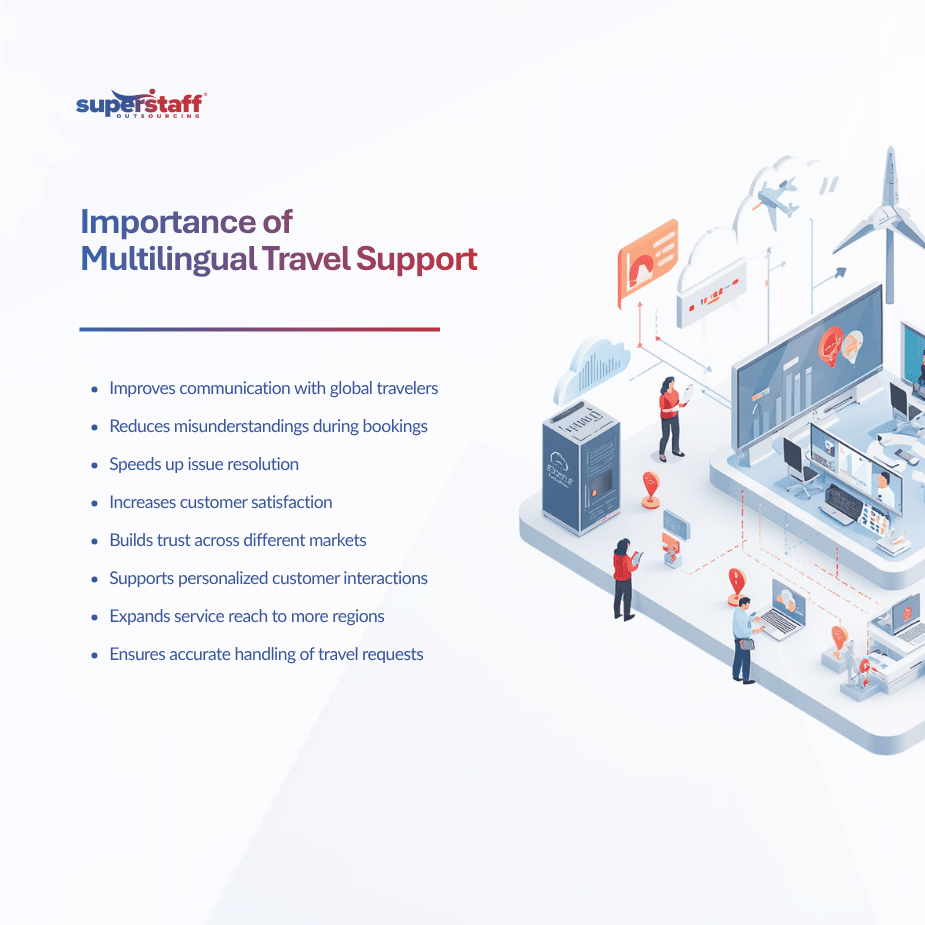
Key benefits include:
- Faster issue resolution
- Better booking accuracy
- Higher customer satisfaction
- Stronger brand trust
Moreover, multilingual travel support allows businesses to serve diverse customers without limiting their reach. It also supports personalization, which is now expected in travel experiences.
Common Challenges Without Multilingual Support
Many travel companies try to serve global customers with limited language capabilities. This creates gaps that affect both service quality and operations.
Common issues include:
- Miscommunication during bookings
- Delays in handling cancellations or changes
- Increased call handling time
- Customer frustration due to language barriers
In addition, agents may struggle to handle requests outside their language skill set. Because of this, internal workflows become slower.
Multilingual travel support helps remove these barriers. It ensures that each customer interaction is handled clearly and efficiently.
Why the Philippines Is Ideal for Multilingual Travel Support
The Philippines remains one of the top locations for customer support services. Its workforce is known for strong communication skills and cultural alignment with Western markets.
Key strengths include:
- High English proficiency
- Strong customer service orientation
- Familiarity with global travel tools
- 24/7 operational capability
Filipino agents are also trained to handle complex customer interactions. As a result, multilingual travel support teams in the Philippines can manage bookings, cancellations, and inquiries with ease.
Furthermore, the country offers cost efficiency. Businesses can scale operations while maintaining service quality.
Why Colombia Complements Multilingual Travel Support
Colombia plays a strong role in nearshore outsourcing. Its location aligns well with North American time zones. This makes collaboration easier.
Advantages of Colombia include:
- Spanish and English bilingual talent
- Time zone compatibility with the U.S.
- Growing BPO industry
- Strong cultural alignment with Western markets
Because of these factors, Colombia is a valuable addition to multilingual travel support strategies. It allows companies to provide real-time assistance to Spanish-speaking customers.
In combination with the Philippines, businesses can create a balanced global support model.
Building a Multilingual Travel Support Model
A structured approach helps ensure success. Businesses need to plan how teams will operate across regions.
- Define language coverage needs
- Identify key customer markets
- Prioritize languages based on demand
- Assign roles by location
- Philippines for English and global support
- Colombia for Spanish and regional support
- Standardize processes
- Use shared tools and workflows
- Align service guidelines across teams
- Invest in training
- Provide product knowledge training
- Improve communication and service skills
By following these steps, companies can build a scalable multilingual travel support system.
How Multilingual Teams Improve Customer Experience
Customer experience improves when communication becomes clear. Each interaction becomes faster and more accurate.
Multilingual travel support enables:
- Real-time assistance in preferred languages
- Reduced errors in bookings and reservations
- Faster handling of urgent travel issues
- Personalized communication across channels
Additionally, customers feel more confident when speaking in their native language. This leads to better engagement and stronger loyalty.
Operational Advantages of Offshore and Nearshore Teams
Beyond customer experience, multilingual travel support also improves internal efficiency.
Operational benefits include:
- Lower staffing costs
- Flexible team scaling
- 24/7 service coverage
- Reduced workload for in-house teams
Philippines-based teams can handle overnight support for Western markets. Meanwhile, Colombia-based teams can manage daytime operations in similar time zones.
This setup creates continuous coverage without overloading a single team.
Key Use Cases for Multilingual Travel Support
Travel companies use multilingual travel support across different functions.
Common applications include:
- Flight and hotel bookings
- Reservation changes and cancellations
- Customer inquiries and complaints
- Travel policy explanations
- Loyalty program support
Each of these areas benefits from clear communication. Therefore, multilingual travel support becomes essential for maintaining service quality.
Technology and Tools That Support Multilingual Teams
Technology plays a strong role in enabling multilingual travel support. However, human agents remain essential for handling complex cases.
Common tools include:
- CRM systems for customer data
- Booking platforms for reservations
- Communication tools for voice and chat support
- Knowledge bases for quick reference
When combined with trained agents, these tools improve efficiency and accuracy. As a result, multilingual travel support becomes more effective.
Scaling Multilingual Travel Support for Growth
As businesses grow, support needs also increase. A flexible model helps companies expand without disruption.
Steps to scale effectively:
- Add new language capabilities based on demand
- Expand team size during peak travel seasons
- Use data to improve service performance
- Continuously train agents on new tools and policies
With this approach, multilingual travel support can adapt to changing business needs.
Partnering With the Right Outsourcing Provider
Choosing the right partner is critical. A reliable provider ensures smooth operations and consistent service quality.
What to look for:
- Experience in travel support
- Access to multilingual talent
- Strong training programs
- Scalable solutions
SuperStaff offers multilingual travel support through teams in the Philippines and Colombia. The company focuses on building dedicated teams that align with client needs.
Move Forward With Multilingual Travel Support
Travel businesses cannot rely on one language anymore. Customer expectations continue to grow across regions.
Multilingual travel support helps companies meet these expectations with clarity and speed. It improves customer satisfaction, supports global expansion, and strengthens operations.
SuperStaff provides multilingual travel support through skilled teams in the Philippines and Colombia. With the right setup, businesses can deliver consistent service across different markets.
If you are planning to expand your reach, now is the time to invest in multilingual travel support. Contact SuperStaff today to build a support team that connects with your customers anywhere in the world.