
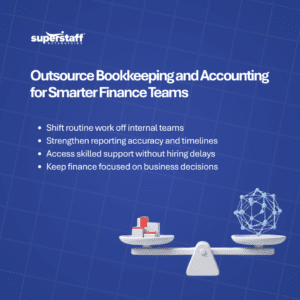
Finance teams are under pressure to do more with fewer resources. Hiring has slowed, while reporting requirements, compliance demands, and real-time decision support have increased.
As a result, many organizations now outsource bookkeeping and accounting to maintain accuracy and efficiency without expanding internal headcount.
This shift reflects a broader move toward lean operations, where finance leaders focus on strategy while external partners handle execution.
Lean Finance Teams Are Now the Norm
Finance departments are becoming smaller by design. Companies are reducing overhead and reallocating resources toward growth functions.
-
CFOs are prioritizing agility and cost control
-
Hiring cycles are longer and more selective
-
Teams are expected to deliver faster insights
This environment creates a gap between expectations and capacity. That gap often leads organizations to outsource bookkeeping and accounting to sustain performance without overloading internal teams.
The Rising Complexity of Financial Operations
Financial processes are no longer limited to basic reporting. Businesses now operate across multiple systems, regions, and compliance frameworks.
-
Multi-entity reporting requires coordination
-
Regulatory standards continue to evolve
-
Real-time visibility is expected by leadership
As complexity increases, internal teams struggle to keep pace. Many companies outsource bookkeeping and accounting to ensure consistency and accuracy across all financial activities.
Why Internal Teams Are Reaching Capacity
Even experienced finance teams face bandwidth limits. Routine tasks consume time that could be used for analysis and planning.
-
Month-end closing cycles remain time-intensive
-
Data reconciliation requires careful review
-
Manual processes still exist in many systems
Leaders recognize that these operational tasks can be handled externally. When they outsource bookkeeping and accounting, internal teams gain the capacity to focus on higher-value work.
Cost Control Without Compromising Accuracy
Maintaining a full in-house finance team is expensive. Salaries, benefits, training, and technology investments add up quickly.
-
Fixed costs limit flexibility during market shifts
-
Hiring delays create operational bottlenecks
-
Turnover introduces risk and inconsistency
Outsourcing offers a variable cost model. Companies that outsource bookkeeping and accounting can scale support up or down while maintaining accuracy and compliance.
Access to Specialized Financial Expertise
Outsourcing provides access to professionals with focused experience. This is especially valuable for companies without large finance departments.
-
Expertise in accounts payable and receivable
-
Strong understanding of compliance requirements
-
Experience with multiple accounting systems
When businesses outsource bookkeeping and accounting, they tap into a broader talent pool without long recruitment cycles. This improves both speed and quality of financial operations.
Technology Integration Is Easier With Outsourcing
Modern bookkeeping relies on integrated systems and automation tools. However, implementing and managing these tools internally can be challenging.
-
Cloud accounting platforms require setup and maintenance
-
Data synchronization across systems must be managed
-
Automation workflows need ongoing optimization
Outsourcing partners often bring established processes and tools. Companies that outsource bookkeeping and accounting benefit from faster implementation and smoother system integration.
Improving Financial Visibility for Decision-Making
Leadership teams need accurate and timely data to make decisions. Delays or errors in financial reporting can affect planning and forecasting.
-
Real-time dashboards support better decision-making
-
Accurate data improves forecasting reliability
-
Consistent reporting builds confidence across teams
Organizations that outsource bookkeeping and accounting can improve reporting speed and quality. This allows leaders to act on insights with greater confidence.
Supporting Growth Without Expanding Headcount
Growth introduces new financial demands. More transactions, new markets, and additional reporting requirements increase workload.
-
Expansion into new regions adds compliance complexity
-
Increased transaction volume requires more processing
-
Strategic planning requires deeper financial insights
Instead of hiring additional staff, many companies outsource bookkeeping and accounting. This approach supports growth while keeping the organization lean.
Reducing Risk and Strengthening Compliance
Financial errors can have serious consequences. Compliance failures can lead to penalties and reputational damage.
-
Regulatory requirements vary across jurisdictions
-
Audit readiness requires accurate documentation
-
Internal controls must be consistently applied
Outsourcing providers follow structured processes to reduce risk. Businesses that outsource bookkeeping and accounting benefit from improved compliance and audit preparedness.
Aligning Finance With Strategic Priorities
Finance leaders are expected to contribute to business strategy. This requires time, focus, and access to reliable data.
-
Strategic planning requires forward-looking analysis
-
Cross-functional collaboration demands availability
-
Leadership expects finance to guide decision-making
Routine bookkeeping tasks can limit strategic involvement. When companies outsource bookkeeping and accounting, finance leaders can focus on planning, analysis, and business growth.
The Shift Toward Standardization
Outsourcing is no longer seen as an alternative approach. It is becoming a standard operating model for finance teams.
-
More companies are adopting hybrid finance structures
-
External partners are integrated into core operations
-
Processes are standardized across organizations
This shift reflects a broader change in how businesses operate. Companies that outsource bookkeeping and accounting are aligning with a model that prioritizes efficiency, scalability, and focus.
Building a Scalable Finance Function With the Right Partner
Choosing the right outsourcing partner is critical. The goal is not just to reduce workload but to improve overall financial performance.
-
Clear communication ensures alignment
-
Defined processes support consistency
-
Performance metrics track outcomes
A strong partnership enables continuous improvement. Businesses that outsource bookkeeping and accounting with the right provider can build a finance function that scales with their needs.
Moving Forward With a Lean and Strategic Approach
Finance teams are evolving to meet new business demands. Lean structures require smarter allocation of resources and a focus on value creation.
-
Operational tasks are handled externally
-
Internal teams focus on strategy and insights
-
Technology supports efficiency and visibility
This approach allows organizations to stay competitive while maintaining control over financial operations.
A Smarter Way to Strengthen Your Finance Operations
If your organization is looking to improveLean finance teams are not a limitation. They are a strategic choice. Companies that outsource bookkeeping and accounting can maintain accuracy, improve efficiency, and support growth without increasing internal complexity.
SuperStaff helps businesses build this model by combining skilled finance professionals with structured workflows. AI tools support speed and accuracy, while human oversight ensures quality and accountability.
financial operations while staying lean, it may be time to explore a more flexible approach. Connect with SuperStaff to learn how outsourcing can support your finance team and position your business for long-term success.