
A major technology and manufacturing project can affect more than the companies directly involved. It can influence jobs, supply chains, infrastructure, training, logistics, and business services.
For the Philippines, the proposed Pax Silica development in New Clark City raises questions about how the country could participate in a changing technology and manufacturing landscape.
The Philippines joined the US-led Pax Silica initiative in April 2026 as its 13th signatory. The country also proposed a 4,000-acre industrial zone within the Luzon Economic Corridor, with New Clark City in Tarlac designated as the site of a planned technology and manufacturing hub.
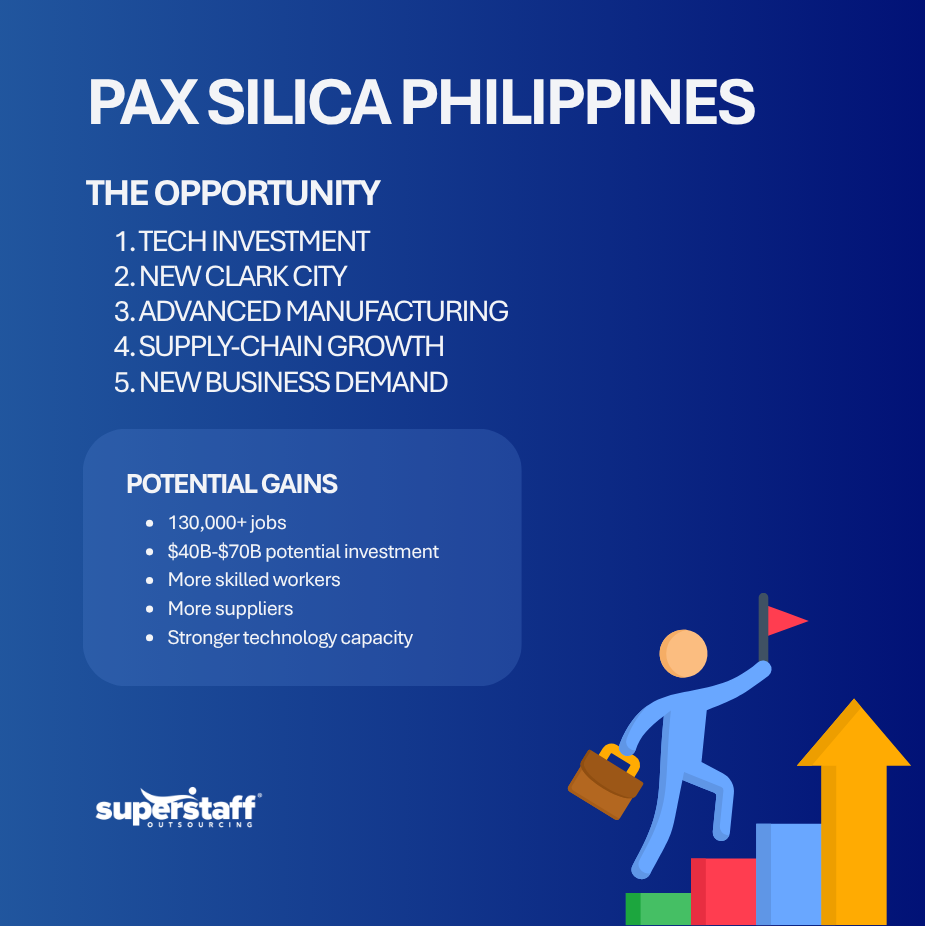
The proposed development covers semiconductors, advanced manufacturing, critical minerals, technology infrastructure, and related supply chains. Its potential effects could extend beyond technology manufacturers to suppliers, logistics companies, service providers, and workers.
However, the outcome is not guaranteed. Investment commitments, infrastructure, workforce readiness, regulations, and project execution will influence how the development progresses.
Where Could the Philippines Fit Into the Technology Push?
The Philippines already has experience in electronics, semiconductor-related activities, business services, and technology operations. Pax Silica could provide another opportunity to connect these capabilities with manufacturing and investment activities.
Semiconductor and Electronics Growth
The government has set a goal for the semiconductor and electronics industry to reach $110 billion in exports by 2030. Plans include expanding into areas such as integrated circuit design, advanced packaging, and semiconductor manufacturing.
Reaching these targets will depend on investment, infrastructure, skilled workers, technology capabilities, and the ability of local companies to meet international requirements. Pax Silica could support some of these efforts, but its actual contribution will become clearer as projects move forward.
Technology Investment
The proposed hub could attract companies involved in semiconductor production, critical minerals processing, data centers, advanced infrastructure, and research.
In July 2026, the Philippine government said more than 50 companies had expressed interest in investing in the Pax Silica development. This indicates interest in the project, but companies will still assess energy availability, operating costs, workforce skills, infrastructure, regulations, and supply-chain access before making long-term commitments.
Why Does New Clark City Matter?
New Clark City is located within the Luzon Economic Corridor, which connects Subic Bay, Clark, Manila, and Batangas. The corridor is intended to improve connectivity and support trade and investment across Luzon.
For technology and manufacturing companies, location can affect access to workers, transportation, suppliers, utilities, and business services. This makes Clark an area worth monitoring as Pax Silica plans develop.
SuperStaff’s Presence in Clark
SuperStaff already has an existing site in Clark. This gives the company a direct presence in an area that could see additional technology, manufacturing, and business activity as investment and infrastructure plans develop.
The presence of SuperStaff does not indicate how successful or large Pax Silica will become. It simply places the company within the broader business environment surrounding a proposed technology and manufacturing hub.
What Could Pax Silica Mean for Jobs?
One potential area of impact is employment. The proposed development could create roles for engineers, researchers, computer science graduates, technicians, logistics professionals, and other skilled workers.
The BCDA estimated in July 2026 that the project could attract $40 billion to $70 billion in investment once fully developed and create more than 130,000 high-quality jobs. These figures are projections rather than guaranteed results, with the actual employment impact depending on the projects that eventually move forward.
Beyond Technical Positions
Employment opportunities may not be limited to technical roles. Companies could also need workers in accounting, procurement, human resources, customer support, logistics coordination, documentation, facilities management, and administrative operations.
This could create opportunities across different areas of the workforce. However, the scale will depend on how many companies establish operations and which functions they manage internally or outsource.
The Need for Relevant Skills
Training could become an important part of the development. Universities, training centers, and businesses may need to strengthen programs in engineering, electronics, manufacturing, data, logistics, technical operations, and supply chain management.
The key issue will be matching training with actual industry requirements. A larger workforce will be more useful to businesses if workers have the specific skills needed for available positions.
Where Could Businesses Find Opportunities?
The possible effects of Pax Silica are not limited to companies directly involved in manufacturing. If projects move forward, businesses providing supporting products and services could also become part of the wider ecosystem.
Logistics and Supply Chain Services
Technology and manufacturing companies need to move equipment, materials, components, and finished products. They may also require inventory management, shipment tracking, documentation, dispatch coordination, and transportation support.
This could create opportunities for logistics providers that can meet the requirements of companies operating in and around the proposed hub. The size of the opportunity, however, will depend on the volume of actual activity that develops.
Business and Technical Support
Companies entering a new market may need administrative support, customer service, recruitment, data management, and technical assistance.
Outsourcing is one option companies can consider when they need additional capacity without building every support function internally. Philippine service providers already support international businesses in these areas, although they would still need to meet requirements for quality, security, reliability, and technical capability.
Local Suppliers
Large technology projects can also create demand for businesses providing maintenance, packaging, transportation, facilities support, professional services, equipment, and other operational needs.
This could give Philippine companies opportunities to participate in supply chains connected to larger technology businesses. At the same time, suppliers may need to meet specific requirements for quality, compliance, security, reliability, and delivery.
What Should Businesses Watch?
Pax Silica could create opportunities for some businesses, but companies may benefit from monitoring developments rather than assuming immediate demand.
Skills and Operating Capacity
Businesses can review their workforce and identify skills that may become relevant to technology and manufacturing companies. These can include technical support, logistics, data handling, engineering support, customer service, and administration.
Companies can also assess whether their current staffing and processes can handle additional workloads if demand increases. Building capacity early can provide more options if new opportunities emerge.
Infrastructure and Compliance
Infrastructure will be an important factor in determining how the proposed hub develops. In July 2026, the Department of Energy said it was reviewing the power requirements for the planned New Clark City project and considering additional power projects in the area.
Energy, transportation, telecommunications, and other infrastructure will influence how practical the area is for future operations. Businesses seeking to work with technology and manufacturing companies may also need to meet requirements for quality, security, documentation, and compliance.
Project Timeline
The proposed hub is expected to develop in phases rather than become a fully operating industrial center immediately. BCDA officials said the first phase is expected to break ground within the first two years.
This gives businesses time to monitor confirmed investments, understand market requirements, develop relevant skills, and determine where their services may fit.
What Could Pax Silica Mean for Philippine Businesses?
Pax Silica could give the Philippines another opportunity to participate in technology manufacturing and global supply chains. The proposed New Clark City hub could potentially bring investment, jobs, manufacturing activity, logistics demand, and business services, although the actual impact will depend on how the planned projects develop.
For businesses, staying informed while building relevant capabilities may be the most practical approach. With an existing site in Clark, SuperStaff can provide customer service, technical support, logistics, administrative, and other business functions as companies assess their operational needs and prepare for potential growth.
The Business Leader’s Takeaway
Pax Silica could open new opportunities for the Philippines across semiconductors, advanced manufacturing, logistics, technology services, and workforce development, with New Clark City positioned as a potential hub for future investment. However, the scale of the impact will depend on actual investment commitments, infrastructure readiness, workforce skills, compliance requirements, and how quickly planned projects move from announcements to operations.
For Philippine businesses, the more practical approach is to prepare rather than assume. Companies that strengthen technical capabilities, operating capacity, supply-chain support, and workforce readiness may be better positioned to participate if the ecosystem expands.
With an established presence in Clark, SuperStaff is also strategically located to support businesses that may need scalable customer service, technical, logistics, administrative, and back-office operations as activity in the region develops. Explore how we can help your business build the support capacity it needs as opportunities in the Philippines continue to develop.