
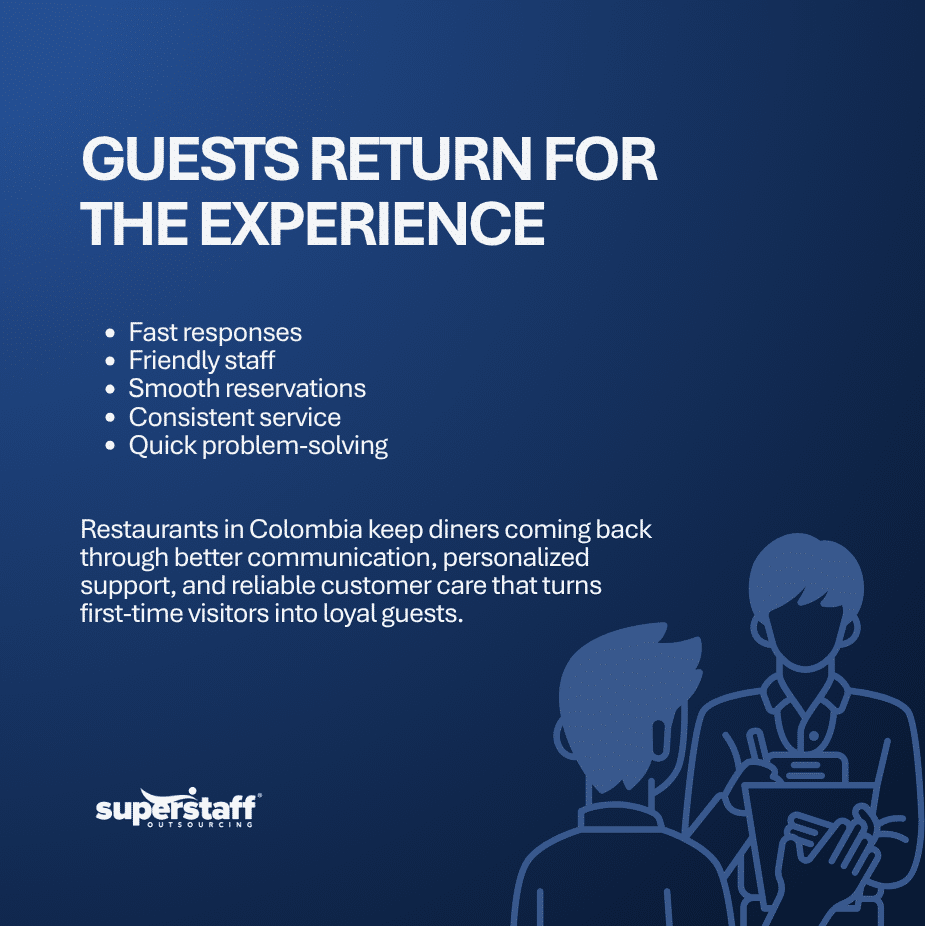
A good meal can bring customers through the door once. However, excellent restaurant customer service gives them a reason to return. Across Colombia, restaurants continue to improve how they greet, assist, and connect with guests because customer experience can shape dining decisions alongside food quality.
Guests notice every detail. They remember friendly greetings, fast responses, clean dining areas, and staff who handle concerns professionally. As a result, restaurants that focus on strong customer service can build loyal customer bases and receive more positive reviews. Additionally, repeat guests may recommend restaurants to family and friends, which can support steady business growth.
Colombian restaurants continue to adapt to changing customer expectations. From local cafés to large dining chains, businesses can invest in training, communication, and customer support to improve guest retention and create stronger relationships with diners.
Why Customer Experience Drives Repeat Visits
Many guests have plenty of dining choices. Because of this, restaurants must create experiences that encourage customers to return instead of trying another place next time.
1. Friendly Staff Create Strong First Impressions
Guests often form opinions about a restaurant within the first few minutes. A warm greeting, quick seating assistance, and polite communication can immediately make customers feel welcome.
Additionally, friendly employees can reduce frustration during busy hours. Even when delays happen, clear and respectful communication keeps guests informed.
2. Fast Service Keeps Customers Happy
Long wait times can frustrate diners. Therefore, restaurants need efficient workflows that allow staff to serve food and respond to customers without unnecessary delays.
Quick service does not mean rushing guests. Instead, it means responding promptly, checking tables regularly, and handling requests efficiently. These same principles are important across modern customer service outsourcing, where personalization and responsive support contribute to stronger customer experiences.
3. Personalized Attention Builds Loyalty
Guests enjoy feeling recognized and valued. Restaurants can train employees to remember returning customers, favorite menu items, or seating preferences when appropriate.
Small actions may include:
- Greeting repeat customers by name
- Recommending dishes based on previous orders
- Offering simple birthday greetings
- Asking for feedback after meals
These efforts can help restaurants strengthen relationships with customers over time.
4. Problem Resolution Encourages Repeat Business
Mistakes can happen in any restaurant. However, customers pay close attention to how staff respond when issues arise.
Restaurants can train staff to address concerns quickly and professionally. Employees who listen, explain available solutions, and remain calm can improve how customers view the response to a service problem.
5. Positive Reviews Attract More Guests
Satisfied customers may share their experiences online. As a result, strong customer service can contribute to a restaurant’s reputation across review platforms and social media.
Online reviews also influence dining decisions. Research from BrightLocal examines how consumers use and respond to online reviews when evaluating local businesses.
Therefore, maintaining consistent restaurant customer service can support both guest retention and the restaurant’s online reputation.
Restaurant Teams Shape Customer Satisfaction
Behind every successful dining experience is a team that works together efficiently. Restaurants that invest in employee support and service processes can create more consistent customer interactions.
1. Staff Training Improves Service Quality
Well-trained employees communicate more confidently with guests. They can also become better prepared to manage complaints, explain menu items, and maintain professionalism during busy hours.
Regular customer service training can improve consistency across teams. Consequently, guests receive a more predictable level of service during each visit.
2. Clear Communication Reduces Mistakes
Poor communication can lead to incorrect orders, billing issues, or delayed service. Therefore, restaurants should maintain clear coordination between servers, kitchen staff, and managers.
Strong communication can help restaurants:
- Deliver orders correctly
- Handle special requests properly
- Reduce avoidable customer complaints
- Improve dining flow
As a result, guests experience fewer service disruptions.
3. Employee Morale Affects Guest Experience
Employees who receive proper training, clear instructions, and management support may be better prepared to provide consistent customer service.
Restaurants can focus on scheduling, employee recognition, training, and communication to create a more organized work environment. Supporting employees also gives teams the resources they need to handle guest interactions professionally.
4. Multichannel Support Helps Customers Faster
Customers now contact restaurants through phone calls, social media, delivery apps, websites, and messaging platforms. Because of this, restaurants need clear processes for managing several communication channels.
Businesses can improve guest support by:
- Confirming reservations quickly
- Responding to online inquiries
- Handling delivery concerns efficiently
- Updating customers about wait times
For restaurants that need additional customer support capacity, nearshoring customer support to Colombia can provide access to teams working within overlapping North American business hours.
5. Consistency Builds Trust
Guests expect a consistent experience each time they visit. Restaurants that maintain service standards across shifts and locations can provide customers with clearer expectations.
Consistency can cover food quality, cleanliness, employee behavior, response times, and complaint handling. Maintaining documented standards also makes it easier to train new employees.
Technology Supports Better Restaurant Service
Restaurants can use technology to improve operations and customer interactions. While personal service remains important, digital tools can make certain tasks faster and easier to manage.
1. Online Reservations Improve Convenience
Guests appreciate simple booking options. Online reservation systems can reduce manual scheduling work and give customers another way to plan their visits.
Reservation systems also provide restaurants with information they can use to organize seating and prepare for busy periods.
2. Feedback Tools Help Restaurants Improve
Customer feedback allows restaurants to identify service gaps. Businesses can collect comments through surveys, apps, online reviews, or follow-up messages.
Managers can then review recurring concerns and determine where processes or staff training need improvement.
3. Loyalty Programs Encourage Repeat Visits
Restaurants can use loyalty programs to encourage repeat business. Discounts, points, rewards, or special offers provide customers with incentives to return.
These programs can also provide information about purchase patterns and customer preferences, depending on the data collected and applicable privacy requirements.
4. Delivery Support Expands Customer Reach
Food delivery allows restaurants to serve customers outside the dining room. However, service quality still matters when customers order remotely.
Restaurants can improve delivery experiences by:
- Packaging food carefully
- Providing accurate order information
- Responding quickly to concerns
- Coordinating efficiently with delivery partners
Good delivery support can encourage customers to place future orders.
5. Data Helps Restaurants Understand Customers
Restaurants can use operational and customer data to review peak dining hours, popular menu items, reservation patterns, and other trends.
This information can support decisions about staffing, inventory, promotions, and service processes. Businesses should also maintain appropriate privacy and data protection practices when collecting customer information.
Strong Service Creates Lasting Customer Loyalty
Restaurants that focus on customer experience can strengthen guest retention and build more consistent service. Restaurant customer service covers more than what happens at the table. It also includes reservations, online inquiries, delivery concerns, feedback, and post-visit communication.
As customer expectations change, restaurants may need additional resources to maintain responsive service across these touchpoints. SuperStaff provides customer experience outsourcing through teams in Colombia and the Philippines, including omnichannel and multilingual support.
If your restaurant or hospitality business needs additional support for reservations, customer inquiries, or guest communication, contact SuperStaff to discuss your customer service requirements.