Customers expect businesses to answer their calls when they need help with an order, have a product question, or want to report a problem. Missed calls can lead to delayed solutions, lost sales, and poor customer experiences. Call answering service Philippines providers help businesses manage incoming calls, respond to customer inquiries, and provide support beyond regular office hours. This allows companies to remain accessible even when their in-house teams are unavailable.
With trained agents and reliable communication systems, companies can stay connected with customers without managing every support task internally. Agents can handle routine questions, relay important messages, schedule appointments, and direct urgent concerns to the right team. This approach helps businesses maintain service coverage, manage changing call volumes, and support customers across different time zones while allowing internal employees to focus on their primary responsibilities.
How Call Answering Services Keep Businesses Connected
Reliable phone support helps businesses respond to customer needs and manage daily communication. Outsourced agents can answer inquiries, record messages, and direct calls to the right people.
1. Continuous Customer Support
A call answering team can cover evenings, weekends, and holidays based on the agreed schedule. This allows businesses to assist customers outside standard office hours and reduce missed calls. Research on customer expectations and service experiences examines how business interactions influence customer trust and purchasing decisions.
2. Efficient Message Management
When the right person is unavailable, agents can record the caller’s details, summarize the concern, and forward the message to the appropriate department. Accurate records help employees follow up without asking customers to repeat the same information.
3. Order Processing and Appointment Scheduling
Call handlers can confirm appointments, answer order questions, and record customer requests. These tasks reduce routine work for internal employees and help businesses keep schedules and records updated.
4. Urgent Call Escalation
Some calls require immediate attention, such as service disruptions or time-sensitive customer concerns. Clear escalation rules help agents identify urgent cases and contact the designated person promptly.
5. Consistent Communication
Phone support can work alongside email and live chat to provide consistent service. Businesses should establish procedures for transferring inquiries between channels and ensure that customer information remains accurate.
Benefits of Outsourcing Call Answering Services
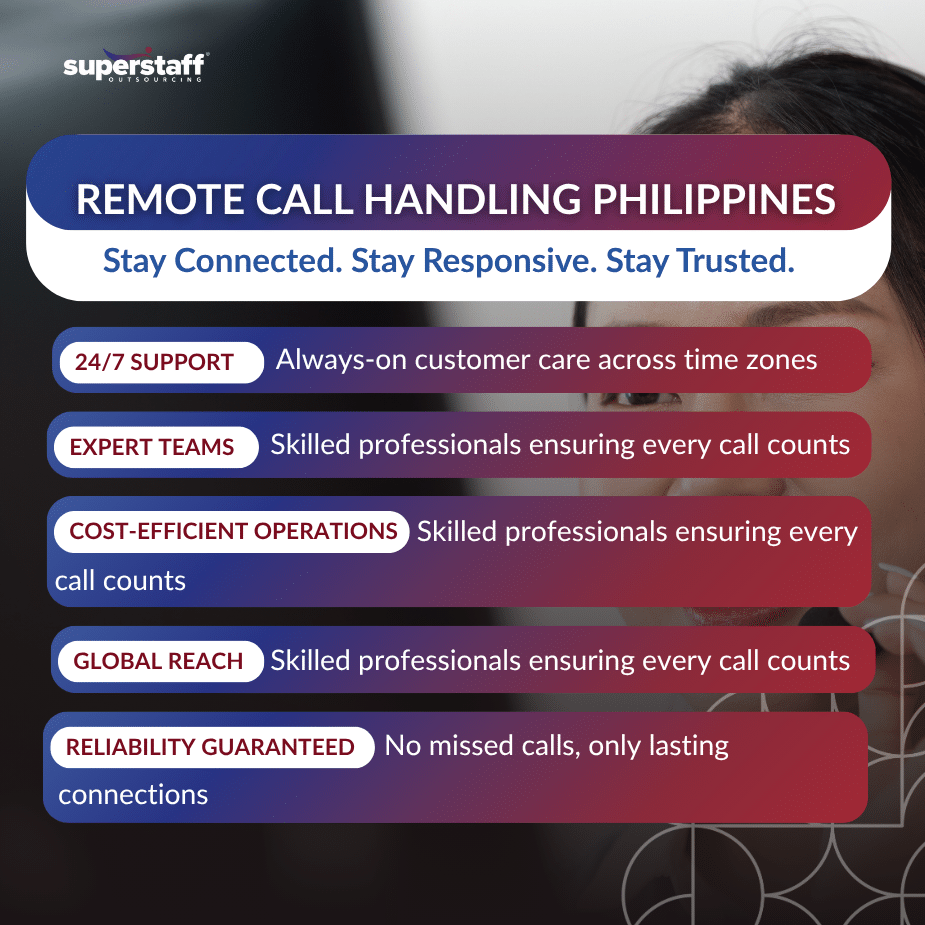
Outsourcing gives businesses another way to manage customer calls while controlling staffing needs and operating costs. The results depend on the provider’s capabilities and the services included in the agreement.
1. Lower Operating Costs
Maintaining an internal call team involves recruitment, salaries, training, equipment, and ongoing management. Outsourcing can reduce some of these expenses by providing access to an established team. Businesses should compare provider fees with their current operating costs before making a decision.
2. Access to Trained Professionals
Call handlers need clear communication skills, accurate recordkeeping, and the ability to follow company procedures. Businesses should select agents who can represent their brand professionally and manage different types of customer concerns.
3. Coverage Across Time Zones
Companies serving international customers may need phone support outside their local business hours. A remote team can cover agreed shifts and help maintain communication with customers in different regions.
4. Flexible Staffing
Call volumes often change during promotions, seasonal peaks, and business expansion. Outsourcing can help businesses adjust team capacity based on demand instead of maintaining the same staffing level throughout the year.
5. More Time for Core Tasks
When outsourced agents handle routine calls, internal employees can focus on sales, operations, and complex customer concerns. A customer service outsourcing guide can help businesses assess which support tasks may be suitable for an external team.
How Philippine BPO Teams Support 24/7 Call Answering
The Philippines has an established business process outsourcing industry, with professionals experienced in customer service and business support. Companies evaluating a provider should consider its staffing model, training process, service hours, and ability to meet their requirements.
1. Support for International Customers
Philippine-based teams can handle calls from customers in different markets when staffing schedules align with those time zones. Businesses should define coverage requirements and confirm which hours are included in the service agreement.
2. Remote Team Flexibility
Remote call answering arrangements allow agents to manage calls using approved communication systems without working at the client’s office. Providers must maintain proper supervision, data security, and reliable phone and internet connections.
3. Consistent Customer Experiences
Training materials, call scripts, and escalation procedures help agents deliver accurate information. Regular coaching and quality reviews can identify areas where responses need improvement.
4. Better Use of Internal Resources
When outsourced agents handle routine calls and messages, internal employees can spend more time on complex requests and business priorities. Clear responsibilities help agents understand which decisions they can make and which issues need internal approval.
5. Business Continuity
A remote team may help businesses maintain phone support during office closures or unexpected disruptions. Continuity depends on backup systems, staffing arrangements, and documented recovery procedures.
Industries That Benefit from Call Answering Services
Many businesses rely on phone communication to coordinate services, answer questions, and respond to customer requests. The type of support required varies by industry.
1. E-Commerce and Retail
Call handlers answer questions about orders, deliveries, product availability, returns, and refunds. They can also record complaints and direct complex issues to the relevant team.
2. Healthcare and Medical Services
Remote agents can schedule appointments, confirm bookings, and direct general inquiries. They must follow privacy procedures and transfer clinical questions to qualified healthcare professionals.
3. Real Estate and Property Management
Agents can respond to property inquiries, arrange viewing schedules, and record maintenance requests. Accurate message handling helps agents and property managers follow up on time-sensitive matters.
4. Financial Services and Insurance
Support teams can handle general policy questions, route account inquiries, and record requests. Businesses must apply appropriate identity checks and access controls when calls involve confidential financial information.
5. Travel and Hospitality
Hotels and travel companies can use call handlers to manage booking questions, reservation changes, and guest requests. Extended coverage helps customers reach someone when their travel plans change outside regular office hours.
Best Practices for Managing Outsourced Call Teams
A successful arrangement requires clear procedures, ongoing communication, and regular performance reviews. Businesses should treat the outsourced team as part of their support process while maintaining clear responsibilities.
1. Set Measurable Goals
Define targets for call response time, abandoned calls, message accuracy, and customer satisfaction. These measures help businesses determine whether the service meets their expectations.
2. Provide Proper Training
Share current product information, company policies, call scripts, and escalation rules. Training should also explain how agents must handle complaints and protect customer information.
3. Maintain Regular Communication
Schedule reviews to discuss service performance, recurring issues, and changes in business needs. Both teams should know who handles escalations and how urgent cases are reported.
4. Review Call Reports
Use call logs and performance reports to track call volume, response times, and unresolved concerns. Reviewing this information helps managers identify staffing gaps and areas that need additional training.
5. Conduct Quality Checks
Review calls where permitted, assess customer feedback, and provide agents with clear guidance. Quality checks should focus on accuracy, professionalism, compliance, and effective handling of customer needs.
Round-the-Clock Support That Builds Trust
Reliable phone support helps customers get answers, receive updates, and reach the right person when they need assistance. A well-managed call answering arrangement can reduce missed calls, improve message tracking, and support customers across different time zones.
Businesses should assess their call volume, required coverage hours, escalation procedures, and reporting needs before choosing a provider. Reviewing customer experience outsourcing practices can help businesses understand how external support teams fit into their wider customer service operations.
Call answering service Philippines providers can help businesses manage incoming calls, coordinate follow-ups, and maintain support beyond regular office hours. Clear procedures, trained agents, and regular performance reviews help businesses provide consistent service.
Businesses can discuss their call answering requirements with SuperStaff to assess their expected call volume, coverage needs, and suitable support arrangements.