
Customer expectations continue to change as people become more accustomed to getting help whenever they need it. They no longer want to wait until the next business day to ask about an order, report a problem, or request assistance. Whether it is a late-night delivery concern or an early-morning service inquiry, customers expect businesses to respond within a reasonable time. Companies that make support accessible can build stronger relationships and encourage repeat business.
This is where customer support outsourcing becomes useful. With a 24/7 outsourced call center, businesses can provide continuous assistance without placing the full responsibility on their internal teams. Outsourcing also gives companies access to trained agents, flexible staffing, and established support systems that help maintain service quality across different time zones.
How 24/7 Call Centers Operate
A 24/7 call center provides customer assistance throughout the day, including weekends and holidays. It uses scheduled shifts, communication systems, and trained agents to ensure that customer inquiries receive attention regardless of when they arrive.
Through 24/7 customer support outsourcing, businesses can maintain service coverage without hiring enough internal employees to handle every shift.
1. Continuous Service Coverage
Agents work in rotating shifts to keep operations running throughout the day. When one team finishes its schedule, another takes over to prevent gaps in service. Proper shift planning also gives agents enough time to rest while ensuring that customers can still reach the company.
2. Organized Workforce Scheduling
Call center providers manage employee schedules based on expected inquiry volumes and customer demand. They also handle attendance monitoring, shift assignments, and workforce planning. This reduces the administrative work that businesses would otherwise need to manage internally.
3. Communication and Support Tools
Call center agents use customer relationship management (CRM) systems, call routing software, and other communication tools to manage inquiries. These systems help agents access customer information, review previous interactions, and track unresolved concerns.
A remote call center setup also allows agents to assist customers from different locations while working within the same service standards.
4. Multichannel Customer Assistance
Customers do not always prefer phone calls when asking for help. Some may choose email, live chat, or social media instead. An integrated support system allows agents to manage different communication channels while keeping customer information organized.
5. Support Across Time Zones
Businesses serving international markets need to consider differences in working hours. A 24/7 call center allows customers to contact support during their local business hours, even when the company’s main office is closed.
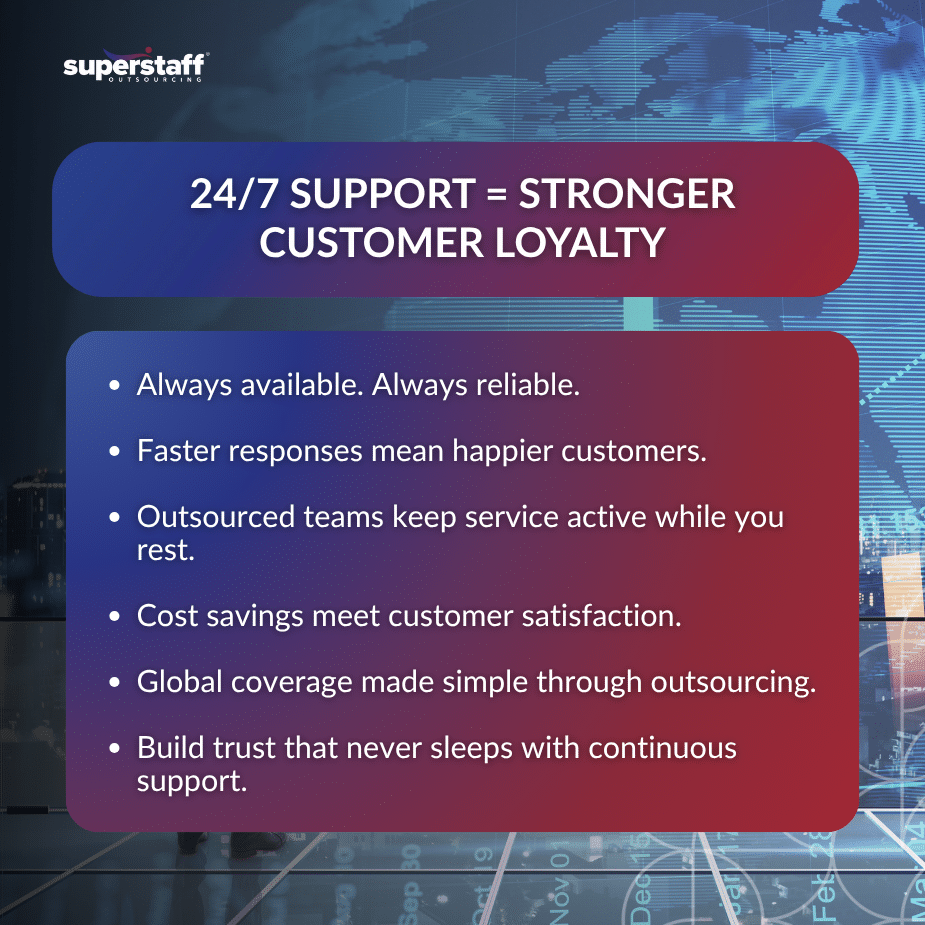
Why 24/7 Availability Matters for Customer Loyalty
Customers are more likely to trust a business when they know help is available. Delayed responses can cause frustration, especially when customers need immediate assistance with payments, orders, bookings, or service interruptions.
According to Qualtrics XM Institute’s Contact Center Trends 2025 research, customer satisfaction with contact center experiences is connected to loyalty behaviors, including purchasing more, trusting a company, and recommending it to others.
1. Immediate Responses Build Trust
Customers appreciate businesses that acknowledge their concerns without unnecessary delays. When agents are available to answer questions and provide clear updates, customers feel that their time and concerns matter.
Customer support outsourcing helps maintain this availability by providing trained agents who can respond to inquiries during evenings, weekends, and holidays.
2. Consistent Service Across Time Zones
International customers should receive the same level of assistance regardless of their location. A round-the-clock support team helps businesses maintain consistent communication across different markets.
This is particularly useful for companies with customers in multiple countries who may need help outside the main office’s operating hours.
3. Fewer Missed Sales Opportunities
Customers sometimes contact businesses before making a purchase because they need product details, payment information, or delivery estimates. If nobody answers, they may decide to buy from another company.
Having agents available to handle these questions can prevent missed opportunities and help customers make informed purchasing decisions.
4. A More Reliable Brand Image
Customers notice when a business consistently provides helpful service. Reliable responses, accurate information, and proper follow-ups create a positive impression that can influence future purchasing decisions.
5. Better Customer Retention
Customers who receive dependable assistance have fewer reasons to look for another provider. Addressing problems early and keeping customers informed can help prevent frustration and reduce the likelihood of losing existing clients.
The Role of Outsourcing in 24/7 Call Center Operations
Running an in-house call center around the clock requires careful planning. Businesses need enough employees to cover multiple shifts, along with supervisors, training resources, equipment, and support systems.
Customer support outsourcing provides another way to manage these responsibilities while keeping internal operations focused on other business priorities.
1. Access to Trained Agents
Outsourcing providers recruit and train agents to handle different types of customer interactions. Depending on the business requirements, they can manage order inquiries, billing concerns, appointment requests, technical questions, and general customer assistance.
Proper training also helps agents understand company policies and follow the correct procedures when resolving customer concerns.
2. Lower Operating Costs
Maintaining a full-time internal team involves expenses beyond employee salaries. Businesses must also consider recruitment, training, office space, equipment, software, and shift management.
Outsourcing can reduce these responsibilities by allowing companies to work with an established service provider that already has the necessary workforce and infrastructure.
3. Flexible Team Sizes
Customer inquiry volumes can change depending on the season, marketing campaigns, product launches, and business growth. An outsourced team can adjust staffing levels based on these changes.
This flexibility helps companies manage busy periods without maintaining a larger permanent workforce throughout the year.
4. Multilingual Customer Support
Language differences can create problems when businesses serve international customers. Outsourcing providers with multilingual capabilities can help companies communicate more effectively with different customer groups.
Customers can explain their concerns more comfortably when they receive assistance in a language they understand.
5. Performance Monitoring and Reporting
A reliable call center operation tracks performance through service-level agreements (SLAs), response times, first-contact resolution, and customer satisfaction scores.
These measurements help businesses identify recurring problems, evaluate agent performance, and determine whether the support team is meeting customer expectations.
How 24/7 Call Centers Strengthen Customer Relationships
Availability is only one part of good customer service. Businesses must also make sure that agents understand customer concerns and provide useful solutions.
1. Faster Issue Resolution
Customers want clear answers, not repeated transfers or unnecessary follow-ups. Agents should have access to the right information and authority to resolve common concerns whenever possible.
Improving first-contact resolution can reduce customer effort and make support interactions more convenient.
2. More Personalized Assistance
Customers expect businesses to understand their previous interactions and specific concerns. Through outsourced customer service solutions, agents can use CRM records to review purchase history, previous complaints, and account details.
This allows them to provide relevant assistance instead of asking customers to explain the same issue repeatedly.
3. Regular Customer Feedback
Support agents hear directly from customers about product concerns, service problems, and areas that need improvement. Businesses can use these comments to identify patterns and make informed changes to their operations.
For example, repeated questions about delivery schedules may indicate that product pages or order notifications need clearer information.
4. Dependable Follow-Ups
Some customer concerns cannot be resolved during the first conversation. Agents should document these cases, provide realistic timelines, and follow up when updates become available.
Consistent follow-ups show customers that their concerns are being handled rather than forgotten.
5. Better Customer Experience
A helpful interaction can influence how customers view a company. Agents who listen carefully, communicate clearly, and provide accurate solutions help create a more positive service experience.
Industries That Benefit From 24/7 Customer Support
Some industries receive customer inquiries throughout the day because their services involve transactions, bookings, urgent requests, or ongoing technical needs.
1. E-commerce
Online shoppers may need assistance with order tracking, payment issues, product information, returns, and delivery concerns. A 24/7 team helps online retailers respond to these inquiries without requiring customers to wait for regular office hours.
2. Healthcare
Healthcare providers receive appointment requests, scheduling changes, patient inquiries, and administrative questions. Outsourced agents can assist with non-emergency communication and appointment coordination while following established privacy and escalation procedures.
3. Finance
Banks, financial service providers, and payment companies handle questions about transactions, account access, and payment concerns. Continuous support helps customers report problems and receive guidance when they encounter difficulties with financial services.
4. Travel and Hospitality
Travelers may need help with reservations, cancellations, itinerary changes, and accommodation concerns at different hours. A remote call center setup gives customers a way to request assistance when travel plans change unexpectedly.
5. Technology
Software companies and technology providers often serve users across different countries. Round-the-clock technical support helps customers report access problems, troubleshoot common issues, and receive updates about service disruptions.
For companies that need support across several communication channels, customer service outsourcing can provide access to agents who handle phone, email, chat, and social media inquiries.
Best Practices for Managing a 24/7 Outsourced Call Center
Maintaining continuous availability does not automatically guarantee good service. Businesses must establish clear processes and regularly check whether the outsourced team is meeting their requirements.
1. Choose a Provider With Relevant Experience
Look for a provider that understands your industry, customer needs, and expected inquiry volume. Review its experience, training methods, technology, and ability to manage different shifts before making a decision.
2. Establish Clear Service Expectations
Set specific SLAs covering response times, resolution targets, escalation procedures, and service availability. These expectations give both parties a clear basis for evaluating performance.
3. Review Performance Regularly
Monitor call quality, customer satisfaction, average handling time, and first-contact resolution. Regular reviews help identify areas that need additional training or process adjustments.
4. Keep Agent Training Updated
Products, services, and company policies can change over time. Provide updated training materials and clear instructions so agents can give accurate answers and handle new customer concerns.
5. Protect Customer Information
Call centers often handle personal details, payment-related inquiries, and account information. Businesses should require appropriate access controls, secure communication systems, and clear data-handling procedures.
How Continuous Customer Support Contributes to Business Growth
A well-managed 24/7 call center supports more than daily customer inquiries. It also helps businesses maintain customer relationships, improve service processes, and manage increasing demand.
1. Encourages Repeat Purchases
Customers who receive reliable assistance are more likely to consider the same company when making future purchases. Positive service experiences can also encourage recommendations to friends, colleagues, and family members.
2. Protects Brand Reputation
Customer service interactions can influence online reviews and public opinions. Responding to concerns promptly and professionally helps businesses manage complaints before they develop into larger reputation problems.
3. Helps Reduce Customer Churn
Unresolved problems and poor communication can cause customers to leave. Continuous support gives businesses more opportunities to address concerns, provide updates, and retain existing customers.
4. Improves Internal Efficiency
Outsourcing allows internal employees to focus on product development, sales, management, and other responsibilities. Meanwhile, trained support agents handle routine inquiries and customer concerns.
5. Supports Business Expansion
As a company enters new markets, its customer service requirements may increase. An outsourced call center can help accommodate additional inquiries, different time zones, and changing support needs without requiring the business to build every operation internally.
Build Customer Loyalty Through Round-the-Clock Support
Customer loyalty depends on how consistently a business meets customer expectations. Providing assistance only during regular office hours may not be enough for companies serving customers with different schedules and locations. A 24/7 call center helps close this gap by making support available when customers need it.
Through customer support outsourcing, businesses can access trained agents, flexible staffing, and established systems without managing every part of the operation internally. The right setup also supports faster responses, better issue resolution, and more consistent customer communication.
SuperStaff provides outsourced customer service solutions that help businesses manage customer interactions across different channels and time zones. Whether you need full-time coverage or additional assistance during busy periods, the right support structure can help maintain service quality as your business grows.
If your company is planning to improve customer support availability, get in touch with the SuperStaff team to discuss your requirements and find a support arrangement that fits your operations.