
A new vendor should help a business move forward. However, when vendor onboarding takes weeks of emails, missing documents, approval requests, and repeated follow-ups, teams lose time before the relationship even starts.
The problem can affect more than procurement. A delayed vendor may hold up a product launch, slow down a new project, or prevent a department from getting the services it needs. Meanwhile, employees spend hours checking forms and chasing updates instead of handling work that directly supports business goals.
For growing companies, these delays can become harder to manage. More vendors mean more documents, more approvals, and more coordination. Therefore, businesses increasingly look for ways to make the process faster without removing the checks that protect the company.
Why Vendor Onboarding Delays Slow Business Growth
A vendor cannot contribute until the company completes the necessary steps. Therefore, even a small delay can affect teams that depend on the vendor.
1. Projects Start Later
Teams often need vendors before they can begin a project. If procurement or finance has not completed the required checks, employees may need to wait before work can start.
As a result, project timelines can shift. In some cases, the delay can also affect customers who expect a product, service, or update by a specific date.
2. Employees Spend Time on Follow-Ups
Vendor onboarding often requires coordination between procurement, finance, legal, IT, and the vendor. Without a clear process, employees may spend hours sending reminders and checking whether someone completed a task.
That time adds up. Instead of focusing on revenue-generating work, skilled employees handle repetitive administrative tasks.
3. Vendor Relationships Get Off to a Slow Start
A long onboarding process can affect the vendor experience. Vendors may need to provide the same information more than once or wait several days for a response.
Therefore, companies risk creating unnecessary friction before the partnership even begins. A clear process helps both sides understand what they need to provide and when. Companies managing multiple supplier relationships may also face broader coordination issues, which makes vendor management outsourcing a relevant option for handling documentation, communication, and ongoing vendor coordination.
4. Cash Flow Can Feel the Impact
A delayed vendor setup can also affect payments. If finance does not receive the right tax details, banking information, or approval, the company may not process invoices on time.
Consequently, vendors may follow up about unpaid invoices while internal teams spend additional time fixing documentation issues.
5. Growth Becomes Harder to Manage
A company can handle a few vendors through informal processes. However, that approach becomes harder when the vendor list grows.
More vendors mean more records, approvals, contracts, compliance checks, and updates. Without a structured process, growth can create more administrative work for internal teams.
What Makes Vendor Onboarding Take So Long?
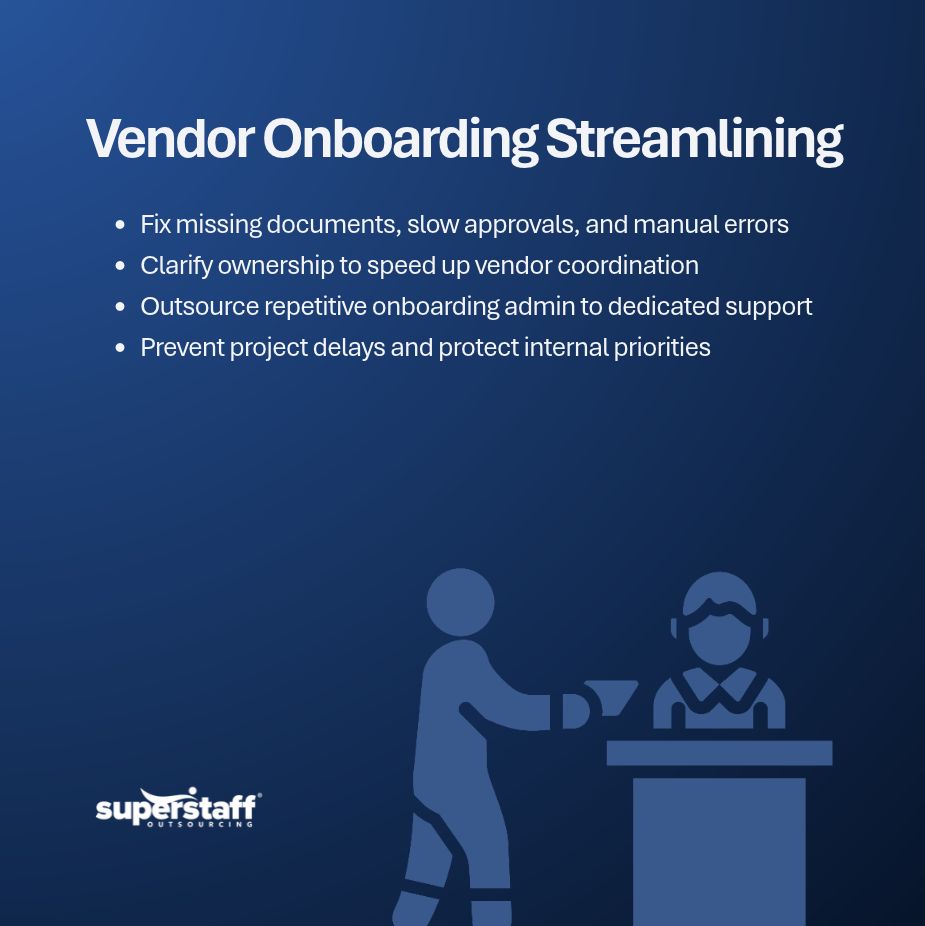
Several small problems can create long delays. Fortunately, companies can identify these issues and improve the process.
1. Incomplete Vendor Information
Vendors may submit forms with missing details. They may also provide outdated certificates, incorrect banking information, or documents in the wrong format.
As a result, employees must request corrections and wait for another submission. A clear checklist can reduce these back-and-forth exchanges. A standardized vendor onboarding process can help companies organize document collection, verification, approvals, and communication requirements.
2. Too Many Approval Steps
Some companies involve several departments in every vendor setup. While approvals can protect the business, unnecessary steps can slow the process.
Instead, companies should define which teams need to review specific vendor types. This approach keeps important checks while reducing unnecessary waiting.
3. Manual Data Entry
Employees may enter vendor information into multiple systems. This creates additional work and increases the chance of errors.
For example, one incorrect account number or company name can lead to another round of verification. Standard forms and organized records can help reduce these problems.
4. Poor Communication
A vendor may not know who to contact when questions arise. Likewise, internal teams may not know which department currently handles the request.
Therefore, assigning clear responsibilities can improve communication. A shared workflow can also show which tasks remain incomplete.
5. Limited Internal Capacity
A procurement team may manage vendor setup alongside contracts, purchasing, reporting, and other responsibilities. During busy periods, onboarding requests can move down the priority list.
This creates a simple capacity problem. Even an efficient process can slow down when too few employees manage too many requests.
Why Companies Outsource Vendor Onboarding
Companies do not always need to handle every administrative process internally. Outsourcing can give internal teams additional capacity while maintaining a defined onboarding process.
1. Reduce Administrative Work
An outsourced team can manage document collection, data entry, follow-ups, and status updates. Meanwhile, internal employees can focus on procurement decisions and other higher-value responsibilities.
This division can help reduce repetitive work without removing internal oversight.
2. Support Faster Processing
Outsourcing teams can dedicate staff to vendor onboarding tasks. Therefore, requests do not have to compete with unrelated internal priorities.
A dedicated team can also follow standard procedures for checking documents and moving requests between departments.
3. Handle Higher Vendor Volume
Growth often brings more suppliers, contractors, service providers, and partners. An outsourced team can help companies manage higher volumes without immediately expanding their internal headcount.
This makes the model useful for companies entering new markets or adding multiple vendors at once.
4. Improve Process Consistency
A defined outsourcing workflow can establish consistent steps for every vendor. For example:
- Collect required information
- Review submitted documents
- Identify missing details
- Coordinate corrections
- Update internal systems
- Track approval status
- Send completion updates
As a result, employees and vendors have a clearer process to follow.
5. Give Internal Teams Better Visibility
Outsourced vendor onboarding should not mean losing control. Companies can establish service levels, reporting requirements, escalation rules, and approval points.
Therefore, internal teams can still make final decisions while an external team handles the administrative workload. Companies managing large volumes of documents and records can also benefit from back-office support services to handle data entry, document management, and other recurring administrative responsibilities.
How to Choose the Right Outsourcing Partner
Outsourcing can improve vendor management, but companies should select a partner that fits their process and volume.
1. Check Process Experience
Look for a provider that understands document management, data entry, verification, follow-ups, and administrative coordination.
2. Review Communication Practices
The provider should explain how it handles questions, missing documents, escalations, and status updates. Clear communication reduces unnecessary delays.
3. Ask About Scalability
Your vendor volume may change over time. Therefore, ask whether the provider can adjust staffing as your requirements increase or decrease.
4. Define Performance Measures
Set clear measures before the work begins. These may include:
- Average onboarding time
- Completion rate
- Document accuracy
- Response time
- Number of unresolved requests
- Vendor satisfaction
These measures help both sides identify problems and improve performance.
5. Keep Decision-Making Where It Belongs
Outsourcing should support your process, not remove important business decisions from your team. Define which tasks the provider can complete independently and which ones require internal approval. Businesses can also use back-office support and data entry outsourcing to manage recurring administrative work while keeping internal teams focused on other priorities.
Turn Vendor Setup Into a Growth Support Process
Vendor onboarding should not become an administrative barrier to growth. When delays continue, companies can lose employee time, postpone projects, create payment issues, and make vendor relationships harder to manage.
However, businesses can improve the process by standardizing requirements, assigning clear responsibilities, tracking requests, and removing unnecessary steps. For companies dealing with growing vendor volumes, outsourcing can also provide dedicated support without adding the same workload to internal teams.
SuperStaff can help businesses manage administrative processes through dedicated outsourcing support. If your team spends too much time collecting documents, following up with vendors, updating records, and tracking onboarding requests, contact SuperStaff to discuss how dedicated support can give your internal team more time to focus on growth.