Many businesses collect personal information every day without thinking about how much data they actually manage. Customer records, employee information, supplier details, and marketing databases all play a role in daily operations. However, when an audit takes place, organizations need clear documentation that shows how they collect, use, store, and protect that information. Without proper records, answering audit questions can become difficult and time-consuming.
This is why preparation matters. Companies that maintain organized documentation often handle data privacy audits more efficiently. A record of processing activities helps businesses understand their data practices while providing auditors with the information they need. As a result, organizations can approach data privacy audits with greater confidence and less disruption to their operations.
Why a Record of Processing Activities Matters
A record of processing activities provides a detailed overview of how personal information moves throughout an organization. Therefore, it serves as one of the most valuable resources during compliance reviews and data privacy audits.
1. Creates a Clear Data Inventory
Businesses often collect information from many sources. Customer inquiries, employee applications, website forms, and service agreements all generate personal data.
A record of processing activities identifies what information exists and where it is located. Consequently, businesses avoid confusion during audits.
2. Improves Transparency
Auditors want to understand how an organization handles personal information. Therefore, businesses should be able to explain their data practices clearly.
Accurate records provide transparency while showing that the organization follows documented procedures.
3. Supports Compliance Requirements
Under GDPR Article 30, covered controllers and processors must maintain records of applicable processing activities. These records should include information such as processing purposes, data categories, recipients, retention periods, and security measures.
The Information Commissioner’s Office guidance on documenting processing activities explains how organizations can prepare, document, and update their records. Businesses should also confirm which privacy laws apply to their operations because requirements vary by jurisdiction.
4. Identifies Data Risks Early
Data mapping often reveals areas where sensitive information may face unnecessary exposure. Therefore, maintaining records allows businesses to identify potential risks before they become larger issues.
Early action strengthens data protection efforts and reduces compliance concerns.
5. Simplifies Audit Preparation
When records are already organized, businesses spend less time gathering information before an audit. Instead, teams can focus on answering questions and addressing improvement opportunities.
This reduces stress for employees and management alike.
Key Information Auditors Often Review
Preparation becomes easier when businesses understand what auditors typically examine. Although requirements vary, several areas receive consistent attention.
1. Types of Personal Information Collected
Organizations should document the categories of information they collect. Examples may include:
- Names
- Contact information
- Employment records
- Financial details
- Customer account information
- Marketing preferences
Clear documentation makes audit reviews much more efficient.
2. Purpose of Data Processing
Businesses should explain why they collect each type of information. Some data supports customer service, while other information supports payroll, recruitment, or legal obligations.
Defined purposes help demonstrate responsible data management.
3. Data Storage Locations
Auditors often ask where personal information is stored. Therefore, businesses should document all storage systems, including cloud platforms, databases, and physical records.
Knowing where data resides also improves security management.
4. Access Controls
Organizations should identify who can access personal information and why. Proper access controls help reduce unnecessary exposure.
Limiting access to authorized personnel supports stronger privacy practices.
5. Data Retention Policies
Businesses should explain how long they keep personal information. Furthermore, they should document how and when data is deleted.
Retention policies demonstrate that the organization manages information responsibly.
Steps to Strengthen Audit Readiness
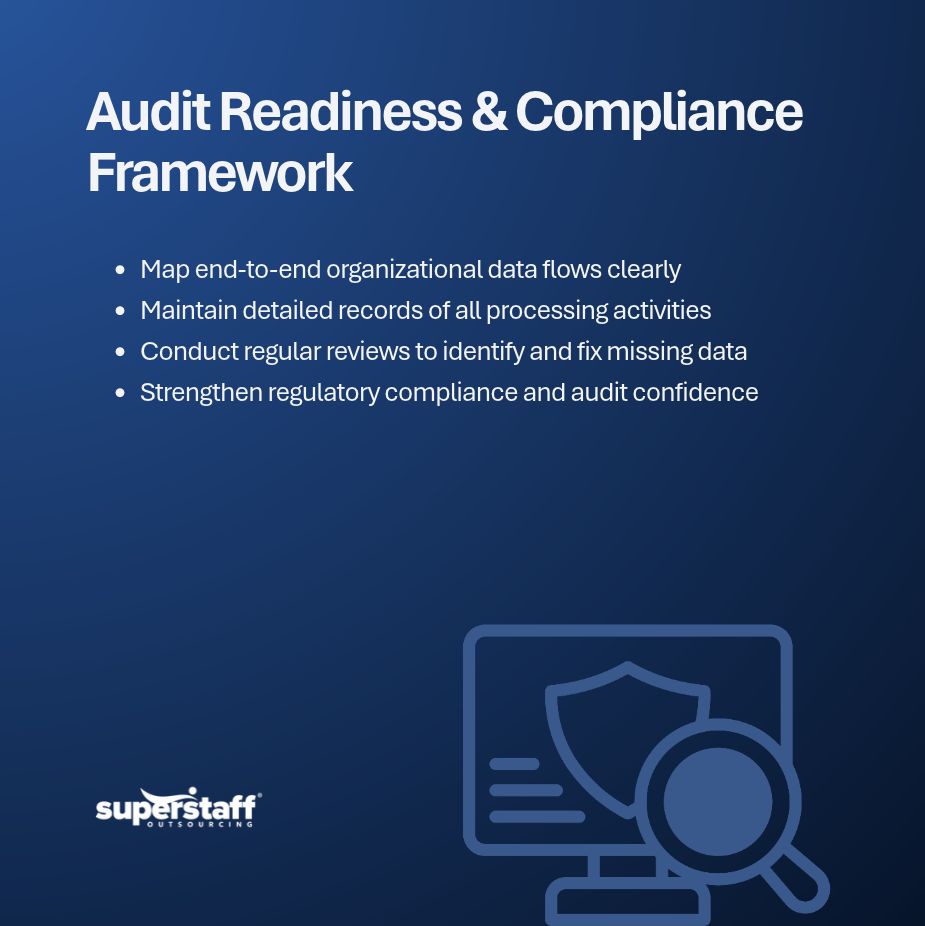
Preparing for audits should be an ongoing process rather than a last-minute effort. Companies that review their documentation regularly often perform better during data privacy audits.
1. Keep Records Updated
Business processes change over time. New systems, services, employees, and vendors may affect how personal information is handled.
Therefore, organizations should review processing records regularly to maintain accuracy.
2. Involve Multiple Departments
Privacy compliance affects more than one team. Human resources, operations, customer service, IT, finance, and legal departments may all process personal information.
Collaboration helps ensure records reflect actual business practices.
3. Conduct Internal Reviews
Internal assessments help businesses identify gaps before external auditors discover them. As a result, organizations gain opportunities to improve their processes.
Regular reviews also strengthen long-term compliance efforts.
4. Document Third-Party Relationships
Many businesses share information with payroll providers, customer service partners, software vendors, or other service providers.
Organizations should document these relationships and explain how personal information moves between parties.
5. Train Employees on Privacy Responsibilities
Employees play an important role in data protection. Therefore, businesses should provide regular training that explains privacy policies and operational procedures.
Well-informed employees help support successful audit outcomes.
Common Mistakes Businesses Should Avoid
Even organizations with strong privacy programs can encounter challenges if documentation becomes outdated or incomplete.
Some common mistakes include:
- Failing to update processing records
- Overlooking third-party data-sharing activities
- Keeping incomplete data inventories
- Allowing excessive employee access to information
- Using inconsistent documentation across departments
Addressing these issues early helps businesses improve both compliance and operational efficiency.
Strong preparation also supports smoother communication during data privacy audits. When information is easy to locate, organizations can respond more quickly to auditor requests and compliance questions.
Organizing Documents for Easier Audit Preparation
A record of processing activities often connects to other business documents, including privacy policies, vendor agreements, retention schedules, and security procedures. Keeping these materials organized helps employees locate supporting information when auditors request it.
Businesses can establish standard file names, consistent folder structures, and document review schedules. They should also assign responsibility for checking whether records are complete and whether older versions need to be replaced.
For companies handling large volumes of files, document management outsourcing can provide additional support with organizing, tracking, and maintaining business documents. Internal compliance personnel should still review the records and make decisions that require regulatory knowledge.
Strong Records Support Better Audit Outcomes
A well-maintained record of processing activities does more than satisfy compliance requirements. It helps businesses understand how information flows through their operations, identify risks, and improve accountability across departments. Furthermore, organized documentation allows teams to respond confidently when audit requests arise.
Companies that prepare consistently often experience fewer disruptions during data privacy audits. Instead of searching for information under pressure, they can focus on demonstrating strong privacy practices and continuous improvement.
Managing Data Accuracy Across Business Operations
Accurate records depend on more than keeping files in order. Businesses must also make sure that the information entered into their systems is complete, consistent, and updated when changes occur.
This can be difficult when employees handle large volumes of customer details, employee information, transaction records, and other business data. Manual entry errors and duplicate records may affect the accuracy of reports and supporting documents.
Companies can improve these processes by establishing validation procedures, reviewing entries regularly, and assigning clear responsibilities for record maintenance. They can also use AI data management and document management support to understand how structured data processes and external assistance can help organize business information.
Data Entry Support for More Organized Records
Some businesses need additional help maintaining large databases and processing documents accurately. Data entry professionals can assist with updating records, checking information, organizing files, and processing business documents based on established instructions.
SuperStaff’s Data Entry services support businesses that need help managing information, improving record accuracy, and handling recurring data-related tasks. With clear procedures and quality checks, external support can help internal teams manage documentation workloads more efficiently.
Stay Audit-Ready With Reliable Support
Preparing for data privacy audits requires organization, consistency, and accurate documentation. A well-maintained record of processing activities helps businesses understand their data practices, identify gaps, and respond to audit requests with less disruption.
However, documentation should be part of an ongoing privacy program. Regular reviews, employee training, access controls, and clear responsibilities all contribute to stronger data management.
SuperStaff helps businesses manage documentation, data entry, and other process-driven responsibilities through trained support teams. If your organization needs additional help with record management and operational processes, contact SuperStaff to discuss your requirements.