
A CRM can store thousands of customer records, track sales activity, and help teams manage leads. However, none of those functions can work well when the information inside the system is incomplete, outdated, or incorrect.
Consider a sales representative preparing for a customer call. The CRM shows an old phone number, a duplicate contact, and a deal stage that no longer matches the account. The representative now has to spend time checking information instead of preparing for the conversation.
These problems can happen quietly across a growing business. Therefore, CRM administration outsourcing can help companies maintain accurate records, manage routine tasks, and keep their CRM useful for the teams that depend on it.
Where CRM Data Problems Begin
CRM data can become unreliable for several reasons. As teams grow, more employees enter information, update records, and create new contacts. Without consistent processes, small errors can quickly spread across the system.
1. Employees Enter Data Differently
One employee may enter a company name in full, while another uses an abbreviation. Similarly, different employees may use different formats for phone numbers, job titles, or customer names.
These small differences make records harder to organize and search. A clear data entry process can reduce inconsistencies and make customer information easier to use.
2. Duplicate Records Create Confusion
Duplicate contacts can appear when several employees add the same customer to the CRM. They can also occur when a lead enters the system through different forms or marketing channels.
As a result, teams may see multiple records for the same person. They may also send duplicate messages or miss important activity stored under another record. Salesforce’s guide to managing duplicate and disconnected customer records explains how duplicate information can affect the accuracy of customer records.
3. Old Information Stays in the System
Customer information changes over time. People change jobs, companies update contact details, and accounts move through different sales stages.
However, employees may not have enough time to update every record. Regular data checks can help identify outdated information and keep customer records current.
4. Important Fields Remain Empty
A CRM record may contain a customer’s name and email but lack other useful details. Missing information can make it harder for sales and customer teams to understand an account.
Teams can set required fields based on business needs. For example, they may require industry, company size, lead source, or account status before a record moves to the next stage.
5. Data Builds Up Without Regular Review
CRM databases grow as businesses add leads, customers, contacts, and opportunities. Without regular maintenance, the system can become harder to manage.
Therefore, companies should schedule routine data reviews. These reviews can identify duplicates, missing information, outdated records, and other issues that affect daily work.
What CRM Administration Outsourcing Covers
CRM administration involves more than adding names and contact details. It includes many routine tasks that keep the system organized and useful.
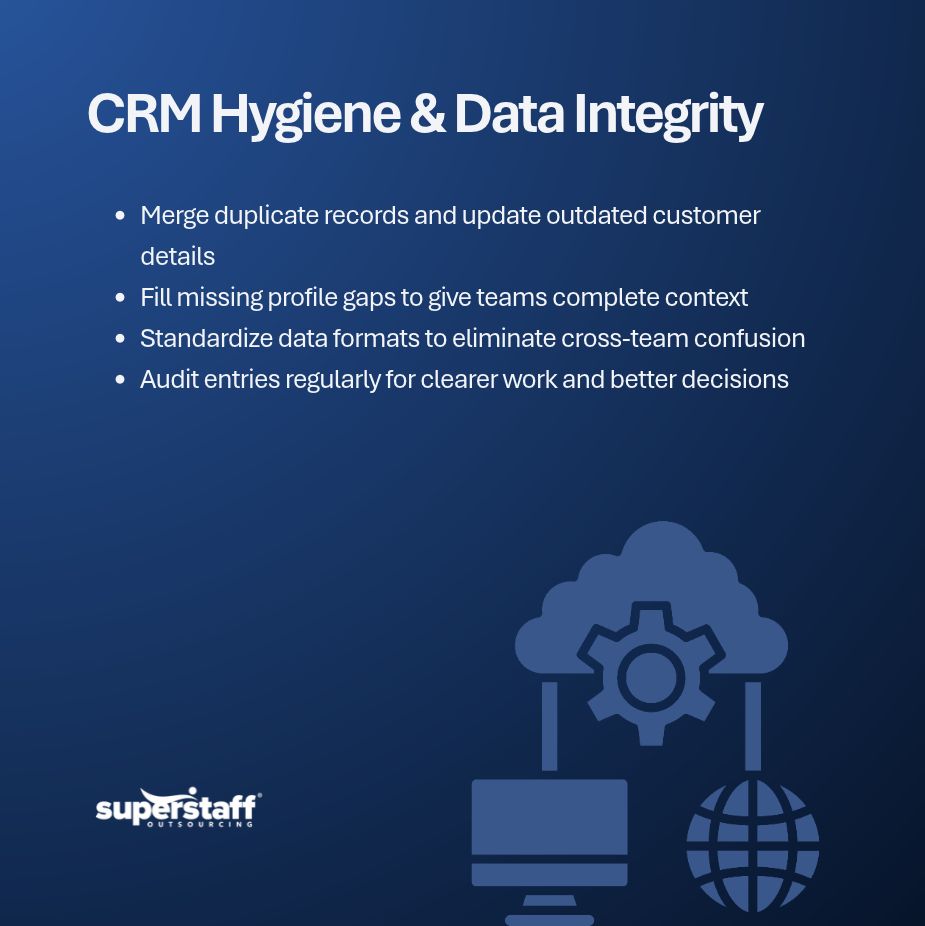
1. CRM Data Entry and Updates
An outsourced team can enter new records and update existing information based on defined rules. They can also check records for missing fields and inconsistent entries.
This gives internal employees more time to focus on sales, customer relationships, and other responsibilities.
2. Duplicate Record Management
A CRM administrator can regularly search for duplicate records and follow company rules for merging or removing them. Before making changes, the team can verify that important customer information remains accurate.
This process helps keep one reliable record for each contact or account.
3. Data Cleaning
Data cleaning involves reviewing records and correcting issues that affect accuracy. The process may include standardizing names, updating contact details, completing missing information, and removing outdated entries.
With CRM administration outsourcing, businesses can assign these repetitive tasks to dedicated specialists. As a result, internal teams can work with cleaner information.
4. CRM Record Organization
CRM systems often contain different types of records, including leads, contacts, companies, opportunities, and accounts. Poor organization can make it difficult for employees to find the information they need.
A dedicated team can help maintain naming rules, record structures, fields, and categories. This creates more consistency across the database. Businesses using Salesforce can also review Salesforce admin support services to understand how dedicated assistance can help maintain CRM records, workflows, and system organization.
5. Routine CRM Maintenance
CRM platforms need regular attention as businesses change their processes. New fields, users, workflows, and reporting requirements may require updates.
An outsourced administration team can support these routine tasks based on approved instructions. This keeps the CRM aligned with business operations.
Why Better CRM Data Matters
Clean data affects more than the CRM itself. It influences sales activity, customer communication, reporting, and business decisions.
1. Sales Teams Work With Better Information
Sales representatives need accurate customer details when preparing for calls and follow-ups. If the information is wrong, they may contact the wrong person or use outdated information.
Clean records help sales teams understand who they are contacting and what has already happened in the account.
2. Marketing Can Improve Lead Management
Marketing teams use CRM information to segment audiences and manage campaigns. However, inaccurate records can place contacts in the wrong groups or affect campaign results.
For example, a company may send information to an existing customer as though they were a new lead. Better data can help prevent these mistakes.
3. Managers Get Clearer Reports
Business leaders rely on CRM reports to understand pipeline activity, lead sources, sales performance, and customer trends. However, incomplete or inconsistent records can affect those reports.
Regular data management helps improve the information behind these reports. Consequently, managers can spend less time questioning the data and more time reviewing performance.
4. Teams Spend Less Time Searching
Employees can lose time looking for the correct customer record or checking whether information is current. These small delays can happen several times throughout the day.
A well-maintained CRM makes information easier to find. Therefore, employees can move through routine tasks with fewer interruptions. Consistent data management also supports better reporting and business processes, as explained in this guide to AI data management and document management outsourcing.
5. Customers Receive More Consistent Communication
Customer information often moves between sales, support, and customer success teams. If each team works with different information, customers may need to repeat details.
Accurate CRM records give teams a shared view of customer interactions. This can support more consistent communication across the customer journey.
Signs Your CRM Needs More Support
Sometimes the need for CRM administration becomes clear through daily problems. However, businesses may overlook these signs because employees have already created workarounds.
1. Employees Keep Their Own Spreadsheets
If employees maintain separate spreadsheets because they do not trust the CRM, the system may have a data quality problem.
Multiple tracking systems also create another risk. Information can become different across the CRM and individual files.
2. Sales Teams Question CRM Reports
If employees regularly ask whether CRM reports are accurate, managers should review the underlying data. Reports depend on the quality of the records behind them.
A regular data review can help identify where errors begin.
3. Employees Spend Time Fixing Records
CRM maintenance should not take salespeople away from their main responsibilities. If employees regularly correct contact information or search for duplicate records, the business may need dedicated administrative support.
4. Customer Information Changes Frequently
Businesses with large customer bases often deal with frequent changes in contact details, job roles, account ownership, and company information.
A dedicated CRM team can monitor these changes and update records based on defined procedures.
5. Your CRM Has Become Hard to Manage
A growing CRM can contain thousands of records and many different fields. Without consistent management, employees may struggle to know which information matters and how they should enter it.
Clear rules and regular administration can make the system easier to manage.
Making CRM Administration More Effective
Outsourcing can help, but businesses still need clear processes. An external team needs to understand how the company organizes customer information and what standards it expects.
Define Data Rules
Set clear rules for names, contact details, company records, lead stages, and required fields. These rules give administrators a consistent reference when reviewing records.
Assign Clear Responsibilities
Determine which tasks the outsourced team handles and which decisions remain with internal employees. Clear ownership reduces confusion and helps teams resolve issues faster.
Track Data Quality
Useful metrics can include:
- Duplicate records removed
- Records updated
- Missing fields completed
- Data errors identified
- CRM requests completed
- Average task turnaround time
These measures can help managers evaluate the quality of CRM administration.
Business needs change, so CRM processes should change with them. Review workflows and data rules regularly to ensure they still support current sales and customer operations. Companies that need help with recurring administrative tasks can also explore SuperStaff’s back-office support services.
Make Better Data Part of Daily Operations
A CRM works best when employees can trust the information inside it. However, keeping thousands of records accurate takes time, consistency, and regular attention.
CRM administration outsourcing gives businesses a way to assign routine data management to dedicated specialists. These teams can support data entry, record updates, duplicate management, cleaning, and ongoing maintenance.
The goal is simple: give internal teams access to accurate information without adding more administrative work to their schedules.
SuperStaff provides flexible outsourcing solutions that can support CRM administration and other back-office processes. If your team spends too much time cleaning records or managing CRM tasks, contact SuperStaff to discuss how CRM administration outsourcing can support your operations.