A missing invoice, an outdated customer record, or a contract saved under the wrong name may seem like a small mistake. However, these problems can delay payments, affect business decisions, create compliance concerns, and force employees to repeat work. When several departments rely on the same records, one missing detail can affect an entire process.
The cost of poor documentation goes beyond the time employees spend looking for files or correcting information. It can also affect customer relationships, operating expenses, and business growth. As companies handle more transactions, records, and internal requests, they need reliable ways to organize information and keep documents accurate.
How Poor Documentation Affects Business Costs
Documentation supports daily business activities, from processing payments to managing employees and serving customers. When records lack important details, companies face problems that can affect both productivity and expenses.
1. Employees Spend More Time Correcting Errors
Missing information forces employees to review records, contact other departments, and request corrections. Consequently, tasks that should take a few minutes can take much longer.
For example, an employee may need to check several emails to confirm a purchase order or locate an updated contract. These repeated tasks reduce the time available for more important responsibilities.
2. Financial Records Become Less Reliable
Incorrect invoices, missing receipts, and incomplete payment records can create problems for finance teams. As a result, employees may struggle to reconcile transactions, verify expenses, or prepare accurate reports.
Even a small data entry mistake can affect several financial records. The common data entry errors businesses should avoid show why accurate information and consistent checking matter in everyday operations.
3. Compliance Problems Become More Likely
Many businesses must keep records of transactions, agreements, employee information, and other activities. However, missing documents or unclear approval records can make it difficult to show that employees followed company policies.
Consequently, companies may spend additional time preparing for audits or responding to information requests. In some cases, incomplete records can also lead to penalties or legal disputes.
4. Customer Service Becomes Slower
Customer-facing employees depend on accurate records to answer questions and resolve concerns. However, outdated account details, missing order information, or incomplete service histories can delay their responses.
Customers may need to repeat information or wait while employees verify details. Therefore, poor documentation can affect customer satisfaction and make routine service requests harder to resolve.
5. Business Decisions Rely on Incomplete Information
Managers use reports, records, and internal documents to evaluate performance and plan future activities. However, inconsistent information can lead to inaccurate reports and poor decisions.
For example, outdated sales records may affect revenue forecasts, while incomplete inventory reports can create purchasing problems. This makes the cost of poor documentation a concern for both daily operations and long-term planning.
Why Documentation Problems Keep Happening
Poor documentation does not always result from employee negligence. Often, companies lack clear procedures, enough staff, or reliable systems for managing information.
1. Employees Follow Different Procedures
Without standard guidelines, employees may use different file names, formats, and storage locations. As a result, teams struggle to find documents or determine which version contains the correct information.
Companies should establish clear rules for creating, naming, reviewing, and storing files. These guidelines also help new employees follow the same process.
2. Manual Tasks Increase the Risk of Errors
Employees who enter large amounts of information manually may overlook fields, duplicate records, or enter incorrect details. Furthermore, repeated data entry across several systems increases the chance of inconsistencies.
Standard templates and review procedures can reduce these mistakes. Companies should also identify tasks that require additional checks before employees finalize records.
3. Important Information Stays in Separate Systems
Some businesses store documents in email accounts, shared folders, spreadsheets, and different software platforms. Consequently, employees may not know where to find the latest version.
A centralized document system can make information easier to access. It should also include clear access permissions and version controls.
4. Employees Have Too Many Responsibilities
Administrative work often competes with customer service, sales, operations, and other daily tasks. Therefore, employees may rush through documentation or postpone record updates when their workloads increase.
This creates backlogs that become harder to manage over time. Assigning specific documentation responsibilities can help companies maintain more consistent records.
5. Companies Do Not Review Records Regularly
A document may contain accurate information when employees first create it. However, business details, procedures, and contact information can change.
Without regular reviews, outdated records remain in use. Companies should schedule checks to update information, remove duplicate files, and identify missing documents.
How Outsourcing Helps Reduce Documentation Costs
Companies do not need to handle every documentation task with their internal employees. Outsourcing can provide dedicated support for data entry, document organization, record updates, and other administrative processes.
1. Dedicated Teams Handle Repetitive Tasks
Outsourced employees can manage document preparation, data entry, file organization, and record updates. Meanwhile, internal employees can focus on tasks that require company knowledge and decision-making.
This arrangement can reduce administrative pressure, especially when documentation requests continue to increase.
2. Consistent Procedures Improve Accuracy
An outsourcing partner can follow established instructions for handling documents and entering information. In addition, supervisors can review completed tasks and check records for missing details.
For example, teams can use standard formats for dates, account numbers, customer names, and transaction details. This helps maintain consistency across different records.
3. Companies Can Manage Larger Workloads
Document volumes often increase during business expansion, seasonal demand, audits, and major projects. However, hiring and training additional internal employees for every increase may require more time and money.
Outsourcing gives companies access to additional staff based on their workload. As a result, businesses can manage documentation backlogs without placing all the work on existing employees.
4. Internal Teams Gain More Time
Employees should not spend most of their working hours searching for files or correcting routine data entry mistakes. Instead, they should have enough time to handle customer concerns, review business performance, and complete specialized tasks.
Outsourcing routine documentation activities can help create that balance. It also gives managers more time to review important records and address issues that need their attention.
5. Businesses Can Access Specialized Support
Different documentation tasks require different skills. Some involve data entry, while others require document classification, spreadsheet management, record checking, or administrative coordination.
Companies can use data entry outsourcing services to assign high-volume information processing and record maintenance to dedicated specialists. This can help businesses maintain organized information while managing routine administrative work.
Building a More Reliable Documentation Process
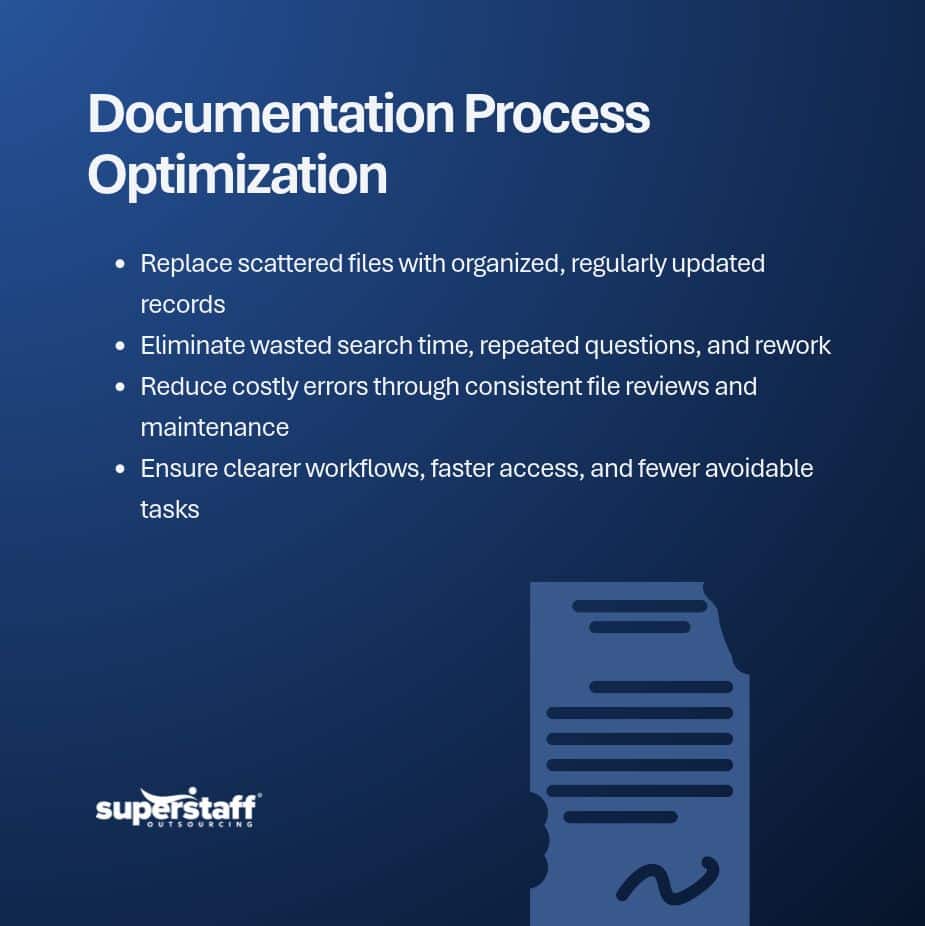
Outsourcing can help manage the workload, but companies still need clear internal rules. A reliable documentation process should cover how employees create, review, store, and update business records.
Consider these practical steps:
- Create standard templates for recurring documents.
- Assign clear ownership for record creation and updates.
- Use consistent file names and folder structures.
- Set access permissions for confidential information.
- Schedule regular document reviews.
- Keep backup copies of important records.
- Track corrections and approval changes.
Furthermore, companies should train employees to follow these procedures. Even when an external team handles documentation tasks, internal departments must understand their responsibilities and review important information when needed.
A clear process also helps businesses identify repeated errors before they affect other departments. Companies that need to manage several administrative functions can benefit from back-office support and data entry outsourcing to handle recurring tasks and maintain more organized records.
Make Accurate Documentation Part of Business Growth
Poor documentation can affect far more than file storage. It can increase operating expenses, delay important tasks, create compliance concerns, and reduce the quality of business decisions. Therefore, companies should treat accurate recordkeeping as part of their regular operations rather than an occasional administrative task.
The cost of poor documentation can become harder to manage as a business grows. However, clear procedures, regular reviews, and dedicated outsourcing support can help companies reduce errors and keep information organized.
SuperStaff provides back-office support for businesses that need help with data entry, document management, and other administrative responsibilities. Reach out to SuperStaff to discuss how dedicated support can help your team reduce documentation workloads and manage business records more efficiently.