
Telehealth has shifted from a convenience benefit to a core part of how U.S. employers support their workforce. Virtual care now plays a role in primary care access, mental health support, benefits navigation, and follow-up coordination. As adoption grows, the operational demands behind telehealth grow with it.
Many employers are discovering that scaling internal teams alone is no longer practical. Hiring domestically is slow, retention is difficult, and coverage gaps appear quickly. As a result, nearshoring has moved from an option to a strategic decision. For a growing number of companies, Colombia has become the preferred location to support telehealth employee support services in a way that balances access, quality, and operational control.
Telehealth Support Is No Longer a Side Function
Telehealth programs introduce continuous support requirements. Employees need help booking appointments. They ask questions about coverage eligibility and need guidance after virtual consultations. These interactions happen throughout the day, not just during HR office hours.
Internal HR and benefits teams are rarely designed to handle this volume. When support falls behind, frustration rises. Employees disengage from telehealth offerings altogether.
Nearshoring allows employers to build dedicated teams focused solely on telehealth workflows. These teams handle repetitive but critical interactions that keep programs functioning smoothly. Over time, telehealth employee support services become predictable, measurable, and easier to manage.
Colombia Aligns With U.S. Working Hours
One of the most practical advantages of nearshoring to Colombia is time zone alignment. Colombian teams operate within or very close to U.S. Eastern and Central time zones. This removes many of the delays associated with offshore models.
Employees receive faster responses. HR teams experience fewer escalations. Providers see cleaner handoffs.
This alignment strengthens nearshore telehealth support by making external teams feel present rather than distant. Support feels immediate, coordination improves, and issues resolve faster.
Language Fluency Supports Clarity in Healthcare Conversations
Healthcare support requires precision. A missed detail or misunderstood instruction can lead to frustration or delays in care. Clear communication is essential.
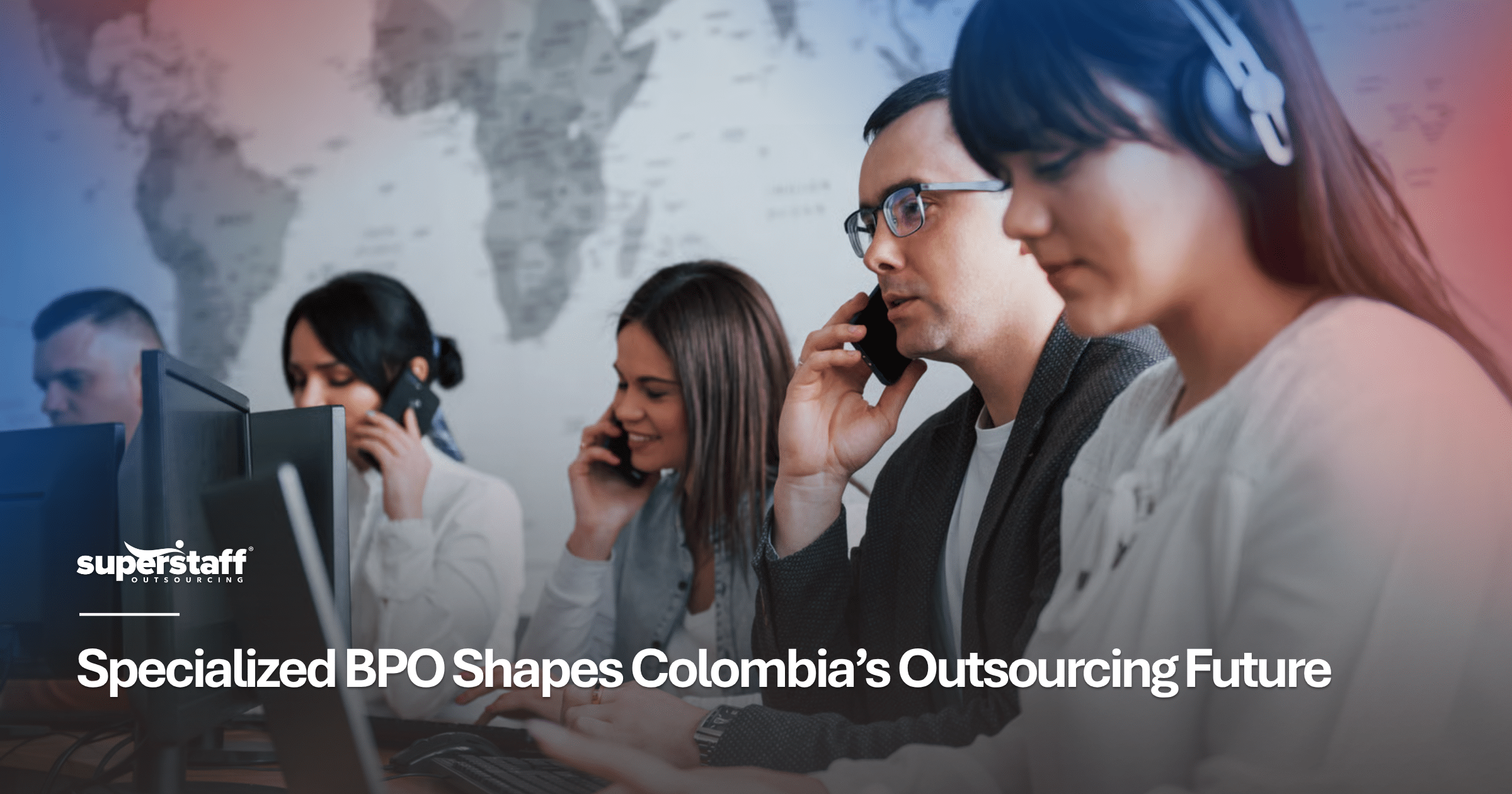
Colombia offers a strong pool of bilingual professionals with experience supporting U.S. customers. Many are accustomed to working in environments where accuracy and tone matter.
This foundation is critical for telehealth employee support services that involve benefits explanations, appointment instructions, and post-visit guidance. Conversations stay focused. Documentation remains accurate. Employee confidence increases.

Cultural Familiarity Reduces Friction
Beyond language, cultural familiarity plays a role in service quality. Colombian professionals are familiar with U.S. workplace expectations, communication styles, and service standards.
This reduces the adjustment period often required with offshore teams. Fewer misunderstandings occur, and feedback loops shorten.
For employers operating remote telehealth operations, cultural alignment supports smoother collaboration between internal stakeholders and external teams.
Faster Scaling Without Internal Disruption
Demand for telehealth support rarely grows in a straight line. Seasonal spikes, benefit enrollment periods, and provider changes all affect volume.
Nearshoring allows companies to scale capacity without restructuring internal teams. Additional agents can be added during peak periods. Coverage can be adjusted as programs expand.
This flexibility helps employers maintain consistent telehealth employee support services even as demand fluctuates. Internal teams remain focused on strategy rather than constant firefighting.
Training and Knowledge Transfer Are More Efficient
Telehealth support requires familiarity with healthcare terminology, workflows, and systems. Training time matters.
Colombian talent pools include professionals with backgrounds in healthcare administration, insurance support, and patient coordination. Many already understand documentation standards and escalation protocols.
This shortens ramp-up time. Teams reach productivity faster. Employers benefit from more stable telehealth employee support services earlier in the engagement.
Operational Visibility Stays Intact
Executives often worry about losing control when functions move outside the organization. Nearshore models reduce this concern.
Teams in Colombia typically operate under clear governance structures. Reporting, quality reviews, and performance metrics are standard. Communication channels remain open and frequent.
This structure supports remote telehealth operations that require transparency rather than blind trust. Leaders stay informed without managing day-to-day tasks.
Compliance Discipline Is Familiar
While telehealth support teams do not provide medical care, they operate close to regulated processes. Accuracy and documentation matter.
Colombian teams are accustomed to working within compliance-driven environments. They follow defined procedures and respect escalation paths.
This experience supports telehealth employee support services that must integrate seamlessly with U.S. providers and internal compliance frameworks.
Cost Efficiency Supports Long-Term Planning
Nearshoring also supports better financial planning. Labor costs in Colombia are lower than in the U.S., but quality remains high.
Savings allow employers to invest in better training, extended coverage hours, or improved reporting tools. Rather than cutting corners, companies strengthen their support models.
This approach ensures telehealth employee support services remain sustainable as programs mature.
A Strategic Shift in Workforce Design
Nearshoring telehealth support reflects broader workforce strategy changes. Employers are separating core decision-making from execution work that benefits from scale and consistency.
Support functions move closer to where talent is available and adaptable. Internal teams focus on policy, provider relationships, and employee experience design.
These are the strategic reasons U.S. companies choose nearshore telehealth support today. The goal is resilience, not short-term savings.
Why Colombia Continues to Stand Out
Colombia combines several operational advantages in one location.
- Time zone alignment with U.S. business hours
- Strong bilingual talent pools
- Experience supporting regulated industries
- Cultural familiarity with U.S. service expectations
- Scalable workforce without rigid commitments
Together, these factors make telehealth employee support services easier to deploy and manage over time.
How Nearshore Teams Integrate With Internal Operations
Successful nearshoring requires integration, not isolation. Colombian teams work best when embedded into existing workflows.
They coordinate with HR teams, follow provider protocols, and use shared systems and reporting dashboards.
This integration allows remote telehealth operations to function as a single ecosystem rather than disconnected parts.
SuperStaff’s Approach to Nearshore Telehealth Support
SuperStaff applies structure and discipline to nearshore delivery. Our teams are trained to support healthcare-adjacent workflows with consistency and care.
We focus on process clarity, emphasize communication standards, and design teams that align with client expectations and compliance requirements.
For employers expanding telehealth employee support services, SuperStaff provides a stable foundation without unnecessary complexity.
Elevate Telehealth Employee Support Services With Colombian Teams
Telehealth is now a permanent part of employee healthcare. Supporting it effectively requires operational depth, not ad hoc solutions. Nearshoring to Colombia offers U.S. employers a practical way to scale support while maintaining quality, responsiveness, and control. When designed correctly, telehealth employee support services strengthen employee trust and program adoption.
SuperStaff helps organizations build and manage nearshore teams that integrate seamlessly with telehealth operations. If you are evaluating how to support growing telehealth demand without adding internal strain, explore how SuperStaff can help you design a smarter support model built for long-term success.