Organizations across different sectors continue to look for ways to improve efficiency, strengthen decision-making, and deliver better services. As markets evolve and customer expectations change, businesses need practical solutions that help them manage resources and improve operational performance. Technology has become an important part of this effort, allowing companies to process information faster and make better use of available data.
One approach gaining attention is the use of AI-driven strategies. Businesses are applying these methods to improve workflows, support customer service, analyze data, and strengthen planning efforts. As a result, AI-driven strategies are helping organizations identify opportunities, address challenges, and improve outcomes.
Companies across healthcare, finance, retail, logistics, and other industries are also exploring AI and outsourcing to combine technology with skilled human support. This approach can give businesses additional capacity while keeping people involved in tasks that require judgment, communication, and oversight.
How AI-Driven Strategies Improve Business Operations
Many organizations use AI and related technologies to organize information, automate routine processes, and support daily activities.
1. Faster Data Analysis
Businesses generate large amounts of information every day. Reviewing that data manually can take significant time, especially when information comes from several systems.
AI-supported tools can process large datasets and identify patterns faster. This gives employees more time to review findings and decide how to use them.
2. Improved Workflow Management
Many operational tasks require coordination between departments. Delays can occur when employees manually transfer information, update records, or complete repetitive steps.
AI-driven strategies can support workflow automation by handling selected routine processes. Companies can also combine automation with back-office outsourcing when they need additional people to manage administrative and operational workloads.
3. Better Resource Allocation
Organizations must manage budgets, employees, technology, and other resources carefully. Data-supported planning gives decision-makers more information when deciding where those resources should go.
For example, businesses can analyze workload patterns, customer demand, and operational performance before adjusting staffing or budgets. This creates a clearer basis for resource planning.
4. Enhanced Decision Support
Decision-makers benefit from accurate and organized information. AI systems can process information from multiple sources and highlight patterns that employees may need to review further.
However, businesses still need human oversight when interpreting results and making important decisions. AI can support the process, while employees remain responsible for applying business knowledge and judgment.
5. Increased Operational Consistency
Consistency helps organizations maintain defined standards across repetitive processes. Automated systems can follow established rules for tasks such as sorting information, routing requests, or processing routine data.
Human teams can then review exceptions, handle complex situations, and monitor whether automated processes continue to produce acceptable results.
Industry Applications of AI-Driven Strategies
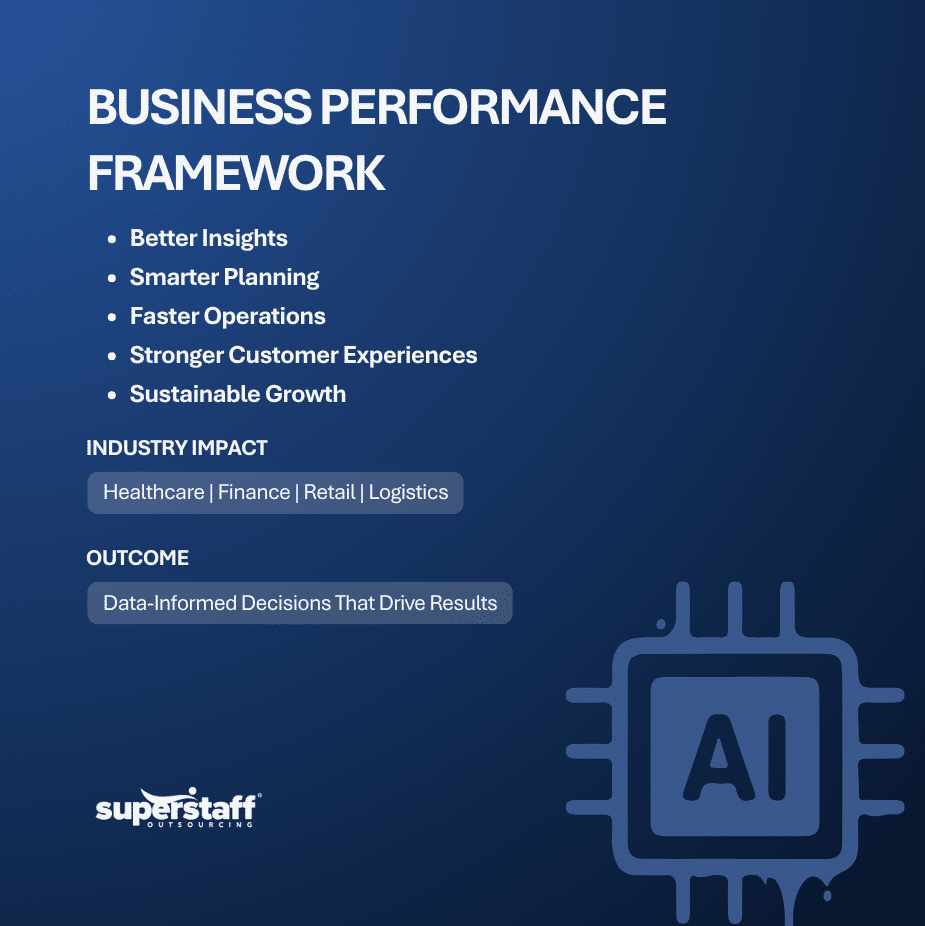
Organizations across multiple sectors continue to find practical uses for AI. According to IBM, businesses use artificial intelligence across areas such as customer service, supply chains, cybersecurity, and other operational functions.
1. Healthcare
Healthcare organizations manage large amounts of patient, administrative, scheduling, and billing information.
AI-supported systems can assist with administrative processes, data analysis, scheduling, and other defined tasks. Healthcare organizations can also use healthcare outsourcing to provide human support for patient communication and back-office processes.
These systems should complement appropriate professional review rather than replace clinical judgment in patient care decisions.
2. Retail
Retail businesses need to understand purchasing patterns, inventory levels, and changing customer demand.
AI-supported analytics can identify patterns in sales data and provide information that assists inventory and demand planning. Retailers can also use these insights when deciding which products to promote or replenish.
3. Financial Services
Financial institutions process significant amounts of transactional and customer data every day. AI systems can assist with tasks such as pattern detection, document processing, customer support, and risk analysis.
Human review remains important, particularly when decisions involve regulatory requirements, customer finances, or unusual transactions.
4. Logistics and Supply Chain
Logistics companies coordinate shipments, inventory, transportation schedules, and delivery routes. Small delays in one part of the process can affect other operations.
AI-driven strategies can analyze operational data and support forecasting, routing, inventory planning, and shipment monitoring. Better access to current information allows employees to respond more quickly when disruptions occur.
5. Customer Service
Businesses continue to seek ways to improve customer interactions. AI can assist with sorting inquiries, analyzing customer feedback, suggesting responses, and directing requests to the appropriate support channel.
Companies can combine these tools with customer service outsourcing when they need trained agents to handle conversations that require additional context, problem-solving, or personal assistance.
Key Benefits Businesses Can Expect
The results of AI adoption depend on how a company implements the technology, the quality of its data, and the processes involved. When used appropriately, AI-supported systems can provide several operational benefits.
1. Greater Efficiency
AI can handle selected repetitive processes faster than manual workflows. This reduces the amount of time employees spend on routine work.
Employees can then focus on responsibilities that require communication, analysis, creativity, or direct customer interaction.
2. Better Customer Experiences
Customers value timely service and accurate information. AI can support faster routing, self-service options, and access to relevant information.
Human agents can then handle complex requests that require additional explanation or judgment. Combining both approaches can create a more efficient support structure.
3. Faster Response to Business Changes
Organizations regularly deal with changes in customer demand, costs, workloads, and market conditions.
AI-supported analytics can make it easier to identify patterns in current data. Business leaders can use those findings alongside other information when deciding how to respond.
4. Improved Risk Management
Businesses face financial, operational, security, and compliance risks. AI tools can analyze large volumes of information and flag patterns or unusual activity for further review.
However, organizations still need clear controls and human oversight. Automated alerts should support risk management rather than serve as the only basis for important decisions.
5. Scalable Growth Opportunities
As businesses expand, operational demands often increase. AI-supported processes can automate some repetitive work and allow existing systems to handle larger volumes.
Companies can then add technology, outsourced support, or internal staff based on the requirements of each process.
Important Considerations for Successful Implementation
AI implementation requires more than selecting a new tool. Businesses need clear objectives, reliable data, employee training, security controls, and regular performance reviews.
Best Practices for Success
- Establish clear business goals before introducing AI tools.
- Identify processes where AI provides a practical benefit.
- Train employees to use and review AI-supported systems properly.
- Maintain strong data management, privacy, and security practices.
- Monitor accuracy and performance regularly.
- Keep human oversight for decisions that require judgment.
- Review systems as business requirements change.
These practices help businesses use AI in a controlled and practical way while identifying problems before they affect larger operations.
Future Opportunities Across Industries
AI capabilities continue to develop, creating additional opportunities for organizations seeking operational improvements.
Areas where businesses are exploring AI include:
- Customer experience management
- Healthcare administration
- Supply chain planning
- Financial analysis and reporting
- Workforce planning
- Data processing and classification
- Quality assurance
- Business forecasting
The value of these applications depends on how well they address a specific business need. Companies should evaluate each use case based on its expected benefits, risks, costs, and required human oversight.
Smarter Strategies for Sustainable Business Growth
AI-driven strategies can support organizations that want to improve efficiency, analyze information faster, and manage growing workloads. From healthcare and retail to finance and logistics, businesses are finding practical ways to combine technology with skilled employees.
SuperStaff supports organizations that need skilled teams for customer service, administrative operations, back-office processes, and other business functions. Combining the right people with suitable technology can give companies a more flexible approach to operational growth.
Looking for a team that can support your AI-driven strategies and growing operations? Contact SuperStaff to discuss your business needs and explore an outsourcing solution that fits your goals.