The start of a new year brings additional responsibilities for businesses and accounting departments. Financial records need to be updated, receipts must be organized, and supporting documents have to be prepared before tax filing deadlines. For companies handling large volumes of financial information, these tasks can quickly add to the workload of internal accounting teams.
The challenge becomes greater when employees are already managing bookkeeping, payroll, reporting, and other financial responsibilities. Missing documents, inconsistent records, and delayed data entry can slow down preparation and create additional work during tax season.
Remote filing teams help businesses manage these administrative demands by organizing financial documents, updating records, checking data, and preparing files for review. With clearly assigned responsibilities, companies can maintain organized workflows while giving their internal accounting professionals more time to handle complex financial work.
This article explains why remote filing support is becoming more common, the tasks external teams can manage, and how businesses can use outsourced professionals to improve their early-year tax preparation processes.
Why Businesses Need Structured Tax Prep Support at the Start of the Year
Early-year tax preparation requires more than collecting receipts and completing forms. Businesses must make sure their financial records are complete, transactions are properly documented, and supporting information is available for review.
For companies operating in the United States, tax preparation may involve reviewing income statements, expense records, invoices, payroll information, and other supporting documents. The exact requirements depend on the business structure, tax obligations, and applicable regulations.
The Internal Revenue Service (IRS) emphasizes the importance of maintaining organized financial records to support income, expenses, deductions, and other information reported on tax returns. Its business recordkeeping guidelines also explain why companies should maintain accurate records throughout the year rather than waiting until filing season.
However, maintaining these records can be difficult when accounting employees have several responsibilities. Some businesses also experience backlogs because financial documents come from different departments, systems, and locations.
Structured tax preparation support helps address these problems. By assigning document organization, data entry, record verification, and administrative follow-ups to dedicated personnel, companies can keep their financial information organized before final tax review.
Why Remote Filing Teams Are Increasing in Demand
Remote filing teams are becoming an option for businesses that need additional administrative capacity during tax season. Instead of increasing their permanent workforce to manage temporary workloads, companies can work with external professionals who handle selected financial and documentation tasks.
One reason behind this shift is the amount of time required to process financial information. Accountants may spend several hours sorting receipts, checking transaction details, updating spreadsheets, and following up on missing documents. These activities are necessary, but they can take time away from financial analysis and other specialized responsibilities.
Outsourcing bookkeeping and accounting tasks can help reduce this pressure. Businesses can assign routine administrative work to trained external personnel while keeping financial decisions and final approvals within their authorized internal teams.
Another factor is flexibility. Remote teams can provide additional support during busy reporting periods without requiring businesses to manage a lengthy recruitment process for every temporary staffing need.
Companies considering this arrangement should understand the distinction between administrative filing support and professional tax preparation. Tasks involving tax calculations, interpretations of tax rules, return preparation, and final filing should be handled or reviewed by appropriately qualified and authorized tax professionals.
Key Ways Remote Filing Teams Support Early-Year Tax Preparation
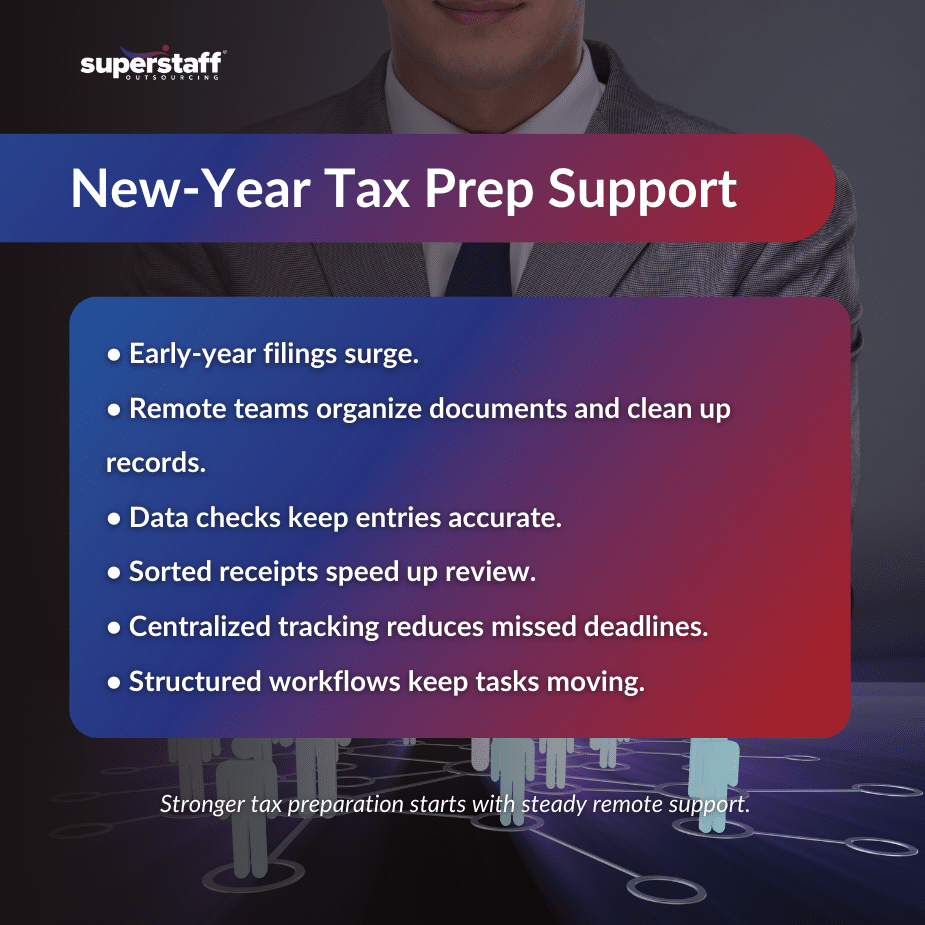
Remote filing teams handle several administrative activities that help businesses prepare their financial information for review. These responsibilities can be assigned based on the company’s existing accounting procedures and the level of access granted to external personnel.
- Document organization
Remote personnel sort, label, and arrange financial files according to established categories. This helps employees locate invoices, receipts, bank statements, and other supporting documents without searching through multiple folders. - Data entry and verification
External staff enter financial information into approved spreadsheets or accounting systems. They can also compare entries against source documents and flag missing or inconsistent details for review. - Financial record updates
Income, expense, and account records need regular updates before tax preparation begins. Remote personnel can maintain assigned records so internal accountants have access to current information. - Receipt and invoice sorting
Receipts and invoices can be grouped according to expense categories, dates, vendors, or other company requirements. This makes it easier for authorized accounting professionals to review business expenses. - File tagging and classification
Consistent naming conventions and digital labels help businesses maintain organized document libraries. Proper classification also makes it easier to retrieve files when additional information is needed. - Deadline and schedule tracking
Remote assistants can maintain calendars, monitor document collection schedules, and send reminders about pending administrative tasks. This helps teams stay aware of upcoming deadlines. - Standardized spreadsheet preparation
External personnel can prepare templates and organize financial summaries using approved formats. Standardized files make information easier to review and compare. - Communication and follow-ups
Remote staff can coordinate with authorized employees to request missing documents, confirm information, and provide progress updates. This helps prevent incomplete submissions from delaying the next stage of preparation. - Pre-review document checks
Before files reach accountants or tax professionals, remote personnel can check whether required fields and supporting documents are present. They can flag incomplete records without making independent tax judgments. - Centralized progress reporting
Remote teams can maintain reports showing completed assignments, pending documents, unresolved discrepancies, and outstanding requests. This gives managers a clearer view of the preparation process.
These activities help businesses maintain organized financial records and reduce the amount of administrative work assigned to internal accounting professionals.
Factors to Evaluate When Working With Remote Filing Teams
Selecting a remote filing partner requires more than checking staffing availability. Businesses must establish procedures that protect financial information and maintain accuracy throughout the process.
Communication Routines
Remote personnel should follow established reporting schedules and communication procedures. Regular updates help managers track pending assignments, clarify missing information, and address issues before they affect other tasks.
Data Protection
Financial documents contain sensitive information, including account details, payroll records, and business transactions. Companies should establish access restrictions, confidentiality agreements, secure file-sharing procedures, and appropriate data protection measures.
Defined Responsibilities
Every assignment should have a clear owner. Businesses need to identify which activities remote personnel can complete independently and which require approval from an accountant, manager, or authorized tax professional.
Documentation Processes
Consistent file naming, organized folders, and updated records make financial information easier to retrieve. Remote employees should follow the company’s documentation standards to avoid duplicate files and incomplete records.
Training Alignment
External personnel should receive training on the accounting software, company procedures, file management practices, and assigned responsibilities. Training should also cover how to identify discrepancies and report concerns.
Quality Checks
Managers should review completed work to confirm that information is entered correctly and supporting documents are properly organized. Regular checks help identify errors before files move to the next stage.
Platform and Tool Compatibility
Remote teams should be able to work with the company’s approved accounting software, spreadsheets, document management systems, and communication platforms. Compatible tools make collaboration easier and reduce unnecessary delays.
How Remote Support Strengthens Daily Tax Prep Operations
Tax preparation involves several recurring administrative activities that must be completed before accountants can finalize their work. These include updating records, organizing supporting documents, checking financial entries, and following up on missing information.
Remote personnel help manage these activities throughout the preparation period. For example, they can update expense spreadsheets, organize invoices, and maintain digital folders while internal accountants review financial statements and investigate discrepancies.
This division of responsibilities helps prevent administrative work from accumulating. Instead of spending most of their time organizing files, accounting professionals can concentrate on reviewing figures, assessing financial information, and addressing issues that require specialized knowledge.
Remote support can also improve communication between departments. When employees submit documents through a shared system, assigned personnel can track received files, identify missing information, and provide updates to the appropriate team members.
Companies that want to reduce manual accounting workloads can also consider how they outsource bookkeeping and accounting to maintain organized records and support their financial operations throughout the year.
Use Cases Where Remote Filing Teams Provide High Value
Remote filing support can benefit businesses with different accounting structures and financial workloads. The tasks assigned to external personnel depend on the company’s size, industry, software, and internal approval procedures.
Common assignments include:
- Sorting receipts, invoices, and financial statements
- Updating income and expense records
- Preparing spreadsheets and transaction summaries
- Checking data against supporting documents
- Organizing payroll-related files
- Maintaining digital document archives
- Tracking missing financial information
- Preparing files for accountant review
- Monitoring administrative deadlines
- Assisting with quarterly and annual reconciliations
For example, an e-commerce business may need assistance organizing sales records, payment reports, supplier invoices, and shipping expenses. Remote personnel can arrange these documents into the company’s approved categories before an accountant reviews the information.
An accounting firm may also assign document collection and data entry to external staff during peak filing periods. This allows its internal professionals to spend more time reviewing client records and preparing tax returns.
For businesses that require broader financial assistance, SuperStaff’s accounting and bookkeeping services provide support for bookkeeping, financial reporting, reconciliation, and other accounting-related responsibilities.
These arrangements help companies manage recurring financial tasks while maintaining clear oversight of sensitive information and important tax-related decisions.
How Remote Filing Teams Support Internal Accounting Staff
Internal accounting employees often handle several responsibilities at the same time. Aside from preparing financial reports, they may also manage payroll records, review transactions, coordinate with other departments, and respond to management requests.
During tax season, these responsibilities can become difficult to balance. Additional document collection and data entry requirements may leave accountants with less time for complex reviews.
Remote filing teams help distribute the workload by managing assigned administrative tasks. They can organize files, update records, prepare spreadsheets, and monitor pending document requests.
This arrangement gives internal accountants more time to review financial information and address discrepancies. It also helps managers maintain better visibility into the progress of ongoing assignments.
However, remote support should complement rather than replace professional accounting oversight. Internal employees and authorized tax professionals remain responsible for reviewing financial information, making tax-related decisions, and approving final submissions.
Choosing the Right Outsourcing Partner for Tax Prep Support
Businesses should evaluate outsourcing providers based on their ability to manage financial documentation accurately and follow established procedures. A reliable partner should understand the importance of confidentiality, organized workflows, and consistent communication.
Before entering an agreement, companies should review the provider’s experience with accounting administration, document management, and financial data entry. They should also ask about recruitment standards, employee training, quality checks, and information security practices.
Other considerations include:
- Experience handling accounting and financial documentation
- Familiarity with relevant accounting software
- Clear communication and reporting procedures
- Secure file-sharing and data access controls
- Documented quality assurance processes
- Structured employee onboarding
- Flexible staffing arrangements
- Clear escalation and approval procedures
Businesses should also establish measurable expectations before work begins. These may include document processing times, data entry accuracy, completed assignments, and reporting schedules.
A well-defined arrangement helps both parties understand their responsibilities and gives managers a consistent way to evaluate performance.
SuperStaff Remote Tax Prep Support Services
SuperStaff provides accounting and back-office support through trained professionals who assist businesses with financial and administrative workflows. Depending on the company’s requirements, assigned personnel can help organize documents, update records, process financial data, and maintain supporting files.
Its teams can also assist with bookkeeping-related activities, data entry, reconciliation support, and financial documentation. These services help businesses manage recurring tasks while allowing internal accounting professionals to focus on reviews and responsibilities that require specialized expertise.
SuperStaff follows structured workflows and uses digital tools to support communication, document management, and performance monitoring. Businesses can also discuss staffing requirements based on their workload and operational needs.
For companies preparing for busy reporting periods, having additional administrative support can help maintain organized records and reduce pressure on existing employees.
Let SuperStaff Strengthen Your Tax Preparation Workflows
Preparing for tax season requires accurate records, organized documentation, and consistent follow-through. Businesses that establish clear procedures early in the year can reduce administrative backlogs and make financial information easier to review.
Remote filing teams provide additional support by handling document organization, data entry, record updates, and other assigned administrative responsibilities. When these tasks are properly managed, internal accountants can spend more time on financial reviews, tax-related decisions, and final filing requirements.
SuperStaff helps businesses build dedicated support teams for accounting and back-office operations. With trained personnel, organized workflows, and flexible staffing arrangements, companies can manage their financial administrative workload more effectively.
If your business needs additional support during tax season or throughout the year, contact SuperStaff to discuss your accounting support requirements and find an arrangement that fits your operations.