Healthcare providers face growing pressure to deliver timely care while dealing with staff shortages, rising patient demand, and increasing administrative work. Patients also expect faster responses, clear updates, and better coordination throughout their care journey. Meeting these expectations can be difficult when doctors, nurses, and administrative employees already have full schedules.
To manage these demands, more healthcare organizations are considering an outsourced healthcare workforce to support their daily operations. Remote teams can handle patient inquiries, appointment scheduling, medical records, billing support, and other administrative responsibilities. This gives in-house staff more time to focus on their primary duties while helping providers maintain consistent service.
As healthcare outsourcing 2026 trends continue to develop, remote support roles are becoming an important part of workforce planning. With clear responsibilities, proper training, and strong oversight, healthcare providers can expand their support capacity without placing additional pressure on existing employees.
Why Healthcare Providers Are Expanding Remote Support
Healthcare organizations need staffing models that can respond to changing patient needs. Hiring additional in-house employees is not always easy, especially when qualified workers are difficult to find or recruitment takes too long.
Several factors are encouraging providers to consider remote support teams.
- Growing patient demand
More patients are using virtual consultations, online appointment systems, and remote follow-up services. These options create additional work for scheduling teams, patient coordinators, and support staff. An outsourced healthcare workforce can help manage these responsibilities and keep patient requests moving.
- Limited availability of qualified workers
Many healthcare organizations struggle to fill open positions. Finding experienced employees can take time, particularly for specialized administrative and support roles. The 2026 American Hospital Association Health Care Workforce Scan highlights the need for healthcare organizations to rethink staffing models and respond to changing workforce needs.
- Increasing administrative responsibilities
Healthcare professionals spend considerable time handling records, coordinating appointments, processing requests, and completing documentation. These tasks are necessary, but they can take time away from patient care. Remote support staff can take on appropriate administrative duties and help reduce this workload.
- Changing staffing requirements
Patient volume can change due to seasonal illness, new services, and changes in healthcare access. Remote teams give providers more flexibility when additional administrative support is needed.
- Greater focus on patient experience
Patients want timely answers and clear instructions. Delayed callbacks, missed appointments, and unanswered questions can affect their experience. Remote clinical support roles help healthcare organizations manage communication and follow-ups more consistently.
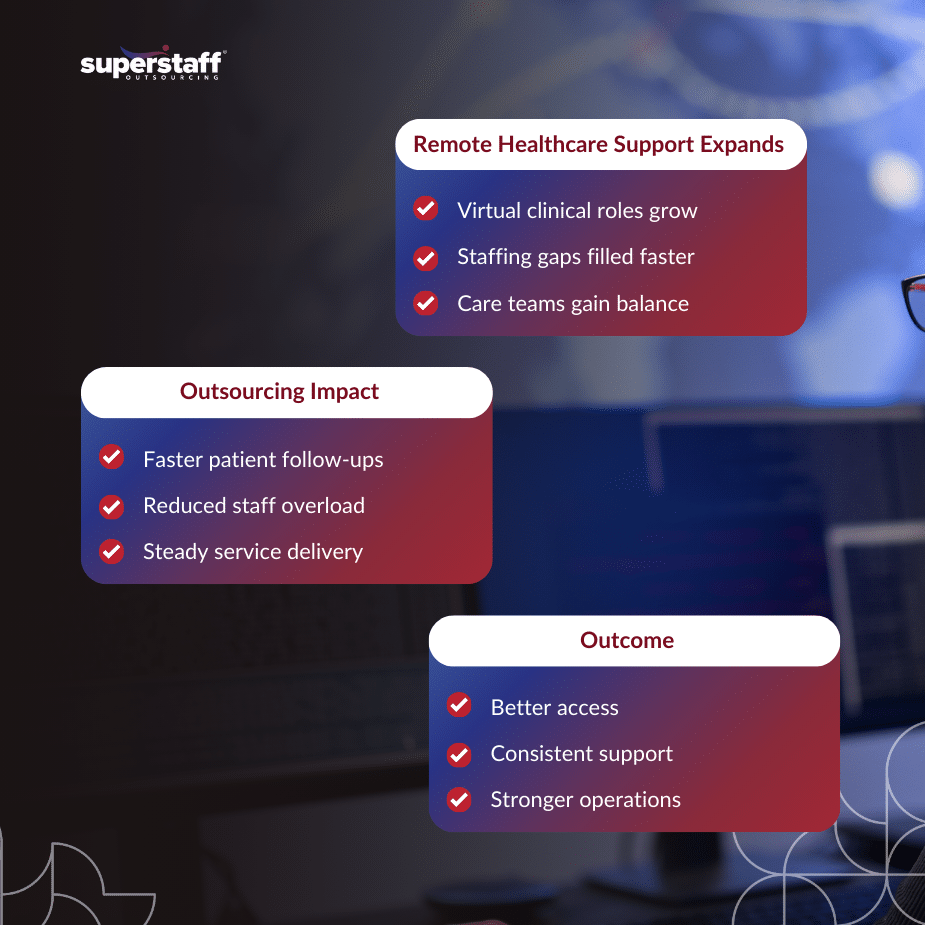
Remote Healthcare Support Roles in Demand
Healthcare providers can outsource several non-clinical and administrative functions to improve daily operations. The roles they choose depend on their service needs, available systems, and the level of support their internal teams require.
Here are some common positions that can work remotely.
- Remote medical administrative assistants
These professionals help manage patient information, update records, prepare documents, and organize schedules. Their support helps keep administrative tasks organized before and after patient appointments.
- Patient care coordinators
Care coordinators help manage referrals, appointment reminders, follow-up schedules, and communication between patients and healthcare providers. They help reduce missed steps and keep patients informed about their next appointments.
- Virtual patient support representatives
These employees answer general patient questions, assist with appointment requests, and provide information about services and procedures. They can also direct patients to the appropriate department when they need additional assistance.
- Medical billing and coding support staff
Billing and coding teams help process claims, review records, and manage billing-related documentation. Accuracy is important because errors can lead to claim delays, payment issues, and additional administrative work.
- Appointment and referral coordinators
These professionals organize appointment schedules, manage referral requests, and coordinate with different departments. Their work helps providers manage patient access and reduce scheduling backlogs.
The range of available support functions is also reflected in healthcare BPO services that improve patient experience, including patient communication, front-office assistance, and back-office support.
How Outsourcing Supports Clinical Teams
Remote support employees do not replace doctors, nurses, or other licensed healthcare professionals. Instead, they handle approved administrative and coordination tasks that allow clinical staff to spend more time on their core responsibilities.
This division of work can improve how healthcare organizations manage their daily operations.
- Less administrative work for clinicians
Doctors and nurses can spend less time handling routine administrative requests when trained support staff manage appropriate tasks. This gives clinical employees more time for patient consultations and care-related responsibilities.
- Faster handling of routine requests
Dedicated remote teams can manage appointment updates, general inquiries, documentation requests, and follow-up reminders. This helps prevent routine requests from remaining unattended.
- More consistent daily processes
Outsourced teams can follow documented procedures for handling calls, updating records, and managing patient requests. Clear workflows help maintain consistency even when patient volumes change.
- Better support for existing employees
When administrative workloads are shared, in-house employees may have more time to focus on their assigned duties. This can help reduce daily pressure and improve the distribution of work.
- More efficient use of internal resources
Healthcare leaders can assign specialized employees to tasks that require their expertise while remote teams handle appropriate support functions. This creates a clearer division of responsibilities.
Impact on Patient Care and Staffing Balance
Remote healthcare support roles can affect how patients interact with providers and how employees manage their workloads. When these roles are properly integrated, they help improve communication and keep routine processes organized.
Some of the benefits include:
- Quicker responses to patient inquiries
Dedicated support employees can answer general questions, handle appointment requests, and direct patients to the right department. This helps reduce unanswered calls and long response times.
- Better follow-up coordination
Patient reminders, referral updates, and appointment confirmations help people stay informed about their care schedules. Consistent communication also reduces the chance of missed appointments.
- Reduced pressure on clinical employees
When support staff handle routine administrative work, doctors and nurses can focus on patient-related responsibilities. This may help improve workload balance and reduce unnecessary interruptions.
- More stable staffing arrangements
An outsourced healthcare workforce can provide additional support when patient requests increase or internal employees are unavailable. This gives healthcare organizations another option for managing staffing gaps.
- Clearer division of responsibilities
Defined roles help prevent confusion between clinical and administrative employees. Each team knows which tasks it handles and when an issue should be referred to a licensed healthcare professional.
These improvements depend on proper training, communication, and supervision. Remote support teams should work within clearly defined responsibilities and follow the healthcare provider’s established procedures.
Cost and Operational Benefits of Outsourcing
Healthcare organizations must balance service quality with operating expenses. Expanding an internal team can involve recruitment, training, employee benefits, equipment, and ongoing management costs.
Outsourcing offers another way to manage selected support functions while keeping staffing requirements flexible.
- More manageable staffing expenses
Providers can build teams based on their operational needs instead of immediately expanding their permanent workforce. This helps them plan expenses more carefully.
- Reduced recruitment workload
Hiring takes time and requires coordination between managers, recruiters, and human resources teams. Working with an outsourcing partner can reduce some of the recruitment and staffing responsibilities.
- Faster access to trained support staff
Established outsourcing providers can help businesses find employees with relevant administrative, customer service, and healthcare support experience. This can shorten the time needed to fill certain operational roles.
- Flexible workforce expansion
As patient volume increases, healthcare organizations can review their staffing requirements and add support where needed. This flexibility is useful for providers experiencing growth or changes in service demand.
- Access to specialized support skills
Healthcare outsourcing partners may provide employees experienced in patient communication, medical billing support, records management, and other administrative functions. This allows providers to access specific skills without managing every position internally.
Compliance, Security, and Quality Controls
Healthcare outsourcing requires careful planning because employees may handle confidential patient information and work with systems that contain sensitive records. Providers must make sure that remote teams follow the same security and quality requirements expected of their internal workforce.
Before assigning responsibilities, healthcare organizations should establish clear rules and monitoring processes.
- Define job responsibilities
Each role should have a clear list of approved tasks and limitations. Clinical decisions and other restricted activities must remain with properly licensed professionals.
- Establish standard procedures
Documented processes help remote employees understand how to handle patient requests, update records, and escalate concerns. These procedures should match the healthcare provider’s requirements.
- Protect patient information
Access to patient records should be limited to authorized employees. Healthcare organizations should use appropriate security controls, secure communication channels, and access monitoring.
- Review employee performance
Regular assessments help managers check response times, documentation accuracy, task completion, and service quality. These reviews also help identify areas that need improvement.
- Provide ongoing training
Healthcare procedures, software, and compliance requirements can change. Regular training helps remote employees stay familiar with approved workflows and security practices.
Planning an Outsourced Healthcare Workforce Strategy
Choosing to outsource is only the first step. Healthcare providers also need a clear plan for integrating remote employees into their existing operations.
A structured approach helps prevent communication problems and makes it easier to measure results.
- Identify staffing and workflow gaps
Review the tasks that take up the most time and determine which responsibilities can be handled remotely. Start with functions that do not require direct clinical judgment or physical patient care.
- Set measurable service goals
Establish targets for response times, documentation accuracy, appointment coordination, and task completion. These standards help both teams understand what successful performance looks like.
- Integrate remote teams into existing systems
Remote employees need access to approved tools and clear instructions for working with in-house staff. Proper onboarding helps prevent delays and confusion during the transition.
- Monitor performance regularly
Review reports, employee feedback, and operational results. Regular checks help healthcare leaders identify problems early and make changes when needed.
- Prepare for future workforce needs
Healthcare outsourcing 2026 strategies should account for changes in patient volume, new services, and growing administrative requirements. Planning ahead makes it easier to expand support when demand increases.
Healthcare providers exploring these staffing options can also consider healthcare outsourcing teams in the Philippines for access to professionals who support medical administration and other healthcare operations.
Stronger Care Through Smarter Workforce Expansion
An outsourced healthcare workforce gives providers another way to manage growing administrative demands and expand their support capacity. Remote employees can assist with patient communication, scheduling, billing support, records management, and care coordination.
These roles help reduce routine workloads for in-house employees while keeping essential processes organized. However, successful outsourcing depends on proper role assignments, data protection, employee training, and regular performance checks.
As healthcare outsourcing 2026 trends continue to influence workforce planning, providers that take a structured approach can improve operational flexibility without losing sight of patient needs.
Supporting Healthcare Teams With the Right Partner
SuperStaff helps healthcare organizations build dedicated teams for patient support, healthcare administration, and revenue cycle operations. Our solutions are designed to support daily workflows, reduce administrative pressure, and give healthcare providers more time to focus on patient care.
Whether you need help with patient inquiries, appointment coordination, or back-office responsibilities, the right team can make daily operations easier to manage.
Visit our Healthcare and Revenue Cycle Management services to see how our teams can support your organization. You can also contact SuperStaff to discuss your staffing needs.