Business leaders often set ambitious revenue targets to support expansion and long-term growth. However, reaching those targets requires more than strong sales performance. Companies also need enough people, the right skills, and efficient processes to handle increasing demand.
Many organizations struggle to keep workforce capacity aligned with business goals. Hiring delays, employee turnover, and rising workloads can limit productivity even as revenue expectations increase. When teams cannot keep up, projects slow down, customer service suffers, and expansion plans become harder to execute.
This makes workforce capacity planning an important part of business growth. Companies that align staffing resources with operational needs can pursue new opportunities without placing excessive pressure on existing employees.
Why Revenue Goals Often Outpace Workforce Capacity
A business may have a clear growth strategy but lack the workforce needed to carry it out. This gap often develops when leaders focus on revenue projections without considering the people and resources required to support them.
1. Customer Demand Grows Faster Than Hiring
An increase in sales and customer demand creates additional work across several departments. However, recruiting new employees takes time. Job postings, interviews, background checks, onboarding, and training can delay the process.
Meanwhile, existing employees must handle the additional workload. Customer inquiries may take longer to resolve, administrative tasks can accumulate, and project deadlines may become harder to meet.
2. Employee Burnout Reduces Productivity
When employees regularly manage workloads beyond their capacity, fatigue can affect their performance and engagement.
Over time, overwhelmed employees may struggle to maintain work quality or consider leaving the organization. This creates another staffing challenge because remaining employees must absorb additional responsibilities while the company searches for replacements.
3. Skill Gaps Delay Important Projects
Some business functions require specialized knowledge and experience. Finding qualified candidates for these positions can be difficult, especially when companies need to fill several roles at once.
Without the right expertise, projects may experience delays. Existing employees may also need to handle responsibilities outside their usual roles, affecting productivity and the quality of their work.
4. Business Expansion Requires Additional Resources
Entering new markets, launching products, and increasing production all require additional workforce support.
Companies that expand without reviewing their staffing capacity may encounter operational problems. Leaders should evaluate recruitment needs, available skills, and departmental workloads before committing to larger revenue targets.
5. Employee Turnover Disrupts Operations
When experienced employees leave, businesses lose more than available manpower. They may also lose valuable knowledge, established processes, and customer relationships.
Replacing employees requires time and resources. Until new hires are fully trained, remaining team members may need to take on additional work, which can slow down business activities.
How Workforce Capacity Planning Supports Sustainable Growth
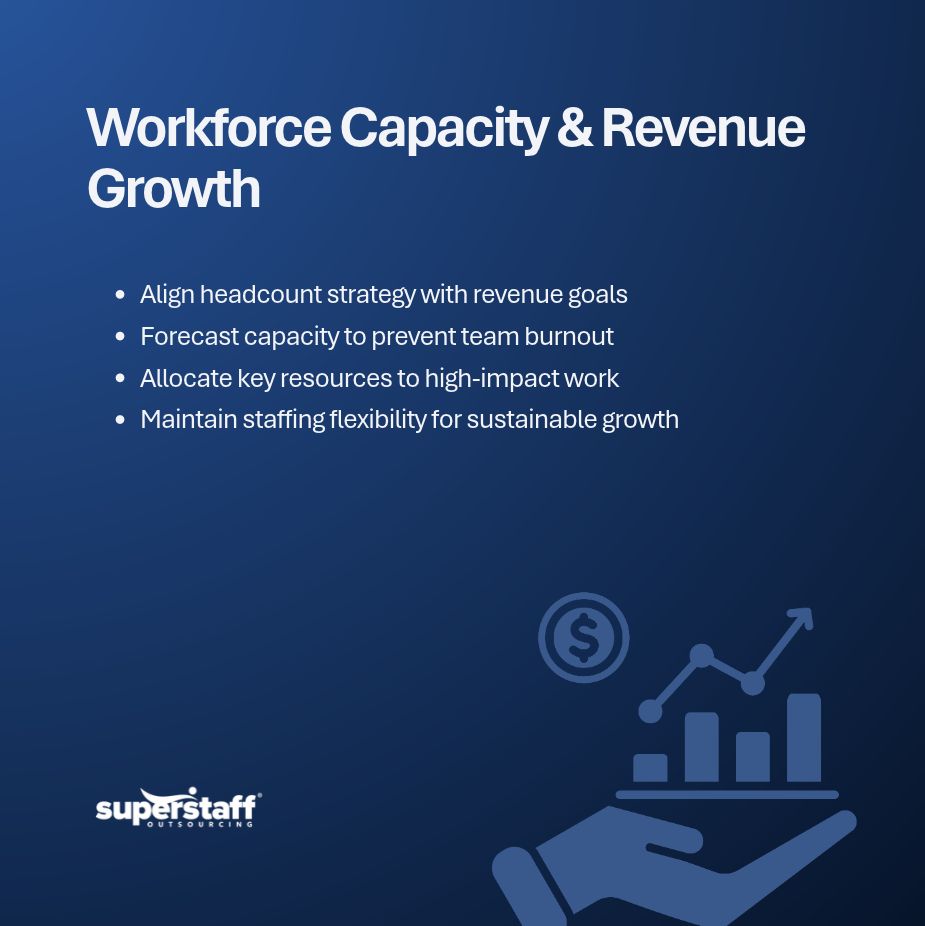
Workforce capacity planning helps organizations understand whether their current employees and resources can support business objectives. It also gives leaders a clearer view of future staffing requirements.
1. Connecting Staffing Requirements With Revenue Targets
Companies should consider workforce needs when setting revenue goals. For example, a business expecting a 20% increase in customer demand may need additional customer service representatives, sales support professionals, or administrative employees.
Identifying these requirements early allows leaders to prepare recruitment plans, allocate resources, and avoid unnecessary operational pressure.
2. Preparing for Future Workforce Needs
Businesses that anticipate staffing requirements can avoid making rushed hiring decisions when demand increases.
Forecasting allows HR teams and department managers to prepare recruitment schedules, identify skill gaps, and plan employee training before additional support becomes necessary.
3. Distributing Resources More Effectively
Some departments may have available capacity while others struggle with increasing workloads. Reviewing these differences helps managers determine where employees can be reassigned or where additional support is needed.
Companies can also identify processes that may benefit from automation or external assistance.
4. Maintaining Employee Productivity
Balanced workloads give employees enough time and resources to complete their responsibilities properly.
When organizations distribute tasks more effectively, they can reduce unnecessary pressure, maintain service standards, and support employee engagement.
5. Making Better Business Decisions
Workforce data helps leaders understand staffing levels, employee productivity, skill shortages, and future hiring requirements.
The Chartered Institute of Personnel and Development (CIPD) emphasizes the importance of matching workforce supply with future business demand. Its workforce planning guide explains how organizations can assess existing resources, identify gaps, and prepare for changing business needs.
Strategies for Expanding Workforce Capacity Without Slowing Growth
Traditional hiring is not the only way to address workforce shortages. Businesses can combine internal development, better resource allocation, and external support to meet operational demands.
1. Improve Workforce Forecasting
Regularly review revenue targets, staffing levels, and projected workloads to identify potential shortages.
Consider seasonal demand, upcoming product launches, expected customer growth, and possible employee turnover. These factors can help leaders prepare for changes before they affect daily operations.
2. Cross-Train Existing Employees
Cross-training allows employees to develop additional skills and assist with different responsibilities when needed.
For example, administrative employees can learn reporting tasks, while customer service representatives can receive training to support additional communication channels.
This approach improves workforce flexibility and helps maintain operations when certain departments experience staffing shortages.
3. Consider Outsourcing for Additional Support
Outsourcing allows businesses to increase operational capacity without relying entirely on traditional in-house recruitment.
External teams can support functions such as customer service, bookkeeping, data entry, recruitment, and administrative operations. This gives companies access to additional talent while allowing internal employees to focus on responsibilities that require their direct involvement.
Businesses that need a more flexible approach to recruitment can also explore Recruitment Process Outsourcing (RPO) to support candidate sourcing, screening, and hiring activities.
4. Prioritize High-Value Activities
Not every business task requires the same level of internal involvement.
Leaders should identify which responsibilities need direct attention from their core employees and which can be delegated, automated, or assigned to external teams.
This allows managers to spend more time on strategic planning, customer relationships, and revenue-generating activities instead of routine administrative work.
5. Develop Scalable Staffing Plans
Workforce strategies should account for both current operations and future business goals.
Companies should regularly review their hiring plans, training requirements, and resource allocation. As customer demand and business priorities change, staffing strategies should remain flexible enough to accommodate new requirements.
Signs Your Business Needs More Workforce Capacity
Companies should not wait until employees become overwhelmed before reviewing their staffing requirements. Several operational issues may indicate that current resources are no longer enough.
Watch for these common signs:
- Recurring overtime: Employees regularly work beyond their scheduled hours to complete daily responsibilities.
- Growing backlogs: Administrative tasks, customer requests, and pending projects continue to accumulate.
- Missed deadlines: Teams struggle to complete assignments within expected timelines.
- Slower customer responses: Existing employees cannot handle inquiries and service requests as quickly as before.
- Increasing employee turnover: Workload pressure and limited support may contribute to employee dissatisfaction and departures.
When these issues become recurring, leaders should compare actual workloads with available staffing resources. This helps determine whether the business needs additional hires, employee training, process improvements, or outsourced support.
Build a Workforce That Can Handle Increasing Demand
When internal employees cannot keep up with growing workloads, outsourcing can provide additional operational support.
SuperStaff helps businesses expand their workforce through back-office support services covering functions such as data entry, bookkeeping, virtual assistance, and administrative work.
With dedicated professionals handling selected responsibilities, internal teams can devote more time to business development, customer relationships, and other important priorities. This approach also gives companies another option for managing workloads without placing every additional responsibility on existing employees.
Review Workforce Capacity Before Setting Bigger Targets
Workforce planning should be an ongoing business activity rather than a one-time exercise. As revenue expectations change, companies should review staffing levels, employee workloads, skill requirements, and operational performance.
Regular assessments help leaders identify workforce gaps early and determine where additional resources will have the greatest impact. They also make it easier to adjust staffing plans before capacity issues affect customers, productivity, or business results.
Give Your Growth Plans the Workforce Support They Need
Revenue growth depends on having enough people with the right skills to support business demand. Workforce capacity planning helps organizations understand their current resources, prepare for future requirements, and make informed staffing decisions.
SuperStaff helps businesses strengthen their operations through flexible outsourcing solutions designed to support daily workloads and long-term expansion. If your company needs additional workforce capacity to meet its revenue goals, contact SuperStaff to discuss your business requirements.